Review Days Adventure | Of Packed Bags, Borrowed Courage, and the Road to Talavera
I have always found it rather amusing how people prepare for examinations. Some arrange their notes according to colour, subject, and level of importance, creating beautifully organised systems that suggest they have complete control over their academic futures. Others survive on coffee, borrowed reviewers, and the somewhat optimistic belief that information can be absorbed through prolonged physical contact with a textbook. I belonged somewhere in between. I had my notes, my ambitions, and a rather impressive collection of anxieties, all competing for the limited space inside my head. Four years of nursing school had taught me many things, but apparently, none of them included how to convince my brain to stop imagining every possible examination question I might fail to answer.
And now, after years of lectures, return demonstrations, clinical rotations, nursing care plans, and examinations that occasionally made me question my intelligence, I was approaching the one examination that seemed to carry the weight of everything we had worked towards: the Philippine Nursing Licensure Examination, scheduled for December 18 and 19, 2011.
Becoming a Registered Nurse had been our destination for so long that it almost felt strange to be standing this close to it. We had spent years introducing ourselves as student nurses, proudly wearing our uniforms, enduring our instructors’ questions, and telling people that someday we would finally become professionals. Someday was beginning to look suspiciously like an actual date on the calendar, and I was discovering that ambition becomes considerably more intimidating when it starts making appointments.
That was how I found myself preparing for twenty days of in-house review at Talavera House of Prayer in Cebu.
Twenty days. In one place. With our reviewers, our fellow examinees, and considerably fewer opportunities to distract ourselves with the outside world. Our arrangement was deliberately restrictive: limited contact with life beyond the review house, no ordinary diversions, and a daily routine centred on preparing for the examination. The intention was perfectly sensible. Remove distractions, create an environment for concentration, and give aspiring nurses the opportunity to devote themselves entirely to studying.
In theory, a marvellous idea.
In practice, I was about to discover whether twenty days of uninterrupted academic responsibility would improve my knowledge or simply introduce me to new varieties of nervousness.
The adventure began on a Monday, with our group waiting for the bus that would take us to Talavera. I remember the atmosphere as a mixture of excitement and apprehension, although we were far too busy taking photographs to behave like people facing one of the most consequential examinations of our young lives. We had bags to carry, belongings to organise, and twenty days of uncertainty waiting somewhere beyond the journey. Naturally, our immediate concern was making sure everyone looked presentable in the pictures.
Priorities, as you can see, were already firmly established.
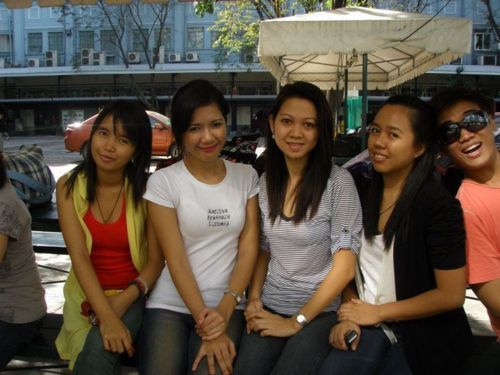
Looking at the photograph now, I find myself wondering what each of us was thinking while we waited. Perhaps some were already mentally reviewing medical-surgical nursing. Others might have been calculating how many topics remained unfinished or worrying about the questions that would appear in December. I suspect a few were simply wondering whether they had packed enough clothes.
I was carrying more than my belongings that morning. There were expectations, ambitions, uncertainties, and the peculiar pressure that comes with knowing people are waiting for you to succeed. After four years of nursing school, passing the board examination felt like the final bridge between everything I had studied and everything I hoped to become.
And bridges, I was discovering, can look considerably longer when you are standing at the beginning.
Fortunately, I was travelling with people who understood the situation perfectly. My reviewmates were experiencing their own mixture of excitement and concern, which meant that none of us had to explain why we could be laughing one moment and worrying about examination results the next. There is something reassuring about collective nervousness. It does not necessarily make the problem smaller, but it does make the journey more entertaining.
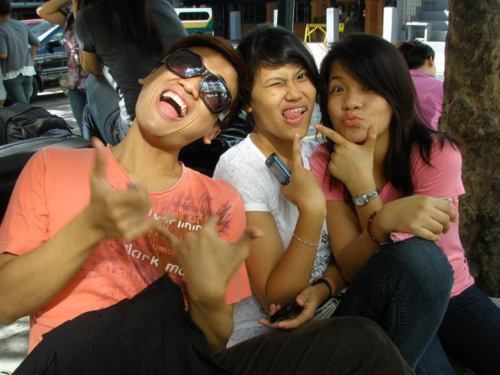
We posed for photographs, made ridiculous faces, and enjoyed the sort of laughter that seems to appear whenever college friends are gathered in one place. Some expressions suggested great confidence. Others suggested that their owners had momentarily forgotten how to behave in front of a camera. Either way, we looked like young people embarking on an adventure rather than aspiring professionals preparing to disappear into a twenty-day academic retreat.
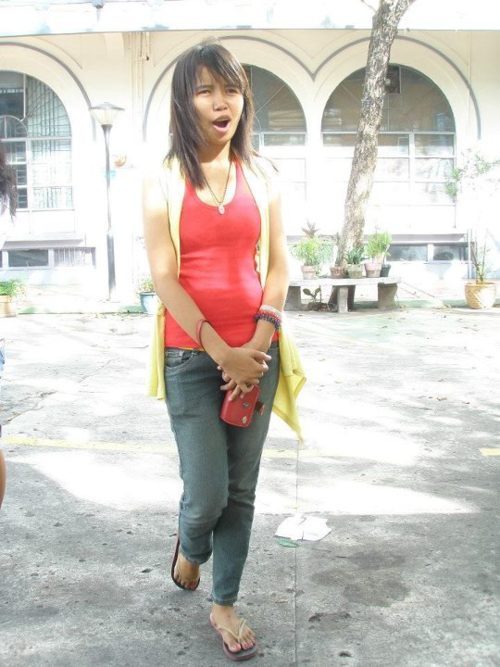
One photograph deserves particular mention because it was apparently taken by my so-called stalker best friend. I use the term affectionately, of course, although the photographic evidence suggests a worrying level of dedication to documenting my whereabouts. There I was, minding my own business, when somebody decided that my unsuspecting face deserved preservation for future generations.
Hmp! Some friendships are built on trust. Others are built on the mutual understanding that embarrassing photographs may be produced without warning.
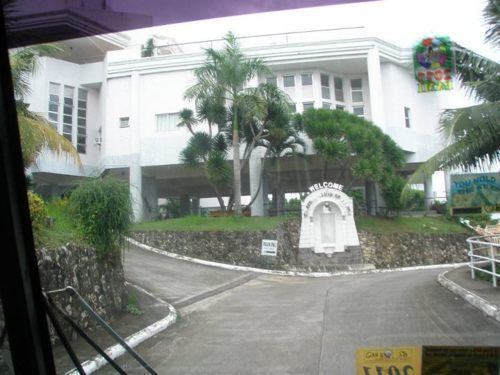
By the time we reached Talavera House of Prayer, the atmosphere had changed. Our noisy little journey had delivered us somewhere far more peaceful than the familiar surroundings of college life. There was greenery, open space, and a welcome sense of distance from the usual demands of the city. The environment seemed particularly appropriate for a group of people who needed both concentration and a considerable amount of divine assistance.
I have always appreciated places that encourage a person to become aware of their surroundings. Talavera had that quality. Its quiet atmosphere offered a contrast to the busyness we had grown accustomed to during our nursing education. There were no hospital corridors to rush through, no clinical duties waiting for us, and no ordinary campus routines to follow. For the next twenty days, our world would become smaller, organised around the purpose that had brought us there.
It was a curious arrangement. We had spent years looking forward to the freedom that would come after graduation, only to voluntarily enter a place where our activities were restricted and our days would be devoted to studying.
Apparently, freedom could wait until we had answered a sufficient number of multiple-choice questions.
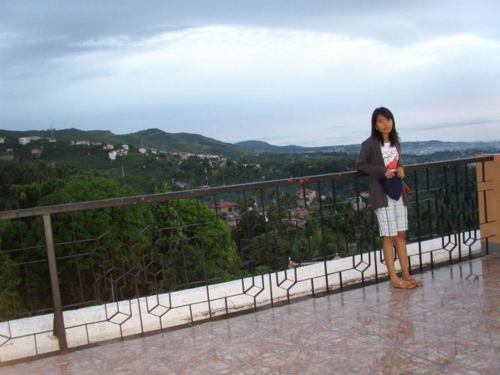
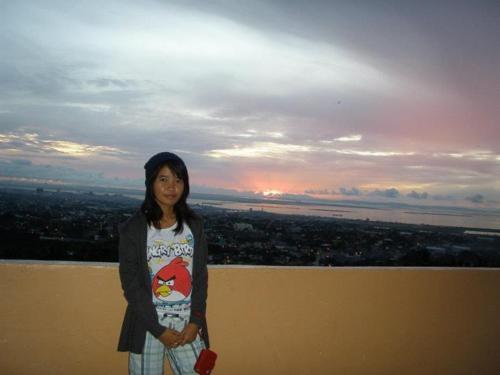
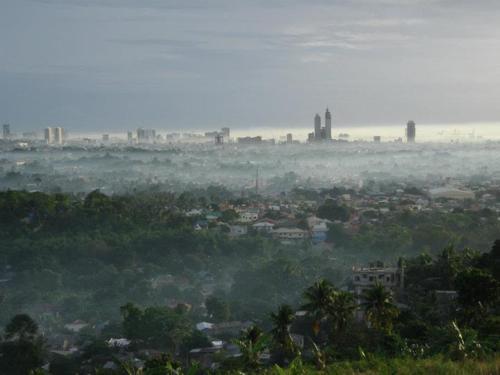
There was something refreshing about waking up in that environment, particularly during the early morning when everything seemed less hurried. One morning, I woke at six o’clock and found myself looking towards Cebu City in the distance. I took a photograph, partly because the view was beautiful and partly because I wanted to remember what the place looked like before the day’s studying began.
From where I stood, the city appeared almost detached from the ordinary concerns of the people living within it. Buildings and streets stretched across the distance, familiar yet strangely removed from my temporary little world at Talavera. Somewhere out there, people were going to work, travelling to school, preparing breakfast, and carrying on with lives that had very little to do with our upcoming examination.
And here I was, beginning another day with my nursing reviewers.
I remember thinking about the distance I had already travelled, although I was not referring to the bus journey. Four years of nursing education had demanded more from me than I could have imagined when I first enrolled. There were endless examinations, assignments, case studies, clinical requirements, and mornings when I would have preferred another hour of sleep to almost anything else in the world.
I had learned to take vital signs, communicate with patients, assist with procedures under supervision, and recognise the responsibilities that came with caring for people. I had encountered clinical areas I enjoyed and others that made me question where I might eventually belong. I had experienced the satisfaction of understanding a difficult lesson and the considerable embarrassment of discovering, usually in front of an instructor, that I did not understand something nearly as well as I thought.
Nursing school had given me knowledge, certainly, but it had also made me acquainted with my limitations.
Now we were expected to bring everything together for a national examination.
There is something rather unreasonable about the human tendency to measure years of work against a few dates on a calendar. I knew that passing the Nursing Licensure Examination would not automatically make me an expert. There would still be experience to gain, responsibilities to understand, and countless opportunities to discover how much I did not yet know. But the examination represented an important professional threshold, and I wanted to cross it.
I wanted to become a Registered Nurse.
I wanted the years of studying, the financial sacrifices, the difficult days, and the encouragement of the people who believed in me to lead somewhere meaningful. I wanted to know that I had done everything reasonably possible to prepare myself.
And, if I am being entirely fair to my younger self, I also wanted to stop worrying about the board examination.
At least until the results were released. But that was a problem for another day.
During those first days, our surroundings became part of the experience. The peaceful atmosphere, the view of Cebu, and the familiar company of our fellow examinees offered a welcome contrast to the pressure of preparing for the examination. It did not remove our worries, but it gave those worries a different setting.
I found myself appreciating the ordinary moments between our responsibilities. There was pleasure in looking out at the scenery, spending time with friends, and knowing that everyone around me was working towards a similar goal. Even our conversations carried a particular mixture of humour and determination. We could complain about the amount of material we needed to remember, laugh about something ridiculous, and return to the seriousness of studying without finding any contradiction in the process.
That, I think, was one of the most memorable things about being young and ambitious. We could take our dreams seriously without being serious every minute of the day.
I also began to appreciate why a place dedicated to prayer had been chosen for our review. Studying remained our responsibility, of course. We could not reasonably expect divine intervention to substitute for understanding nursing concepts, nor would prayer magically identify the correct answer to every examination question. I rather suspect heaven expects nursing students to read their textbooks.
Nevertheless, faith gave the experience another dimension.
There were uncertainties I could address by reviewing my notes, practising questions, and listening carefully during our sessions. Other uncertainties were beyond my control. I could prepare diligently, but I could not know exactly what the examination would contain or predict the outcome with absolute certainty. That distinction was difficult to accept, particularly for someone who wanted reassurance that every effort would eventually be rewarded.
Perhaps that was part of what these twenty days were teaching me. Preparation was something I could influence. The future was something I would have to encounter when it came.
For now, I could study, ask for guidance, encourage my friends, and pray that I would have the presence of mind to remember what I had learned when December 18 finally arrived.
Twenty days seemed both terribly long and frighteningly short.
Long enough to miss the ordinary comforts of home, to become intimately familiar with our reviewers, and perhaps to develop strong opinions about the daily routine. Short enough to remind us that the examination was approaching regardless of whether we felt entirely prepared.
But these were still the beginning days, when the experience retained a sense of novelty and the challenges ahead had yet to unfold. We were adjusting to our surroundings, settling into unfamiliar routines, and discovering how it felt to devote almost every waking hour to one purpose.
I wonder what I would tell that younger version of myself if I could return to the morning when we were waiting for the bus. Perhaps I would remind her to enjoy the company of her friends, to take plenty of photographs, and to avoid worrying quite so much about questions that had not yet been written.
More importantly, I think I would tell her that she did not need to know the outcome of the examination to appreciate how far she had already come.
But perhaps that would spoil part of the experience.
There are certain things we only come to understand because nobody tells us the ending in advance. We have to carry our bags, board the bus, arrive somewhere unfamiliar, and discover what the next few days demand of us.
And so, on that first morning, we were simply a group of aspiring nurses waiting to leave for Talavera House of Prayer. Our reviewers were packed, our ambitions were intact, and our enthusiasm for photographs remained completely unaffected by the seriousness of the occasion.
Somewhere ahead of us were twenty days of studying and two examination dates that seemed to determine everything.
But for the moment, the bus had yet to arrive.
And we still had time for one more picture.
To be continued in Review Days Adventure.
— Just Anj

































Leave a Reply