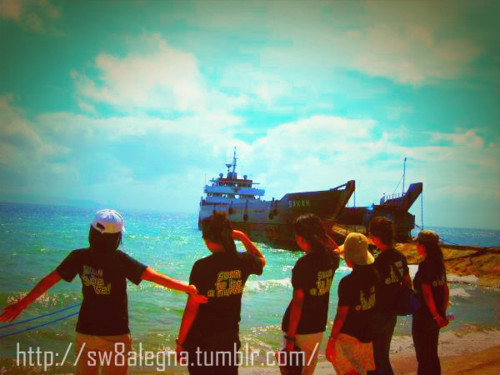
History Class, Heritage Tours, and the Unexpected Education of a Reluctant Historian
There must be a special place in academic history for students who have managed to remain physically present in a classroom while their minds have travelled somewhere considerably more interesting. I suspect I occupied that place rather frequently during history lessons. My eyes would follow the professor, my pen would occasionally move across the paper, and my face would maintain a respectable expression of intellectual engagement. Meanwhile, somewhere behind that carefully arranged appearance, my brain was negotiating the possibility of an early dismissal. It was never anything personal against the heroes, the revolutionaries, or the remarkable people who had shaped our country. I simply struggled to understand why so many of them insisted on being remembered through dates I could never seem to remember.
History and I had what one might politely describe as a complicated relationship. I appreciated its importance in principle, in much the same way that one appreciates the nutritional value of vegetables without necessarily wanting them for every meal. The subject appeared to consist of battles, political developments, economic reforms, and an alarming number of important men whose names sounded suspiciously similar after an hour of lectures. One century would end, another would begin, somebody would declare something, somebody else would oppose it, and somewhere in the middle of all this, I was expected to remember the precise year. My memory, which could retain completely useless conversations and the lyrics of songs I had not heard in years, suddenly became remarkably selective.
By the time I reached my second year of college at the University of San Jose–Recoletos, I had already decided that history was one of those subjects I simply had to survive. I was studying nursing, after all. My imagination was occupied by hospital corridors, clinical duties, anatomy, and the possibility of becoming the sort of competent professional who could answer a clinical instructor’s question without experiencing a minor spiritual crisis. I could understand why I needed to learn about the human body. I was considerably less enthusiastic about learning who had signed a document several generations before I was born.
Then our history professor did something rather inconvenient.
Our professor made the subject interesting.
Instead of allowing the past to remain imprisoned between textbook pages, our lessons began to involve films, dramatic performances, poetry, and activities that asked us to interpret history rather than merely recite it. Suddenly, people who had previously existed as portraits and paragraphs became characters with decisions to make, beliefs to defend, and consequences to face. Historical events began to resemble the complicated business of being human. There were disagreements, ambitions, sacrifices, misunderstandings, and choices that must have seemed perfectly reasonable to the people making them at the time. The more we explored, the harder it became to dismiss the past as a collection of obsolete information.
I had apparently spent years blaming history for being boring when, in truth, I simply had not been introduced to it properly. A rather embarrassing discovery, considering how confidently I had held my previous opinion.
Our professor understood something that many students only recognise once they have left the classroom: information becomes easier to appreciate when it acquires a human face. Films allowed us to imagine the atmosphere of another period. Dramatic presentations encouraged us to consider different perspectives. Writing poetry about historical themes forced us to examine ideas more carefully than a memorised answer ever could. It was an unexpected combination of scholarship and creativity, and although I cannot claim that I suddenly developed an extraordinary appetite for every historical date in existence, I began to understand why the subject deserved more than my habitual yawning.
And then came the heritage tour.
There is a particular excitement associated with leaving the classroom for an educational trip, especially when you are young enough to believe that any academic activity involving a bus automatically qualifies as an adventure. The official purpose may have been historical appreciation, but to a group of college students, the prospect of travelling together, exploring unfamiliar places, and temporarily escaping our usual routine was already sufficient cause for celebration.
Our transportation was the bright yellow school bus of USJ-R, an unmistakable vehicle that seemed almost determined to announce our arrival wherever we went. There was something wonderfully cheerful about it. Perhaps it was the colour, which had all the subtlety of a giant ripe mango, or perhaps it was the knowledge that once we climbed aboard, the day would involve something other than sitting behind a desk. Whatever the explanation, that yellow bus became part of the experience itself.
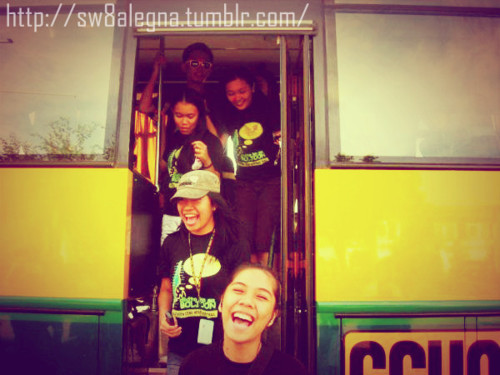
Our beloved yellow USJ-R school bus. Subtle? Absolutely not. Memorable? Without question.
I remember the pleasure of travelling with classmates who had become such a familiar part of my college life. We were students sharing the same academic anxieties, nursing ambitions, and enthusiasm for activities that offered even the slightest opportunity to have fun. There was laughter, conversation, sightseeing, and the inevitable business of taking photographs. I suspect that if somebody had asked us to produce a detailed account of every historical location we visited, our answers might have varied in quality. Ask us who had photographs, however, and suddenly everybody became remarkably attentive.
The wonderful thing about a college trip is that friendship has a way of occupying the spaces between the official activities. The journey matters as much as the destination. A conversation during the bus ride, a ridiculous pose, a shared joke that makes absolutely no sense to anybody outside the group—these are the ordinary details that eventually become extraordinary simply because they cannot be repeated in quite the same way.
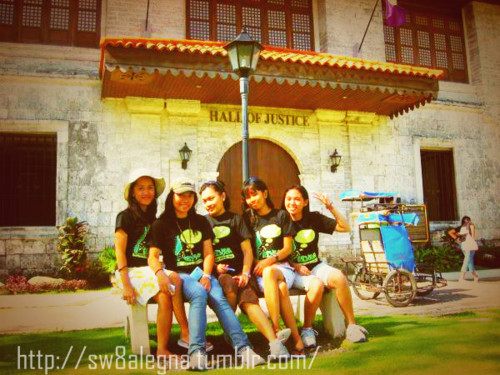
Friendship: the people who made ordinary college days worth remembering.
I have always found it amusing how photographs expose the priorities of the people taking them. We may have been surrounded by places of historical significance, but the camera was equally interested in capturing our faces, our friendships, and our rather enthusiastic expressions of happiness. We stood together, smiled together, and occasionally behaved as though our principal academic requirement was to demonstrate how many different poses a group of nursing students could invent.
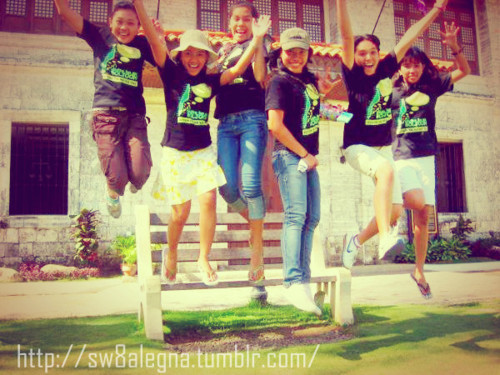
There was no shortage of enthusiasm.
Happiness, college edition. No complicated explanation required.
Among my favourite details from that trip were our matching shirts proudly bearing the words SOON TO BE A NURSE. There was something almost endearing about our confidence. We wore those words as though the future had already agreed to cooperate with our plans. Never mind the examinations still waiting for us, the clinical requirements, the sleepless nights, and the many occasions when our knowledge would be tested against reality. At that moment, we were future nurses, and we had the shirts to prove it.
Looking at that photograph, I cannot help smiling at the optimism of our younger selves. We knew that nursing would demand dedication, but there were still so many things about the profession we had yet to discover. The title we were working towards seemed both distant and wonderfully attainable. We were old enough to dream seriously about the future and young enough to believe that wearing the appropriate T-shirt was an excellent way to announce our intentions to the universe.
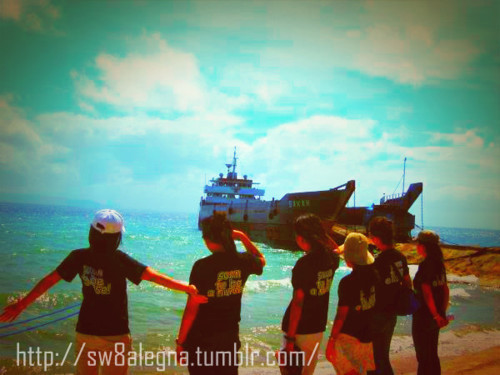
Sightseeing in our “Soon To Be A Nurse” shirts. The ambition was genuine. So was our enthusiasm for photographs.
Our journey also took us to Dalaguete, Cebu, where we had the opportunity to meet a parish priest and take a photograph with him. It was one of those pleasant encounters that added another personal dimension to the trip. We were visiting places associated with heritage and community, but we were also meeting people whose lives continued to be woven into those places.
I suppose this was when I began to appreciate that history does not belong exclusively to museums, monuments, and the names engraved on memorials. It is also present in churches where generations have gathered, in communities that have preserved their customs, and in the familiar landscapes people pass through every day without necessarily considering how much has happened there before them.
A place can appear ordinary to someone who has known it all their life and become fascinating to another person who has just discovered its story. Perhaps that is one of the great pleasures of travelling, even within one’s own province. The scenery may be familiar, the language may be our own, and the roads may lead through towns whose names we have heard since childhood, but there is always something beyond the surface waiting to be understood.
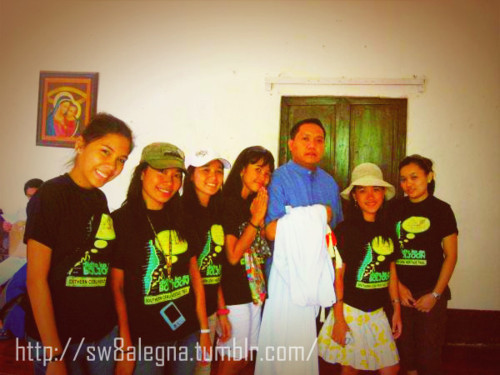
A photograph with the parish priest in Dalaguete, Cebu — another memorable encounter during our heritage tour.
And I must give proper credit to Robert, our photographer during that time. While the rest of us were enthusiastically participating in the adventure, he was preserving evidence that would eventually become more valuable than any of us probably realised. Photography is a curious responsibility. The person behind the camera may believe they are merely recording a group of friends enjoying a day out, but years later, those same images can become the only remaining visual record of a particular afternoon, a friendship, or a version of ourselves that no longer exists in quite the same form.
So, Robert, thank you. Your photographs have survived long enough to remind me of an entire chapter of college life. That is quite an achievement, especially considering how many pictures from those years were probably lost to damaged memory cards, forgotten passwords, and mobile phones that have long since retired from active service.
As I write this, three years have passed since that history class. It is strange how quickly something that once occupied an ordinary place in our weekly schedule can become part of a personal archive. At the time, we were simply students attending a subject, participating in activities, and enjoying an educational tour. We had no particular reason to believe that the day would deserve its own written reflection years later. It was just another college experience, one among many.
Yet looking through those photographs now, I find myself paying less attention to the places in the background and more attention to the people standing beside me.
There they are, my classmates and friends, wearing the expressions of people who have no immediate reason to worry about where life might take them. We were all moving towards something, although none of us could have known exactly how our individual stories would unfold. Some friendships would continue through the years. Others might become occasional greetings, familiar names, or memories of people we once saw almost every day. That is one of the peculiar arrangements of growing older: the people who were once essential characters in our daily routines can gradually become part of the chapters we revisit rather than the days we are currently living.
And perhaps that is why I have become more interested in history than my younger self ever expected.
I used to think the subject was primarily concerned with remembering people who had lived long before us. But there is another kind of history being created while we are occupied with ordinary things. We make it during school trips, in classrooms, while laughing with friends, and on bright yellow buses travelling along provincial roads. Nobody announces that a memory is being made. There is no dramatic instruction to pay attention because this particular moment will matter someday. Most of the time, we are too busy enjoying ourselves to consider that the present is quietly becoming the past.
My history professor may have intended to teach us about the events and people that shaped our country. And that lesson certainly reached me. But years later, the subject has offered me something else: an understanding of why people take photographs, preserve letters, revisit familiar places, and write about seemingly unimportant days.
We are all, in one way or another, trying to remember.
I still cannot promise that I would win a competition involving historical dates. My memory continues to have an unfortunate habit of retaining amusing incidents while misplacing information that might actually be useful in an examination. But I no longer think of history as a subject populated entirely by people who have been dead for centuries.
Because somewhere in a photograph taken three years ago, a younger version of me is standing beside her friends, smiling with the confidence of someone who has no idea how quickly time will pass. Somewhere behind us is a yellow school bus, waiting to take us to the next destination. We are wearing shirts that announce what we hope to become, surrounded by people whose company makes the journey enjoyable.
And for that particular afternoon, our future can remain undecided.
We still have places to visit, pictures to take, and a bus to catch. Funny, isn’t it? I spent so many years trying to stay awake during history lessons, only to discover that one day, I would willingly sit down and write about my own.
From the college archives, with gratitude to the professor who made the past interesting, the friends who made the journey worthwhile, and Robert, who remembered to bring the camera.
— Anj

































Leave a Reply