I sometimes wonder whether the ants outside our house have any idea how insignificant they appear to us. There they are, marching across the ground with extraordinary seriousness, carrying crumbs several times their size, navigating cracks in the pavement, turning abruptly for reasons known only to ants and occasionally creating what looks suspiciously like a committee around one piece of biscuit. I could watch them for far longer than is sensible. They seem terribly busy, as though each journey matters enormously to them even if, from where I am standing, I cannot tell one ant from another.
An ant could spend its entire life working diligently, contributing to its colony and becoming an outstanding member of local insect society, yet I would never know its name. I would not remember its accomplishments. There would be no commemorative plaque honouring the ant that successfully transported a crumb across the garden on an otherwise uneventful Tuesday. Still, it continues. It does not seem particularly concerned about whether future generations will appreciate its contribution.
Human beings, unfortunately, have managed to turn being remembered into a philosophical emergency. We build monuments, preserve photographs, write books, collect certificates, attach our names to projects and leave behind things we hope will continue speaking for us when we no longer can. We want evidence that we were here, that we contributed something and that our existence amounted to more than working, eating, sleeping, paying bills and occasionally searching the house for something we were already holding.
We want our lives to mean something, and buried inside that desire is a question I find both uncomfortable and fascinating: if nobody remembered us after we were gone, would everything we had done become meaningless?
I think the question bothers us because we often confuse significance with permanence. We admire people whose names survive generations and describe remarkable lives as having “left a legacy.” History seems to offer the highest level of approval because being remembered long after death feels like proof that someone mattered. Yet history is not a particularly reliable moral judge. It remembers kind people and cruel people, inventors and conquerors, reformers and tyrants. A compassionate neighbour may disappear from public memory within a generation, while somebody who caused extraordinary suffering can remain famous for centuries.
If remembrance determines value, the cruel ruler wins.
That seems like a fairly serious flaw in the system.
Perhaps being remembered and having mattered are simply not the same thing.
Think about the people who built roads we use every day, planted trees that now shade strangers, taught children who later became teachers themselves or constructed houses where generations of families eventually lived. Most of their names are gone from ordinary memory. Yet their work continues to affect people who will never know who they were.
Someone once planted a tree without knowing who would sit beneath it decades later. Someone encouraged a frightened child and never discovered how far that confidence eventually travelled. Someone made a principled decision at work that prevented a problem nobody else would ever know had been possible. There was no applause, no audience and possibly not even a thank-you, but the consequence still existed.
I sometimes imagine meaning less like a monument and more like a stone dropped into water. The stone disappears almost immediately, but the surface changes. Ripples move outward, overlap with other ripples and eventually become impossible to trace back to where they began. Nobody standing downstream could point to the exact stone responsible for one movement in the water, but the fact that the source has disappeared does not mean it never affected anything.
Perhaps we struggle with that idea because we like proof. Human beings are collectors of evidence. We keep certificates, souvenirs, photographs, cards and little objects from important occasions because memory is unreliable and we know it. I cannot always remember what I ate three days ago, yet part of me apparently expects civilisation to preserve an accurate record of my most meaningful contributions for several centuries.
Optimistic.
Especially considering how confidently families can disagree about what happened at Christmas only two years earlier.
Memory is an unreliable historian. One person remembers an argument, another insists everyone had a lovely evening, and somebody recalls a guest who apparently was not even in the country. If memory is that flexible within a family group chat, perhaps basing the value of an entire life on whether future generations preserve us correctly is asking rather a lot.
The fear of being forgotten probably becomes stronger as we grow older because time stops feeling theoretical. Childhood seems enormous while we are inside it. School years stretch forever. Birthdays take an unreasonable amount of time to arrive. Thirty sounds ancient until it becomes inconveniently close, and then one day you realise the world existed perfectly well before you arrived and appears fully prepared to continue after you leave.
That can be unsettling because each of us experiences life from the centre of our own consciousness. My worries feel enormous to me because I am the one thinking them. My memories matter because I lived them. My plans, relationships, embarrassments and hopes occupy substantial space inside my own life, but billions of other people are experiencing equally detailed lives at exactly the same time.
Somebody is celebrating a birthday tonight. Someone is sitting an examination. A family is preparing dinner. A child is asking a parent a question with no satisfactory answer. Someone has just discovered a new obsession, changed their mind about something important or decided they are in love with a place, a profession or a person. These lives are happening without my knowledge, and from their perspective I may be no more significant than a stranger walking past them at a train station.
I find that strangely reassuring.
It means significance does not require becoming central to everyone.
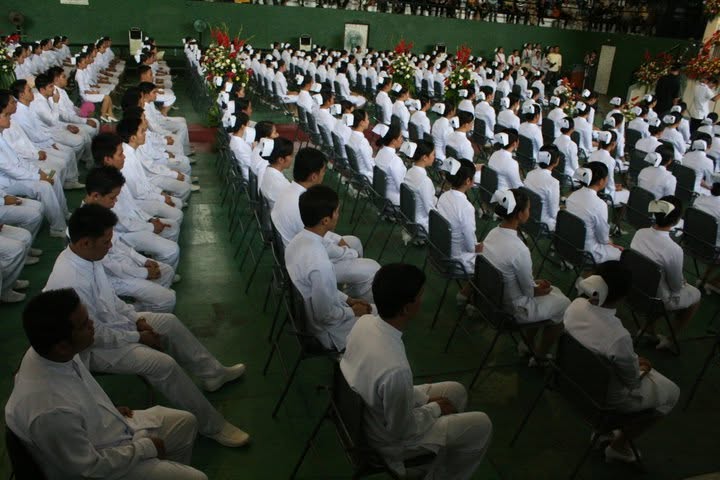
A life can matter intensely within a very small radius. A child may see a parent as one of the most important people in existence. A patient may remember a nurse’s kindness long after forgetting the date of admission, the medication names and the hospital room. A friend may carry one ordinary conversation into a decision made years later. Nobody outside that small chain of people may ever know, but the effect is still real.
I think we underestimate this because we have been taught to associate meaningful lives with extraordinary output. We admire major discoveries, large institutions, bestselling books, prestigious careers and achievements that can be neatly summarised in a biography. There is nothing wrong with ambition directed towards useful things, and society would be poorer if nobody attempted difficult work. But contribution does not become meaningful only when it reaches a large audience.
What about somebody who spends decades raising a family with patience and consistency? What about the person who performs ordinary responsibilities honestly, maintains friendships, keeps promises and makes life slightly easier for the people around them? What about someone whose greatest impact is not becoming famous but becoming dependable?
Those lives may look modest from a distance because familiarity hides importance. Clean water is not impressive until the tap stops working. The person who always remembers, prepares, checks, listens and cares can become almost invisible precisely because their presence makes things run normally.
Care is particularly easy to overlook because so much of it disappears as soon as it is performed. Meals are cooked and eaten. Rooms are cleaned and become untidy again. Conversations are forgotten. Problems are solved and eventually replaced by new ones. It can feel repetitive and unimpressive, yet to the people receiving that care it may have meant safety, belonging or simply knowing they did not have to carry everything alone.
There may never be a plaque for that.
It still happened.
Our obsession with visibility probably makes this harder. We photograph achievements, share milestones and document experiences because we want to remember them and because sharing can connect us with people we love. There is nothing wrong with that. I take more photographs than future historians could reasonably request, so I am in no position to criticise documentation itself.
But sometimes I wonder whether we start confusing a documented life with a valuable one.
If two people visit the same beautiful place and one posts twenty photographs while the other keeps the experience private, the second journey is not less real. If someone gives generously without announcing it, the kindness does not shrink because nobody applauded. If a moment of happiness never becomes a caption, it still happened to the person who experienced it.
Perhaps a useful question is whether we would still value something if nobody else ever knew.
Would the sunset remain beautiful without a photograph? Would generosity still be worthwhile without thanks? Would an achievement matter if there were no congratulations afterwards? I would like to think the answer is yes, even though appreciation is pleasant and recognition can matter. The problem begins only when recognition becomes the evidence we require before believing an experience had value.
Applause is temporary anyway.
Even people whose names survive eventually become compressed. A whole human life gets reduced to a date, a profession, one achievement and perhaps a paragraph in a textbook. Imagine spending eighty years trying to become unforgettable only to discover that future generations remember you primarily because your surname appears in Question 14 of an examination.
That would be an irritating return on investment.
Perhaps remembrance cannot offer the immortality we quietly expect from it.
The things that matter to us often have value precisely because they do not last. A conversation may take ten minutes and change how somebody sees a problem. A family afternoon might never appear in any record yet remain emotionally important for years. A piece of music ends, a meal is eaten, a holiday finishes and a child grows older. Their impermanence does not make them worthless.
Sometimes the ending is part of why we pay attention.
I think about the ordinary objects people leave behind. A handwritten note, an old cup, photographs of relatives whose names slowly become uncertain, books with underlined passages or a drawer containing things nobody knows whether to keep. Years later, someone may open a box and recognise one face, remember half a story and then return everything to storage.
There is something melancholy about that, but also something normal.
We are not permanent residents of history.
We occupy a period of time, form relationships, influence people in ways we rarely understand completely and then the world continues developing beyond us. Accepting that does not have to make life smaller. Perhaps it allows us to stop demanding impossible guarantees from it.
I think the fear of being forgotten is closely related to the fear of being ordinary. We are constantly encouraged to stand out, achieve more, become exceptional and leave something behind. Somewhere along the way, ordinary existence begins to sound like failure.
But why should it?
Why would a peaceful life be unsuccessful because it produces a poor biography? Why should kindness within one family count for less than public recognition? Why should a person need their name on a building before we consider their contribution significant?
Perhaps the mistake is scale.
Helping a thousand people may produce a larger measurable impact than helping one, but the one person receiving help does not experience themselves as a statistic. To them, the effect may be enormous. A small act can remain small in scale while being large in consequence.
I realise that sounds dangerously close to something that belongs on a decorative sunset graphic, but familiar ideas are not automatically wrong simply because they have been abused by inspirational typography.
A life does not need to change the entire world to alter the part of the world somebody else is living in.
If I treat a stranger with dignity during an awful day, they may never remember my name. If I help somebody through a difficult moment, the benefit does not need public documentation before it becomes real. If I create something useful, perhaps it can help another person even if they eventually forget who made it.
Meaning may have more to do with consequence than applause.
We are very good at judging lives through visible achievements. We ask what somebody does for work, which qualifications they have, whether they own a house, where they travelled and how successful they became. Those questions can tell us something, but they leave out entire categories of human character.
We rarely open a conversation by asking whether somebody treats people fairly, whether they apologise when wrong, whether they remained kind while under pressure, whether they stayed curious or whether the people closest to them feel safe around them. Those things are difficult to summarise on a CV, yet they may reveal far more about whether a life was lived well.
An ordinary life lived with integrity may be a greater achievement than an extraordinary life conducted badly.
History does not necessarily record this distinction. History records visibility.
Visibility is not virtue.
That thought gives me some freedom because it means ambition does not have to disappear. I can still want to write, learn, build something useful, become better at my work or leave behind words that somebody might read years from now. I can hope that what I do matters beyond my own immediate life.
I just do not want my worth to depend on whether people I will never meet remember my name.
Future generations may care about completely different things anyway.
The more useful question may be whether my life has value while I am actually living it. Do I have meaningful relationships? Do I act according to principles I genuinely believe in? Do I contribute where I can? Do I remain curious? Do I notice the ordinary things instead of permanently postponing satisfaction until I have achieved something impressive enough to justify it?
Those questions produce less dramatic answers.
Perhaps that is the point.
I think about people whose names I will never know. Somebody planted the tree beside a road I have passed many times. Someone built the wall of an old house. Somebody designed one small improvement that makes a system easier for people today. The original person may be completely forgotten, yet the effect continues.
Perhaps something I do will work like that.
I may help someone who later helps another person. Something I write may influence a thought and then become detached from my name. A professional standard I practise may be copied by someone else and carried forward until nobody remembers where they first saw it. The effect could continue without me receiving any evidence that it did.
I find that possibility less sad than I once might have.
Maybe influence is often anonymous by the time it reaches its furthest point.
A teacher encourages a student. Years later, the student encourages somebody else. A parent models patience, and the child carries some version of it into another relationship. Someone offers support during a difficult year, and that experience changes how the recipient later supports somebody else. Nobody can trace every transfer.
No monument required.
Just one human consequence becoming part of another.
I return to the ants. They are still busy, apparently unconcerned by the philosophical burden I have placed upon them. One has found a crumb. Another is trying to move something far beyond what seems reasonable for its size. Several others are heading in directions that make no sense to me but presumably feature prominently in the colony’s strategic plan.
The colony will not remember them in the way humans remember famous people, but the work still serves a purpose. Food is carried, something is built, the colony continues and no ant appears to stop halfway across the pavement to ask whether future generations will appreciate its contribution.
Human beings are obviously more complicated than ants, so I am not proposing insect philosophy as the final answer to existence. Still, the comparison makes me wonder whether historical recognition is really necessary for an action to matter.
Perhaps it is enough that the action had consequences while it existed.
I do not know whether anything I do will be remembered for generations. Perhaps something I write will survive longer than I expect. Perhaps my work will influence someone in a way I never discover. Perhaps the things I currently consider significant will look completely ordinary to whoever comes afterwards.
Or perhaps my name will eventually disappear altogether.
I cannot control that.
What I can influence is how I live while I am here. I can try to treat people well, take responsibilities seriously, remain willing to learn and leave room for humour, curiosity and ordinary enjoyment. I can stop measuring every year according to whether it produced something impressive enough to display.
There is freedom in accepting that we do not have to become unforgettable.
We can be ordinary and still matter.
We can make modest contributions, enjoy private moments and spend an afternoon doing something that earns no certificate, applause or measurable achievement. Those hours are not wasted simply because nobody else sees them.
Perhaps meaning is created less by becoming permanently remembered and more by participating fully in the life we were given and affecting the people who happen to share it with us.
I look back at the ants and consider leaving a few more crumbs. Then I remember that encouraging an ant colony near the house may not be the wisest practical application of my newly discovered philosophy. There are limits to generosity, and apparently pest management is one of them.
So I leave them to their important business and go back inside.
Nobody has witnessed my philosophical breakthrough. The ants have not expressed gratitude. No audience has formed, no certificate has been issued and tomorrow this entire train of thought may be forgotten by everyone except me.
Still, I enjoyed thinking about it.
Perhaps that is enough for an ordinary afternoon.
And perhaps it is enough for far more of life than we realise.
Because even if every achievement, photograph, possession and carefully preserved record eventually disappears from memory, that does not retroactively cancel what happened. The kindness was still given. The laughter still occurred. The work was still completed. The people we loved were still loved, and the life itself was still experienced by the person living it.
If nobody remembers my name one day, I do not think that means I was never here.
The world will already have been slightly altered by the fact that, for a while, I was.
Still leaving small ripples behind,
Anj





















Leave a Reply