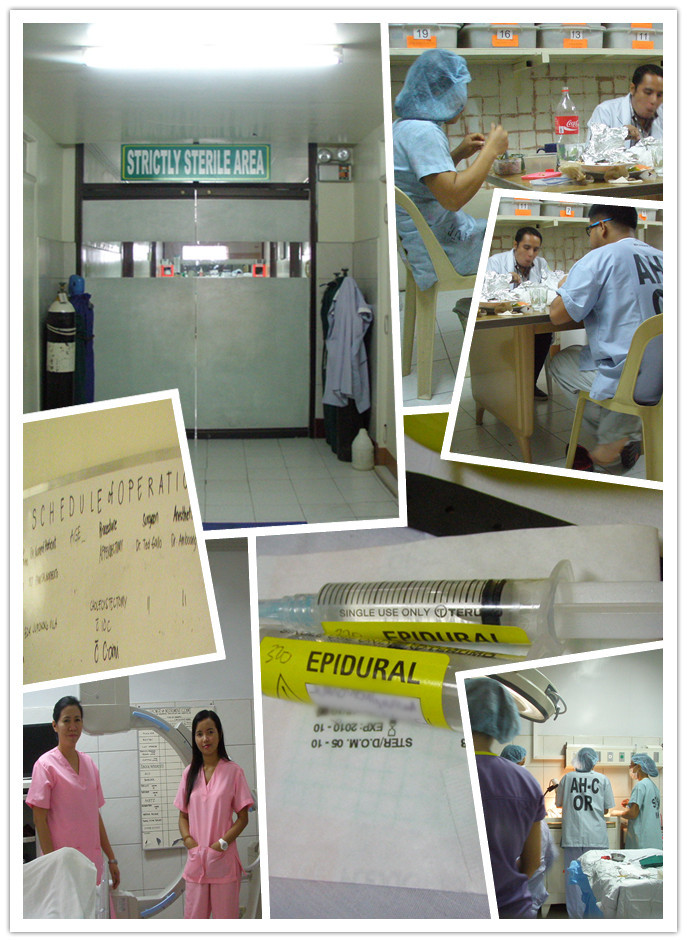
September 6, 2013 | My Last Day in the Operating Room, Where Patience Is Tested, Personalities Collide, and Learning Never Clocks Out
I am beginning to suspect that nursing school deliberately omitted several important chapters from our textbooks. We spent four years studying anatomy, physiology, pharmacology, microbiology, and practically every medical condition capable of appearing in an examination. We memorised nursing interventions, defended our care plans, and learned the importance of therapeutic communication. Yet nobody thought to include a chapter entitled How to Remain Professionally Pleasant When a Surgeon Is Having a Terrible Day. There were no return demonstrations on maintaining a respectable facial expression while someone spoke to you with the warmth of a malfunctioning refrigerator. And certainly nobody prepared me for the extraordinary self-control required to remain courteous when my stomach was growling, my feet were aching, and a doctor appeared to have misplaced his patience somewhere between the operating table and the instrument trolley. Honestly, our curriculum could have benefited from an additional subject: Advanced Survival Skills for Nurses, with practical examinations conducted under pressure.
Today, marks my last day of duty in the Operating Room. I am feeling that familiar combination of relief, satisfaction, and unexpected sadness that seems to accompany the end of every hospital rotation. Part of me is delighted to have survived the long hours, unfamiliar routines, and physical demands of working in a surgical environment. Another part is already thinking about the people I have met and the experiences I will miss. I have only been here for a limited period, yet the department has managed to teach me things I never fully appreciated during my student-nurse years. Some lessons were clinical, others involved communication and teamwork, and a few were delivered through circumstances that tested my ability to remain civilised while thoroughly exhausted.
Only a few days ago, I was describing my rather dramatic encounter with a lead apron during a laminectomy. My shoulders still deserve recognition for their participation in that particular adventure. I had spent hours standing in the Operating Room, feeling increasingly uncomfortable beneath the protective equipment while watching the clock with the desperation of someone hoping it might eventually take pity on her. I missed my expected lunch, became painfully aware of how much I needed a break, and returned home so exhausted that even hunger surrendered to the overwhelming attraction of my bed. At the time, I jokingly described the experience as an unusually early penitensiya. Looking back, I still find it amusing, although I suspect my shoulders would prefer that I stop revisiting the memory.
But the physical discomfort was only one part of what the Operating Room taught me. Beneath the surgical lights, the protective clothing, and the endless attention to procedures, I began to recognise how much responsibility exists in an environment where patients may be unable to communicate for themselves. A person undergoing surgery places considerable trust in the healthcare team. They depend upon doctors, nurses, anaesthesia professionals, and other staff to carry out their responsibilities safely while respecting their dignity. In many circumstances, patients cannot observe what is happening around them or express concerns during the procedure. That makes the responsibility of those caring for them even more significant.
One of the most important lessons I am taking away from this rotation is to be careful about what we say around patients who are sedated or under anaesthesia. We cannot simply assume that a patient is unaware of every sound or conversation taking place nearby. Awareness and the ability to recall events vary according to the type and depth of anaesthesia or sedation, so maintaining appropriate professional communication is essential. I have learned to approach such situations with the understanding that the patient deserves the same respect whether they are awake, asleep, responsive, or unable to participate in the conversation. Their inability to respond should never become an invitation for careless remarks.
I find this particularly meaningful because it challenges the way we sometimes think about communication in healthcare. During nursing school, we were taught to introduce ourselves, explain procedures, obtain appropriate consent, and speak respectfully to patients. Those responsibilities seem obvious when the person is awake and able to answer. But dignity does not depend upon somebody’s ability to speak. A patient should not have to be conscious, alert, or capable of correcting us before we remember that they are a human being deserving of consideration.
Perhaps this is one of the quietest but most important lessons the Operating Room has offered me. Respect is not something we demonstrate only when another person can acknowledge it. It should remain part of our behaviour even when nobody expects a reply. The words we use, the conversations we have, and the way we discuss patients should reflect the professional responsibility entrusted to us. I want to remember that long after the details of individual procedures have become less vivid in my memory.
The rotation has also reminded me that learning opportunities do not always arrive when we feel conveniently prepared for them. Sometimes they appear during an unfamiliar procedure, when somebody asks us a question we cannot immediately answer or when we discover that a task requires more knowledge than we previously realised. In those moments, it can be tempting to remain within the limits of what feels comfortable. Nobody particularly enjoys appearing inexperienced, especially in front of colleagues who seem to know exactly what they are doing. But I am beginning to appreciate that professional confidence develops through the willingness to learn rather than the determination to appear knowledgeable at all times.
I have learned to take opportunities seriously, ask questions when I am uncertain, and observe the experienced members of the surgical team. There is an enormous amount of practical knowledge that cannot be fully appreciated through textbooks alone. We can memorise the names of surgical instruments and understand the principles of asepsis, but being present during actual procedures helps us recognise how those principles are applied. We can study the roles of the circulating nurse and scrub nurse, yet observing their responsibilities within the theatre reveals the importance of preparation, concentration, and communication in a way that printed descriptions cannot always capture.
Of course, I still believe textbooks are important. I spent far too many years studying them to suddenly announce that they have become unnecessary. But I am discovering that a professional education is not a finished collection of facts. It is a foundation that must be developed through continued study, supervised experience, reflection, and an awareness of the limits of our knowledge. Every department has its own demands, and every clinical experience offers another opportunity to understand the profession more deeply.
Unfortunately, some educational experiences arrive without the slightest consideration for our personal comfort. I have discovered that operating theatre nursing can be physically demanding, particularly when procedures continue for several hours. There may be long periods of standing, uncomfortable protective equipment, and times when meal or rest breaks must be carefully coordinated around clinical responsibilities. I understand that patient safety must remain the priority, but I have also learned that nurses need to recognise their own physical needs and communicate appropriately when relief is required. Exhaustion is not proof of professional excellence, and neglecting basic needs should never become something we automatically celebrate.
Still, I cannot deny that certain shifts have tested my endurance. There were occasions when I looked forward to sitting down with an enthusiasm usually reserved for holidays. A proper meal began to seem like an extraordinary privilege, while a visit to the comfort room acquired the emotional significance of a long-awaited vacation. Grabe, pati pag-ihi kailangan pang pagplanuhan! There is something almost comical about entering a profession with ambitions of acquiring advanced clinical knowledge, only to discover that one of the day’s greatest challenges may involve finding an appropriate moment to take a break.
But perhaps those experiences have given me a greater appreciation for the nurses who work in surgical environments every day. The physical demands are only part of their responsibilities. They must understand the procedures, anticipate what may be needed, maintain appropriate standards of infection prevention, and work effectively with colleagues whose roles and personalities can differ considerably. It requires technical competence, organisation, and the ability to remain attentive even when the working environment becomes stressful.
And then there are the doctors.
Ah, yes. The doctors.
I would like to devote a few respectful sentences to this fascinating subject, although I must first clarify that I have met doctors who are professional, approachable, and generous with their knowledge. Some have been excellent teachers, and I appreciate the opportunity to learn from them. But I have also encountered individuals whose manner of communication made me wonder whether politeness had been accidentally omitted from their medical education. Perhaps they were tired, stressed, or concentrating on demanding responsibilities. Perhaps they were simply having a particularly unpleasant day. Whatever the explanation, I discovered that communicating with a difficult colleague requires a kind of composure that was never adequately covered during our lectures on pathophysiology.
I can still imagine a nursing examination asking, “A surgeon appears irritated and speaks abruptly to the nurse. What is the most appropriate nursing response?” I suspect the correct answer would involve remaining calm, communicating clearly, and maintaining professionalism. The examination would almost certainly fail to acknowledge the alternative answer quietly occurring inside the student’s imagination: Doc, huminahon po tayo. Pare-pareho lang tayong nagtatrabaho rito. Unfortunately, internal commentary does not qualify as an approved communication technique, so I have been learning to keep my facial expressions respectable while concentrating on the responsibilities that matter.
I do not want to generalise unfairly. Working in a hospital involves people with different personalities, temperaments, and methods of communicating. A demanding clinical environment can place considerable pressure on everybody involved, and occasional frustration does not necessarily define someone’s character. However, stress should not become an excuse for disrespectful behaviour. Professional communication is important not only because it makes the workplace more pleasant, but also because clear and respectful exchanges contribute to patient safety. Nurses must feel able to raise concerns, ask questions, and communicate important information without unnecessary intimidation.
I am beginning to understand that dealing with difficult personalities requires judgement rather than simply enduring whatever happens. There are moments when remaining calm and choosing our words carefully can prevent an already stressful situation from becoming worse. There are also circumstances when inappropriate behaviour needs to be addressed through the proper channels. I hope that as I gain professional experience, I will become better at distinguishing between an isolated moment of frustration and behaviour that should not be accepted as an ordinary part of hospital culture.
Still, I must admit that the occasional clash of personalities has provided me with several opportunities to practise patience. If patience were measured through internal monologues, I would probably qualify for an advanced certificate by now. I have learned that sometimes the wisest response is to listen carefully, clarify what is required, and avoid allowing somebody else’s mood to dictate my own behaviour. There is little value in transforming a stressful clinical situation into a competition over who can become more irritated. Besides, the patients deserve our attention far more than our egos deserve the satisfaction of winning an argument.
What surprised me most about the Operating Room, however, was not the physical demands or the occasional difficult interaction. It was the sense of camaraderie that gradually developed among the people working there. Before beginning this rotation, I expected to learn about surgical procedures, equipment, and the responsibilities of theatre nursing. I did not anticipate how much I would appreciate the ordinary interactions with the doctors, nurses, and other members of the healthcare team.
There is something meaningful about working alongside people whose responsibilities differ from our own but contribute towards the same purpose. In the Operating Room, no single professional works entirely independently of everybody else. The surgeons, anaesthesia team, nurses, and other staff have distinct roles, yet effective care depends upon their ability to coordinate their efforts. Observing that cooperation helped me appreciate how much of healthcare relies upon relationships between colleagues, not merely individual expertise.
As the days passed, unfamiliar faces gradually became more familiar. I began recognising the working habits of different people, becoming more comfortable with the routines, and appreciating the small exchanges that make a demanding environment feel less intimidating. There were conversations, questions, moments of humour, and opportunities to learn from colleagues whose experience far exceeded mine. Not every interaction was perfect, naturally, but the overall experience reminded me how much difference supportive professional relationships can make.
I think this is one of the reasons I become sentimental whenever a rotation ends. I arrive in a new department feeling uncertain, spend the first few days trying to understand the environment, and gradually develop a sense of familiarity with the people around me. Then, just as everything begins feeling more comfortable, the schedule announces that it is time to move somewhere else. Honestly, hospital rotations have an unfortunate talent for making people appreciate a place precisely when they are preparing to leave it.
Perhaps that is part of their value. Each department introduces us to different clinical experiences and people, expanding our understanding of the profession beyond the environment in which we first became comfortable. We learn to adapt, communicate with unfamiliar colleagues, and recognise that nursing offers numerous areas in which we may eventually develop specialised expertise. I am still interested in intensive care and haemodialysis, but my Operating Room experience has given me another perspective on the knowledge and skills required within a hospital.
It has also made me think about the variety of people we encounter in nursing. Our profession brings us into contact with individuals whose personalities, circumstances, beliefs, and experiences may be very different from ours. Some people are cheerful and easy to communicate with. Others may be frightened, frustrated, demanding, withdrawn, or unable to express themselves clearly. We meet people during moments of happiness and recovery, but also during uncertainty, illness, and loss. We work alongside colleagues whose approaches may differ from our own, and we care for patients whose needs require us to look beyond personal preferences or assumptions.
I once heard someone describe nursing as a profession centred on people, and I think I am beginning to understand what that means. The clinical knowledge matters enormously, of course. We need to understand disease processes, treatments, medications, and the responsibilities involved in safe patient care. But much of our work takes place through interactions with human beings, and no two people respond to illness, fear, uncertainty, or professional responsibility in exactly the same way.
We cannot expect every patient to be cheerful, every family member to remain composed, or every colleague to possess the personality we would personally prefer. Healthcare involves people whose lives are complicated, and those complications do not disappear at the hospital entrance. A good nurse needs the ability to recognise individual circumstances while maintaining appropriate professional standards. Compassion should not depend upon whether a patient is easy to care for, and respect should not be reserved for people whose personalities resemble our own.
That is a lesson I hope to carry with me throughout my career.
I have also begun to appreciate that professional relationships can teach us something about ourselves. A difficult interaction may reveal that we need greater patience or more confidence in communicating concerns. A supportive colleague may encourage us to ask questions we would otherwise hesitate to raise. A patient’s experience may remind us that clinical routines, however familiar to healthcare professionals, can be deeply significant to the person receiving care.
In that sense, the people we encounter become part of our education.
Not because they exist to teach us lessons, but because caring for and working with others continually challenges the assumptions we bring into the profession. We learn about diseases and procedures through formal education, but our understanding of responsibility, compassion, and professional conduct continues developing through everyday experience.
I think that is why the idea of lifelong learning appeals to me.
When I was a nursing student, I imagined graduation as the end of an exhausting academic journey. I wanted to finish my clinical requirements, pass the licensure examination, and finally enjoy the satisfaction of calling myself a Registered Nurse. I certainly did not anticipate how quickly I would discover new things I needed to learn after obtaining my licence. Apparently, nursing has no intention of allowing me to retire from studying simply because I have survived university.
How terribly inconsiderate of the profession.
But perhaps that is one of the things that makes it worthwhile.
Healthcare knowledge continues to develop, and professional practice requires us to remain informed, reflective, and willing to improve. We cannot depend indefinitely upon everything we learned during college, nor should we assume that experience automatically makes every decision correct. There will always be unfamiliar situations, updated practices, and opportunities to develop our understanding.
Even experienced nurses need to continue learning.
And I find that strangely reassuring.
It means I do not have to interpret every unanswered question as evidence that I am inadequate. I can acknowledge that I am still developing professionally and approach unfamiliar situations as opportunities for appropriate learning. I can respect the knowledge of experienced colleagues while recognising that they, too, continue refining their practice. Most importantly, I can remain curious about the profession without expecting myself to possess every answer immediately.
Of course, I would appreciate it if some of those learning opportunities could occur while I am comfortably seated and properly fed.
But I suspect the Operating Room has already demonstrated that my preferences are not the department’s highest priority.
As this rotation comes to an end, I find myself considering which memories will remain most vivid. I will probably remember the heavy lead apron, the missed lunch, and the occasion when my shoulders nearly declared independence. I will remember the challenge of communicating with different personalities and the effort required to remain professional when circumstances became frustrating. I will remember the operating theatre routines, the procedures I observed, and the satisfaction of understanding something that initially seemed unfamiliar.
But I think I will also remember the people.
The colleagues who shared their knowledge, the nurses who helped me become comfortable with the department, and the healthcare professionals whose work demonstrated the importance of coordination and responsibility. I will remember how unfamiliar relationships gradually became part of my ordinary duty experience and how quickly a department can begin feeling comfortable once we understand the people and routines within it.
I am grateful for that unexpected companionship.
I am also grateful for the patients whose care reminded me that technical expertise must always be accompanied by respect. It is easy to become absorbed in learning instruments, procedures, and the details of surgical nursing, but the purpose of all that knowledge remains the person receiving treatment. Every patient deserves safe care, dignity, and consideration, regardless of whether they can speak, move, or acknowledge the people working around them.
That may be the most important lesson I am taking with me.
Not the weight of the equipment, the personalities of the doctors, or the physical demands of the work, although those experiences have certainly contributed to my education. Rather, I want to remember that professionalism is demonstrated through the way we behave when our responsibilities become difficult, when someone cannot speak for themselves, and when remaining respectful requires deliberate effort.
These are not lessons that belong exclusively to the Operating Room. They will remain relevant wherever my nursing career eventually takes me.
Today, I am leaving this rotation with a mixture of happiness and reluctance. I am pleased to have completed another part of my hospital experience and grateful for the knowledge I have gained. I am also a little sad to leave the people and routines that have become familiar during these past days. But another department will bring new responsibilities, new colleagues, and undoubtedly another collection of experiences that I cannot yet predict.
That is becoming a familiar pattern in my nursing journey.
Just when I begin thinking I have finally understood one environment, the schedule sends me somewhere else and reminds me that there is still an enormous amount to discover.
Perhaps I should stop expecting the profession to provide a convenient finishing line.
After all, there is no final chapter in learning how to care for people. There will always be more knowledge to acquire, more skills to refine, and more opportunities to examine the kind of nurse I am becoming.
I began this rotation expecting to learn about surgical nursing. I am leaving with a better understanding of the operating theatre and a greater appreciation for the professional and human responsibilities involved in caring for patients. Along the way, I discovered that my shoulders are less enthusiastic about prolonged exposure to heavy equipment than my brain is about learning new procedures, and that my patience can be tested by both physical discomfort and the occasional difficult colleague.
I also discovered that the same department capable of exhausting me could introduce me to people whose companionship I would genuinely appreciate.
What a strange and wonderful profession this is.
I am grateful to God for another opportunity to learn, for the guidance of the people I have worked with, and for the chance to continue developing as a nurse. I know there will be difficult days ahead, and I do not expect every future rotation to become a pleasant collection of memories. But I hope to remain open to the experiences that help me become more knowledgeable, responsible, and compassionate.
As for the Operating Room, thank you for the lessons, the laughter, the challenges, and the unexpected friendships. Thank you for reminding me that respect matters even when patients cannot respond, that communication requires patience, and that professional education continues long after graduation.
And to the lead apron that accompanied me through one particularly memorable operation, I would like to extend my sincerest gratitude for the important protection it provided.
I would also like to request that we spend some time apart.
My shoulders and I believe this would be best for everyone concerned.
As I prepare for the next chapter of my nursing journey, I can only imagine what unfamiliar responsibilities and personalities are waiting to introduce themselves. Perhaps there will be challenging procedures, inspiring colleagues, and another doctor whose communication style requires the patience of a saint.
Whatever happens, I hope I continue approaching the profession with curiosity, humility, and the willingness to learn.
Because if these past few weeks have taught me anything, it is that nursing does not end when we finish a shift, complete a rotation, or receive our professional licence. The work may eventually become familiar, but the responsibility to keep improving remains.
And perhaps that is exactly why I chose it.
Once a student of nursing, always a student of the profession. Charvakee!
September 6, 2013 — the final day of my Operating Room rotation, with grateful appreciation for the people, lessons, and experiences that made it memorable.
— Just Anj, RN, a lifelong learner whose shoulders have officially requested annual leave.


































Leave a Reply