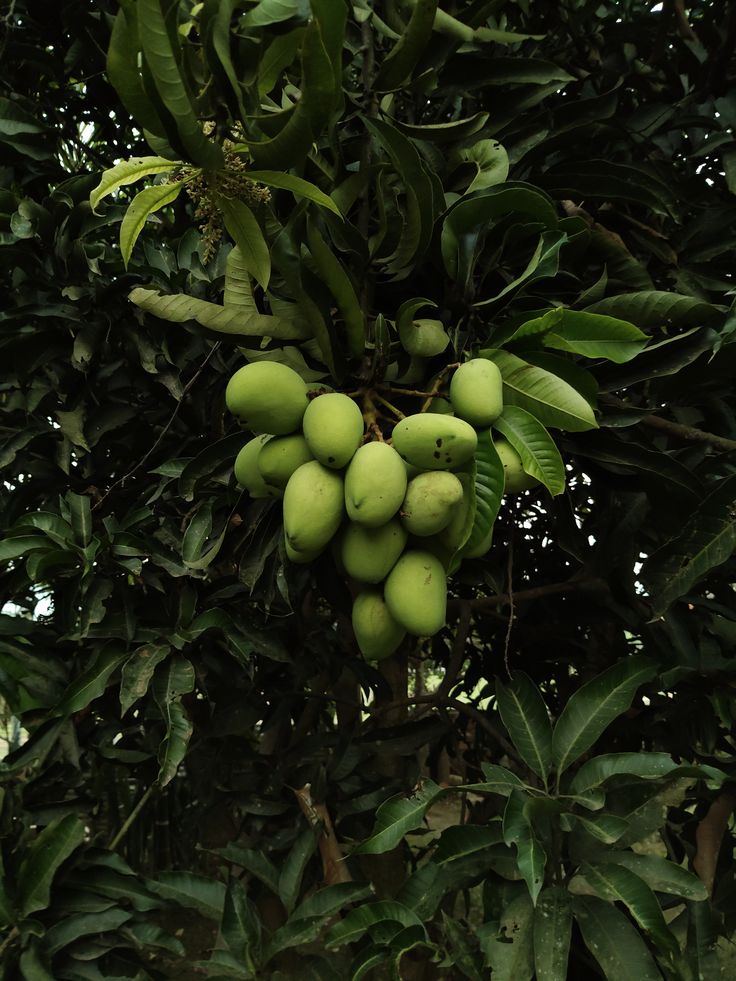
The mango tree had absolutely no intention of cooperating with my plans. Its branches were high, its fruit looked promising, and the distance between where I stood and where I wanted to be seemed unnecessarily ambitious. I examined the situation with the seriousness of a civil engineer inspecting a questionable bridge. There was the tree, there were the mangoes, and there was me, a person whose enthusiasm considerably exceeded her qualifications in agricultural engineering.
From the ground, the solution looked simple. Someone needed to climb the tree, reach the appropriate branch and retrieve the fruit. Unfortunately, the tree had provided no staircase, no handrail and certainly no written assurance that the experience would conclude favourably. The sensible answer was obvious: leave the mangoes alone, find some elsewhere or wait until the fruit became easier to reach. Almost every practical explanation I could construct suggested that the mangoes were not worth the trouble.
And yet, there was something wonderfully irritating about being told that something should not be attempted simply because it was inconvenient. I think childhood often begins with this disagreement between what adults consider sensible and what children consider interesting. A child sees a puddle and imagines an opportunity, while an adult sees wet clothes, muddy floors and laundry. A child looks at a wall and wonders what might be on the other side, while an adult notices the height, the condition of the ground and the considerable inconvenience of explaining an avoidable accident.
Both perspectives contain something useful. Curiosity without caution can become reckless, but perhaps adulthood sometimes preserves the caution while slowly misplacing the curiosity. We become so efficient at identifying reasons not to do things that imagination begins consulting the risk assessment before an idea has even had time to become interesting.
Caution matters. There is wisdom in recognising danger, considering consequences and refusing risks that serve no meaningful purpose. Sometimes a wall really is just a wall, and climbing it would be a remarkably poor decision. But not every obstacle is the same. Some are created by genuine danger, while others are created by unfamiliarity, embarrassment or fear disguised as practicality.
There are opportunities we avoid because somebody might think we are foolish. There are questions we never ask because we fear sounding uninformed, subjects we refuse to study because we think we are too old or too inexperienced, and ambitions we dismiss because they do not resemble the life we have already planned. We call these decisions sensible, and sometimes they are. Other times, practicality is simply fear wearing respectable clothes.
I find the word sensible interesting because it sounds mature and almost impossible to challenge without appearing irresponsible. A sensible decision may be one supported by evidence, shaped by financial limitations or designed to protect important responsibilities. But sometimes sensible simply means familiar, socially approved and unlikely to attract criticism. A decision may feel safe because everybody understands it, not because it is necessarily the best one.
This becomes obvious whenever somebody expresses an ambition that does not fit the expectations around them. A young person mentions a career their family did not imagine. A friend decides to learn something new. Someone proposes a different way of solving a familiar problem. The first response is often not curiosity but concern: “Are you sure?” “Is that practical?” “What if it does not work?” “Why not choose something safer?”
Those questions are not automatically unreasonable. People who care about us may recognise difficulties we have missed, and advice can protect us from mistakes we are too excited to see. But advice becomes less useful when its only purpose is to eliminate uncertainty. Every meaningful opportunity contains some uncertainty, and if certainty becomes the entry requirement, very little in life will ever qualify.
I think many useful changes begin with somebody asking a question that everyone else has stopped asking. Why are we doing it this way? Is there another method? Does this rule still serve its original purpose? Could this process work better? These questions can be irritating because they disturb routines that have become comfortable.
“Because we have always done it this way” can explain history, but it does not automatically prove continued usefulness. Sometimes traditions and procedures deserve preservation because they still work. Experience matters, and established methods may contain wisdom that a newcomer cannot immediately see. But experience becomes less useful when it turns into immunity from examination.
A procedure should survive questioning because it remains effective, not because everybody has become accustomed to it. That applies in workplaces, schools, families and communities. A teacher may discover a better way to explain a difficult topic, a family may recognise that an inherited expectation no longer fits their circumstances, and a team may realise that a process everyone has tolerated for years can actually be improved.
Questioning something does not necessarily mean disrespecting what came before. Sometimes it means caring enough about the purpose to ask whether the current method still serves it well. Improvement does not always require declaring the old way foolish. Circumstances change, resources change and new information appears.
This is where rebellion becomes more interesting to me. I do not mean rebellion for the pleasure of refusing. There is nothing especially admirable about rejecting advice simply because somebody older, more experienced or more conventional offered it. That is still allowing the expectation to control the decision, only in reverse.
Thoughtful rebellion is quieter. It examines the rule, understands the reason behind it and then decides whether it still makes sense. Sometimes the answer will be yes. Sometimes it will be no. Genuine independence requires being able to agree without surrendering judgement and disagree without assuming superiority.
I think the smallest rebellious sentence may simply be, “Could we try another way?” It is polite, almost harmless, and yet it can disturb years of unquestioned habit. People may react defensively because familiar routines create a sense of competence. We know what to do, how things work and where we belong inside the process.
When somebody suggests another approach, it can feel like criticism of everything that came before. But a better method existing now does not mean everyone was foolish then. The earlier method may have suited earlier circumstances, or perhaps nobody had enough reason to question it before. Improvement is not always an accusation.
I think this matters in education as well. Memorisation has an important role because some facts, formulas and foundational knowledge need to become familiar before deeper understanding can develop. But learning becomes richer when students are also allowed to ask why something works, what evidence supports it and what happens when real observations do not match the expected answer.
A question can be inconvenient. A teacher may have limited time, a professional may be managing several responsibilities and a parent may simply be exhausted when a child asks “why” for the fourteenth time. Still, questions can reveal whether our reasoning is actually as strong as we assume. If we cannot explain why something matters, perhaps irritation is not the most useful response.
I also think practicality has become too involved in the way we judge personal interests. Someone wants to write a book, but perhaps nobody will read it. Someone wants to learn an instrument, but they may never become particularly talented. Another person wants to paint, study history or learn a language, and immediately the activity is asked to justify itself through income, qualifications or some measurable achievement.
Why must every hobby become a business before we consider it worthwhile? Why must every interest produce a certificate? Why does enjoyment suddenly need evidence?
A person can learn piano without becoming a professional musician. They can write stories no publisher ever sees, plant flowers without developing a commercial garden and read books simply because reading gives them pleasure. These things may never produce money or status, but they can still enrich a life.
Perhaps we have become too suspicious of activities that are valuable only because we enjoy them. The modern world is very fond of turning hobbies into side hustles, interests into personal brands and curiosity into productivity. There is something almost rebellious now about remaining an amateur on purpose.
Adults can find this particularly difficult because incompetence becomes more embarrassing with age. As children, being a beginner is normal. We learn to read, count, ride bicycles, play games and make mistakes publicly because nobody expects mastery at the beginning. Adults, however, often prefer doing things they already know how to do.
Competence feels dignified. We like knowing what we are doing. The problem is that staying only where we feel competent gradually narrows what we are willing to explore.
Learning something new requires temporary awkwardness. We may ask basic questions, make obvious mistakes, need help and feel slower than people with more experience. Pride rarely enjoys this stage, but perhaps tolerating beginnerhood is one of the conditions of continued growth.
Confidence often develops after action rather than before it. We imagine confident people attempt difficult things because they already believe they will succeed, but many probably begin while uncertain. They prepare, understand the risk and move forward because the opportunity matters enough to justify trying.
If we insist on feeling completely ready before beginning, we may spend years waiting for an emotion that was never supposed to arrive in advance.
I find that particularly relevant to professional growth. Someone considering further study may wonder whether they are capable. A person offered greater responsibility may question whether they know enough. A student entering their first placement may feel unsettled by the distance between learning something in theory and doing it in real life.
Those concerns can be reasonable and should not be dismissed. Preparation, supervision and realistic assessment matter. But uncertainty does not always mean incapacity. Sometimes it simply means we understand that the next stage will require us to learn.
People who care about us may also discourage unfamiliar opportunities because they are afraid of watching us fail. A parent worries about an uncertain career, a friend questions a project because rejection is possible, or a relative prefers a familiar path because it feels safer. Their caution may come from affection.
But protecting someone from every possible disappointment also protects them from discovering what they might be capable of doing. The aim cannot be to remove all risk. It should be to understand which risks are reasonable, which consequences can be managed and what preparation might make the attempt wiser.
A failed attempt is not automatically proof that the decision was foolish. Outcomes matter, but they are not the only measure of whether a choice was responsible. Someone can make a thoughtful decision and still experience disappointment.
I wonder how many opportunities are lost because embarrassment feels more threatening than failure itself. Someone wants to join an activity but imagines being the worst person there. Someone wants to express an opinion but worries others will disagree. Someone wants to submit work but hesitates because rejection would make the attempt visible.
The audience in our imagination is often far more attentive than the real one. We picture people discussing our mistakes, remembering them and drawing permanent conclusions. Meanwhile, those same people are probably busy thinking about their own responsibilities, bills, plans, embarrassing memories and unanswered messages.
Someone may notice our mistake and then continue with their day. We, however, may preserve it for ten years and occasionally replay it at 2 a.m. with enhanced commentary.
That seems like a rather unfair distribution of attention.
Perhaps we should allow ourselves to be imperfect without turning every mistake into an identity. There is a difference between learning from embarrassment and building a permanent residence inside it.
The same idea applies to regret. We sometimes refuse unfamiliar opportunities because we are afraid we will regret trying, but not trying can create its own form of regret. There is the application never submitted, the question never asked, the story never written and the opportunity dismissed before it received serious consideration.
Declining something can absolutely be the wisest choice. Not every open door deserves to be entered. But perhaps the useful question is whether we are saying no because the opportunity conflicts with our values and responsibilities, or because uncertainty itself feels intolerable.
From the outside, those decisions can look identical.
The reason underneath them may be completely different.
I find it interesting that society often celebrates unconventional choices only after they succeed. The entrepreneur becomes visionary, the artist becomes original and the researcher becomes brave enough to challenge assumptions. Before success, however, those same choices may have been described as impractical, risky or slightly foolish.
Outcome changes the vocabulary.
That creates a problem because originality receives the most admiration after the difficult part is over. Before success, when encouragement might actually matter, people are often told to be realistic.
Of course, unusual ideas are not automatically good ideas. Some are poorly considered, unsupported by evidence or simply impractical. Being different is not proof of wisdom. The question should not be whether something is conventional or unconventional, but whether it makes sense and whether the evidence supports trying it.
This is why I do not want to romanticise rebellion. Rules can protect people. Experience can prevent expensive mistakes. Tradition can preserve important things, and sometimes the person advising caution is completely correct.
Rejecting a rule merely because it exists is no more independent than following it automatically. One person obeys because the rule is there, while the other refuses for exactly the same reason. Neither has necessarily examined whether the rule deserves obedience.
Real independence is more demanding. It requires listening carefully, weighing evidence, understanding consequences and then choosing without allowing either familiarity or novelty to do all the thinking for us.
Life would be easier if there were one permanent instruction. Always be brave. Always be cautious. Follow tradition. Challenge convention. Trust experience. Think independently. Each of these contains wisdom, but none works everywhere.
Caution without courage can become paralysis. Courage without judgement can become recklessness. Tradition without examination can preserve unnecessary limitations, while independence without humility can become arrogance. Wisdom may be less about choosing one principle forever and more about knowing which one a particular situation requires.
Which brings me back to the mango tree.
The fruit is still above me, the branches are still inconveniently high and the ground has not become any softer simply because I have developed a philosophy about courage. I could climb recklessly to prove that fear does not control me, but that would merely allow pride to make the decision. I could also abandon the possibility immediately because the most obvious approach looked difficult.
Neither response seems especially wise.
Perhaps there is another way. A safer method, someone with more experience, a tool, a longer stick, or simply the patience to wait until the fruit becomes easier to reach. The point is not that every desirable thing must be pursued immediately. It is that the first obstacle does not always deserve the final word.
I like that because it leaves room for curiosity without requiring foolishness. We can question assumptions while respecting genuine limits. We can seek unfamiliar opportunities without neglecting responsibilities. We can refuse to live entirely according to an approved pattern without pretending every unusual decision deserves admiration.
The small rebellion worth practising, then, is not against common sense itself. It is against the moments when fear borrows common sense’s clothes, when unfamiliarity is mistaken for danger and when enjoyment is forced to justify itself through productivity before we permit ourselves to pursue it.
As for the mangoes, I eventually accepted that the tree was under no obligation to rearrange its branches for my convenience. I could admire the fruit without making an unreasonable attempt to obtain it. That was not defeat, and it was not cowardice. It was simply the recognition that some things are worth pursuing differently and some are not worth the trouble at all.
The sensible person does not necessarily abandon the mango because it hangs beyond immediate reach. Nor do they climb recklessly simply to prove determination. Perhaps the sensible person looks again, considers the alternatives and asks whether there might be another way.
I walked home without a mango, which was a disappointing result from an agricultural perspective but a surprisingly satisfying one philosophically. I had gone outside expecting fruit and returned with an argument about what sensible behaviour actually means. It was not an especially useful exchange if one happened to be hungry, but perhaps not every afternoon needs to produce the thing we originally intended.
Sometimes the more useful discovery is that the safest answer and the wisest answer are not always the same thing. The trick is learning when caution is protecting us and when fear has simply become very good at sounding sensible.
Still checking whether fear borrowed the sensible voice,
Anj



























Leave a Reply