October 2012 | Of an Aspin Named After Chocolate, His Extraordinary Patience, and the Unfortunate Discovery That Not Every Human Deserves a Dog
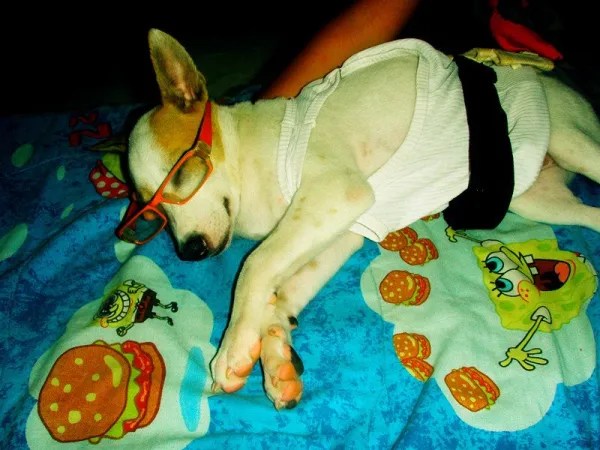
If patience were an Olympic sport, I am convinced that my dog Choco would have brought home a gold medal for the Philippines. He would probably have accepted the medal without making a fuss, allowed somebody to place an enormous ribbon around his neck, and then proceeded to investigate whether the ceremony included complimentary food. Unlike most human beings, who become considerably less agreeable when inconvenienced, Choco possesses an almost suspicious tolerance for the peculiar behaviour of my family. We dress him up, place glasses on his face, and occasionally attempt to improve his appearance with accessories that no self-respecting canine would have requested. Yet he remains remarkably cooperative, looking at us with the expression of someone who has accepted that the people responsible for feeding him are also slightly ridiculous.
His name is Choco, courtesy of my cousin Vince, who apparently decided that naming a dog after chocolate was an excellent idea. I must admit that the name suits him wonderfully. There is something sweet about his personality, although I suspect the comparison becomes less impressive when one remembers that chocolate is not something dogs should actually eat. Still, the name has stayed, and I cannot imagine calling him anything else. He is our Aspin, short for Asong Pinoy, the familiar Filipino dog whose value has absolutely nothing to do with possessing an expensive pedigree or a name that requires several attempts to pronounce correctly.
I have always had a particular affection for Aspins. They are so familiar in Filipino communities that people sometimes overlook how much personality each one possesses. Some are energetic and mischievous, others are cautious around strangers, and a few seem to have appointed themselves official security guards of the entire neighbourhood. Choco, however, has chosen a considerably more peaceful occupation. He is the resident companion, enthusiastic food inspector, occasional fashion model, and remarkably patient participant in whatever entertainment my family has organised at his expense.
Whenever I am home, Choco likes to remain close to me. I find that incredibly sweet because dogs have a way of making their affection obvious without requiring elaborate conversations. He does not need to ask how my day went or offer an encouraging speech when I appear tired. His presence is enough to make the house feel a little warmer. There is something reassuring about being accompanied by an animal who appears genuinely pleased that you have returned, particularly after spending time away in the city. Human beings have a remarkable talent for complicating affection with expectations, misunderstandings, and occasional arguments. Dogs seem perfectly satisfied with companionship, familiar routines, and the possibility of being offered something delicious.
Speaking of delicious things, Choco has an extraordinary enthusiasm for food. He approaches mealtimes with the conviction of someone who believes every edible item deserves serious consideration. My other dog, Brownie, is considerably more particular about what he finds acceptable, which makes their contrasting personalities rather entertaining. Brownie appears to possess culinary standards, while Choco seems willing to approach almost any offering with optimism. I sometimes wonder whether he considers himself a professional food critic or whether his enthusiasm simply reflects the understanding that meals are among life’s most dependable pleasures.
Of course, his willingness to eat almost anything means we need to be sensible about what we offer him. Dogs cannot safely eat everything that humans enjoy, regardless of how enthusiastically they express an interest. But Choco’s appetite remains one of the qualities that makes him so amusing. He has very little interest in appearing sophisticated when food is involved, and I suppose there is something refreshingly uncomplicated about that. He knows what he likes, appreciates the opportunity to eat, and seems entirely unconcerned about whether his preferences meet anybody else’s expectations.
His tolerance for our family photography sessions is another matter altogether. We have occasionally dressed him in clothes, placed glasses on him, and experimented with playful accessories, all while finding his remarkably calm behaviour entertaining. Looking back, I hope he was genuinely comfortable during those moments, because animals deserve to have their limits respected even when we find their appearance amusing. At the time, however, we were fascinated by how patiently he tolerated our attention. He seemed to possess the resignation of a creature who understood that arguing with an entire household of enthusiastic humans would require more energy than the situation deserved.
I sometimes imagine what Choco would say if he could speak. Perhaps he would politely request that we stop interfering with his personal appearance, or perhaps he would negotiate additional food in exchange for future photographic cooperation. I suspect he would also have a few observations about the strange priorities of human beings. We become excited about perfectly ordinary things, spend unnecessary amounts of time arranging photographs, and occasionally interrupt a dog’s comfortable afternoon because somebody has discovered a pair of glasses that might look funny on him. If Choco possessed the ability to write a diary, I imagine his entries would be deeply entertaining and only moderately complimentary towards the family.
Yet beneath all our teasing and laughter, Choco is genuinely loved. He has become part of the familiar atmosphere of home, one of those little presences that we gradually stop noticing precisely because they have become so important to our ordinary routines. When I return, I expect to see him. When we gather as a family, he is part of the surroundings. His habits, appetite, and gentle personality have become details I associate with being home. I suppose that is how animals become members of a household. They enter our lives as pets, but eventually their absence would change something about the place itself.
Last week, however, I received a message that made me realise just how much Choco means to me.
I was in the city when my brother sent me a text explaining that Choco had been injured. The message was brief, written in Cebuano, and far more alarming than I was prepared to receive during an ordinary day. He told me that somebody had struck Choco’s foot with a bladed object and that our poor dog was having difficulty walking. I remember reading the words and feeling an immediate mixture of disbelief, anger, and concern. I wanted to understand what had happened, whether Choco was safe, and why anybody would deliberately hurt an animal who had done nothing to deserve such treatment.
There are moments when a short message can completely alter the direction of your thoughts. A few seconds earlier, I had been occupied with ordinary concerns. Suddenly, I could think only about Choco. I remembered his familiar behaviour, his gentle nature, and the way he liked staying close whenever I was home. The idea that someone had intentionally harmed him was deeply upsetting. I could not understand what sort of anger or carelessness could lead a person to treat an animal so cruelly, particularly one whose ordinary existence seemed to involve little more than companionship, food, and tolerating the occasional ridiculous costume.
I have never believed that cruelty towards animals can be dismissed as an insignificant matter. Dogs depend upon the people around them to behave responsibly, and they cannot explain their suffering in the same way humans can. They may react through fear, changes in behaviour, or difficulty moving, but they cannot tell us exactly what happened or ask for help in words. That vulnerability makes our responsibility towards them even greater. We have the ability to understand the consequences of our actions, and I think that should encourage us to treat animals with care rather than regard them as convenient targets for frustration.
What upset me most was knowing how trusting Choco could be. Here was a dog who patiently allowed my family to place accessories on him, who welcomed familiar people, and who seemed content simply being near us. He was not an expensive dog with an elaborate pedigree, but I cannot imagine why that distinction should matter. His worth was never determined by his breed or how much somebody might be willing to pay for him. He mattered because he was a living creature capable of affection, fear, and discomfort, and because he had become part of our family.
I sometimes think people are strangely inconsistent in the way they speak about animals. We admire loyalty, celebrate kindness, and describe dogs as wonderful companions, yet there are still people who treat them as though their wellbeing is unimportant. Perhaps some imagine that an Aspin deserves less consideration than a dog with an expensive breed name. I find that attitude particularly troubling. Choco does not know anything about pedigree certificates or the social importance some people attach to particular breeds. He simply lives according to the familiar routines of a dog who enjoys companionship and food. His ability to feel pain or distress is not reduced by the fact that he is an ordinary Filipino dog.
Being away when I received the message made the situation more difficult. I wanted to see Choco for myself and know that he was receiving the care he needed. There is a particular helplessness in learning that someone you care about has been hurt while you are somewhere else. You can ask questions and seek updates, but you cannot immediately provide the reassurance of being present. I found myself worrying about his condition and hoping that the injury would not cause lasting difficulties. Veterinary assessment is important when an animal has suffered a significant injury, both to identify complications and to provide appropriate treatment. More than anything, I wanted Choco to be comfortable and safe.
Thankfully, the news eventually became more encouraging. Choco improved, and I was relieved to learn that he was able to walk again. I cannot explain how comforting that was after the fear and frustration I experienced when I first received my brother’s message. Knowing that he was recovering allowed me to feel hopeful, although the incident remained upsetting. I hope he continues doing well and receives any care necessary for a full recovery. Animals can sometimes appear resilient, but their ability to resume ordinary activities does not mean we should overlook the importance of checking that an injury has properly healed.
The incident also made me think about how easily we take the familiar comforts of home for granted. Before receiving the message, Choco’s presence was something I enjoyed without examining too closely. I knew he would be there when I returned, ready to continue his usual routine and perhaps investigate whether I had brought anything interesting to eat. When I learned that he had been hurt, those ordinary expectations suddenly felt much more precious. I wanted nothing extraordinary from him. I simply wanted him to be safe, comfortable, and able to continue being the affectionate dog we knew.
Perhaps that is one of the reasons pets become so important to us. Their companionship is woven into everyday life through small habits that rarely receive much attention. A dog resting nearby, following someone through the house, or appearing hopefully whenever food is prepared may seem like an ordinary part of the day. Yet those details gradually become connected to our understanding of home. Choco’s familiar behaviour makes me smile precisely because it belongs to him. Another dog might look similar, but it would not possess the same personality or the collection of memories our family has developed with him.
I am also grateful that my brother informed me about what happened. The message was distressing, but I would rather know when Choco needs help than remain unaware simply because I am away. Caring for an animal involves responsibilities that extend beyond enjoying its companionship. We need to pay attention to its health, provide appropriate food and shelter, and respond when something is wrong. I hope our family continues looking after Choco carefully, particularly after an experience that has reminded us how vulnerable animals can be when people behave cruelly.
I have been thinking about whether Choco understands how much we care about him. Dogs may not interpret affection through the same ideas humans use, but they recognise familiar voices, routines, and interactions. I like believing that Choco associates our home with comfort and safety, and I hope his experience has not made him fearful of the people around him. The thought of an affectionate animal becoming frightened because of somebody’s cruelty is particularly upsetting. I want him to continue enjoying the ordinary things that have always made him happy, without carrying unnecessary fear into every encounter.
I also hope that people who encounter animals in their communities remember that kindness does not require a special occasion. We do not need to adopt every dog we see or become involved in every animal’s life to recognise that cruelty is unacceptable. Sometimes responsible behaviour is as simple as allowing an animal to remain undisturbed, seeking appropriate help when one is injured, or treating a household pet with the same basic consideration we would expect others to show our own. These actions may seem modest, but they matter to creatures whose wellbeing can depend heavily upon human behaviour.
Perhaps my affection for Choco makes me more sensitive to stories about mistreated animals. I know that some people may regard a dog as merely an animal and struggle to understand why such an incident produces a strong emotional reaction. But affection does not become less meaningful simply because its recipient has four legs and an extraordinary appetite. Choco has been part of our ordinary family life, and the thought of someone harming him is painful precisely because I recognise him as an individual creature we have learned to love.
I have also been reminded that anger, however understandable, should not determine how we respond to a distressing situation. When I first read my brother’s message, I was furious with the person responsible. I wanted to know who could have done such a thing and why. But I also recognised that the most urgent concern was Choco’s wellbeing. He needed appropriate attention, safety, and care far more than he needed me to devote all my energy to imagining an argument with someone whose actions I could not immediately change. I still believe the cruelty was wrong, but I hope my response to such situations remains focused upon protecting the animal and addressing the matter responsibly.
Now that Choco is improving, I find myself remembering his more entertaining qualities again. I picture him patiently tolerating our family antics, remaining close when I am home, and expressing his usual enthusiasm for food. I suspect he would be entirely uninterested in the elaborate emotional reflections his injury has inspired. If he could read this entry, he might wonder why I have written so many paragraphs about him instead of using the time to prepare something suitable for his next meal. There is a practical simplicity to dogs that I find rather endearing. We spend hours analysing circumstances, while they often seem most interested in whether their immediate surroundings are safe, comfortable, and likely to provide food.
I hope Choco continues enjoying that uncomplicated life. He deserves to rest comfortably, move without difficulty, and remain part of the familiar household where he has become so loved. I hope his future adventures involve considerably fewer unpleasant encounters and more opportunities to demonstrate his extraordinary patience. Perhaps we should also consider retiring him from some of our more ambitious fashion experiments. He has already contributed enough to the family’s entertainment, and I suspect the occasional photograph of him behaving naturally would be equally charming.
I must admit, however, that I will probably remain tempted to photograph him whenever he does something amusing. His expressions can be entertaining without requiring much assistance, and I enjoy preserving little memories of the animals who share our home. I would rather have a collection of ordinary photographs showing his personality than attempt to make every picture extraordinary through accessories. After all, Choco’s appeal has never depended upon whether he looks fashionable. He is already perfectly capable of making us smile simply by being himself.
I began this entry joking that Choco deserved an Olympic medal for patience. After everything that happened, I think he deserves something more practical: good care, a safe home, and a family that recognises the responsibilities accompanying his affection. His gentle personality has given us countless reasons to laugh, but the recent incident has also reminded me how important it is to protect the animals who trust us. I cannot control how every person in the world behaves, but I can continue valuing kindness and encouraging others to treat animals with respect.
There is something particularly touching about the loyalty of a dog who remains close simply because he enjoys your company. Choco does not know whether I have accomplished anything impressive during the day, whether my plans are succeeding, or whether I have received good news. He is not interested in professional titles, social expectations, or the complicated ambitions that occupy so much of human life. When I am home, he simply wants to be near me, and I find that wonderfully comforting. I suppose that is one of the quiet gifts animals offer us: companionship without requiring us to explain every part of ourselves.
I hope that when I next spend time at home, Choco will be moving comfortably and behaving like his familiar self. I want to see him enjoying ordinary life, responding to familiar voices, and perhaps demonstrating his usual enthusiasm whenever somebody approaches with food. It would be lovely to discover that the incident has become a difficult memory rather than an ongoing problem for him. I shall probably give him considerably more attention than he expects, although I suspect he will tolerate that arrangement with the same patience he has always shown.
As for the person who harmed him, I hope they eventually understand that causing suffering to an animal is neither impressive nor justified. Strength should not be demonstrated through cruelty towards something vulnerable. I would rather admire somebody who chooses restraint, compassion, and responsibility when dealing with animals, particularly those that cannot defend themselves against human aggression. Choco’s experience has reminded me how important those qualities are, even in ordinary circumstances where nobody else may be watching.
For now, I am grateful that my poor dog is recovering. I am grateful for the familiar companionship he has given our family and for the opportunity to continue making memories with him. He may be an ordinary Aspin in the eyes of the world, but to us, he is Choco, the affectionate dog named after something sweet, with an appetite that seems to recognise very few limitations and a remarkable ability to tolerate the ridiculous behaviour of his humans.
And if anybody ever asks me why I consider him amazing, I shall resist the temptation to describe an elaborate collection of extraordinary accomplishments. Choco has not performed remarkable tricks, won prestigious competitions, or appeared in a television programme demonstrating exceptional canine intelligence. His talent is much simpler. He makes home feel like home, follows the people he loves, and remains himself despite the extraordinary amount of attention our family occasionally directs towards him.
I think that is quite enough to make him special.
Perhaps one day, when I look back upon these photographs, I will laugh at the glasses, the outfits, and our enthusiasm for turning an innocent dog into a reluctant fashion model. I will remember how patiently he tolerated us and how much comfort his presence brought whenever I returned home. I hope I will also remember the relief of learning that he could walk again after that frightening message from my brother. Some memories are amusing, others are difficult, but together they remind us how deeply an ordinary animal can become part of a family’s life.
So here is to Choco, my sweet and wonderfully patient Aspin. May your days be filled with safe surroundings, comfortable places to rest, and meals that meet with your enthusiastic approval. May you continue enjoying the affection of the people who love you, preferably without being subjected to too many questionable fashion decisions. And may the next person who encounters you recognise what our family already knows: a gentle animal deserves care, regardless of its breed, appearance, or the price somebody might attach to it.
Choco, you may have been named after chocolate, but the sweetest thing about you has always been your company. Please continue getting better, because your family still has plenty of love to give you—and Brownie certainly cannot be expected to handle all the household entertainment alone.
October 2012 | Choco the Amazing Dog — A little tribute to our beloved Aspin, his remarkable patience, and the relief of knowing he is recovering after being hurt.
— Anj, proud human of Choco, occasional canine fashion consultant, and forever convinced that ordinary Filipino dogs can possess the most extraordinary personalities.


































Leave a Reply