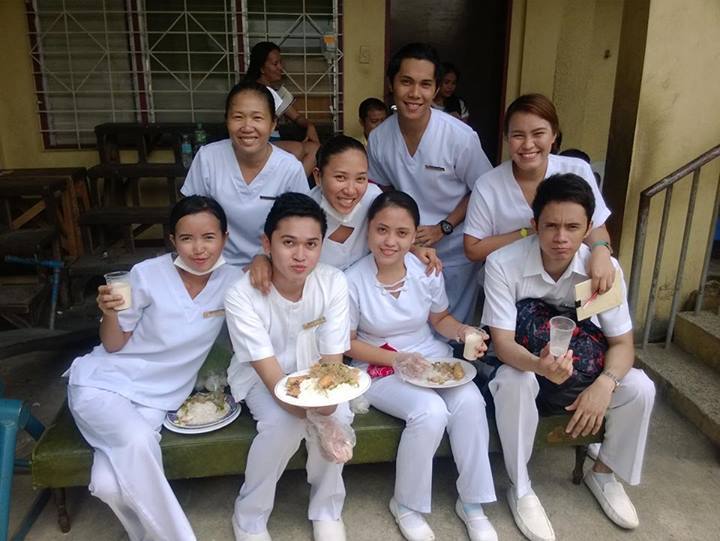
October 15, 2013 | The Cebu–Bohol Earthquake, a Nurse’s Reflection, and the Prayers That Outlived the Stones
Hospitals have a particular understanding of emergencies. We are trained to anticipate them, recognise warning signs, and respond when something goes wrong. We study procedures, familiarise ourselves with protocols, and learn that remaining composed is part of our professional responsibility. But nowhere in my nursing notes did I find a chapter explaining what to do with the peculiar realisation that the very ground beneath the hospital could suddenly become uncertain. Apparently, Mother Nature does not consult the duty roster before making an appearance. She does not send a memorandum, request permission from the nurse-in-charge, or kindly arrange her activities around medication rounds. And on the morning of October 15, 2013, she reminded us of that fact in a way that neither Cebu nor Bohol will easily forget.
We were on duty when the earthquake struck.
At approximately 8:12 in the morning, a powerful magnitude 7.2 earthquake originated in Bohol, sending intense shaking across parts of the Central Visayas. What should have been an ordinary Tuesday became a day that would enter the history of our islands. I had reported for duty as a nurse, prepared to attend to the responsibilities of the hospital and the needs of our patients. Earthquakes, however, are remarkably uninterested in whether people are ready for them. Within moments, the ordinary concerns of the day were overshadowed by something much greater, and the familiar certainty of our surroundings was challenged by a force we could neither negotiate with nor control.
There is something particularly unsettling about experiencing a natural disaster while working in a hospital. At home, our immediate thoughts may turn towards finding safety and checking on the people we love. As healthcare professionals, those concerns do not disappear, but they exist alongside another responsibility. There are patients whose conditions may make it difficult for them to move independently, people who rely upon healthcare staff for assistance, and clinical duties that cannot simply be abandoned without consideration. Suddenly, the question is no longer confined to what might happen to us. We must also think about the people entrusted to our care.
I am still relatively new to professional nursing, having returned to regular clinical practice only a few months ago. My recent rotations have already introduced me to the demands of emergency care, intensive monitoring, and the responsibilities involved in different hospital departments. I have learned about observation, clinical judgement, teamwork, and the importance of remaining attentive when circumstances become unpredictable. Yet there is something different about a disaster that affects an entire community. A clinical emergency may involve an individual patient or a particular situation. An earthquake reminds us that the people providing care are living within the same uncertain world as those receiving it.
What affected me most was the knowledge that the earthquake extended far beyond the place where we were working. Our families, friends, neighbours, and communities were all part of the world that had just been shaken. Even while carrying out professional responsibilities, it is impossible not to think about the people whose safety matters deeply to us. I found myself considering how quickly an ordinary morning could change, and how little control we sometimes possess over circumstances we had confidently assumed would remain stable. Only minutes earlier, people across Cebu and Bohol had been occupied with their usual activities. Then the earthquake interrupted everything, leaving countless families concerned about their homes, their loved ones, and what might happen next.
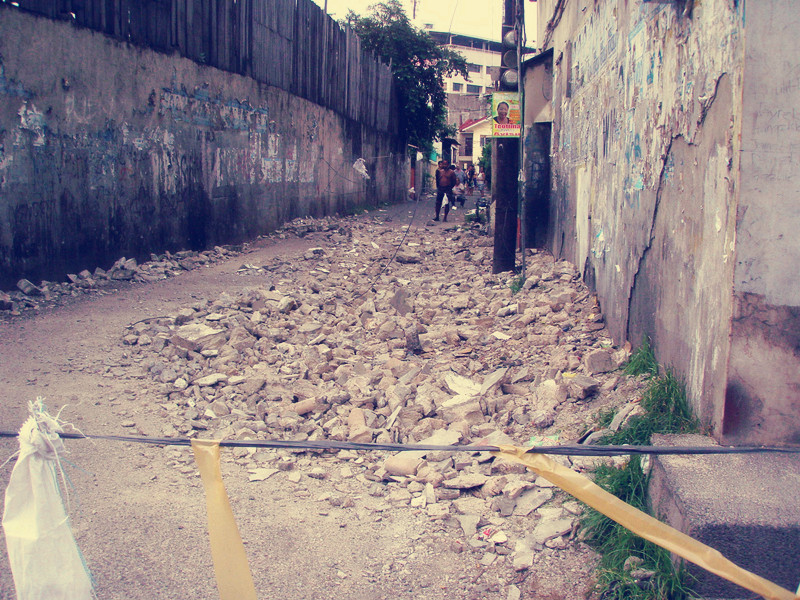
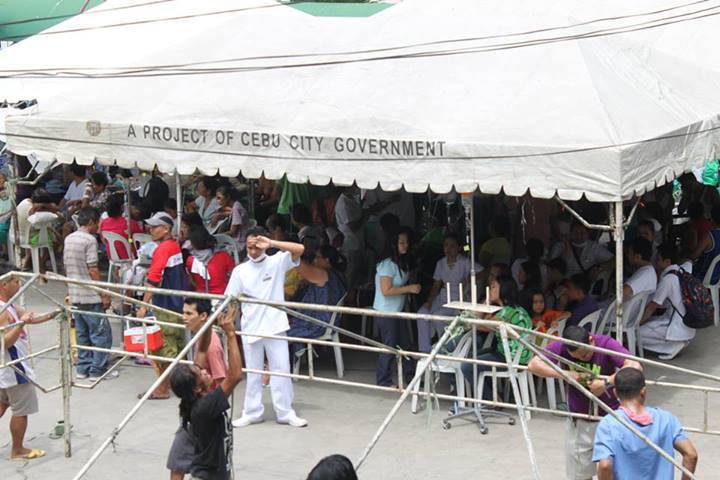
As information and images of the devastation emerged, the extent of the damage became increasingly difficult to comprehend. Buildings had been damaged, communities disrupted, and families were facing losses that could never be measured simply through photographs of fallen structures. In Bohol, where the earthquake originated, the destruction was particularly severe. Roads, homes, public buildings, and historic landmarks had been affected, while rescue and relief efforts became urgent priorities. The reports were heartbreaking, and I could not help thinking about the people behind every photograph and every account of destruction.
Among the images that affected me most were those of our centuries-old churches.
I have always believed that churches occupy a special place in Filipino communities. They are places of worship, certainly, but they are also witnesses to generations of ordinary human life. Within their walls, babies have been baptised, couples have exchanged marriage vows, families have gathered for Mass, and people have offered prayers during moments of happiness and sorrow. Their bells have marked celebrations and solemn occasions, while their architecture has preserved something of the history, craftsmanship, and devotion of the people who came before us. Some have stood for centuries, remaining familiar landmarks even as the surrounding towns changed.
Then, in a matter of moments, parts of that history were reduced to rubble.
The destruction of churches in Bohol was particularly painful to witness. Historic places of worship in communities such as Loboc, Loon, Maribojoc, and Baclayon suffered devastating damage. These buildings had survived generations of changing circumstances, witnessed countless religious celebrations, and become part of the cultural identity of their communities. Looking at photographs of collapsed walls and damaged bell towers, I thought about how many people must have regarded those churches as permanent fixtures of their hometowns. They had been there for their parents, grandparents, and perhaps generations before them. It must have been difficult to imagine that something so familiar could become so vulnerable.
But what makes a church valuable extends beyond its age or architectural beauty. Its significance also comes from the memories and relationships people associate with it. A damaged church is not simply a historical structure awaiting repair. For those who worship there, it may be the place where they learned their first prayers, attended Christmas Mass, celebrated a family occasion, or sought comfort during a difficult time. When such a building is destroyed, a community loses something connected to its collective memory. The stones may be replaceable, at least in part, but the history they carried cannot be recreated in precisely the same form.
As a Catholic, I found myself deeply saddened by those images. Churches have always represented something meaningful to me, particularly because faith has been part of my life since childhood. I have grown accustomed to seeing people enter a church carrying intentions known only to themselves. Some come in gratitude, others seeking forgiveness, and many simply hoping to find a little peace amid their worries. I think there is something beautiful about places that welcome so many different human concerns beneath the same roof.
And yet, October 15 reminded me that even buildings constructed for worship are not exempt from the forces of nature.
Perhaps this is where faith becomes a more difficult subject than we sometimes expect. It is easy to express gratitude when circumstances are favourable and the people we love are safe. We thank God for answered prayers, professional achievements, birthdays, and the little opportunities that make life pleasant. But what do we say when something terrible happens? How do we understand suffering that affects people who have done nothing to deserve it? What words can adequately comfort a family whose home has been destroyed or whose loved one has been lost?
I do not pretend to possess satisfying answers to those questions.
There are tragedies that cannot be made understandable through a few comforting sentences. I would never want to suggest that people experienced the earthquake because their faith needed testing or because God wished to teach them a lesson. Such explanations seem terribly inadequate when placed beside the reality of human suffering. People have lost homes, security, and loved ones, and they deserve compassion and practical assistance rather than lectures about why their suffering might have occurred.
But I still believe faith can offer strength during circumstances we cannot explain.
For me, faith is not a guarantee that nothing terrible will happen. It does not mean that buildings will remain standing indefinitely or that believers will never encounter illness, loss, or uncertainty. Rather, it reminds me that prayer, compassion, and our responsibility towards one another remain important when circumstances become difficult. A person may feel frightened, confused, or distressed and still turn towards God with questions that do not have immediate answers.
I think there is room within faith for those questions.
The destruction of our churches also made me reconsider where the true life of a church exists. We often associate it with beautiful altars, stained-glass windows, old wooden pews, and towers that rise above the surrounding streets. These things matter, and their preservation is important because they carry our cultural and religious heritage. Yet the life of a faith community cannot be confined entirely within a building. It also exists in the people who gather to pray, those who help their neighbours, and those who continue practising compassion even when the familiar place of worship is no longer available.
A church can lose its roof without its congregation losing the ability to pray.
That thought comforts me, although it does not make the destruction any less heartbreaking.
I hope that, in time, the damaged churches will be restored wherever possible, and that the communities affected will receive the support they need to recover. But I also hope that our attention will remain focused on the people whose difficulties cannot be resolved simply by rebuilding walls. Families need shelter, food, clean water, healthcare, reassurance, and the chance to restore their ordinary lives. The loss of historic structures deserves recognition, but the wellbeing of the people who lived and worshipped around them must remain the greater priority.
As a nurse, I cannot help thinking about the healthcare needs that follow a disaster. Beyond the immediate emergency, there may be people requiring medical treatment, individuals whose existing illnesses become more difficult to manage, and families affected by uncertainty and displacement. Hospitals and healthcare workers have important responsibilities during such events, but they also depend upon functioning infrastructure, communication, supplies, and the cooperation of the wider community. An earthquake can expose how interconnected those systems are and how quickly an ordinary disruption can become a serious challenge.
Being on duty that morning has made these reflections particularly personal. I was not simply hearing about a distant event in the news. I was working in a hospital in a region affected by the earthquake, reminded that the people who provide healthcare are also members of families and communities experiencing the same event. We may wear uniforms and carry professional responsibilities, but underneath them we remain sons, daughters, parents, siblings, and friends who worry about the people we love.
Perhaps that is what I find most humbling about nursing. We are expected to respond thoughtfully to the needs of others, yet we are not immune to fear or uncertainty ourselves. Professionalism does not mean becoming incapable of emotion. It means learning how to act responsibly while recognising that our feelings and concerns are part of being human. There are circumstances in which we must seek guidance, work together, and rely upon the preparation of the healthcare team rather than assuming that individual courage alone will be sufficient.
I am grateful for the importance of teamwork, and I hope this experience will encourage me to become more knowledgeable about emergency preparedness and disaster response. Nursing education has taught me that preparation matters, but events such as this demonstrate why we must continue reviewing and practising what we have learned. We cannot predict exactly when a disaster will occur, but we can understand our responsibilities, remain familiar with established safety procedures, and appreciate the importance of coordinated action.
Yet beyond those professional reflections, I keep returning to the photographs of the churches.
I imagine the countless Sundays when people walked through their entrances, perhaps carrying children, holding rosaries, or arriving a little late for Mass. I think of the old walls that had heard generations of prayers and the bells that had called communities together through ordinary mornings and important celebrations. Those churches were part of the landscape of Filipino faith, and their destruction feels like the loss of familiar pages from a history book that our ancestors had been writing for centuries.
It is strange how we come to regard certain places as permanent. We know, intellectually, that buildings can deteriorate and that natural disasters occur. Yet when a structure has stood for hundreds of years, we begin assuming that it will continue standing long after we are gone. Its continued presence seems to promise stability. Perhaps that is why the collapse of a historic church affects us so deeply: it challenges our assumptions about what can endure.
But a building’s destruction does not erase every memory associated with it.
The people who were baptised there remain connected through their shared history. The weddings, prayers, celebrations, and traditions that took place within its walls continue to exist in the memories of families and communities. And the faith that inspired generations to build and maintain those churches can continue through the people who remain.
That, I believe, is worth remembering.
I also hope the coming days will bring opportunities for Filipinos to demonstrate the compassion for which our communities are so often known. In moments of disaster, the practice of bayanihan becomes especially meaningful. It reminds us that helping one another is not merely a pleasant cultural ideal but a responsibility that can become urgent when families are facing extraordinary difficulties. Assistance may come through organised relief efforts, professional services, donations, or the simple willingness to support neighbours whose circumstances have suddenly changed.
Not everyone can contribute in the same way, and nobody should be expected to provide more than they reasonably can. But there is value in recognising that collective recovery depends upon people working together. Faith can inspire generosity, yet that generosity must also become practical action if it is to make a difference in the lives of those affected.
Tonight, I am praying for the people of Bohol and Cebu, especially the families who have experienced loss, the injured, the displaced, and those who remain frightened by the uncertainty following the earthquake. I pray for the healthcare workers, rescuers, volunteers, and everyone helping communities respond. I pray that those who have lost their homes will find shelter and support, and that the people grieving loved ones will be surrounded by compassion.
I am also praying for the preservation and eventual restoration of our historic churches, because I believe our cultural heritage deserves care. These structures carry stories about the generations who built them, worshipped within them, and considered them part of their communities. Losing them is painful, and rebuilding will require patience, resources, and the expertise of people who understand their historical significance.
But I hope we remember that restoring a community involves more than repairing its buildings.
The people must be cared for, too.
As I think back to the beginning of this day, I find myself considering how confidently we enter ordinary mornings. We prepare for work, think about our responsibilities, and imagine that the hours ahead will follow some recognisable pattern. We make appointments, discuss future plans, and arrange our schedules as though tomorrow has already promised to cooperate.
Then something happens that reminds us how fragile those assumptions can be.
October 15 began as another duty day for me. I was a young Registered Nurse, still learning the responsibilities of my profession and gradually building the confidence that comes with clinical experience. By the end of it, I was thinking about the vulnerability of entire communities, the historic churches that had fallen, and the families whose lives had been changed in ways I could scarcely comprehend.
I do not think I will forget that contrast.
The earthquake has reminded me that our lives are connected to things much larger than our individual ambitions. We belong to families, communities, and histories that existed before us and will hopefully continue long after us. When disaster affects one part of that shared world, its consequences reach far beyond the immediate destruction.
Perhaps that is why seeing our fallen churches has affected me so deeply. Their stones represented something familiar and enduring, and watching those structures collapse challenged the sense of permanence we had associated with them.
Yet my faith reminds me that a church was never meant to be understood only through its walls.
It is also a community of people, connected by belief, worship, compassion, and a willingness to care for one another.
On October 15, the ground shook, old walls collapsed, and church bells that had called generations to prayer were silenced by destruction. I will not pretend that faith makes the suffering easier to explain or that a hopeful reflection can repair what families have lost.
But I believe the prayers of the people can continue, even when the buildings that once sheltered them can no longer stand.
Perhaps one day, those bells will ring again from restored towers. Perhaps the churches will gradually recover their familiar outlines, and future generations will learn about the earthquake through photographs, stories, and the memories of those who experienced it.
For now, however, there are people who need our prayers, our attention, and whatever meaningful assistance we can offer.
I began the morning on hospital duty, believing I was prepared to face another ordinary day in nursing. I ended it with a reminder that even the strongest-looking things in our lives can be vulnerable, and that the responsibilities of compassion extend far beyond the walls of any hospital.
Our churches may crumble, and their bells may fall silent. Our communities may grieve the loss of places that have stood for centuries.
But as long as people continue to pray, support one another, and carry their faith into the difficult work of rebuilding, the story of those churches has not ended.
The earthquake brought down the stones. It did not take away the prayers.
For the people of Cebu and Bohol, the families affected by the earthquake, and the generations whose faith and history live within our churches. May God grant strength to those facing loss, wisdom to those responding, and comfort to every community beginning the long work of recovery.
— Just Anj, RN | October 2013


































Leave a Reply