The Curious Art of Living Without Regrets — On Second Chances, Unwritten Futures, and the Decisions We Cannot Take Back
There is a particular spot near our front door where I occasionally find myself standing longer than necessary. Nothing extraordinary happens there. No grand revelation descends from the ceiling, no mysterious voice offers instructions, and certainly no cinematic soundtrack begins playing whenever I reach for the doorknob. It is simply the place where I leave the familiarity of home and prepare to encounter whatever the outside world has arranged for me that day. Sometimes I walk through that door feeling confident about my plans. Other times, I leave wondering whether I am making the right decisions or heading towards another experience that will eventually require a lengthy explanation in this diary. I suppose that is the trouble with life: we must keep moving forward despite possessing absolutely no reliable method of previewing the consequences. If only somebody had invented a remote control with a rewind button for questionable decisions and a fast-forward function for particularly inconvenient Mondays.
Unfortunately, life seems determined to operate without either feature.
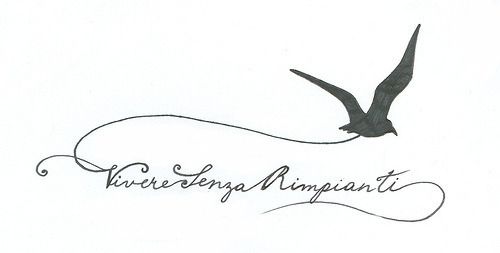
Lately, I have been thinking about an Italian expression that I find particularly beautiful: Vivere senza rimpianti. To live without regrets. There is something wonderfully confident about those words, as though the person saying them has somehow mastered the art of making decisions without spending the following three weeks questioning every possible alternative. I would very much like to meet such a person. I suspect our conversation would be fascinating, although I would probably spend most of it asking how they manage to sleep peacefully after making an important decision. Personally, I am capable of reconsidering something as ordinary as a restaurant order. Imagine the amount of intellectual exercise I undertake when the subject involves my career, relationships, or the direction of my entire life.
Regret is a strange companion. It rarely announces its arrival during the actual moment when we are making a decision. Instead, it prefers to appear afterwards, when the consequences have become clearer and we suddenly possess information that would have been tremendously useful earlier. We look back upon an experience and wonder why we did not recognise certain signs, why we trusted a particular person, or why we allowed an opportunity to pass without making an attempt. We replay conversations, examine decisions, and imagine alternative versions of events in which we somehow possess greater wisdom, better timing, and an impressive ability to avoid embarrassment.
Of course, those imaginary versions of ourselves have a tremendous advantage. They already know what happened.
I have always found this rather unfair. We judge our past decisions using knowledge we acquired only because we lived through their consequences. We criticise our younger selves for failing to understand situations that had not yet unfolded, forgetting that experience is precisely what allowed us to develop that understanding. It is remarkably easy to become an expert on yesterday. The difficulty lies in making sensible decisions today, while tomorrow remains stubbornly unwilling to reveal its intentions.
Perhaps that is why one of my favourite films, ”The Butterfly Effect“, continues to fascinate me. The idea of returning to an earlier moment and changing a decision seems almost irresistible. Imagine being able to revisit the occasions when we said something foolish, trusted the wrong information, or failed to recognise an opportunity that might have changed our circumstances. We could correct misunderstandings, avoid certain disappointments, and perhaps prevent ourselves from purchasing clothes that looked fashionable for approximately six minutes before becoming permanent evidence of terrible judgement.
I can think of several moments I would be tempted to revisit.
But the film raises a more complicated question. If changing an earlier event also changes everything that follows, how can we know that the alternative would genuinely be better? We often imagine that removing one unpleasant experience would leave all the wonderful parts of our lives perfectly intact. Yet our experiences are connected in ways we may not fully recognise. A disappointing decision may influence where we go next, whom we meet, or what we eventually learn about ourselves. Changing one circumstance could affect others we had never considered.
That does not mean every painful experience happens for a wonderful reason or that we should be grateful for every difficulty. I cannot honestly look at all the disappointments people experience and confidently announce that they were necessary for some perfect outcome. Life is far too complicated for such an explanation. But I do believe that our past influences who we become, and that understanding its consequences is more useful than spending our lives imagining how much better everything might have been if one particular event had unfolded differently.
I suppose the real challenge is learning to appreciate what experience has taught us without becoming imprisoned by the things we wish had happened another way.
Over the past year, I have encountered enough changes to reconsider several assumptions I once had about adulthood. I entered the nursing profession with hopes for my career, enthusiasm for developing my skills, and the belief that working hard would gradually make my future easier to understand. I have since discovered that professional development involves opportunities, disappointments, uncertainty, and decisions that do not always provide immediate reassurance. There were days when I felt proud of my progress and others when I questioned whether I had chosen the right direction.
I have worked exhausting hospital shifts, learned from unfamiliar clinical situations, and developed a greater appreciation for the responsibilities involved in caring for patients. I have also made decisions about employment that required me to leave the comfort of what had become familiar. Submitting my resignation and pursuing another opportunity meant accepting that I could not know exactly how everything would turn out. I had to make the best decision I could with the information available and recognise that certainty might come much later.
If I had allowed myself to become completely occupied with everything that could go wrong, I might never have made a decision at all.
That is one of the habits I am trying to change.
I have an unfortunate tendency to spend considerable time contemplating the future while neglecting the practical steps required to reach it. I imagine what I would like to accomplish, where I hope to work, and the kind of person I want to become. These ambitions can be exciting, but imagination becomes considerably less useful when it begins replacing action. I could spend an entire afternoon planning an extraordinary future and still finish the day having accomplished very little towards making it possible.
There is a certain embarrassment in recognising that the person responsible for delaying some of my plans has occasionally been me.
I would prefer to blame the calendar, the weather, or a mysterious conspiracy involving insufficient hours in the day. Unfortunately, honesty requires me to admit that procrastination has sometimes been a willing participant. I have told myself that I would begin something tomorrow, wait until circumstances became more convenient, or make an important decision when I felt completely prepared.
But tomorrow has a remarkable habit of becoming another today.
And circumstances rarely arrange themselves into perfect conditions merely because we would appreciate the convenience.
I am learning that having a purpose means more than possessing an impressive collection of ambitions. It requires considering what genuinely matters to me and making decisions that reflect those priorities. I want to continue developing as a nurse, become more knowledgeable, and use my abilities to contribute meaningfully to the lives of others. But I also want to become someone who treats people with kindness and respect, particularly when they are facing circumstances that make them feel uncertain or discouraged.
If people remember me someday, I hope it will not be exclusively because of a professional title or an achievement printed on a certificate. I would like them to remember that I tried to be useful, that I listened when they needed somebody to understand, and that I was willing to offer encouragement without pretending to possess every answer.
That aspiration sounds simple enough when written down.
Living according to it every day, however, requires rather more effort.
There are occasions when I become impatient, especially when things fail to happen according to my expectations. I can be stubborn about my opinions and sometimes discover that I have spent more energy complaining about an inconvenience than it would have taken to address it. I am not proud of every reaction I have had, but I would rather acknowledge those habits than pretend they belong to somebody else.
Perhaps personal growth begins when we become willing to examine our behaviour without turning every imperfection into a permanent judgement of our character.
I have also been reconsidering the idea of responsibility. It is tempting to divide the world into people who constantly complain and people who supposedly overcome every obstacle through determination alone. But the more I observe human experiences, the less convincing that division becomes. People face different circumstances, and not every difficulty can be resolved through additional effort. Illness, financial hardship, family responsibilities, and unexpected events can affect opportunities in ways that are not entirely within an individual’s control.
I know that from my own experiences and from the people I have encountered through nursing.
Taking responsibility for our choices is important, but it should not mean blaming ourselves for every unfortunate circumstance. Some things require action, some require assistance, and others demand patience while we deal with situations we cannot immediately change. I would like to become better at recognising the difference rather than exhausting myself trying to control everything.
There is something reassuring about accepting that our responsibilities have limits.
It means I can work hard without assuming that every disappointing outcome reflects a personal failure. I can reconsider a decision without describing the entire experience as wasted. And I can recognise when somebody else needs support rather than offering an unnecessary lecture about determination.
Another habit I want to leave behind is comparing my life with other people’s progress.
This is considerably more difficult than I would like to admit.
There are moments when I look at former classmates, friends, or people I know and wonder whether I should have accomplished more by now. Somebody has obtained an opportunity I would love to pursue, another seems perfectly settled in their career, and someone else appears to be making important life decisions with an enviable amount of confidence. Meanwhile, I am still trying to understand my own direction, occasionally negotiating with circumstances that refuse to follow the schedule I had prepared.
It is easy to forget that I am comparing everything I know about my own difficulties with only the portions of other people’s lives that happen to be visible.
I do not know every uncertainty they have encountered, every sacrifice behind their achievements, or the personal concerns they may prefer to keep private. Their circumstances are different from mine, just as my decisions and responsibilities may not resemble theirs. Comparing our progress as though we were all participating in the same examination seems rather unreasonable.
Besides, I have already completed enough examinations during nursing school.
I do not need to invent another one involving everybody else’s achievements.
I would rather concentrate on whether I am developing the knowledge, character, and abilities necessary for the opportunities I hope to pursue. Other people’s accomplishments can inspire me, and their experiences may offer useful lessons, but I do not want admiration to become resentment or encouragement to become unnecessary pressure.
There is room for more than one person to succeed.
And there is certainly room for different definitions of success.
Perhaps the most persistent form of regret, however, begins with two innocent-looking words: what if?
What if I had chosen another opportunity? What if I had spoken differently during that conversation? What if I had started earlier, waited longer, or refused to become involved in a particular situation? The possibilities are practically endless, which makes them a remarkably efficient method of exhausting the mind without changing anything in the present.
I have spent enough time entertaining hypothetical versions of my life to recognise that the activity can become rather unproductive.
Sometimes reflection is useful because it helps us identify mistakes and make better decisions. But when the same questions repeat without producing new understanding, I begin wondering whether I am learning from the past or simply refusing to leave it alone.
There is a difference between remembering something and repeatedly reopening it.
I would like to become more capable of recognising when I have learned what I reasonably can from an experience. I can acknowledge that a decision did not turn out as expected, consider whether I should approach similar circumstances differently, and allow myself to move forward without requiring a perfect explanation for everything.
I suspect that would make my thoughts considerably less crowded.
I also want to become more willing to step outside familiar situations when doing so is reasonable and worthwhile. There is comfort in knowing what to expect, particularly when we have worked hard to establish a routine. But remaining exclusively within familiar circumstances can limit the opportunities we encounter. My nursing experience has already taught me that some of the most valuable lessons arise when I accept responsibilities that initially make me uncertain.
I remember returning to clinical practice after spending approximately a year and a half away from regular hospital duties. I was excited, but I also knew that I would need to review my knowledge and become familiar with a working environment that involved real professional responsibilities. Had I allowed nervousness to determine every decision, I might have missed experiences that eventually helped me become more confident.
The same applies to the volunteer opportunities I have encountered, including the Operation Smile medical mission. I did not originally expect that period of my life to involve such an experience, yet accepting the invitation allowed me to learn from new colleagues and contribute to a meaningful programme.
Those experiences remind me that uncertainty is not always evidence that something should be avoided.
But neither does every uncomfortable situation automatically deserve to be pursued.
I want to become more thoughtful about taking risks, recognising that courage should involve judgement rather than a complete disregard for consequences. There are opportunities worth exploring and circumstances where caution is appropriate. Learning how to distinguish them may be more valuable than simply promising myself that I will never be afraid.
One of the things I admire about people who continue developing throughout their lives is their willingness to ask questions. I have always been curious, and nursing has made me appreciate how important it is to recognise the limits of our knowledge. A person can study for years and still encounter something unfamiliar. There are new approaches to learn, experiences to understand, and situations where asking for guidance is more responsible than pretending to possess certainty.
I hope I never become so concerned with appearing competent that I stop being willing to learn.
That would be an unfortunate outcome, particularly in a profession where continuing professional development and safe clinical judgement matter so much.
Asking questions should not be embarrassing when the purpose is to understand something properly. I would rather clarify a concern than make an assumption simply because I was afraid of admitting that I did not know. That lesson applies beyond nursing, too. In ordinary life, we can avoid misunderstandings by asking what someone means rather than inventing elaborate interpretations of their behaviour.
Of course, this would require me to resist my tendency to overanalyse everything.
A challenging assignment, admittedly.
I have also been considering the kind of improvements that occur gradually, without any impressive announcement. We often become excited about dramatic changes, particularly when imagining the future. We promise ourselves that we will become entirely different people, establish perfect routines, and abandon every unhelpful habit beginning on Monday morning.
Then Monday arrives, and we discover that our personalities have not received the memorandum.
Perhaps meaningful change is usually less dramatic than we imagine.
It may involve becoming a little more patient during a difficult conversation, making a thoughtful decision instead of reacting immediately, or recognising when we need to manage our time differently. We may become better at listening, more willing to accept criticism, or more realistic about what we can accomplish in a day.
I like the thought that improvement can be measured through these ordinary choices rather than exclusively through major achievements.
It makes growth feel more closely connected to the way we actually live.
There is also something important about forgiveness, particularly when thinking about regret. We sometimes continue blaming ourselves for mistakes long after the opportunity to correct them has passed. We revisit the same decisions, criticise our earlier judgement, and imagine that feeling guilty enough might somehow alter what happened.
But guilt is not a time machine.
When an action has caused harm, we should take responsibility, offer an appropriate apology when possible, and make reasonable efforts to repair what can be repaired. Those are meaningful responses. Yet there may come a point when continuing to condemn ourselves contributes nothing useful. We can acknowledge a mistake without deciding that it must define our entire character.
I would like to become better at extending that understanding to myself as well as to other people.
There have been moments when I acted with incomplete information or made decisions I later reconsidered. I cannot revisit those situations as the person I am today because I was not that person at the time. My experiences have influenced how I think, and some of the understanding I now possess developed precisely because things did not happen as expected.
That does not make every past decision correct.
It simply means I can learn without spending the rest of my life demanding that my younger self should have known everything.
Perhaps this is what I find most interesting about the idea of living without regrets.
I do not think it means reaching the end of life with a spotless record of perfect decisions. Such a standard would be impossible for anyone who has ever made a mistake, misunderstood another person, or taken a chance that did not produce the desired result.
Living without regrets may instead involve making choices as thoughtfully as we can, accepting responsibility for their consequences, and remaining willing to learn when experience reveals something we had not anticipated.
It may mean giving ourselves permission to reconsider ambitions that no longer reflect our circumstances.
It may involve recognising that some opportunities are worth pursuing while others are better left behind.
And perhaps it requires understanding that a meaningful life is not necessarily one in which every decision produces an impressive outcome.
I think about the people I admire and realise that their lives are rarely interesting because everything happened exactly according to plan. Often, what makes their experiences compelling is the way they responded to difficulties, reconsidered their assumptions, and continued developing despite uncertainty.
The same may eventually be true of my own story.
At twenty-four, I have already encountered a number of circumstances that challenged the future I once imagined. I have experienced the satisfaction of practising nursing, the exhaustion of demanding hospital shifts, the uncertainty of changing employment, and the emotional difficulty of watching someone in my family face serious illness.
I have also enjoyed friendships, family gatherings, unexpected volunteer experiences, and ordinary afternoons that became meaningful precisely because I had not planned them.
Each of these experiences has influenced my understanding of what matters to me.
Some I would happily repeat.
Others I would never willingly choose again.
But all of them belong to the history from which I am continuing to learn.
Perhaps that is why I am becoming less interested in imagining a completely different past. I can wonder about alternative decisions, certainly, but I cannot know whether those imagined lives would have contained greater happiness or fewer difficulties. Every possibility would have introduced circumstances I cannot predict from where I stand today.
The past has already happened.
The future remains uncertain.
And the present, despite my tendency to overlook it while worrying about everything else, is where I can still make decisions.
I suppose that is an important distinction.
We can examine yesterday, but we can only act within the opportunities available to us now. We can prepare for tomorrow, but preparation should not become an excuse for postponing everything that matters today.
I do not want to spend my twenties endlessly waiting for an ideal moment when I finally feel ready to begin living according to my own values.
There are things I can do now.
I can continue learning as a nurse, appreciate the people who matter to me, pursue meaningful opportunities, and make an effort to become someone whose actions reflect the principles I claim to believe in.
I can offer encouragement when another person needs it without pretending that I know exactly how their circumstances will unfold.
I can apologise when I have been wrong.
I can celebrate somebody else’s achievement without interpreting it as evidence that I am falling behind.
And I can take a break from worrying about the future long enough to enjoy a perfectly ordinary day.
That last one may require considerable practice.
I have been thinking, too, about how my faith influences my understanding of regret. As a Christian, I believe that life involves responsibilities towards God, ourselves, and the people around us. I want to live with gratitude, act with integrity, and remain attentive to opportunities to serve others. But I do not believe faith requires me to pretend that every difficult experience was desirable or that every unanswered question must immediately make sense.
There are circumstances I still struggle to understand.
I have prayed about my family’s concerns, questioned the timing of certain events, and wondered whether I am making decisions that will lead towards the future I hope for. I cannot claim that every prayer has received the answer I expected, and I would not want to invent certainty where none exists.
But faith encourages me to approach life with humility.
It reminds me that my understanding is limited, that I may need guidance, and that I can continue making responsible choices even when I cannot predict the outcome.
Perhaps that is more useful than attempting to control every detail of the future.
I also want to remember that living with purpose does not mean treating every minute as though it must produce some measurable achievement. There should be time for rest, friendship, family, reading, and the ordinary experiences that allow us to appreciate life beyond our ambitions.
I have learned this the hard way during demanding hospital duties.
There were periods when I became so occupied with work that I struggled to make time for proper rest, let alone the hobbies I enjoy. I began understanding that constant activity does not automatically make a life more meaningful. Sometimes an afternoon spent with family or a quiet moment reflecting upon the day provides something that no professional accomplishment can replace.
I would regret reaching a future milestone only to discover that I had spent years overlooking the people and experiences that mattered to me along the way.
Perhaps that is one regret I can actively work to avoid.
Not by abandoning my ambitions, but by remembering that they form only one part of my life.
As I return to the Italian expression that inspired this reflection, I find myself appreciating its meaning in a different way. Vivere senza rimpianti originally sounded like a declaration made by somebody who had never questioned a decision. Now, I think it may describe something much more human: the effort to live thoughtfully despite knowing that mistakes, uncertainty, and occasional disappointment are unavoidable.
I cannot promise myself that I will never look back and wish I had done something differently.
That would be rather ambitious for someone who has reconsidered restaurant orders after the waiter has already walked away.
But I can choose not to spend every day conducting an imaginary trial against my past.
I can recognise where I have been, understand what I have learned, and direct more of my attention towards the choices still available to me.
There is a difference between carrying a memory and allowing it to dictate every decision that follows.
I hope I become better at recognising that difference as I grow older.
Perhaps one day, I will read this entry and smile at the twenty-four-year-old who was trying so hard to understand how to live without regrets. I may discover that some of my present concerns were less significant than I imagined, while others required more patience than I anticipated.
I may have made decisions that brought wonderful opportunities and others that taught me difficult but necessary lessons.
I hope I will be able to look back upon them with a little more understanding than criticism.
And if there are things I genuinely wish I had handled differently, I hope I will have learned enough to approach similar circumstances with greater care.
I began this reflection at our front door, thinking about the moment when we leave the familiar comfort of home and enter a world where unexpected circumstances are waiting. I still like that image, partly because it reminds me that every ordinary day begins with possibilities we cannot entirely predict.
Sometimes we return home satisfied with what happened.
Other times, we arrive exhausted, disappointed, or wondering whether our decisions could have been better.
But the door remains there, and eventually another morning gives us an opportunity to step outside again.
I cannot control everything waiting beyond it.
I can, however, consider what kind of person I want to be when I encounter those circumstances.
Perhaps I will remain stubborn about the things I believe matter, while learning to become more flexible when a different approach is necessary. Perhaps I will continue pursuing professional ambitions while becoming more appreciative of the relationships that make life meaningful. And perhaps, with enough practice, I will finally develop the extraordinary ability to stop worrying about events that have not happened.
That last achievement may deserve its own celebration.
For now, I am content to continue learning.
There are decisions I would make differently if I possessed the knowledge I have today, and experiences I wish had been less difficult. But I do not need to return to them endlessly in order to acknowledge their influence.
Life has already allowed me to begin again in more ways than I expected.
I hope I have the wisdom to recognise the opportunities still ahead.
And tomorrow, when I walk through our front door, I intend to remember something simple: the past does not need another revision from me this morning. Whatever lies outside deserves the attention of the person I have become, rather than another argument with the person I used to be.
Vivere senza rimpianti. To live without regrets — or, at the very least, to stop asking yesterday to become something it can no longer be.
From my 2014 reflections — on accepting the past, pursuing a meaningful future, and learning that the greatest opportunity for change may be waiting on the other side of an ordinary front door.
— Just Anj, RN | Still making decisions, occasionally making mistakes, and thankfully unable to locate the rewind button.


































Leave a Reply