
June 12, 2015 | Life Lately — Finding My Place in Government Service, Learning from Disappointment, and Discovering That Purpose Sometimes Wears Muddy Shoes
I am beginning to suspect that my shoes have developed a more interesting social life than I have. They have travelled along unfamiliar roads, collected enough dust to establish a small agricultural enterprise, and accompanied me to places I might never have visited if life had followed my original plans. There was a time when most of my working days revolved around hospital corridors, medication charts, and the particular satisfaction of removing my nursing shoes after a demanding shift. These days, my surroundings have changed considerably. Instead of spending my time moving between patient rooms, I find myself working in communities, meeting people whose experiences differ from mine, and discovering that the world beyond the hospital has its own remarkable collection of lessons. Apparently, adulthood has decided that my education should continue outdoors, where the classrooms are larger, the weather is less cooperative, and nobody has thought to install air-conditioning.
Welcome to my life lately.
It has been some time since I last sat down to write properly about what has been happening. My days have been occupied with work, responsibilities, and the ordinary business of trying to understand where life is taking me. There are moments when I feel as though everything has changed remarkably quickly, and others when I realise that the journey towards my present circumstances has involved more waiting and uncertainty than I originally anticipated. But today, as I look back upon the experiences that brought me here, I find myself feeling extraordinarily grateful.
I am now working in government service, and the opportunity has introduced me to a different understanding of what it means to work with people.
After my experiences in nursing, I had imagined that my professional life would continue developing along familiar clinical pathways. I had worked in a hospital, learned from demanding shifts, and encountered patients whose circumstances reminded me how important compassion and professional responsibility could be. Nursing had taught me valuable lessons about observation, communication, teamwork, and the importance of treating people as individuals rather than simply as a collection of problems requiring attention.
But life, apparently, had another professional setting in mind.
My present work involves spending time in communities as part of the Department of Social Welfare and Development’s KALAHI-CIDSS programme. As a Community Empowerment Facilitator, I am becoming familiar with a kind of service that differs considerably from the hospital environment I once knew. Much of the work takes place in barangays, where community participation, local decision-making, and cooperation are essential parts of the programme. Rather than approaching development as something designed entirely by people sitting behind office desks, the work encourages communities to identify their own priorities and participate in decisions affecting their surroundings.
I find that idea meaningful.
There is something important about recognising that people understand their communities in ways outsiders may not immediately appreciate. We may arrive with professional responsibilities, programme guidelines, and a particular purpose, but the people who live in a barangay possess knowledge shaped by their everyday experiences. They know the difficulties that affect their routines, the resources available within their community, and the concerns they believe deserve attention. Our responsibility is not simply to speak on their behalf but to help create opportunities for meaningful participation.
I am discovering that working with communities requires a different kind of patience.
People have different opinions, priorities, and ways of expressing themselves. What seems straightforward during a meeting may become more complicated once we begin considering the circumstances of those involved. A decision that appears sensible from one perspective may raise understandable questions from another. We cannot assume that everybody will agree simply because we have explained something carefully. Sometimes we need to listen more closely, clarify information, and recognise that meaningful participation takes time.
It is interesting how much of this reminds me of nursing.
In the hospital, I learned that patients deserve clear communication and the opportunity to understand decisions affecting their care. In community development, I am seeing the importance of allowing people to participate in discussions concerning their own communities. The environments are different, and the responsibilities are certainly not interchangeable, but both have reminded me that serving people involves respecting their knowledge, experiences, and ability to express what matters to them.
Perhaps I have not travelled quite as far from my original purpose as I once imagined.
I entered nursing because I wanted to be useful to others. I enjoyed the idea of acquiring knowledge and developing skills that could make a meaningful contribution to somebody’s wellbeing. Now, in government service, I am encountering another way to put that intention into practice. The work may no longer involve the familiar routines of hospital duty, but it still requires communication, responsibility, and a willingness to understand the circumstances of people whose lives may be very different from mine.
That realisation has been surprisingly reassuring.
For a while, I worried about whether changing professional direction meant leaving behind something important. I had worked hard to become a Registered Nurse, and the qualification represented years of studying, examinations, clinical experience, and personal ambition. I was proud of having earned it. Even now, I remain grateful for the knowledge and experiences nursing has given me.
But perhaps a person’s education does not become useless simply because their work takes an unexpected direction.
I still carry those lessons with me.
I carry the importance of listening before making assumptions, the responsibility to communicate clearly, and the understanding that professional competence must be accompanied by respect for other people. I also carry a greater appreciation of how personal circumstances can influence the decisions people make. Those lessons do not belong exclusively within hospital walls.
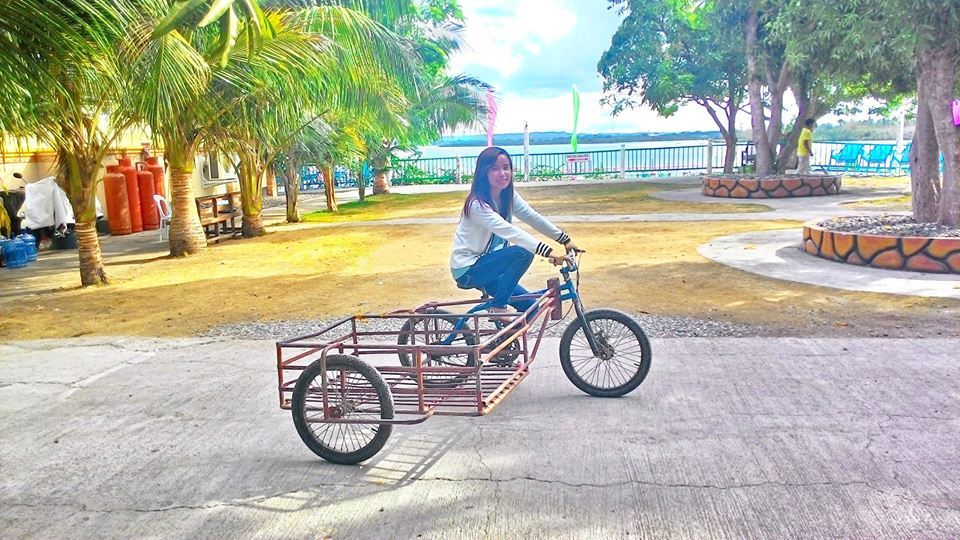
They travel with us.
Sometimes, apparently, they travel along dusty barangay roads.
My work has also encouraged me to think differently about development and the meaning of service. It is easy to speak about helping communities as though the process consists entirely of identifying problems and providing solutions. But people are not passive recipients of somebody else’s generosity. They have their own ideas, abilities, and aspirations, and their participation matters when decisions affect their lives.
I appreciate working within a programme that recognises the importance of community-driven development. The emphasis on participation, transparency, and locally identified priorities has made me consider how much can be accomplished when people are given opportunities to organise, contribute, and take responsibility for decisions within their communities.
Of course, I am still learning.
There are unfamiliar processes, responsibilities that require careful attention, and situations where I must ask questions before I can understand what needs to happen next. Sometimes I leave a working day feeling satisfied with what I have learned. Other times, I realise that I have encountered another complication requiring patience and a willingness to reconsider my assumptions.
I suppose every profession has its own version of a difficult shift.
In the hospital, we used to call those days toxic. In the field, the difficulties may look different, but the experience of trying to manage several responsibilities while maintaining one’s composure remains remarkably familiar. There are schedules to follow, people to coordinate with, and matters that cannot always be resolved as quickly as we would prefer. The difference is that now the scenery changes. And so, quite frequently, does the weather.
I have become particularly aware that fieldwork demands flexibility. Plans may require adjustment, circumstances can change, and activities involving several people depend upon cooperation and clear communication. It is not enough to arrive enthusiastic and assume everything will unfold exactly as expected. We need preparation, patience, and enough humility to recognise when our understanding of a situation is incomplete.
I have been learning to appreciate those lessons, even when they arrive through inconvenience.
Perhaps that is one of the reasons I feel thankful for this opportunity. The work is introducing me to people and experiences that encourage me to look beyond the concerns of my own life. I have ambitions, certainly, and I continue thinking about the future I want to build. But spending time in communities reminds me that everybody carries responsibilities and hopes that may be unfamiliar to someone observing from the outside.
It becomes more difficult to regard the world only through our personal expectations when we begin recognising how differently other people experience it.
I think that is a useful education in itself. Yet I would be exaggerating if I suggested that reaching this stage of my life has been entirely straightforward. There have been disappointments.
Quite a few, actually.
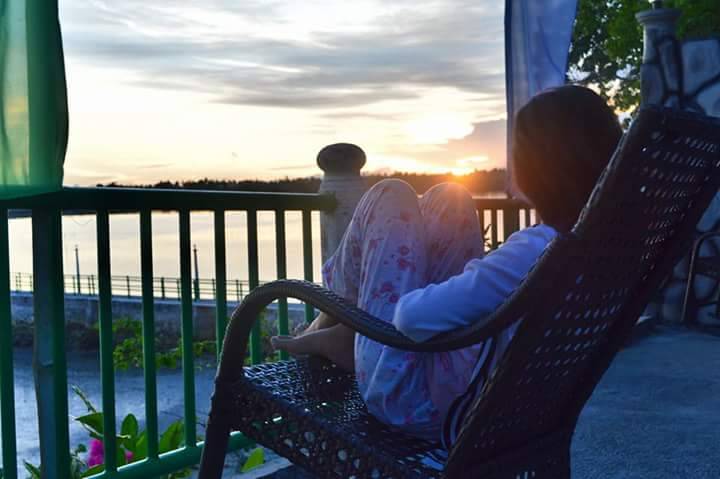
I have always been the sort of person who develops ambitious plans and then becomes personally offended when circumstances refuse to cooperate. I imagine an opportunity, prepare for it, and begin constructing an entire future around the possibility. Sometimes things work out reasonably well. On other occasions, the result is so far from what I anticipated that I find myself wondering whether life has accidentally confused my application with somebody else’s.
There is a particular disappointment that comes from working towards something and discovering that effort alone cannot guarantee the outcome.
We grow up hearing that if we study hard, remain determined, and pursue our ambitions sincerely, success will eventually follow. I understand why adults encourage us with those ideas. Effort, discipline, and persistence are valuable qualities. But as I have grown older, I have also discovered that outcomes are influenced by circumstances, opportunities, timing, and factors we may not be able to control.
It can be difficult to accept that distinction. Sometimes we do everything we reasonably can and still encounter an unfavourable result. Sometimes a plan needs to change. And sometimes we have to acknowledge that our preferred direction is no longer the one available to us. I have experienced enough of those moments to know how frustrating they can be.
There were occasions when I questioned my decisions, compared my progress with what I had originally imagined, and wondered whether I should have taken a different route. I sometimes looked at the ambitions I had not yet accomplished and felt as though my possibilities had become smaller.
For a while, the image that came to mind was a bird trying to fly with only one wing.
I know it sounds rather dramatic, but I have always possessed an unfortunate talent for turning personal frustration into an elaborate metaphor. Perhaps I should blame my fondness for writing. An ordinary person might simply say that they were disappointed. I, apparently, prefer imagining myself as a bird attempting the impossible while delivering a philosophical commentary on the unfairness of gravity. Nevertheless, the image seemed appropriate.
When we encounter a setback, it can feel as though something essential has been taken from the future we imagined. We begin wondering whether our remaining opportunities will be sufficient, whether the effort we have already invested still matters, and whether we can continue pursuing our ambitions through a different path.
I remember thinking that having only one wing would make the journey considerably more difficult.
But as I considered the image, I realised that perhaps I had been concentrating so heavily on what I believed I had lost that I had overlooked the resources and possibilities still available to me. I still had my education. I still had the experiences I had gained through nursing. I had people who encouraged me, opportunities to learn, and a willingness to work towards something meaningful. I also had my faith. Perhaps I was not as helpless as my imagination had suggested.
I do not believe disappointment is automatically a gift, particularly when it involves circumstances that cause genuine distress. There are experiences I would rather not repeat, and I cannot honestly claim that every difficulty was necessary for some greater purpose. But I can recognise that my response to disappointment has sometimes encouraged me to reconsider my priorities and develop a more thoughtful approach to the future.
I am becoming more careful about how I use my time.
There is something almost embarrassing about realising how many hours we can spend worrying about things that have already happened. We replay conversations, examine missed opportunities, and imagine alternative decisions that might have produced better results. We become experts at constructing hypothetical lives in which every choice was perfectly timed.
Unfortunately, those imaginary arrangements do not accomplish much in the present.
I have been trying to direct more attention towards what I can actually do. If I want to develop professionally, I need to continue learning. If I want to become more capable, I need to accept responsibilities that allow me to gain experience. And if I want to make thoughtful decisions, I should probably spend less time rushing towards the next opportunity without properly considering what it requires.
That last lesson has been particularly important.
I am naturally enthusiastic when something interests me, and there are moments when I would prefer everything to happen immediately. Once I have decided that a particular direction seems promising, patience becomes a rather inconvenient requirement. I want results, preferably accompanied by reassuring explanations and a clear indication of what comes next.
Life, however, continues refusing to provide that service.
Perhaps it is trying to teach me that preparation deserves more attention than impatience.
I have begun recognising that some decisions require time, reliable information, and the willingness to consider different possibilities. Rushing simply because I am uncomfortable with uncertainty may lead to complications that could have been avoided through a little more thought.
Of course, taking time to decide is not the same as postponing everything indefinitely. That is another habit I have been trying to examine. I can spend so long considering different outcomes that I begin treating indecision as though it were a responsible strategy. Eventually, I have to recognise that a decision cannot remain theoretical forever. Sometimes we must act with the information available, knowing that the future may still require adjustments. I suppose that is part of adulthood. There are no guaranteed answers neatly printed at the back of the book. And even if there were, I suspect I would find a way to question the wording.
Working in the field has provided an unexpected setting in which to practise these lessons. Community-based work requires cooperation and adaptability, and it reminds me that meaningful outcomes are rarely produced through one person’s enthusiasm alone. There are people to consult, priorities to understand, and practical details that must be addressed before an activity can move forward.
I am learning to appreciate the value of preparation without expecting preparation to eliminate every complication.
There is something satisfying about working towards a shared purpose with people whose experiences and opinions differ from mine. It requires patience, but it also provides opportunities to develop understanding that I might not have gained by remaining exclusively within familiar surroundings.
Sometimes I think the most important part of my present job is not simply what I am learning about the programme. It is what I am learning about people.
We all possess different ways of responding to responsibilities, uncertainty, and opportunity. Some are comfortable speaking during discussions, while others prefer to observe before expressing their thoughts. People may approach the same issue from different perspectives because their experiences have shaped what they consider important.
I have begun to understand that listening is not merely waiting for another person to finish speaking. It requires making an effort to understand the meaning behind their words. I certainly have room to improve in that area.
There are occasions when my mind begins preparing a response before someone has finished explaining their point. I become interested in offering a solution, only to realise that I may not yet have understood the entire situation.
Perhaps one of the benefits of working with communities is that it repeatedly reminds me to become less attached to my first assumptions.
That seems useful for someone who can be rather stubborn.
I also appreciate that the work is encouraging me to think about the wider circumstances affecting people’s opportunities. We often speak about success as though everybody begins from the same position and simply needs to work hard enough to reach the desired destination. But communities differ in resources, access to services, and the practical challenges they encounter.
Personal effort matters, yet opportunities are also shaped by the environment in which people live.
Recognising that does not diminish individual responsibility. It simply encourages us to consider why some difficulties require collective solutions rather than expecting every person to manage them independently.
I think that is one of the most meaningful ideas I have encountered through government service.
Development becomes more thoughtful when we recognise that people should have opportunities to participate in decisions affecting them and that sustainable improvements involve more than a temporary intervention. I am grateful to have a role in work that encourages those principles. But I also want to remain realistic about my contribution.
I am one person within a much larger programme, and the progress of any community depends upon the efforts of many individuals and institutions. I cannot claim responsibility for every positive development, and I certainly do not possess the ability to resolve every challenge I encounter. There is humility in accepting that. I can carry out my responsibilities, continue developing my knowledge, and contribute to the work without imagining that I must personally become the answer to every problem. Perhaps that is another lesson my metaphorical bird should consider.
Flying was never supposed to depend entirely upon one wing and an unreasonable amount of determination. Sometimes progress requires support, favourable conditions, and the willingness to recognise when circumstances demand a different approach.
That brings me back to faith.
I have always believed that God plays an important role in my life, particularly during periods when the future feels uncertain. There have been moments when I prayed for opportunities, questioned why particular things did not happen, and wondered whether my plans were leading me in the right direction. I cannot claim to understand every disappointment I have encountered. There are still experiences I wish had unfolded differently.
But I am grateful for the opportunities that have become available, including my present work in government service. I do not see faith as a guarantee that everything will happen according to my wishes. Rather, it gives me a way to express gratitude, seek guidance, and acknowledge that my understanding of the future remains limited. There is something comforting about recognising that I do not have to possess every answer before beginning the next stage of my life. I can make responsible decisions, work hard, ask for guidance when necessary, and continue praying while circumstances unfold. I may not always receive the outcome I hoped for, but that does not mean the effort was meaningless. Sometimes it simply becomes part of what I learn along the way. Perhaps that is why I feel increasingly thankful for the present, even though it looks different from the future I once imagined. I have a job that allows me to work with communities. I am gaining experience in a new professional environment. I have opportunities to meet people, develop my understanding, and contribute to a programme with a purpose beyond my individual ambitions.
Those are things worth appreciating.
And yet, I have noticed something amusing about human nature. We can spend months hoping for an opportunity, then become so occupied with its responsibilities that we forget how much we wanted it in the first place. I do not want to fall into that habit.
There will undoubtedly be days when fieldwork becomes exhausting, when schedules are complicated, and when I would prefer to remain somewhere comfortable rather than travel to another activity. I am human, after all, and my enthusiasm is not immune to tiredness, heat, or the occasional desire for a proper rest day.
But I hope I continue remembering why the work matters to me.
I want to appreciate the opportunity without pretending that every working day will be enjoyable.
There is an important difference between loving one’s work and expecting work to provide uninterrupted happiness. Even meaningful responsibilities can become tiring. There may be difficult conversations, administrative demands, and situations that require more effort than anticipated. Enjoying a profession does not mean we must never feel frustrated by it. I learned that during my hospital experience, and I suspect the same principle applies here.
What matters is recognising whether the work aligns with our values and whether we can carry out our responsibilities with care, competence, and reasonable support. I want my work to contribute something useful to the people and communities involved. I also want to continue developing as a person outside my professional responsibilities. Perhaps that is the balance I should be pursuing.
There was a time when I thought career success would automatically provide the satisfaction I was looking for. I imagined that reaching a particular position or obtaining the right opportunity would make everything else easier to understand.
Now, I am less certain that happiness can be organised around one accomplishment. Professional fulfilment matters to me, but so do family, friendship, faith, health, and the ordinary experiences that make life enjoyable beyond working hours. I do not want to become so occupied with earning a living that I forget to appreciate the life I am earning it for. That thought has been returning to me lately.
We spend a considerable portion of our adult lives working. We prepare for our responsibilities, travel to our workplaces, carry out our duties, and often continue thinking about unfinished matters long after the working day has ended. It makes sense to seek work that feels meaningful. But I also think we should be careful not to measure our entire worth through professional productivity. We remain people with interests, relationships, and responsibilities beyond employment. Sometimes a day off, a conversation with family, or an afternoon spent doing something entirely unrelated to our job can be just as important to our wellbeing. Perhaps I am still learning that after my exhausting nursing shifts.
My former hospital colleagues would probably laugh if they knew how much I now appreciate the idea of a sensible work-life balance.
I used to consider surviving demanding schedules a remarkable achievement.
Now, I am becoming more interested in the possibility of achieving something meaningful without requiring my body to file a formal complaint afterwards.
I suppose wisdom occasionally arrives through fatigue.
As I look at the photographs accompanying this entry, I find myself smiling at the thought of how much has changed since I began writing about my professional journey. There have been different uniforms, workplaces, responsibilities, and people who have contributed to my experiences. The settings may change, but I recognise something familiar in my intentions. I still want to learn. I still want to become useful to others.
And I still want to believe that the future contains opportunities worth working towards, even when I cannot predict how they will appear. I may no longer be spending my working days exclusively within a hospital, but I have not abandoned the values that encouraged me to enter nursing in the first place. Perhaps they are simply finding another expression through community service. That is something I find deeply satisfying. I also appreciate how much my understanding of ambition has changed.
When I was younger, I imagined success as a fairly straightforward destination. I would work hard, obtain the appropriate qualification, find an opportunity, and gradually achieve the things I wanted.
The reality has been far less predictable.
There have been interruptions, disappointments, and changes that forced me to reconsider my expectations. But there have also been experiences I never planned, people I might not otherwise have met, and opportunities that encouraged me to develop abilities I had not previously considered important. Perhaps a worthwhile life involves more than reaching the destination we originally selected. Perhaps it also involves recognising when the journey introduces something worth exploring. I do not mean that we should abandon every ambition at the first sign of difficulty.
Some goals deserve persistence, particularly when they remain meaningful and achievable through responsible effort.
But perhaps we should also be willing to reconsider our plans when new information or opportunities become available. There is courage in continuing. And sometimes there is wisdom in changing direction. I want to learn how to distinguish the two.
There are days when I still think about the bird with one wing. I imagine how frightened it must be to recognise that the familiar way of moving forward is no longer available. Perhaps that image reflected how I felt during certain disappointments, when I believed the opportunities I had lost were essential to the future I wanted.
But lately, I have begun thinking about the metaphor differently. Perhaps I was mistaken to imagine myself as a bird that had become permanently incapable of moving. Maybe the problem was that I had become so attached to one particular method of reaching my destination that I struggled to recognise another possibility. I still had abilities, experiences, people willing to support me, and opportunities I had not yet discovered.
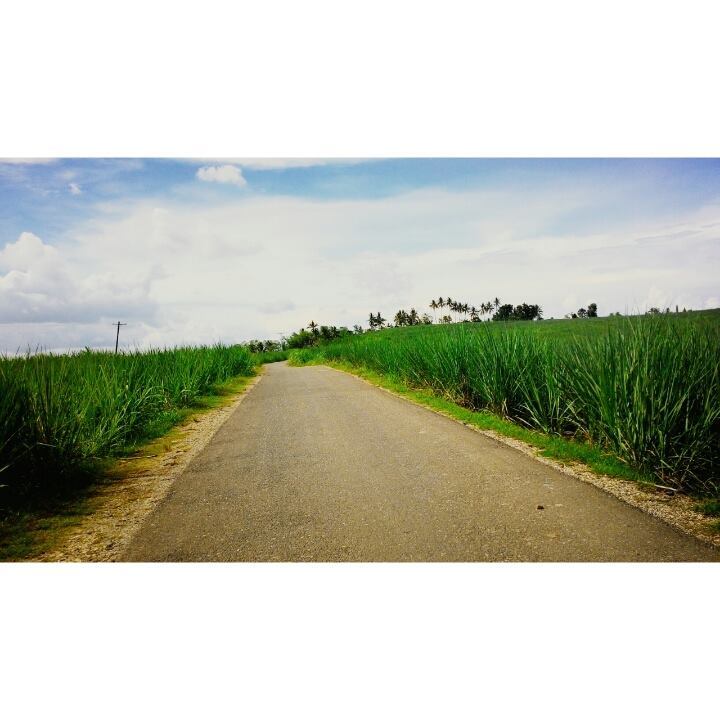
The journey might look different from what I planned, but it had not necessarily ended.
And perhaps my faith helped me become willing to consider that.
I have always liked the image of God carrying us when we feel unable to continue, although I understand it as an expression of trust rather than a promise that every difficulty will disappear. There are circumstances where we need practical assistance, professional guidance, or the support of people around us. Faith does not eliminate those needs. But it can remind us that asking for help is not something to be ashamed of.
I want to remember that when life becomes difficult again. Because I know it will. There will be disappointments, challenging responsibilities, and decisions that require more patience than I would prefer.
I cannot prevent every complication or guarantee that the future will follow my expectations.
But I can continue developing my skills, learning from experience, and treating people with consideration. I can appreciate the opportunities available to me without allowing uncertainty about tomorrow to occupy every thought.
And I can remember that my worth does not depend entirely upon the number of ambitions I have already accomplished. Perhaps that is enough to concentrate on for now.
As I write this on June 12, Philippine Independence Day, the idea of freedom feels particularly interesting to me. We commemorate an important moment in our nation’s history, recognising the value of self-determination and the responsibilities that accompany it. In my own small and entirely personal way, I have been thinking about the freedom to reconsider my direction, to pursue opportunities that matter to me, and to avoid allowing disappointments to determine everything I believe about my future.
Of course, the circumstances of a nation’s history and the concerns of an individual life are very different. I would not pretend that my professional decisions possess the same significance as the struggles remembered on Independence Day.
But perhaps the occasion encourages me to reflect upon responsibility and the importance of participating meaningfully in the society to which I belong. Working in government service has given that reflection a particularly personal dimension.
I am grateful for the opportunity to contribute to communities in Cebu and to develop a better understanding of the work involved in encouraging participation and local development. I hope I remain worthy of the responsibilities entrusted to me.
There is much I still need to learn, and I am certain the coming months will introduce situations that challenge my patience and assumptions. But I look forward to the experiences ahead.
Perhaps that is one of the greatest differences between the person I was a year ago and the person writing this entry today. I am still ambitious. I still worry. And I remain capable of constructing dramatic metaphors whenever life refuses to behave according to my expectations. But I am becoming more willing to appreciate opportunities that were not included in my original plans. I am learning to recognise that changing direction does not automatically erase the value of previous experiences.
And I am discovering that meaningful work can take different forms, sometimes involving hospital corridors and sometimes involving community discussions along unfamiliar barangay roads. I do not know exactly where I will be a few years from now. Perhaps I will return to clinical nursing, pursue another professional opportunity, or continue developing within work connected to communities and public service.
Those possibilities remain open. For now, I am grateful to be where I am. I have responsibilities that challenge me, opportunities to learn, and the chance to work alongside people whose experiences broaden my understanding of the world. That is more than enough reason to approach the coming days with interest.
I began this entry joking that my shoes have developed a social life more interesting than mine. Looking at them now, I suppose they have become an appropriate reminder of the unexpected distance between the future I once imagined and the life I am currently experiencing. They have travelled beyond hospital corridors. They have accompanied me into unfamiliar communities.
And they have reminded me, through dust and occasional discomfort, that meaningful opportunities do not always arrive in particularly glamorous surroundings.
Perhaps I should stop expecting every new beginning to announce itself through something impressive. Sometimes it simply requires showing up, listening carefully, and being willing to learn. I still have ambitions that remain unfinished, and I would be delighted if the universe occasionally decided to cooperate with my preferred timetable. But for now, I am learning to appreciate the work before me.
There are people to meet, responsibilities to fulfil, and experiences waiting beyond the familiar routines of my previous life. And if I encounter another disappointment, I hope I will remember that it does not necessarily remove every possibility for the future. The bird in my imagination may still be worrying about its missing wing.
As for me, I think I shall concentrate on making sensible use of the feet I already possess. They have taken me farther than I expected.
And judging by the condition of my shoes, they are nowhere near finished.
June 12, 2015 — for the unexpected opportunities that led me into government service, the communities that continue teaching me about people, and the faith that helps me face an uncertain future without requiring every answer in advance.
— Just Anj, RN | Community Empowerment Facilitator, occasional philosopher, and reluctant collector of dusty shoes.


































Leave a Reply