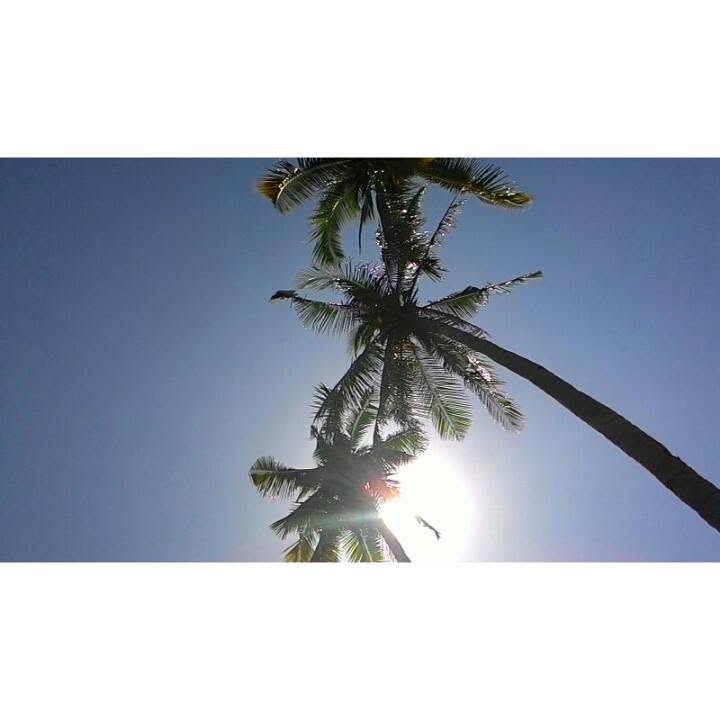
A coconut is a remarkably effective way of reminding me that an office desk is not the centre of the universe, especially when the coconut is almost the size of my head, freshly opened, and handed to me with a straw that looks far too delicate for the responsibility it has been given. There is something wonderfully uncomplicated about drinking buko straight from its shell: no café menu, no elaborate packaging, no barista asking whether I want an extra shot of anything, just cool coconut water, a plastic straw, and nature quietly reminding me that it has been running a beverage business long before anybody thought of putting coffee in a paper cup.
The coconut does have one serious disadvantage because once somebody hands me one, I have to figure out how to hold it with dignity. This is surprisingly difficult when the thing weighs approximately as much as a newborn baby and I am trying to look like a respectable field worker rather than a contestant in an agricultural beauty pageant. I already have photographs suggesting that dignity has not always survived the encounter.
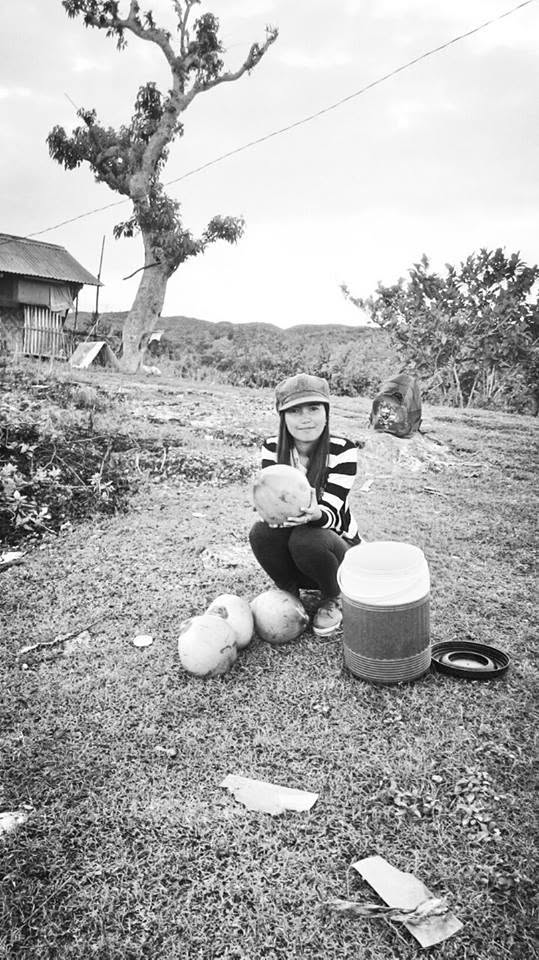
One of those photographs shows me crouching on a grassy hillside with an enormous coconut in both hands while several others sit beside me, apparently waiting for their turn in front of the camera. A large water container is nearby, the landscape stretches behind us, and a tree stands in the background looking far more composed than I do. It is probably not the sort of image one places in a professional portfolio, but I like it because it says something about what I am enjoying most about fieldwork this year.
Working as a Community Facilitator has taken me beyond offices and into communities, and I think that is what makes the work interesting to me. On paper, community development can sound very formal: meetings, plans, participation, priorities, documents and responsibilities. Out here, those words acquire roads, faces, weather, distance, mud, laughter and sometimes a very large coconut.
I am beginning to realise that growing up somewhere does not necessarily mean knowing it. We become familiar with our own routes, the shops we use, the roads we take repeatedly and the places that make up the small geography of ordinary life. Then work brings you somewhere only a short distance away and you suddenly realise that there are communities near home whose daily realities you have barely considered.
Fieldwork makes that ignorance difficult to maintain because a place stops being merely a name and becomes something lived in. You begin noticing how far people travel, what roads they depend on, what services are accessible, what concerns matter locally and how different reality can look once you step outside the meeting room. A proposal can appear neat on paper, but people’s actual circumstances are rarely so obedient.
The roads have been particularly committed to teaching me this lesson. Some begin confidently enough, smooth and respectable, giving everyone the false impression that the journey will be straightforward. Then concrete turns into gravel, gravel becomes earth, earth becomes mud, and somewhere along the way the road seems to reconsider whether it wishes to remain a road at all. At that point, everyone inside the vehicle begins quietly reviewing the decisions that brought them there.
And yet, strangely, I do not think the difficult roads are what I remember first. What stays with me are the things beyond them: green hills, trees, houses scattered across the landscape, stretches of countryside and places that feel completely different from the routes I normally see every day. Sometimes the journey itself gives us something worth noticing before we even reach our destination.
There are moments when I find myself looking out of the window and thinking how little of my own surroundings I actually know. We often imagine discovery as something that happens somewhere far away, perhaps after buying a plane ticket or crossing an ocean. Meanwhile, there are roads close to home we have never taken and communities whose names we recognise without really knowing what life there looks like, and fieldwork has made my own country feel much larger.
It has also made me more cautious about the way we look at rural places. A beautiful hillside can be breathtaking in a photograph while still belonging to a community where transportation is difficult, and a rough road may become an amusing story for somebody visiting once while remaining a daily inconvenience for the people who use it regularly. The countryside can look peaceful without necessarily being easy, and I think that distinction matters.
It would be very easy for an outsider to arrive, admire the scenery and decide that life here must be wonderfully simple. But simplicity from a distance can hide complicated realities, because access, transportation, livelihood and services do not disappear simply because the landscape is beautiful. At the same time, I do not want to look at communities only through what they lack, because that seems equally unfair.
People are not lists of problems waiting for someone from outside to solve them. There is knowledge here, humour, relationships, hospitality, resourcefulness and a very clear understanding of local circumstances that visitors like me are still learning to see. A place can be beautiful and difficult, a household can have limited resources and still insist on feeding a visitor, and a community can face serious challenges while containing people who know far more about what their area needs than someone carrying a folder and an identification card.
The hospitality is probably one of my favourite parts because there is a particular Filipino law of nature which states that if a visitor arrives, the visitor must be offered food. This rule appears to operate independently of schedules, hunger levels and any previous meals consumed before arrival. You arrive for work and somebody offers water, then coffee, then food, and if you make the tactical mistake of saying, “I already ate,” the information is often received with approximately the same enthusiasm as a wrong answer in a quiz.
“Kaon lang gamay,” they say, meaning just eat a little, and I have learned that gamay is a highly flexible unit of measurement. Sometimes it means a genuinely small amount, while at other times it appears to mean enough food to sustain several adults through an agricultural emergency. Refusing too much feels impolite, but accepting everything can quietly destroy any schedule you thought you had. Fortunately, being fed is one occupational inconvenience I am willing to tolerate with considerable professionalism.
Then there are the coconuts, and fresh buko somehow tastes better when it appears unexpectedly in the middle of a working day. Someone opens it, puts in a straw, hands it to you, and for several minutes the official purpose of the visit moves slightly into the background. You are still there for work, but you are also a guest, and I like that small shift.
There is something human about those interruptions. We have responsibilities, of course, and there are things to discuss, activities to support, information to understand and work that needs proper attention. Yet around all of that are moments nobody writes into the programme: somebody making a joke, a roadside pause, an unexpected snack, a conversation during travel or everyone trying to drink from coconuts that seem unnecessarily large.
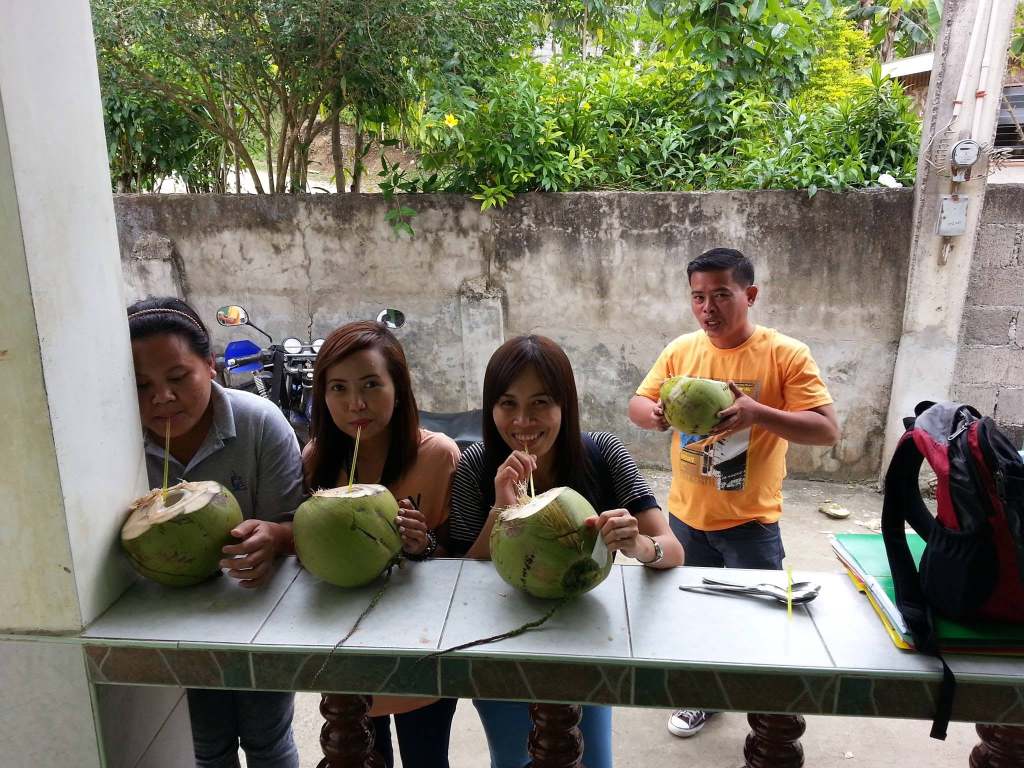
One of my favourite pictures from these trips looks less like a professional field visit and more like an emergency meeting of the National Association of Buko Enthusiasts. Several of us are standing together with fresh coconuts and straws, while another coconut appears in the background ready for deployment. I can only assume the agenda was very efficient: drink coconut water, check whether more is available, then return to work before somebody decides we have opened a roadside refreshment business.
What I like about that photograph is how ordinary it is. Nobody is receiving an award and there is no elaborate backdrop or carefully arranged recognition ceremony. It is simply a group of people sharing a drink during a working day, and I suspect those will be the photographs I keep because they show what the work actually feels like rather than how it might look in an official report.
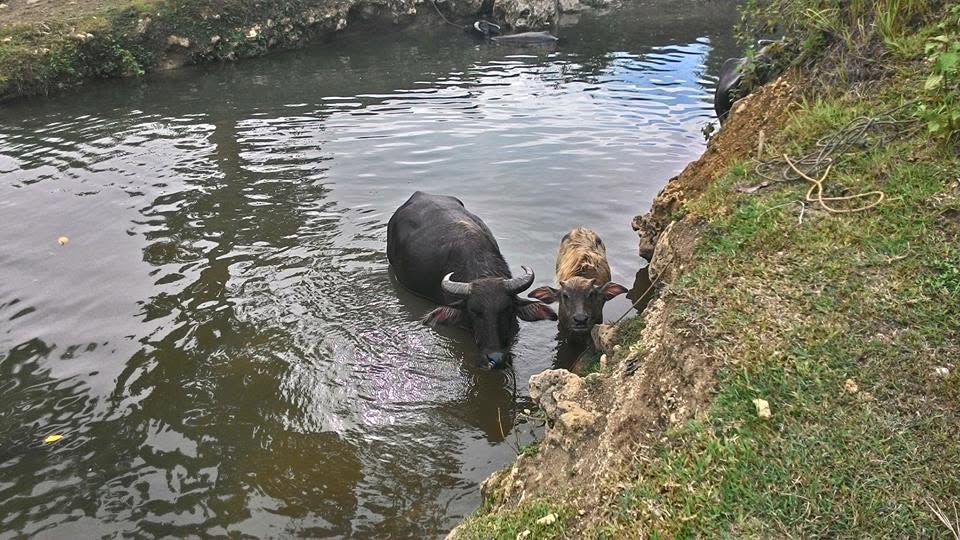
There is another photograph of two carabaos standing in water, one larger and one smaller, both looking far less concerned about productivity than any employed human being I have ever met. The larger one has the calm authority of an animal that has absolutely nowhere urgent to be, and I doubt either of them has ever submitted a weekly accomplishment report. It is an enviable existence.
Animals are wonderfully indifferent to professional anxiety. A carabao does not care about deadlines, career plans, job titles or whether anyone completed the required paperwork before lunch; it simply continues being a carabao. There is probably a profound philosophical lesson hidden there, although I suspect the carabao itself would prefer that I stop assigning intellectual significance to its afternoon bath because perhaps it is simply hot.
Still, I think this is another reason I enjoy being in the field. The environment keeps interrupting the idea that work is the only thing happening because there are trees, animals, changing weather, people passing by and everyday scenes continuing whether our meeting runs on time or not. The world does not stop because somebody has a schedule, the weather certainly does not consult one, and roads appear particularly unwilling to cooperate with planning.
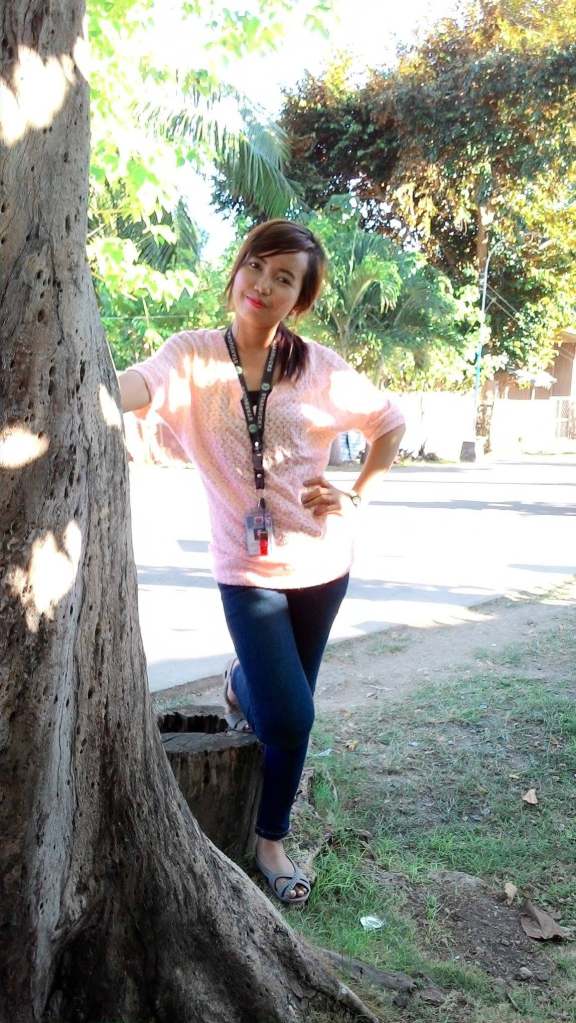
I have a photograph standing beside a large tree, still wearing my ID, which creates a strange visual combination. There I am, visibly attached to employment, while the tree beside me appears completely unconcerned with credentials. I imagine it looking at the ID and thinking, Very impressive, human. But can you photosynthesise? The answer is no, so the tree wins.
There is something freeing about spending part of the working day outside conventional office walls. Offices are useful, obviously, because planning, coordination, documentation and all the less photogenic parts of work need somewhere to happen. But I enjoy travelling, seeing places rather than only reading about them and understanding that the physical environment can shape people’s everyday lives in ways a document cannot fully explain.
A proposal can look wonderfully neat on paper, while reality is rarely that polite. People have different priorities, resources are limited, access varies, and what seems straightforward from a desk can become far more complicated once you see the actual road, distance or circumstances involved. I think this is slowly changing the way I look at communities because I am trying to ask more before I assume.
What matters here, what do people themselves consider important, what does an outsider fail to notice and what choices are actually available? Those questions sound simple, but I am discovering how easy it is to reach conclusions before we know enough. We do this with photographs too, because we see a smiling person and assume happiness, see a modest house and immediately create a story about the people living inside, or see green countryside and imagine a peaceful life.
But a photograph only captures what was visible during one moment, while everything else remains outside the frame. That thought has been following me during fieldwork because so much of what we see can be misleading if we stop at appearances. A beautiful road may be difficult to travel during bad weather, a peaceful landscape may be far from essential services, and a household that appears to have little may offer food with extraordinary generosity.
The photograph is true, but it is simply incomplete. Perhaps people are like that too, and this work is making me more careful with simple explanations, especially when it comes to poverty and opportunity. It is easy to say that people should simply work harder, make better choices or try more, but it becomes harder to speak so confidently once you begin considering distance, infrastructure, education, livelihood, family responsibilities and access to resources.
Personal choices still matter, but choices do not happen in identical circumstances. That does not mean I suddenly understand everything because I visit communities for work; if anything, the opposite is happening. I am becoming more aware of what I do not know, and perhaps that is a useful thing.
There is a particular danger in assuming that entering somebody else’s environment automatically gives us the authority to explain their life. Fieldwork has made me appreciate how much listening has to happen before understanding can even begin. The people who live somewhere possess knowledge that a visitor cannot acquire merely by arriving with professional responsibilities, because I may know something about the work that brought me there while they know what it means to live there.
And somewhere among all these serious thoughts are the friendships developing between those of us travelling together. Fieldwork has a way of producing its own kind of companionship because there are long journeys, unfamiliar routes, meals taken wherever we happen to be and enough practical inconvenience to generate an impressive amount of shared humour. Some jokes will probably make no sense outside the vehicle in which they were created, while some photographs will only be funny to the people who know what happened five minutes earlier.
Some ordinary breaks may become more memorable than meetings we spent hours preparing for, and nobody puts that on an accomplishment report. Maybe they should. There ought to be a section labelled Unexpected Things That Made the Day Better: coconut, one; roadside laughter, three incidents; carabao observation, clinically insignificant but excellent for morale; colleague nearly defeated by oversized buko, highly memorable.
I would excel at that section.
I sometimes wonder what my working life would look like if everything happened exactly according to plan. Probably very efficient, but also probably very boring. The comedy of fieldwork often comes from the distance between the itinerary and reality, because a route takes longer than expected, the weather changes, somebody offers food when we are supposed to be leaving, or a formal working day suddenly contains five people drinking coconut water together.
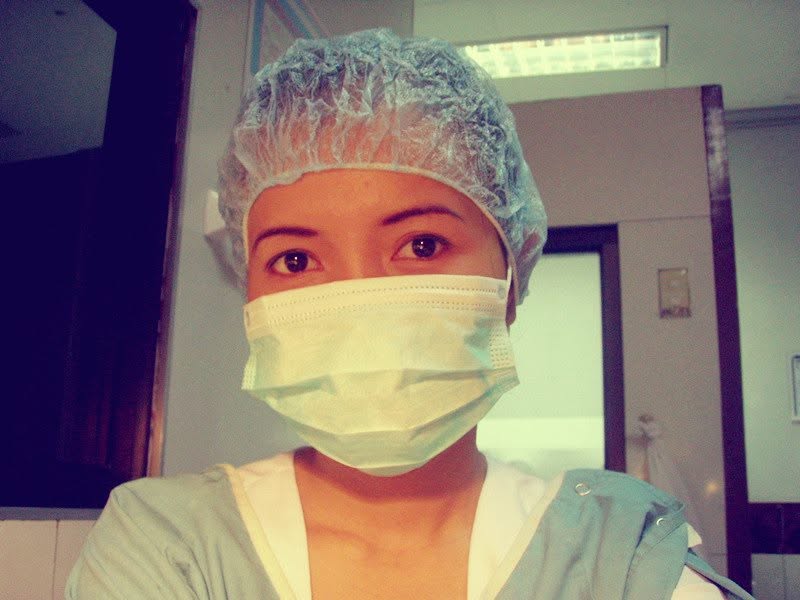
Plans matter, but some of the best parts happen beside them. That is what I am enjoying about this chapter of my working life because I trained in nursing, and now I find myself doing community work instead, which is not exactly the straight professional line I once imagined for myself. I still do not know exactly where my career will eventually take me, but for now, I am here.
And I do not want to become so preoccupied with the next destination that I fail to notice what this one is giving me. There are skills I am learning here that cannot be reduced to a future job title, because I am learning to communicate with different people, to listen before assuming, to notice context and to understand that a community is more than whatever problems appear in a report.
I am also learning how enormous a coconut can become before it stops looking like a beverage and starts looking like a dependent.
These are both valuable forms of professional development.
Possibly.
When I look at the photographs from these trips, I realise how little a job title can explain. “Community Facilitator” may describe what I do, but it cannot describe the heat of the afternoon, the uneven road, the laughter inside the vehicle or the taste of fresh buko after travelling for hours. Official documents are very good at recording responsibilities and very poor at remembering atmosphere.
Maybe that is why I take pictures, because a photograph catches the spaces between the responsibilities. There I am again on the hillside, crouching on the grass and holding that enormous coconut while several more sit beside me. The tree stands behind us, the countryside stretches outward and nothing about the scene looks particularly organised, which may be exactly what I like about it.
Somebody who sees the photograph without context might assume I spent the day harvesting coconuts, perhaps visiting a farm or perhaps entering agricultural entrepreneurship. Judging by the way I am holding the coconut, they may even think I am preparing to adopt it. All reasonable theories, but the truth is less dramatic because I am working, travelling, learning and somewhere between the meetings, roads and responsibilities, having a surprisingly good time.
If somebody asks me what I enjoy most about being a field worker, I suppose I can give the respectable answer. I enjoy learning about communities, listening to people and seeing how development looks outside formal documents, and that is completely true. But there is another answer behind it because I love the journeys, being outside, discovering places relatively close to home that still feel unfamiliar, the friendships forming along the way, the food offered without fuss and the laughter that appears when nobody scheduled it.
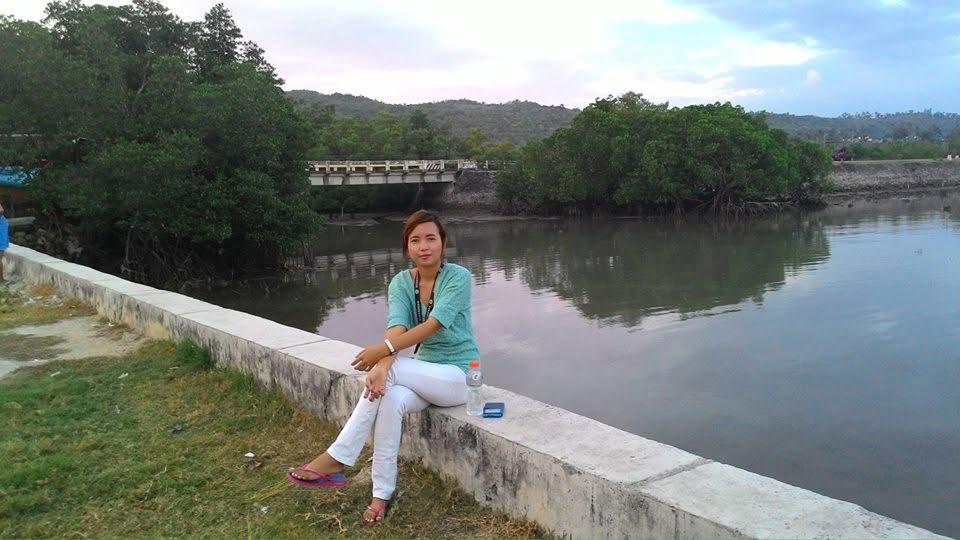
I love those few minutes when work temporarily forgets to feel like work, especially when somebody hands me a coconut. So perhaps this is what 2015 is teaching me at the moment: a job can give you a reason to travel somewhere, but it is often the people, the road, the unexpected conversations and the ridiculous photographs that make you glad you went.
As for that enormous coconut, I hope it appreciates its contribution. So far, it is the only member of my working day that has improved morale without requesting a meeting, submitting a form or asking me for an accomplishment report.
Still somewhere beyond the office walls,
Anj












Leave a Reply