
The calendar had barely recovered from New Year’s Eve when I found myself professionally unemployed and personally overqualified in the art of worrying. December had taken my employment contract with it, along with the routine of getting up for work, knowing where I had to be and having a respectable answer ready whenever someone asked that particularly Filipino question, “Asa na ka nagtrabaho karon?” Where are you working now?
There ought to be a grace period after New Year. Perhaps the first three weeks of January should legally prohibit questions about careers, finances, marriage plans and the general direction of one’s life. January already asks enough from us after weeks of Christmas food, family gatherings and songs we have been hearing since approximately September. Surely professional development could wait until February.
Unfortunately, adulthood observes no such courtesy. The fireworks had finished, the celebrations were over and the decorations would eventually return to their boxes, although the Philippines has never been particularly strict about when Christmas officially ends. The calendar now said 2016 with remarkable confidence, as though it had personally reviewed the twelve months ahead and found no reason for concern.
I wished I shared its certainty.
My contract as a Community Facilitator had ended last month. For a while, my working life had taken me away from the profession I originally trained for and into communities, meetings, planning, conversations and the complicated business of understanding what people actually need rather than what somebody else assumes they need. It had been a different world from nursing, but not an insignificant one.
That work had changed the way I looked at poverty, participation and opportunity. It had made me notice how much of a person’s life is shaped not only by individual decisions but by roads, schools, income, family responsibilities, access to services and whether people are genuinely included in decisions affecting them. I had entered the role with one professional background and left it seeing society through a wider lens.
But however meaningful the experience had been, contracts possess an unfortunate commitment to dates. December arrived, the agreement ended and gratitude did not magically convert itself into a salary. I could appreciate what the work had taught me and still admit that, at the beginning of 2016, I was unemployed.
The two facts were perfectly capable of coexisting. My bank account was simply less philosophical about it.
There is something strangely theatrical about the end of employment. One day, your mornings are organised around responsibilities, colleagues and things that need doing. Then a date arrives and the ordinary machinery of work continues without you. Offices open, vehicles fill with commuters, shops lift their shutters and somewhere somebody complains about having to go to work while another person would gladly borrow the complaint for the week.
That contradiction amused me because free time changes character depending on whether we chose it. After several exhausting working days, a Monday with nowhere to report can feel luxurious. Once work disappears altogether, the same Monday can start behaving like an interviewer.
What are you doing today? What is the plan? When will you work again? Are you making good use of all this time? I had barely entered January and the calendar had already appointed itself my supervisor.
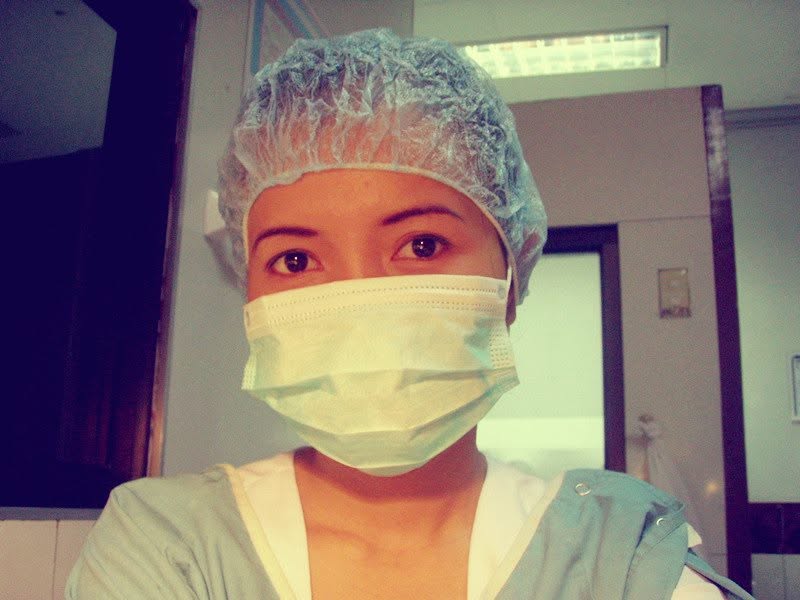
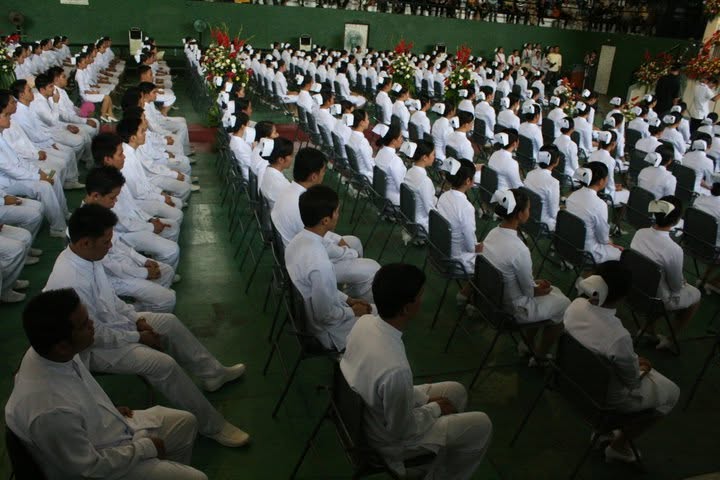
This time, however, I did have a direction in mind. I wanted to return to nursing.
There was something slightly strange about saying that because nursing had never completely stopped belonging to me. It was the profession I had studied for, the language of anatomy, assessment and clinical responsibility still familiar somewhere underneath everything I had learned elsewhere. But returning to a profession after spending time in another field is not the same as simply walking back into a room and discovering everything exactly where you left it.
Knowledge needs attention. Professional standards move, clinical judgement has to be maintained and competence cannot survive indefinitely on nostalgia. I could not reasonably say, “Well, I once studied this, therefore my brain has preserved every detail in museum condition.”
My brain has never shown that level of archival discipline.
Returning to nursing therefore meant preparation, and in my case that preparation involved another licensure examination because I wanted to explore the possibility of working abroad. The examination would be one requirement among several, not a magical passport into a new life, but it was a practical beginning. I would need to study, review subjects I had not used in the same way for some time and become comfortable again with the particular cruelty of multiple-choice questions.
Multiple-choice questions have always seemed deceptively polite. Four answers stand before you as though participating in a democratic process, each presenting itself with admirable confidence, despite only one being permitted to win. The other three are there largely to test whether you can remain emotionally stable while doubting information you were certain you understood five minutes earlier.
I knew the examination would require serious preparation. I also knew that wanting to pass was not the same as being ready to pass. There is humility in opening study materials and discovering exactly how many things you need to revisit.
A wrong answer in practice can bruise the ego for approximately thirty seconds, but it is useful. It shows where understanding is incomplete while the consequences remain safely limited to irritation. Better to discover the gap while sitting with a reviewer than when professional judgement is actually required.
Nursing deserved that seriousness. Clinical competence matters because the work eventually involves real people whose safety cannot depend on how confident I happen to feel. Knowledge, judgement and professional standards exist for reasons larger than my ambition to work abroad.
I could respect that completely while still wishing the examination required less studying. Human beings are capable of holding several truths at once.
The months ahead began arranging themselves in my imagination: review materials, practice questions, study schedules and the inevitable afternoon when I would read an explanation three times and become increasingly convinced that the textbook had developed a personal grudge. There would be subjects that returned easily and others that behaved like people I vaguely remembered from school but could no longer confidently identify.
Yet the studying represented more than an examination. It gave shape to a period that might otherwise have felt directionless. My contract had ended, employment was uncertain and suddenly I had something practical towards which I could direct the next few months.
Unemployment does strange things to time. Without the structure of work, a day contains much more freedom and considerably more responsibility. Nobody tells you when to begin, what must be finished before lunch or whether the afternoon has been productive enough.
Freedom sounds wonderful until it requires self-discipline.
I could decide when to study, when to rest and how to organise my responsibilities. I could also procrastinate with remarkable creativity if left unsupervised. A study timetable therefore became less an instrument of academic excellence and more a diplomatic agreement between my ambitions and my ability to become distracted by almost anything else.
Still, I liked having a plan. Plans make uncertainty look temporarily civilised.
The difficulty was remembering that preparation and control are not the same thing. I could study for the examination but could not guarantee the result. I could research opportunities abroad but could not guarantee employment. I could create a beautiful schedule and still encounter a Tuesday when absolutely nothing proceeded according to it.
This distinction offended the part of me that believed sufficient organisation should eventually make life obedient.
Apparently, life had not received the memo.
I think we sometimes speak about hard work in ways that make outcomes sound more predictable than they really are. Study hard and you will pass. Work hard and you will find employment. Be patient and everything will eventually work out. These phrases can motivate, and effort certainly matters, but perhaps they become unfair when spoken as guarantees.
People can prepare seriously and still fail. They can apply repeatedly and remain unemployed. They can make sensible plans and encounter circumstances they could not reasonably have predicted.
Recognising that does not reduce the value of effort. It simply puts effort where it belongs: among the things we can influence rather than among the things we can guarantee.
For January, that distinction seemed important. My responsibility was to prepare properly. The result belonged to a later version of the year.
Unfortunately, the imagination has little respect for chronological order. Before I had even properly begun studying, my mind was already several chapters ahead: examination result, requirements, application, employment, another country and an entirely different life.
Imagination travels cheaply.
It requires no airfare, professional registration or supporting documents. It can relocate a person internationally before breakfast and have them established in a new career by lunch.
That is part of what makes hope useful and dangerous at the same time. Imagining a possibility can motivate us to prepare for it, but imagined futures can also start feeling emotionally real long before circumstances have agreed to cooperate.
In January 2016, the accurate version of my life was less dramatic. I did not yet have an overseas nursing position. I had not passed the examination and I was not arranging a departure. I was unemployed after the end of a contract and preparing to begin a process that might lead somewhere different.
It did not make an impressive announcement.
It was simply true.
Truth can be less glamorous than ambition, but it is considerably easier to manage.
That mattered because Filipino conversations have an extraordinary ability to promote possibilities without consulting the person involved. Mention that you are considering working abroad and someone eventually asks when you are leaving. Say you are preparing for an examination and another person begins discussing which country you might choose.
A possibility can acquire immigration status before the applicant has finished reviewing the first chapter.
I exaggerate, although perhaps not by much.
That made me more careful about what I shared. There is comfort in telling supportive people about plans because they can offer advice and encouragement, but there is also value in allowing an ambition to remain private while it is still being tested against reality. Not every intention requires an audience.
Some plans need room to be unfinished.
I was already uncertain enough about work without turning the examination into another public measurement of whether my life was progressing correctly. It was an important professional requirement, but it did not need to become a referendum on my worth.
This became particularly important as I thought about moving from community work back towards nursing. I did not want to treat my previous experience as something that needed to be erased for the return to make sense.
The fields were different. Community facilitation was not clinical nursing, and I would never pretend the skills or responsibilities were interchangeable. Yet both experiences involved people, their circumstances, the resources available to them and the consequences of systems that either help or complicate their lives.
Community work had taught me to look beyond the obvious problem. A road could affect school attendance, income and access to healthcare. A household’s choices could make more sense once resources and responsibilities were understood. A person who seemed disengaged in a meeting might simply be unused to being asked for an opinion.
Nursing required a different body of knowledge, but perhaps I would carry some of that broader understanding with me. People do not stop being members of families and communities when they become patients. Health exists inside economic, social and personal circumstances too.
The years outside direct nursing therefore did not have to become a blank space in my professional story. They were not the same experience, but they still belonged to the person returning.
Careers rarely develop as neatly as we pretend they do. We like a straightforward biography: study something, work in the field, gain experience, progress and eventually produce a CV that requires no explanatory paragraphs.
Real life has other ideas.
Contracts end. Opportunities appear somewhere unexpected. People discover new interests, change direction or return to something they once left. Financial circumstances alter what becomes practical, and decisions that made sense several years ago may deserve reconsideration later.
That does not automatically mean the earlier decision was a mistake.
I was not returning to nursing because I had discovered that community work had no value. I was returning because nursing remained the profession I had trained for, and I wanted to see what opportunities might still be available through it.
Both things could be true without fighting for ownership of the story.
Perhaps professional identity is more cumulative than we realise. We carry old experiences forward even when the job title changes. They shape the questions we ask, the things we notice and the assumptions we are less willing to make.
I liked that idea because it made “starting again” feel more accurate. I was becoming a beginner in certain things without becoming the same beginner I had once been.
Of course, professional ambition eventually encounters its least poetic subject: money.
An examination has fees. Studying may require resources. Documents cost money, travel can cost money and subsequent requirements may introduce new expenses with impressive creativity. Pursuing employment can therefore require spending money before there is any income to justify the investment.
I have always found that arrangement slightly suspicious.
You pay for preparation, devote months of time and hope the eventual professional opportunity makes the effort worthwhile. It resembles a business venture except that the product being developed is your future eligibility and the company has refused to promise a return.
Financial circumstances therefore influence more than comfort. They influence how easily people can attempt opportunities. Someone with substantial savings may register for an examination and think mainly about preparation. Another person may have to ask whether paying for the attempt is sensible at all.
The difference is not necessarily ambition.
Sometimes hope needs a budget.
It is not the most romantic thing I have ever written, but adulthood keeps insisting on introducing receipts into otherwise beautiful plans.
I needed to remain ambitious without becoming careless. Preparing for the examination meant taking the academic work seriously while also recognising what the process would require practically. Working abroad could remain a goal without turning into an assumption.
January was only the beginning.
That thought made the usual New Year optimism seem slightly funny. Every January, people promise to become healthier, more organised, financially responsible, widely read and somehow unrecognisable from the same person who had been eating Christmas leftovers two days earlier.
I have nothing against resolutions. A new year can be useful for reconsidering priorities, but midnight is not a magical administrative reset. The calendar changes while many of our circumstances remain exactly where we left them.
My contract had still ended. The examination still required preparation. I still did not have stable employment. No amount of fireworks had changed those facts. Perhaps that was fine. A new beginning does not need to erase the previous chapter. It can simply mean deciding what to do with whatever remains when the celebration is over.
For me, the direction was ordinary: study, review, prepare and consider the next appropriate step. These actions would never look as impressive as announcing a dramatic career move, but perhaps most progress begins before there is anything worth announcing. A chapter reviewed is still work done. A concept understood more clearly still matters. A question answered correctly after getting it wrong several times is still progress, although the ego may request that we remember only the final answer. Preparation is made from small repetitions. The grand future, if it ever arrives, is usually assembled from rather unglamorous afternoons.
I think that suited January.
There was no need to reinvent myself overnight. I only needed to become reacquainted with a profession that still mattered to me and honest about what I had forgotten. That required another kind of confidence. Not the confidence of believing I already knew enough, but the confidence to discover what I did not know without interpreting every gap as proof that I no longer belonged.
Competence and confidence are related, but they are not identical. Confidence can help us approach a challenge. Preparation gives that confidence somewhere solid to stand. Believing I could pass did not remove the need to study. Discovering that I needed more study did not prove that I could not pass. Holding both ideas together seemed like a reasonable goal for the year, even if my brain occasionally preferred more dramatic conclusions.
The beginning of 2016 therefore did not resemble the kind of beginning people usually photograph. There was no new job, no office badge, no airport departure and no triumphant declaration about finally knowing where life was going.
My contract had ended.
I was unemployed.
I wanted to return to nursing.
I had an examination to prepare for and a future whose possibilities remained uncertain.
It was not especially comfortable.
It was still a direction.
Sometimes meaningful decisions begin with temporary uncertainty. Choosing to try does not mean believing the road will be easy, and recognising potential difficulty does not automatically mean the road is wrong.
I could approach it one stage at a time.
January did not need to know what December would become.
I return to the calendar on the table. The first page of 2016 was still almost empty, and the working routine that had filled the previous months now belonged to the contract that ended in December. There was space where appointments and responsibilities had once been, which felt both freeing and slightly alarming.
Nobody would appear each morning to ask whether I had reviewed a nursing topic. No attendance sheet would document my effort and no supervisor would know if I had spent an afternoon studying or negotiating with myself about studying.
The responsibility was mine.
Freedom is wonderful until it asks for evidence of self-discipline.
Still, I finally had an answer of sorts for anyone asking where I was working. I was preparing to return to nursing.
It was not a job. It paid nothing and would probably cost me money instead. It would require several months of preparation, and its outcome remained completely unpromised. I looked at the blank spaces on the calendar and could already imagine future versions of myself complaining that there was never enough time to study. For the moment, however, January still offered its annual illusion of abundance: twelve months waiting politely in rows, apparently unaware of how quickly they intended to disappear.
Somewhere outside, a vehicle passed, a neighbour called across the road and the Cebu heat began gathering beneath the roof with its usual determination. Life looked almost exactly the same as it had before the New Year. My plans were changing inside an ordinary morning. Perhaps that is the peculiar thing about beginning again. The first day rarely resembles the future we hope to reach because there is no dramatic transformation, no audience and no proof that the decision will succeed. There is only a person looking at the circumstances in front of them and deciding what to try next.
December had closed one chapter for me. January had not handed me another finished story; it had handed me study materials.
Perhaps that was enough.
I turned towards the work ahead with the enthusiasm of someone who genuinely wanted a better future and remembered, unfortunately, exactly how examinations worked. The calendar could keep its smug collection of empty dates for now.
I did not need to fill the whole year. I only needed to begin.
Still returning with something left to learn,
Anj
















Leave a Reply