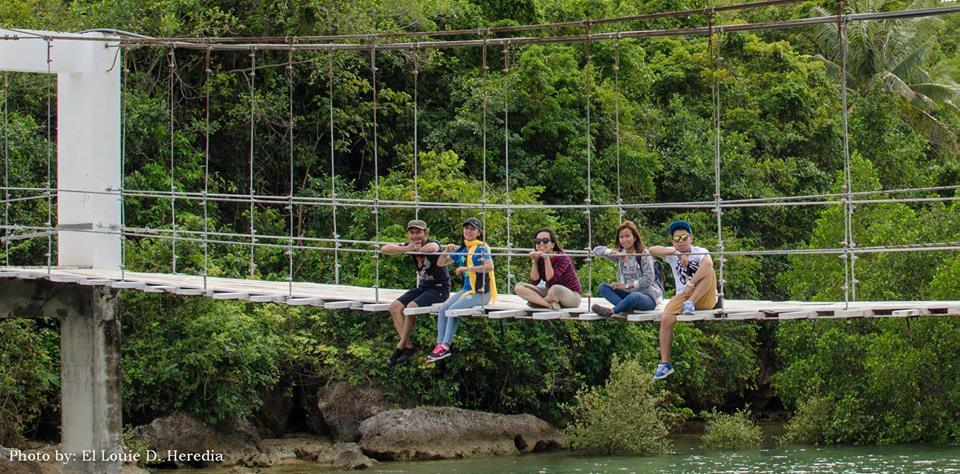
Right Turn in the Northern | March 2016 — A Day Trip Through Northern Cebu, a Hanging Bridge in Tabogon, and the Old Pantalan of Sogod
My blog and I have been in a rather complicated relationship lately. For approximately six months, I have been behaving like an irresponsible tenant who abandoned the property without leaving a forwarding address. The photographs have been accumulating, the stories have been waiting, and every time I promised myself that I would sit down and write, another responsibility appeared with the confidence of someone who had already booked an appointment. I suspect Tumblr has given up expecting my return and has begun considering new ownership. But here I am, finally attempting to compensate for my prolonged disappearance by publishing photographs that have been waiting so long they probably qualify as historical documents. Better late than never, I suppose, although at this rate I may eventually begin writing travel diaries about places I visited during the previous geological era.
Among the experiences I have been meaning to share is a little adventure from March 2016, when my friends and I decided to spend a day exploring the northern part of Cebu. It was one of those outings that reminded me how much beauty can be found surprisingly close to home, provided we occasionally make the effort to leave our ordinary routines behind. I had been encouraging my friends to visit the north for some time because I wanted them to experience the landscapes I had been telling them about. Cebu is often celebrated for its beaches, historical landmarks, and lively city life, but there is another side to the province that deserves attention: the countryside roads, coastal communities, quiet stretches of water, and places where the scenery appears perfectly content without an audience.
I have always found it amusing how easily we become tourists in places far from home while overlooking the interesting corners of our own province. We dream about foreign destinations, admire photographs of distant mountains, and imagine that beautiful scenery must involve an expensive plane ticket and an impressive collection of travel documents. Meanwhile, somewhere within travelling distance, there are landscapes we have barely explored because they have been sitting there all along, waiting for us to become sufficiently curious. Perhaps familiarity makes us less attentive. We assume that because something is close to home, we can visit it whenever we please, and that convenient whenever has a remarkable habit of never appearing on the calendar.
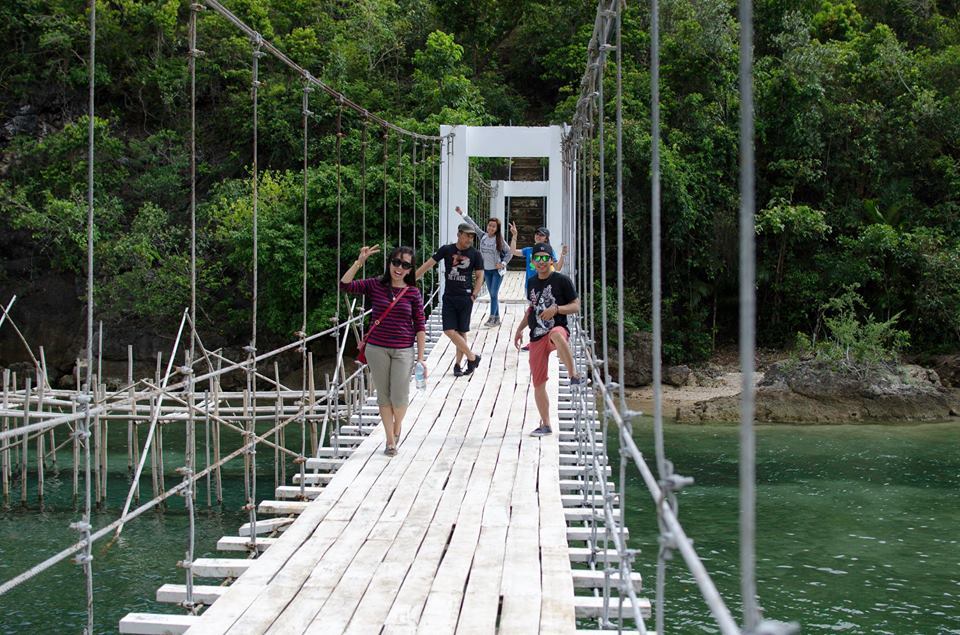
Fortunately, my friends and I managed to escape that particular trap for one day. We set out to discover a little more of northern Cebu, carrying the ordinary excitement that accompanies a trip with good company. I enjoy travelling with friends because even the journey becomes part of the entertainment. There are conversations that wander from one subject to another, occasional disagreements over what deserves a photograph, and the familiar tendency to become unusually enthusiastic whenever somebody spots a particularly attractive landscape. We may have intended to spend the day appreciating nature, but I suspect we were also very capable of entertaining ourselves with completely unrelated nonsense.
One of the reasons I wanted to explore the north was the opportunity to experience the changing scenery beyond the more familiar surroundings of Cebu City. As the landscape becomes less urban, the atmosphere takes on a different character. The roads lead through towns and communities with their own rhythms, while the presence of greenery and coastal views provides a welcome contrast to the buildings and busy streets we encounter in ordinary life. There is something satisfying about watching the surroundings change during a journey, particularly when you have no urgent appointment waiting at the destination. For once, reaching somewhere quickly is less important than appreciating what appears along the way.
I think travelling teaches us to pay attention differently. During a working day, I am usually concentrating on responsibilities, schedules, and whatever task requires my attention next. Even when I am outdoors, my thoughts may be occupied with things that have very little to do with the surroundings. But when I travel, I become more interested in the colours of the landscape, the shape of the coastline, the movement of water, and the ordinary details of places I might otherwise pass without noticing. There are moments when the scenery is so beautiful that I find myself becoming unusually quiet, which my friends would probably consider an accomplishment worth documenting.
Our visit to Salag in Tabogon was one of those occasions when I was particularly glad we had brought our cameras. The hanging bridge was a memorable sight, stretching across a landscape where the colours of the surrounding water created a beautiful contrast. I loved the way the river and sea appeared to meet, producing variations in colour that made the view especially striking. Water has an extraordinary talent for making ordinary scenery look as though somebody has spent hours arranging it for a photograph. Depending upon the light, it can appear calm, reflective, or wonderfully vivid, and I always find myself drawn to the changing shades that emerge where water meets the surrounding landscape.
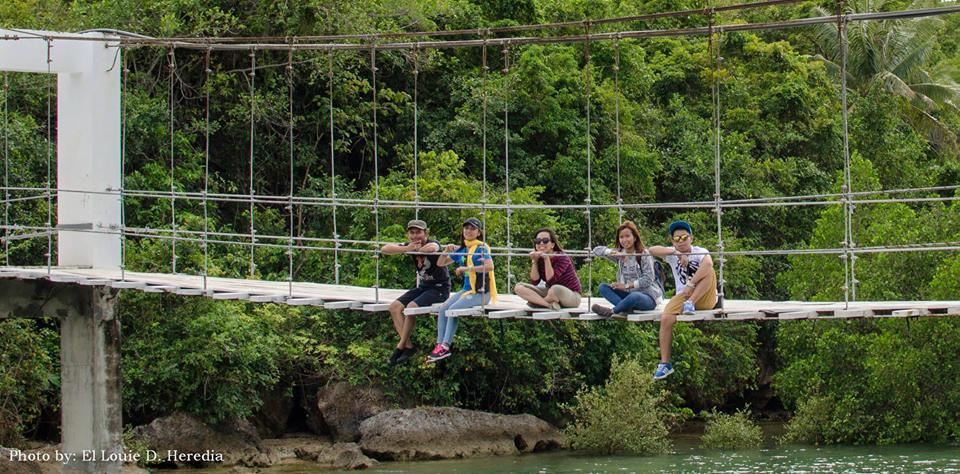
There was also something amusing about the bridge itself. A hanging bridge is hardly the sort of structure that encourages someone to forget the laws of physics altogether. Its appearance reminds you that crossing from one side to another involves a certain amount of confidence in the structure beneath your feet. I have always admired the engineering of bridges, partly because they accomplish something so practical while sometimes becoming beautiful landmarks in their own right. They connect places separated by water or difficult terrain, making journeys possible where travelling directly would otherwise be inconvenient. But of course, when I look at a hanging bridge with my wonderfully undisciplined sense of humour, I cannot resist giving it an entirely different interpretation.
A hanging bridge, I thought. Rather appropriate for an era when everybody seems obsessed with the question of forever. At least this one has made an actual commitment to connecting two sides, even if it occasionally looks as though it might prefer a less demanding profession. Para sa mga walang forever, perhaps a bridge is a perfectly respectable reminder that connections can exist without requiring an elaborate romantic declaration. I realise the comparison is ridiculous, but travelling with friends tends to encourage precisely this kind of unnecessary philosophical commentary. I am capable of appreciating a beautiful landscape and making a questionable joke about relationships within approximately the same minute.
Beyond the humour, however, I genuinely enjoyed the view at Tabogon. There was something refreshing about looking across the water and appreciating a scene that required no particular explanation. The colours, the surrounding greenery, and the bridge itself created an image I wanted to preserve. It reminded me that beautiful places do not always need elaborate attractions to be worth visiting. Sometimes the landscape is the attraction, and the most satisfying thing we can do is allow ourselves enough time to appreciate it.
I often wonder whether we have become too concerned with making every journey extraordinary. We plan activities, search for famous landmarks, and measure the success of an outing by the number of places we manage to visit. There is nothing wrong with an organised itinerary, of course, particularly when time is limited. But I think some experiences become memorable because we allow ourselves to enjoy what is already there without demanding constant entertainment. A bridge, a stretch of water, and the company of friends can provide more than enough reasons to consider a day worthwhile.
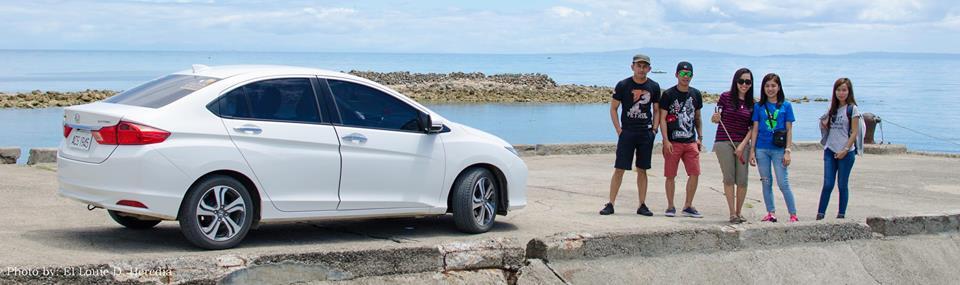
Our journey also brought us to Sogod, where we took photographs at the town’s old pantalan, or wharf. I have always liked places associated with the sea because they seem to possess an atmosphere different from inland towns. A wharf is a practical structure, built for people and vessels rather than for admiration, but it can also become a place where the surrounding landscape invites you to linger. There is something interesting about standing near the water and considering how important the sea has been to communities throughout Cebu. For generations, coastal places have depended upon maritime connections for travel, livelihood, and ordinary communication between communities.
The old pantalan at Sogod made an appealing subject for our photographs. I enjoyed the simplicity of the setting and the opportunity to experience another part of northern Cebu. Unlike destinations filled with organised attractions, places like this invite visitors to appreciate what is already present. The water, the coastline, and the familiar character of a provincial town are enough to make the surroundings interesting. Perhaps I find these locations appealing because they remind me that travelling does not always need to involve extravagance. There is pleasure in visiting places where daily life continues without appearing particularly concerned that somebody has arrived with a camera.
I have been thinking about how different it feels to experience familiar Philippine landscapes through the eyes of a traveller. Growing up in Cebu, I have become accustomed to seeing mountains, coastlines, and greenery as part of the world around me. Yet when I deliberately visit another part of the province, I begin noticing details I might otherwise overlook. A stretch of road becomes memorable because of the view beyond it. A modest structure becomes interesting because of its location. A town I once knew primarily by name becomes associated with an actual afternoon, a particular landscape, and the people who accompanied me there.
Perhaps that is one of the loveliest things about travelling. It changes places from names on a map into memories we can return to. Before a visit, we may know very little about a destination beyond its location or reputation. Afterwards, the name reminds us of conversations, photographs, scenery, and little incidents that occurred along the way. Tabogon will now remind me of the hanging bridge and the remarkable colours of the water beneath it. Sogod will remind me of the old pantalan and another opportunity to appreciate Cebu’s coastal beauty. These places have become part of my personal collection of journeys, and I am pleased that I finally made time to experience them with friends.
I also appreciate how travel allows friendships to develop beyond ordinary routines. We may see one another regularly, discuss work and personal concerns, and exchange messages whenever something interesting happens. But spending an entire day exploring somewhere together creates a different kind of shared experience. We encounter unfamiliar surroundings, make decisions about where to go next, and discover little things about one another that might never become apparent during an ordinary conversation. Somebody becomes particularly enthusiastic about photographs, another is fascinated by the scenery, and someone else may be primarily concerned with the important question of when everybody intends to eat.
I shall refrain from identifying which member of our group was most interested in food. It seems unnecessarily cruel to expose somebody’s perfectly reasonable priorities in a public blog, particularly when I might be the person under investigation. Travelling can be exhausting, after all, and I see no reason to pretend that appreciating natural beauty requires us to abandon our biological responsibilities. A wonderful view becomes even more enjoyable when nobody is distracted by an empty stomach. I suspect the tourism industry would benefit from acknowledging this scientific fact.
What made the outing especially enjoyable was that it did not require us to travel far beyond the province to discover somewhere beautiful. I have nothing against ambitious journeys, and I certainly hope to explore more places in the future. There are destinations I dream of visiting, cultures I would like to encounter, and landscapes I have admired only through photographs. But our little northern Cebu adventure reminded me that curiosity does not have to wait until I can afford a grand holiday. Sometimes there are worthwhile experiences much closer to home, provided I am willing to make time for them.
That last part has become increasingly important to me. Since entering the world of employment, I have discovered how easily responsibilities can consume the days that once seemed available for spontaneous activities. Work schedules, professional expectations, and personal obligations have a way of arranging themselves into an impressive collection of reasons to postpone enjoyment. We tell ourselves that we will travel when we have more time, meet friends when our schedules become easier, and visit interesting places when everything else has been completed. Unfortunately, responsibilities rarely gather together and announce that they have decided to give us an entire month without interruption.
I am beginning to suspect that if I wait for the perfect opportunity to enjoy life, I may eventually become an elderly woman with an excellent collection of unfinished travel plans. She will probably sit beside a window, complain about the inconvenience of modern technology, and wonder why her younger self spent so much time postponing perfectly reasonable adventures. I would prefer to spare her that disappointment, particularly because I suspect she would be rather unforgiving about it.
Perhaps I should be more deliberate about making room for experiences outside work. I enjoy being productive, and I appreciate the opportunities that allow me to develop professionally. But I also want to remember that life consists of more than responsibilities and ambitions. There should be space for friendships, travelling, writing, and the ordinary pleasure of discovering somewhere new. I do not need every outing to become an extraordinary achievement. Sometimes it is enough to return home having seen something beautiful and spent time with people whose company I enjoy.
There is also a particular pleasure in sharing a place with friends who have not yet experienced it. Before our trip, I had encouraged them to explore northern Cebu because I wanted them to appreciate its beauty for themselves. Describing a landscape is one thing, but being present allows people to form their own impressions. Photographs can provide an idea of what a place looks like, yet they cannot fully reproduce the experience of standing there, observing the surroundings, and noticing the little details that make a location distinctive.
I suppose that is why I enjoy recommending places I have visited. It is not simply about persuading somebody to admire the same scenery. I like the possibility that a destination which became meaningful to me might offer another person an equally enjoyable experience, even if they appreciate different details. Some people are drawn to the sea, others prefer mountains or historical landmarks, and a few seem capable of becoming deeply enthusiastic about the presence of a good café. I consider all these preferences respectable, particularly the last one.
As for the photographs from our March adventure, I must confess that the selection process has been unusually strict. I have quite a collection of pictures from the trip, but after reviewing them, I decided that only a few deserved to make their public debut. This decision was not based entirely upon the quality of the scenery. Unfortunately, the photographer and I appear to have experienced a serious disagreement about how I should be represented. The landscapes looked magnificent, the surroundings were beautiful, and my face seemed determined to demonstrate what happens when enthusiasm and exhaustion attempt to occupy the same photograph.
Haggardo Versoza, ladies and gentlemen. A photographic condition for which I am still searching for an effective remedy.
It is terribly unfair that nature can appear effortlessly beautiful while human beings must concern themselves with lighting, camera angles, hair, and the unfortunate possibility of being photographed halfway through an expression that should never have been preserved. The river and sea at Tabogon did not need to reconsider their poses. The old pantalan at Sogod made no complaints about its appearance. Meanwhile, I was examining photographs of myself and wondering whether the camera had developed a personal grievance.
I am aware that this is a somewhat ridiculous concern, especially when the purpose of travelling is to enjoy the experience rather than produce a flawless collection of pictures. But I am also human, and occasionally vanity manages to interrupt my more philosophical intentions. I can write several paragraphs about appreciating the beauty of nature and still reject a photograph because my expression resembles someone who has just received an extremely disappointing examination result. Apparently, personal growth has its limits.
Nevertheless, I am glad we took those pictures. Even the ones I have chosen not to publish remind me of the day, the places we visited, and the ordinary fun of travelling with friends. I suspect that years from now, I may look at them with greater affection than I currently possess. The hairstyles, clothing, and questionable facial expressions may become amusing reminders of who we were in March 2016. Perhaps the photographs I consider unflattering today will eventually seem valuable simply because they preserve a moment I can no longer repeat in exactly the same way.
That possibility makes me reconsider my enthusiasm for deleting imperfect pictures. We often want photographs to present the most attractive version of an experience, forgetting that the less polished moments can be equally memorable. A windswept hairstyle, an awkward pose, or a spontaneous expression may tell us more about the atmosphere of a particular day than a perfectly arranged image. I am not quite ready to publish the entire collection, but perhaps I should at least preserve them for my future self, who may appreciate the entertainment they provide.
Writing this entry several months after the trip has also made me think about how memories change when we postpone recording them. Immediately after travelling, the details remain fresh. We remember the conversations, the order of places we visited, and the little incidents that occurred along the way. As weeks and months pass, some of those details become less distinct, while others remain surprisingly vivid. I may no longer remember every conversation from our northern Cebu adventure, but I still remember the beauty of the water near the hanging bridge and the pleasure of spending time with friends in places I had wanted them to experience.
Perhaps those are the things that mattered most.
I used to feel that writing about an experience required me to remember every detail, almost as though I were preparing an official report. I wanted to describe everything accurately, arrange the events chronologically, and make sure no memorable incident was forgotten. But I am beginning to appreciate that a personal travel diary does not need to function like a complete inventory of everything that happened. It can simply preserve the impressions that remained with me, the details that continue to make me smile, and the thoughts that developed because I went somewhere different.
After all, memory has its own peculiar filing system. It occasionally forgets perfectly important information while preserving completely unnecessary details with extraordinary precision. I may struggle to remember a practical instruction from last week, yet somehow retain the exact feeling of standing beside a beautiful landscape several months earlier. I suppose the mind has decided that some experiences deserve permanent accommodation, regardless of whether they are useful for anything beyond nostalgia.
Our northern Cebu trip has certainly earned a place in that collection.
There is something comforting about knowing that the beautiful places I visited in March continue existing beyond my photographs and memories. The water at Tabogon still changes colour with the light, the landscape continues surrounding the bridge, and Sogod remains part of the northern coastline whether or not I return with a camera. My visit was only a brief interruption in the ordinary life of those places, but it gave me an experience I am grateful to have had.
I like thinking about that. We travel somewhere for a day, admire the scenery, take photographs, and eventually return to our responsibilities. Meanwhile, the place carries on. The people who live there continue their daily routines, the weather changes, and the landscape remains part of a much larger story than the few hours we spent observing it. Perhaps travelling becomes more meaningful when we remember that destinations are not simply backgrounds arranged for our enjoyment. They are real places with communities, histories, and lives continuing beyond our visit.
I hope that as I explore more of Cebu and other destinations in the future, I remain curious about those wider stories. Beautiful scenery is certainly worth appreciating, but places also deserve respect for the people who call them home. I would like to become the sort of traveller who enjoys taking photographs while remaining thoughtful about the communities and environments that make each destination distinctive.
For now, however, I am grateful that my friends and I finally made the journey.
I had spent some time encouraging them to visit northern Cebu, and seeing the landscapes together made the outing worthwhile. We did not need an elaborate itinerary or an entire week away from our responsibilities. One day was enough to explore a little, enjoy the scenery, and return with memories that would eventually find their way into this neglected blog.
There are still many places in Cebu I would love to visit. I imagine future journeys through unfamiliar towns, along coastal roads, and towards destinations I currently know only through recommendations or photographs. Some may require careful planning, while others might begin with a spontaneous suggestion from a friend. I hope I remain willing to accept those invitations whenever circumstances reasonably allow.
Perhaps the most difficult part will be remembering to write about them before another six months have passed.
At this rate, my blog may eventually become a historical archive of places I visited long before I found enough time to explain why I enjoyed them. I suppose that would still be preferable to allowing every memory to disappear into an increasingly disorganised collection of photographs. At least writing gives those images a little context, allowing me to remember not only where we went but why the experience mattered.
I began this entry apologising for my extended absence from Tumblr, imagining that six months of silence required some extraordinary explanation. But perhaps the truth is considerably simpler. Life became busy, responsibilities demanded attention, and the stories I wanted to share accumulated faster than I could find time to write them. It was not a particularly dramatic disappearance, despite my enthusiasm for describing it as though I had vanished during a mysterious expedition.
I was simply living.
And perhaps that is something worth appreciating, too.
The photographs waiting in my folders represent days when I stepped away from ordinary responsibilities to enjoy different experiences. Some may involve travel, others family gatherings or little adventures with friends. They remind me that life has continued providing stories even when I have not been particularly successful at recording them.
I hope I make more time to write about those experiences, not because every outing needs to become an impressive blog post, but because I enjoy preserving the little details that might otherwise become difficult to remember.
Northern Cebu gave me a beautiful beginning for this long-overdue return.
There was a hanging bridge that inspired an entirely unnecessary joke about forever, a lovely meeting of colours between river and sea, the old pantalan of Sogod, and a group of friends willing to spend a day exploring the province together. There were photographs worth keeping, including several that I currently refuse to publish for reasons of personal dignity. And there was the familiar pleasure of realising that the place I call home still contains corners capable of surprising me.
Perhaps that is what I want to remember most about this little adventure. We spend so much time imagining that beauty must be discovered somewhere distant, beyond familiar roads and ordinary routines. Yet sometimes it is waiting within the same province where we grew up, asking nothing more than a free day, a little curiosity, and somebody willing to make the journey with us.
I suspect I shall continue dreaming about faraway places. There are countries I hope to visit and experiences I would love to have beyond the Philippines. But I do not want those ambitions to make me overlook the landscapes already within reach. Cebu has given me many reasons to appreciate home, and I imagine there are countless others I have yet to discover.
As for my friends, I hope they enjoyed the northern adventure as much as I did. Perhaps one day we will return, explore other towns, and collect another set of photographs that will remain unpublished until I have recovered from the shock of seeing myself in them. I might even become more skilled at posing naturally, although that seems a considerably less realistic ambition than finding another beautiful destination.
For now, I shall consider this blog update a small victory. I have finally rescued one adventure from the depths of my neglected photo collection and given it the attention it deserves. The journey may have happened months ago, but the pleasure of remembering it remains surprisingly fresh.
And should Tumblr be wondering whether I intend to disappear again, I can offer only a cautiously optimistic answer. I have several more stories waiting, an unpredictable schedule, and a remarkable talent for postponing things I genuinely enjoy. But I shall try to return before the photographs begin demanding their own retirement benefits.
Until our next adventure, northern Cebu. Thank you for reminding me that some of the loveliest places are found by following familiar roads a little farther than we usually do. The bridge, the coastline, and the old pantalan have all made their way into my collection of travel memories, and I hope this will be the first of many more journeys through the places that make our island beautiful.
As for the rest of the photographs, I assure you they exist. I am simply protecting the public from the full extent of my Haggardo Versoza era, which I believe is a perfectly respectable act of community service.
Originally experienced in March 2016 — a belated travel diary from Salag, Tabogon, and the old pantalan of Sogod, Cebu.
— Just Anj, still travelling, occasionally blogging, and forever negotiating with the camera about which photographs deserve publication.


































Leave a Reply