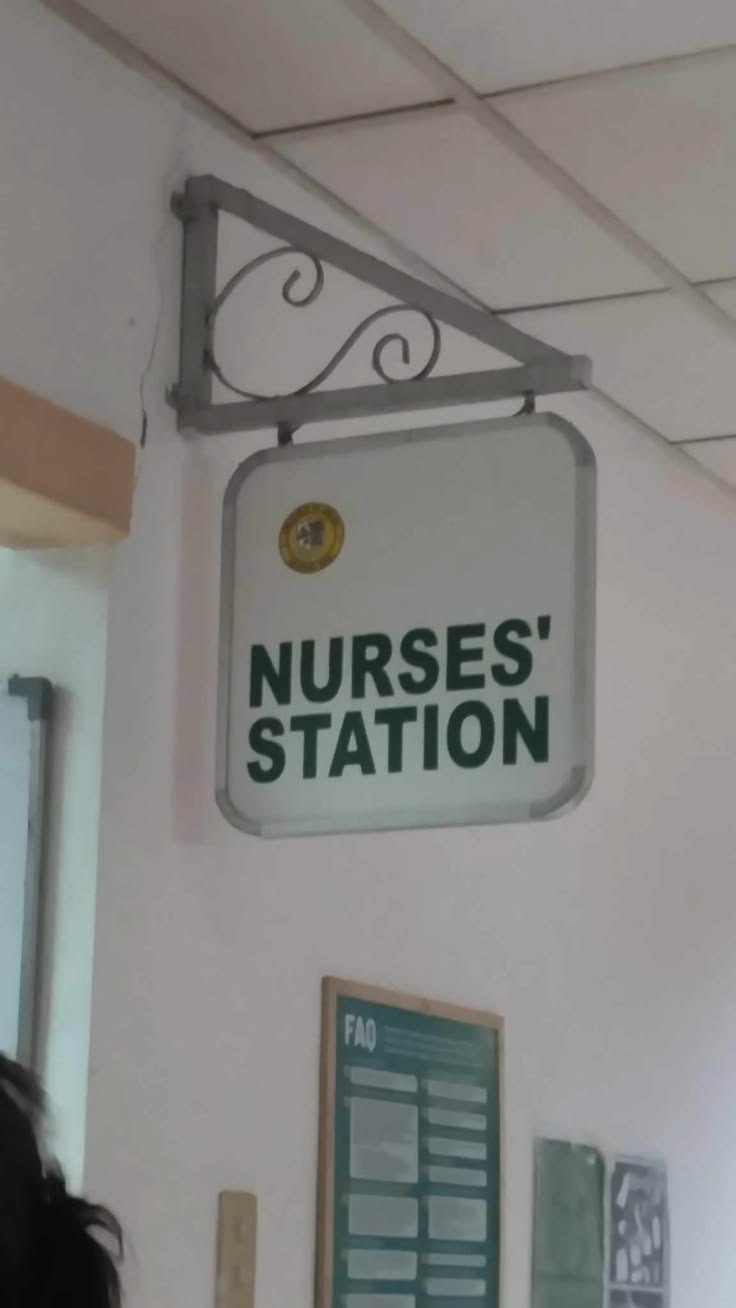
Every country needs a capital, and in a hospital ward ours was the nurses’ station. It had no flag, no national anthem and no border control, although crossing into it at the wrong moment could still make a newly employed nurse feel as though additional documentation might be required. The territory consisted of desks, telephones, folders, computers, chairs of disputed ownership and an air-conditioning unit whose temperature seemed capable of producing stronger political opinions than certain matters of actual public policy.
There was a government, although I do not remember anybody holding an election. The senior nurses formed something resembling an experienced council, the people who knew the routines, the shortcuts, the forms, the personalities and exactly which piece of equipment required a particular kind of persuasion before it would cooperate. Newly employed nurses occupied a more uncertain constitutional position because, although we had professional licences, employment contracts and identification cards, none of these documents contained the unwritten laws governing the republic.
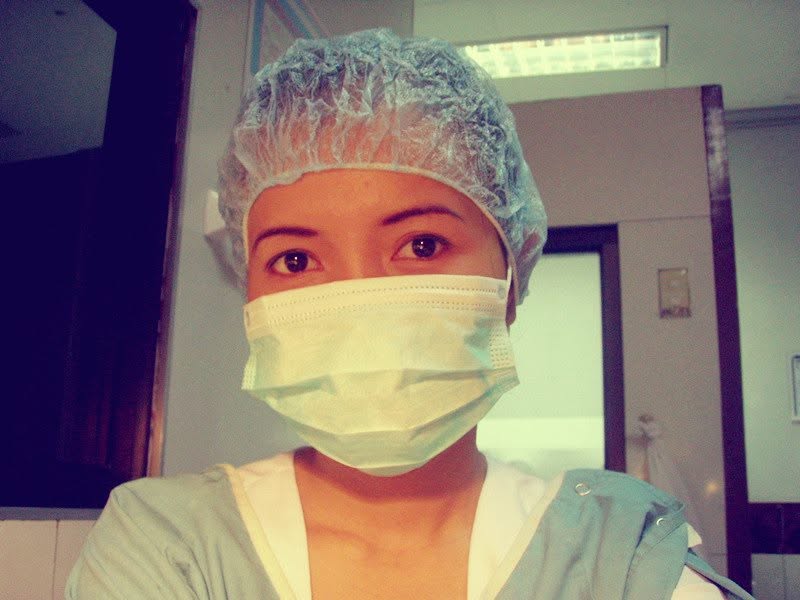
This was one of my earliest discoveries after returning to hospital nursing in 2017. Nursing school had taught me anatomy, physiology, pharmacology, nursing care and professional responsibilities, but what it had failed to provide was a module entitled How to Enter an Established Nurses’ Station Without Accidentally Sitting in Somebody’s Chair. Apparently, chairs can acquire owners without ever being purchased by them, and a newcomer who chooses the wrong one can suddenly sense that sovereignty has been violated despite nobody saying a word.
You usually discover this through atmosphere rather than instruction. There may be twelve chairs in the area, all technically belonging to the hospital, but one particular chair has somehow entered a long-term diplomatic agreement with one particular person. Nobody signed anything and there is no plaque identifying ownership, yet if you sit there long enough, you will eventually understand that the constitution has been breached and quietly relocate.
For this Hospital Diaries entry, I am describing a fictionalised composite of ordinary workplace behaviour rather than any identifiable colleague, ward or specific incident. Hospitals develop their own cultures, and many of the habits I describe here could occur in almost any busy workplace where experienced staff, newcomers, strong personalities and limited chairs are required to coexist for long hours. The humour works because the rituals are familiar, not because one particular person behaved outrageously. Pasted text
Every nurses’ station, I suspect, eventually appoints a Minister of Information. This person requires no official title because they simply know things, often with a speed that would concern several national security agencies. A policy change may still be travelling through the formal communication system, yet the Minister somehow has preliminary details, contextual information and possibly the date somebody first mentioned the idea over lunch.
I never understood the infrastructure supporting this communication network. It did not appear to require broadband, formal minutes or even reliable evidence. One cautious question beginning with “Nakadungog ka?”—Have you heard?—could occasionally achieve distribution speeds unavailable to official email.
Not all unofficial information is gossip, of course. Much of it reflects how teams naturally exchange practical knowledge, especially in organisations as complicated as hospitals. People depend on one another for updates, context, reminders and the small pieces of information that make a difficult shift easier to navigate.
The problem begins when information becomes currency. Knowing something first can create status, and being included in certain conversations can become a sign of belonging. Newer staff may quickly discover that there is an official organisational chart on paper and another one operating through relationships, and the two diagrams do not always match.
That fascinated me because I was returning to hospital nursing while also rebuilding clinical confidence. I needed to learn the work, but I also had to understand the people doing it. Those were two entirely different subjects, and nobody offered an orientation workbook for the second.
A hospital can provide written policies for medication management, documentation and professional practice. It is far less likely to provide a handbook explaining who prefers direct communication, who dislikes being interrupted while concentrating, who teaches patiently, who expects you to observe before asking and who considers “You should already know that” a complete educational philosophy. New employees become anthropologists almost immediately, observing the tribe, interpreting customs and revising hypotheses whenever reality proves the first theory wrong.
The duty roster deserves its own constitutional chapter. In theory, a roster is simply an organised distribution of working hours needed to maintain safe staffing. In practice, it can be studied with the intensity normally reserved for election results, because everyone scans for weekends, nights, consecutive duties and the one sequence capable of making the human circadian rhythm submit a formal complaint.
Within seconds, somebody discovers an injustice. “Why am I on again?” appears alongside “Who requested this?” and “Can anyone swap?” A peaceful nursing team can become politically engaged with remarkable speed once the roster appears, which is understandable because rotas affect sleep, family responsibilities, transport and the simple question of whether a person will know what day it is by Thursday.
The negotiations that follow are undeniably parliamentary. Coalitions are formed, swaps are proposed and historical favours are suddenly retrieved from memory with remarkable precision. A colleague who desperately needs Saturday off may remember that six months ago she covered somebody else’s Tuesday, and apparently international debt has nothing on nursing rota debt.
Then there are supplies. A hospital may contain equipment worth more than many houses, yet civilisation can still be brought dangerously close to collapse by one missing stapler. Nobody admits moving it, several drawers are opened and somebody announces that it was “definitely here earlier,” which adds nothing to the investigation but establishes an important historical record.
Eventually, the stapler is found four feet from its original position and diplomatic relations resume. Pens, however, operate under different laws because they migrate too frequently to maintain national identity. A pen can begin a shift belonging to one nurse and end it three pockets away under circumstances nobody can reconstruct, so I eventually concluded that hospital pens do not disappear; they defect.
The politics of the nurses’ station are funny partly because much of hospital work is not. Illness, anxiety, responsibility and constant decision-making create pressure, and people working under that pressure naturally develop rituals, habits and humour to make demanding shifts more manageable. The nurses’ station becomes more than furniture arranged around computers; it becomes a social space where information is exchanged, questions are asked, frustrations are released and somebody occasionally becomes deeply invested in the location of a pen.
It is also where workplace culture becomes visible. You can learn a surprising amount about a team by watching what happens when a new nurse asks a question. In some places, someone explains the process, shows where things are kept and checks that the newcomer understands, while in others a raised eyebrow or a sigh can deliver an entire editorial before the answer even begins.
That difference matters because every experienced nurse was once inexperienced. Nobody entered their first role already knowing every local policy, routine or expectation, and even a very competent nurse changing hospitals still needs time to understand unfamiliar systems. Experience deserves respect, but it does not justify pretending that experience arrived fully formed at birth.
Seniority has real value because years in a workplace create knowledge that cannot be reproduced through orientation slides. Experienced nurses often recognise patterns faster, anticipate problems earlier and understand how systems behave when the official procedure encounters the untidiness of real life. A newcomer should respect that, but respect and intimidation are not synonyms.
There is a difference between authority built through competence and authority built through making people nervous. Healthcare depends upon communication, so if junior staff become afraid to ask questions, clarify instructions or escalate concerns because they fear looking inexperienced, the workplace has created exactly the wrong incentive. A nursing team should never make appearing knowledgeable more important than obtaining the correct information.
That lesson mattered to me because I was returning to clinical practice knowing I still had plenty to learn. I did not want to perform confidence where I actually needed guidance. Sometimes the safest person in the room is not the one speaking with the greatest certainty, but the one willing to say, “Can you check this with me?”
Workplace hierarchy itself is not the enemy. Hospitals need accountability, leadership and clear professional responsibilities because urgent decisions cannot be decided through endless referendum. Hierarchy works best, however, when people understand why authority exists and when those holding it use it to make work safer rather than more intimidating.
A senior nurse who is calm, knowledgeable and willing to teach rarely needs to remind everyone repeatedly that they are senior. Their authority is already visible in the way they work, the consistency of their decisions and the way colleagues trust their judgement. That kind of leadership is persuasive without becoming theatrical.
The opposite can happen when status becomes more important than responsibility. Seniority begins functioning less like experience and more like a title that must be acknowledged at regular intervals. This is not unique to nursing because give human beings an organisational structure and eventually somebody will become emotionally invested in the seating plan.
Filipino workplaces can add another layer because age and seniority often carry strong cultural expectations. Respect for more experienced people can be entirely appropriate because they have accumulated practical knowledge that younger staff have not yet had the opportunity to develop. But respectful culture should not require silence from everyone newer, and the phrase “senior man gud” should explain experience rather than end discussion.
Good teams somehow manage to preserve both things: respect for expertise and permission to speak. That balance is difficult because workplace relationships involve personality as much as professional structure. Some people are direct, some soften every request until it becomes apologetic, some process stress through humour and others become quiet.
A nurses’ station collects all of these temperaments into one small geographic region. Of course politics will happen. Even the air-conditioning cannot satisfy everybody, so expecting complete interpersonal harmony would be wildly optimistic.
The challenge is making sure ordinary differences do not become permanent factions. Friendship groups form naturally because colleagues spend long shifts together and often share stressful experiences, and there is nothing wrong with becoming close to people at work. The problem begins when friendship determines who receives information, help or fairness.
A new nurse should not need membership in the correct social circle before someone explains what she needs to know. A colleague should not need to be somebody’s favourite before her concern is taken seriously. A workplace can contain friendships without turning into a monarchy organised around them.
Professional respect should survive outside friendship. That sounds obvious, but many important principles do until human beings bring all their normal preferences into a workplace. We like some people more than others, become irritated by certain habits and remember who helped us when things became difficult.
Then we spend twelve hours beside one another and expect professionalism to keep the republic functioning.
Most days, surprisingly, it does.
That may be one of the underrated accomplishments of healthcare teams. People with completely different personalities coordinate complicated work because patients need them to. Teamwork does not require universal affection, which is fortunate because that would be an impossible recruitment criterion.
It requires reliability, communication and enough mutual respect to cooperate even when personalities do not naturally fit. Sometimes the colleague you would be least likely to invite on holiday is exactly the person you would want beside you when the ward suddenly becomes difficult. Professional respect can be quieter than friendship and, in important moments, much stronger.
Humour has its own ministry in this little republic. Hospital work can become emotionally heavy, and small jokes allow tension to change shape for a few minutes. An argument about the air-conditioning may be the harmless absurdity everyone needs after a difficult hour, especially when somebody announces that the ward has now reached conditions suitable for storing vaccines.
Someone laughs, somebody else adds a comment and for thirty seconds nobody is thinking about the twenty tasks still waiting. Then the phone rings and parliament reconvenes.
What I gradually understood was that workplace culture is built through hundreds of interactions too small to appear in policy documents. A new nurse is shown where something is kept, someone is thanked for helping, a mistake is corrected without humiliation and a concern is taken seriously. Each moment looks minor on its own, but together they determine whether a workplace feels safe to learn in.
They also determine what becomes normal. If sarcasm greets every question, new staff learn to hide uncertainty. If people help one another, asking becomes ordinary. If experienced nurses can admit when they do not know something, everyone else receives permission to practise intellectual honesty.
Culture is contagious.
Unfortunately, bad culture is too.
One difficult personality can influence an entire shift if everybody begins organising themselves around that person’s mood instead of addressing the behaviour. Suddenly people are timing questions carefully, avoiding particular conversations and asking, “Is she in a good mood?” before raising something clinically necessary. At that point the workplace has started operating less like a healthcare team and more like a minor royal court.
Leadership matters because teams should not have to arrange themselves around whoever is most intimidating. Good leadership creates predictable expectations, so people know what behaviour is acceptable, what responsibilities belong to whom and where to go when something is wrong. Authority should reduce unnecessary uncertainty, not become another source of it.
Newer nurses notice these things intensely because every shift already contains clinical information, unfamiliar routines, documentation requirements and workplace customs arriving at the same time. We are trying to understand both the medicine cabinet and the sociology, and some days the sociology is considerably harder.
Nobody labels the unwritten rules. You discover them gradually through small corrections: that folder belongs there, handover is usually done this way, one person prefers to be told directly, another dislikes being interrupted mid-task and apparently the air-conditioning remote has disappeared again.
Eventually, the republic begins making sense. You learn which traditions are practical and which survive mainly because nobody has questioned them for years. You begin distinguishing the colleague who sounds stern but will always help from the colleague who sounds wonderfully friendly and somehow becomes unavailable whenever the workload increases.
First impressions become more complicated.
People usually do too.
Newcomers can offer something useful in return because experienced staff possess institutional memory while new people still notice things everybody else has stopped seeing. “Why do we do it this way?” may sometimes be naive, but sometimes it reveals that nobody has asked the question for years.
Healthy workplaces should be able to survive respectful questions. If the answer is that something is safer, explain why. If policy requires it, show the policy. If the answer is simply that it has always been done this way, perhaps the conversation deserves another minute.
Tradition can contain wisdom.
It can also contain old furniture.
The challenge is knowing which one you are looking at.
By then, I had begun to understand that becoming part of a team was different from merely being employed by the same hospital. Employment happens through paperwork, while belonging happens gradually through repeated interactions. Someone learns your name, you understand more of the humour, you know where things are kept and people begin trusting you with more responsibility.
Then one day, without noticing exactly when it happened, you stop feeling like the person standing at the edge of the nurses’ station trying to understand the constitution. You become one of its citizens.
Citizenship comes with obligations. You should return borrowed pens, preferably, avoid provoking unnecessary thermostat conflict and approach roster swaps through established diplomatic channels. If you move the stapler, international law requires that you put it back.
More importantly, belonging creates responsibility for the culture itself. Once we stop being newcomers, we become part of the environment the next newcomer will encounter. It is remarkably easy to remember how intimidating our own first days felt and then, years later, reproduce the same behaviour towards somebody else because experience can create empathy but also amnesia.
Perhaps every experienced professional should occasionally remember a day when nothing felt obvious. The geography was unfamiliar, the routines were unclear and everybody else seemed to understand rules nobody had explained. A small amount of patience can shorten that period considerably.
That does not mean standards should be lowered. Hospitals cannot afford poor standards, and new nurses must learn, prepare, accept feedback and become accountable for their practice. Kindness is not the absence of standards.
Good teaching often requires clear correction. The difference is whether correction is designed to help somebody improve or merely to remind them who holds power. People learn better when dignity survives the lesson.
That may be the central political question of the nurses’ station republic: what kind of authority are we trying to build? The kind that produces obedience because people are afraid of the person in charge, or the kind that earns enough trust that people behave responsibly even when nobody needs to supervise every decision?
Respect built entirely on seniority can be fragile. Respect built on competence, fairness and consistency tends to last, and years of experience become even more valuable when they create room for other people to grow.
That is leadership.
It is not possession of the favourite chair, control of the thermostat or advance knowledge of every unofficial announcement. Those things may provide influence, but they do not automatically provide respect.
By the end of a shift, the nurses’ station usually looks much less like a government headquarters and more like what it really is: a working space occupied by tired people trying to keep a hospital functioning. Papers have accumulated, mugs have migrated, chairs have moved and the air-conditioning dispute may remain completely unresolved.
The Minister of Information still knows something, the senior council is discussing tomorrow and somebody is negotiating a roster swap. A pen has defected again, and there is a reasonable chance the stapler is missing.
Underneath all those minor politics, however, is something far more important. The team has spent the day sharing responsibility for people who needed care, and that is the reason the republic exists at all.
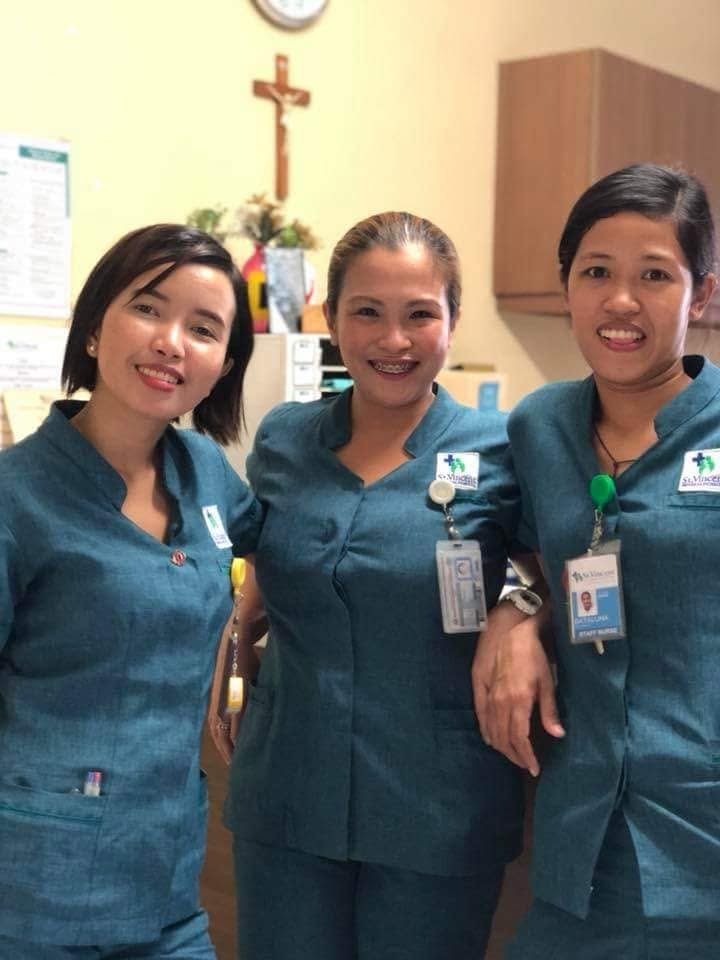
Perhaps every nurses’ station really does have a constitution, even if nobody has written it down. Most of its articles are learned through repetition: help when work becomes heavy, communicate clearly, respect experience, ask when uncertain and do not make somebody’s first month unnecessarily difficult just because yours once was.
I would add one final amendment to the document. Professional respect should never depend entirely on seniority, friendship, popularity or possession of the air-conditioning remote; it should grow from competence, fairness, reliability and the way we treat people who have less power than we do. I think the motion should pass unanimously, although I remain almost certain that somebody will object to the thermostat clause.
Still learning the constitution between the handovers,
Anj


























Leave a Reply