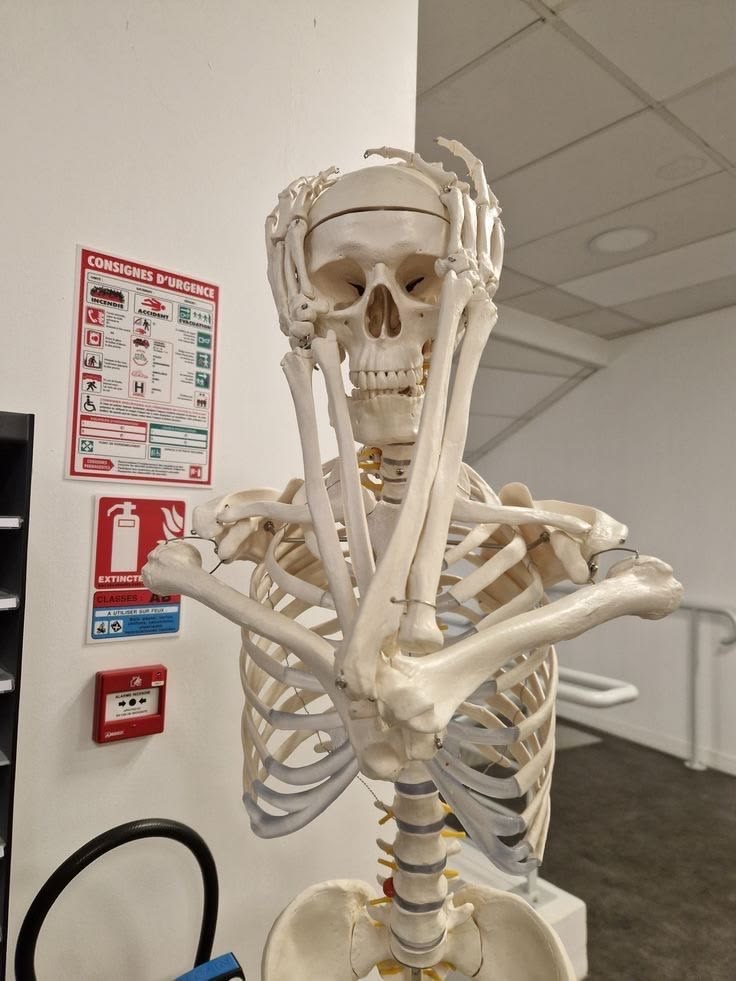
Somewhere in the Philippines, there must be a government office responsible for informing relatives whenever a family member becomes a nurse. I have never seen the office, nor met any of its employees, but I remain reasonably convinced of its existence. How else can one explain the extraordinary speed with which a nursing qualification transforms an ordinary person into the family physician, pharmacist, laboratory interpreter, nutritionist, therapist and, on particularly ambitious days, veterinarian? One simply becomes a nurse, and the extended family immediately behaves as though a fully equipped medical institution has opened somewhere inside one’s skull. Consultation fees are permanently waived, naturally.
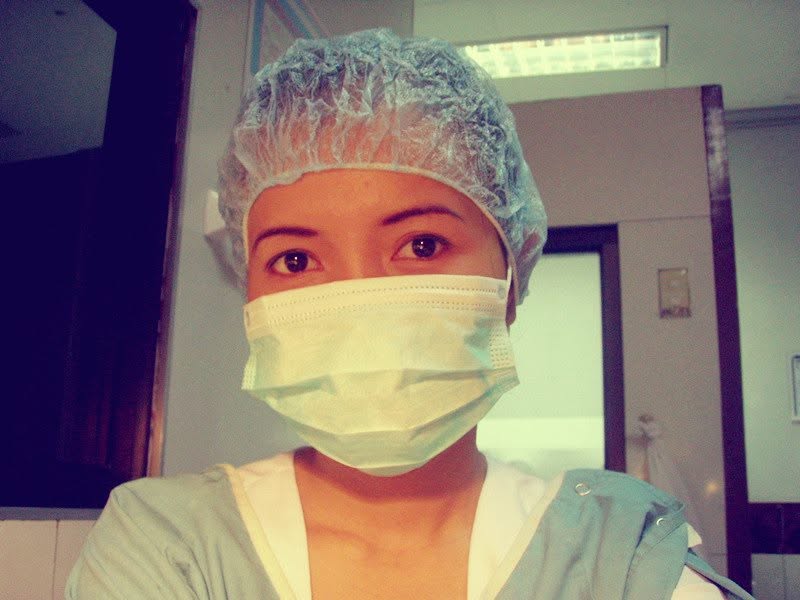
When I returned to hospital nursing, I was genuinely pleased to be working in the profession I had trained for. After the uncertainty of the previous years, there was something reassuring about having a hospital to report to, a clinical routine to learn and responsibilities that demanded more from me than recalling facts for examinations. My relatives, however, appeared to interpret my hospital employment as an upgrade.
Apparently, walking through a hospital entrance each morning granted access to every branch of medicine known to humanity. Cardiology? Naturally. Dermatology? Why not? Orthopaedics? Of course. A suspicious noise coming from the family refrigerator? Perhaps I could examine that too, provided somebody remembered to take its temperature.
I exaggerate, although anyone who has worked in healthcare while belonging to a Filipino family may recognise the general situation. The family conversations in this essay are imaginative composites rather than transcripts of identifiable relatives or specific consultations. My return to hospital nursing this year is real; the domestic clinic that follows is assembled from the sort of assumptions, questions and affectionate boundary-testing familiar to many healthcare workers.
Imagine a family gathering where the dining table has already surrendered beneath rice, meat, noodles and enough food to suggest that a small municipality may be arriving later. I have just sat down with a plate when somebody remembers my profession. “Lhang, nurse na man ka, di ba?” Yes, I am a nurse, which is a perfectly accurate observation and, unfortunately, the opening statement in what is about to become an extremely informal consultation.
Then comes the request: “Tan-awa daw ni akong bukol.” Look at this lump. Before I have established whether the concern has already been assessed, a sleeve is being lifted and an arm presented across the table with the confidence of someone attending a clinic where the appointment system consists entirely of being related to the staff.
I have no clinical environment, no complete history, no diagnostic equipment and, rather importantly, I am holding a spoon. None of these limitations appears particularly troubling to anyone else. Across the table, another relative remembers a persistent cough, somebody asks whether two medicines can be taken together and a third person contributes a story about a neighbour who reportedly recovered after drinking an herbal preparation of uncertain botanical identity.
Within minutes, I have acquired a queue. Nobody has taken a number, there is no receptionist, and the waiting area is occupied by pancit, several plastic containers and a disagreement about who took the last piece of chicken. Welcome to the family clinic.
Filipino gatherings are wonderfully efficient at allowing unrelated subjects to coexist. A birthday can become a financial consultation, Christmas lunch may turn into a career interview and an innocent meal can somehow involve gallbladders, blood pressure, property disputes and whether the rice has been cooked correctly. Conversation moves with impressive freedom.
The difficulty begins when familiarity is mistaken for professional access without limits. Relatives ask because they trust us, and that trust is not unreasonable. A nurse does possess healthcare knowledge and may be able to explain general concepts, recognise when something deserves proper assessment and guide someone towards an appropriate next step.
But there is an important difference between informed guidance and making a diagnosis without the necessary information or assessment. That distinction becomes surprisingly difficult to explain while somebody is holding an ankle six inches from your dinner.
The title nurse seems to expand dramatically once it enters family life. Inside a hospital, different professionals have defined roles, responsibilities and areas of expertise. Nurses, doctors, pharmacists, physiotherapists, laboratory staff and many others contribute different kinds of knowledge, and those distinctions matter because healthcare is collaborative precisely because no single person knows or does everything.
Outside the hospital, however, people may hear the phrase “works in healthcare” and mentally file every medical question under one convenient department. I call this department You Know About These Things. Its opening hours are unlimited, its catchment area extends across several branches of the family tree and its clinical lead is whichever relative happens to be online on Messenger.
Consider another imaginary evening. I am doing something gloriously unmedical, perhaps eating dinner, watching television or enjoying the radical experience of existing without anybody’s vital signs. My phone lights up with a message: “Lhang, naa koy ipangutana.” I have a question.
A photograph follows.
The image is blurry, the lighting is poor and the body part occupies approximately seven pixels. Someone has drawn a large red circle around the relevant area, which is helpful in theory but does not improve the fact that I can barely determine what I am looking at. I study the image, and the image studies me. Neither of us becomes more knowledgeable.
I explain that a photograph alone is not enough to establish what the problem is and that proper assessment may be needed. Then comes the reply: “Pero unsa man imong tan-aw?” But what do you think? The original question has returned wearing different clothes.
There is something wonderfully human about repeating a question in the hope that uncertainty will eventually become embarrassed and leave. We do this everywhere. We ask, receive a cautious answer, then ask again because perhaps the second attempt will persuade the knowledgeable person to reveal the definitive conclusion they were clearly hiding for dramatic effect.
Unfortunately, healthcare does not work that way. Sometimes the correct answer really is that there is not enough information. Responsible clinical judgement includes recognising when certainty would be premature, and that can be harder than sounding confident.
We tend to associate expertise with immediate answers. A knowledgeable professional, we imagine, should be able to look at a problem and announce exactly what it is. Yet expertise often works in the opposite direction: the more someone understands, the more aware they may be of what cannot safely be concluded from limited information.
That kind of professionalism is not especially exciting at a family gathering. Nobody returns home saying, “Our cousin carefully explained the limitations of the available evidence and recommended appropriate clinical assessment.” It lacks drama. A completely unsupported diagnosis, on the other hand, could cross five households before sunset.
Certainty has excellent social mobility.
I understand why people want it. Health concerns can be frightening, services may feel difficult to access and people naturally turn towards somebody familiar when they are worried. Sometimes reassurance is the real request hiding beneath the medical question.
But reassurance should not require a healthcare professional to invent confidence. “I cannot tell from that alone,” “Please have that properly assessed,” or “That needs advice from the appropriate clinician” may sound disappointingly ordinary, yet sometimes those are the safest answers available.
They will never make me the heroine of a medical drama. There is unlikely to be inspirational music playing while I explain why an unclear photograph does not permit a definitive diagnosis. Responsibility has always suffered from poor cinematography.
Family familiarity makes these boundaries especially interesting because Filipino households are skilled at converting professional relatives into shared resources. If you have a cousin who is a lawyer, somebody will eventually ask about a land dispute. If an uncle works in construction, he will be shown cracks in walls. If a niece knows computers, she becomes responsible for passwords, printers and every Facebook notification judged suspicious by anyone over fifty.
Own a decent camera and congratulations, you are now the official photographer for birthdays, weddings, baptisms and any reunion in which at least one person will demand another photograph because somebody blinked.
Become a nurse and the possibilities appear to have no known upper limit.
Often this comes from trust rather than deliberate exploitation. Families share knowledge because relationships are one of the ways people navigate institutions, find information and solve practical problems. Somebody knows which office to visit, another knows a mechanic, someone understands paperwork and somebody else has a cousin who apparently knows a person who knows another person.
These informal networks can be genuinely useful. The problem appears when appreciation quietly becomes entitlement and everyone assumes the professional relative is permanently available.
“Dali ra bitaw ni.” This will only take a moment. That sentence deserves special recognition as one of the most dangerous promises in Filipino life because “a moment” can describe anything from thirty seconds to an entire afternoon.
A quick favour, one small question, just one thing. The request often sounds simple because the person making it sees only the finished answer, not the training, thought and responsibility required to produce it.
We do this with many professions. A teacher produces a lesson, an accountant checks figures, a pharmacist reviews medication and a nurse carries out something they have performed countless times. Competence makes work look ordinary, and the smoother somebody performs a task, the easier it becomes to forget the knowledge underneath it.
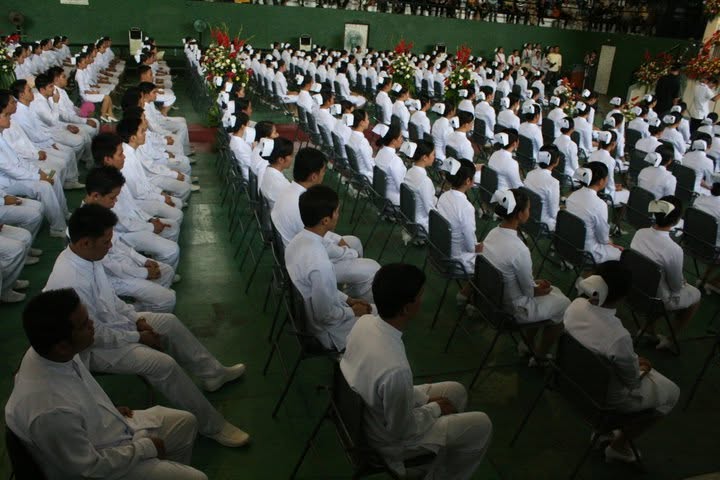
Perhaps nursing suffers particularly from this because the profession is often described primarily through caring. Nurses should be compassionate, patient and kind, and those qualities certainly matter. But sometimes the public image stops there: a lovely person in a white uniform, endlessly available, permanently calm and preferably willing to help without developing any inconvenient needs of their own.
It is a charming image.
It is also incomplete.
Nursing involves scientific knowledge, clinical reasoning, technical competence, communication, accountability and decisions that carry consequences. Compassion is essential, but kindness cannot substitute for competence, just as technical expertise does not excuse indifference.
When I returned to hospital nursing, that was the kind of nurse I wanted to become: kind, certainly, but also capable. I had spent time outside clinical work and knew I needed practical experience, continued learning and enough humility to recognise where my knowledge ended.
I had not returned to become a walking medical encyclopaedia for family gatherings.
Although I admit the imaginary qualification would look impressive: Bachelor of Science in Nursing, with additional responsibilities in family diagnosis, medication enquiries, miscellaneous ailments presented during birthdays and emergency review of anything sent through Messenger after 10 p.m.
Annual leave unavailable.
One particularly amusing expectation is that healthcare knowledge should somehow grant immunity from ordinary human biology. A nurse says she has a headache and somebody asks, “Diba nurse man ka?” But you are a nurse. Apparently, professional registration should have negotiated a separate arrangement with the nervous system.
A nurse becomes tired and someone assumes she must be accustomed to it. A nurse becomes unwell and somebody wonders why she does not simply know how to fix herself. It is an admirable theory, although sadly unsupported by the continued existence of tired nurses.
Nursing qualifications do not eliminate the need for food, rest, sleep or medical care. I wish they did. I would have appreciated professional exemption from headaches, fatigue and the occasional desire to lie horizontally and refuse all nonessential communication.
Instead, nurses remain ordinary human beings who happen to possess particular professional knowledge. Some also have spectacularly poor sleeping schedules once shift work begins interfering with the body’s opinion about when night should occur.
Knowing that rest matters does not guarantee having enough of it. Advising somebody to reduce stress does not magically remove our own. Healthcare workers can understand a principle perfectly and still live inside circumstances that make following it difficult.
That mattered to me this year because I was still rebuilding confidence after a complicated period. Returning to nursing was important, but employment had not instantly transformed me into an infallible clinician. I was still learning, and learning was not evidence of inadequacy.
It was part of the profession.
Family expectations can make that difficult for younger or newly returning professionals because relatives hear the title and assume the expertise is complete. One is either a nurse or one is not, and if one is a nurse, then surely one must know.
But professional knowledge does not become permanently full at graduation. It develops through education, clinical experience, supervision, feedback and continued learning. Different nurses acquire different expertise depending on where they work, and somebody experienced in one area may quite reasonably know less about another.
Scope of practice is shaped by training, competence and professional responsibility. It is not determined by whichever symptom appears beside the lechon at Sunday lunch.
There is no shame in saying a concern needs another professional’s assessment. Sometimes referral is the most knowledgeable response because it demonstrates an understanding of where your own competence ends. Unfortunately, try explaining that when somebody replies, “Aw, nurse man unta ka.” But you’re a nurse.
A devastating argument.
One could respond with a lecture on professional accountability, limits of informal assessment and clinical governance. The danger is that by the time the explanation is finished, everybody else has eaten the dessert.
Sometimes humour is more efficient. “Yes, nurse ko. Pero dili ko hospital nga naay duha ka tiil.” Yes, I am a nurse, but I am not a hospital with two legs.
I like that image. A portable hospital wandering between family gatherings with an imaginary laboratory, pharmacy, emergency department and radiology suite would certainly simplify things. Someone would immediately ask whether I accepted PhilHealth, another would complain about the waiting time and an auntie would somehow obtain priority because she had known me since birth.
The joke contains a serious point. One healthcare professional cannot replace an entire healthcare system. Proper assessment may require equipment, investigations, other disciplines and clinical conditions that a family dining room simply does not provide.
Sharing a surname does not change that.
What I also began noticing was that relatives were not always asking for a diagnosis. Sometimes the visible question was medical while the real request was emotional. “What do you think this is?” may actually mean, “Should I be frightened?” or “Does this sound serious enough to seek help?”
Those questions deserve a different kind of answer.
Someone may not need an elaborate discussion of possible diagnoses. They may need to know whether their concern deserves attention, what the appropriate next step is and whether the person listening takes them seriously.
This is where communication matters. A nurse can refuse to guess without becoming dismissive. We can acknowledge worry, explain uncertainty and guide someone towards appropriate assessment while making it clear that caution is not the same thing as ignorance.
I would never want my relatives to feel they could not ask me anything simply because I could not provide every answer. Family relationships should remain places where people can express concerns. The goal is not to construct a wall between professional knowledge and family life.
It is to prevent affection from manufacturing false confidence.
And, where possible, to allow pancit to be eaten without a symposium on gastrointestinal complaints.
Pancit deserves dignity too.
These family consultations also taught me something about the way people understand health. Medical knowledge becomes most interesting when something has already gone wrong. A symptom appears, a laboratory result contains an unfamiliar term or somebody becomes unwell, and suddenly everyone wants explanations immediately.
Prevention rarely receives the same enthusiasm.
People may ignore sensible advice while feeling perfectly well, then develop great respect for healthcare knowledge the moment discomfort arrives. This is understandable because immediate problems command attention, while long-term risk has never been particularly good at advertising itself.
Human beings are creatures of the present.
I recognised the tendency in myself. When studying for examinations, I knew perfectly well that regular preparation would benefit me later, yet the immediate attractions of rest, television or doing literally anything except answering another difficult practice question could become remarkably persuasive.
Apparently, the brain negotiates with responsibility in every profession.
This is one reason healthcare advice cannot be reduced to simply telling people the correct thing to do. Information has to enter somebody’s actual life, which may include money problems, transport limitations, work schedules, family responsibilities, fear, health literacy, cultural beliefs and previous experiences with healthcare.
My years in community work had made me sensitive to those realities. I had learned that choices look different once circumstances become visible, and I did not want to lose that perspective after returning to nursing.
It is easy to become frustrated when someone repeatedly asks the same question or struggles to follow advice. Curiosity is often more useful. Are they confused? Frightened? Unable to afford something? Struggling with access? Following advice from someone they trust more?
Or perhaps they have an uncle who strongly believes that boiling one particular leaf can resolve everything from indigestion to a malfunctioning motorcycle.
Filipino families possess an impressive collection of inherited remedies. Some traditional practices may be harmless, comforting or supported to varying degrees by evidence, while others may be ineffective or interfere with appropriate treatment. The difficulty is that inherited advice rarely arrives as a neutral suggestion.
It arrives wrapped in family authority.
“Sa una, mao man ni among gigamit.” This is what we used before. The statement may then be reinforced by a story about a grandparent who lived to a remarkable age, apparently because of one habit and not because human lives are affected by thousands of other factors.
Such beliefs deserve respectful discussion rather than automatic ridicule. Experience can generate useful observations, but it can also produce mistaken conclusions. Somebody improving after using a remedy does not necessarily prove that the remedy caused the improvement.
At the same time, mocking a person’s belief may simply make them stop telling healthcare professionals what they are actually taking. Listening first can therefore be clinically useful. Professional knowledge works better when it can communicate with the ordinary world people live in.
The ordinary world, unfortunately, rarely behaves like a textbook.
I have yet to find a chapter entitled Managing an Auntie’s Firmly Held Opinion About Ginger Tea While Attempting to Eat Leche Flan. This remains a serious gap in nursing education.
Perhaps the expectations surrounding nurses also come partly from family pride. “Nurse na among anak.” Our child is a nurse. There is affection in that statement and perhaps satisfaction that someone in the family has entered a profession associated with responsibility and service.
I understood that pride because returning to hospital nursing mattered to me too. I had worked towards the qualification, gone through uncertainty and finally found myself back in clinical employment.
But pride can make a professional title larger than the individual carrying it. The nurse becomes a symbol, and symbols are often expected to behave much more consistently than human beings.
This happens in other professions as well. Teachers are expected to know every answer, engineers to repair anything mechanical, accountants to maintain flawless personal finances and doctors apparently to remain permanently healthy. Nurses, meanwhile, are expected to provide comprehensive healthcare advice during family gatherings and still assist with the dishes afterwards.
The more we admire a profession, perhaps the easier it becomes to forget that its members remain ordinary people. They have limits, specialties, uncertainties, private responsibilities and the basic right to occasionally eat lunch as somebody’s daughter, cousin or niece rather than as the nearest available healthcare resource.
That does not mean professional knowledge should be guarded selfishly. If I can explain a health concept clearly, help someone understand why assessment matters or point a family member towards the appropriate service, I am glad to help within responsible limits.
But usefulness is not the same as endless availability.
One can be an expression of care.
The other can become an expectation.
I think professionals need to remember this with one another too. A nurse finishing a difficult shift deserves rest. A colleague who is still learning deserves guidance rather than humiliation. Someone who says, “I don’t know, but I will find out,” may be demonstrating far more professional integrity than somebody who produces a confident answer unsupported by evidence.
That was the kind of confidence I wanted to develop in this year. I wanted to become knowledgeable without performing certainty, helpful without pretending every problem belonged to me and capable of recognising when another professional was better placed to answer.
Perhaps becoming a good nurse involves learning several kinds of judgement at once: when to act, when to ask, when to escalate, when to explain and when to admit that the available information is not enough. None of these behaviours looks particularly heroic.
Nobody wins an award for refusing to diagnose a rash beside the dessert table.
It may still be the right decision.
The more I thought about the imaginary family clinic, the less it seemed to be only about nursing. It was really about how people use relationships when they are uncertain. We turn towards people we trust, seek reassurance from those we believe know more and ask favours because familiarity feels less intimidating than formal systems.
Sometimes we also forget that the person we trust possesses boundaries, limitations and a life outside whatever expertise we happen to need. Perhaps the answer is not to stop asking. It is to ask with greater awareness.
A professional relative may be able to offer useful general guidance, but a family relationship does not convert a dining room into a consultation room. Knowing a nurse is not the same thing as having access to an entire hospital, and healthcare knowledge does not expand merely because somebody has presented a symptom confidently between lunch and dessert.
I imagine another gathering. The table is crowded, food has arrived in containers that will eventually circulate among households according to an exchange system nobody has ever formally documented, and the electric fan is rotating with great ambition but limited success. Someone is discussing a neighbour. Someone else will eventually ask a health question. I know this. The family knows this. Possibly even the pancit knows this. And when the question arrives, I will probably listen, ask what I reasonably can and point them towards appropriate care if needed. I will help where my knowledge genuinely helps.
But I may also continue eating. Because according to my relatives, becoming a nurse turned me into an entire medical department.
According to the actual profession, becoming a nurse taught me something far more useful. Knowing your limits is part of knowing what you are doing.
Still helping, but keeping the hospital at work,
Anj 😀










Leave a Reply