
The first thing I remember was the light. It was thin and grey, sliding over Edinburgh’s stone buildings without sharpening anything too much, as though the morning had been filmed through a soft-focus lens. When we stepped outside, the air smelled faintly of rain, cold pavement and the first coffee drifting from somewhere nearby. The cobbles still held a darker sheen from the damp, footsteps struck against stone, buses moved through the streets, and cafés were beginning to stir behind steamed-up windows. Edinburgh was clearly awake, but visually it still seemed to be keeping one foot inside another century. The towers, narrow lanes and weathered façades made it feel as though somebody had built a functioning modern city inside the remains of an older story. I had barely started walking and already my imagination was behaving irresponsibly.
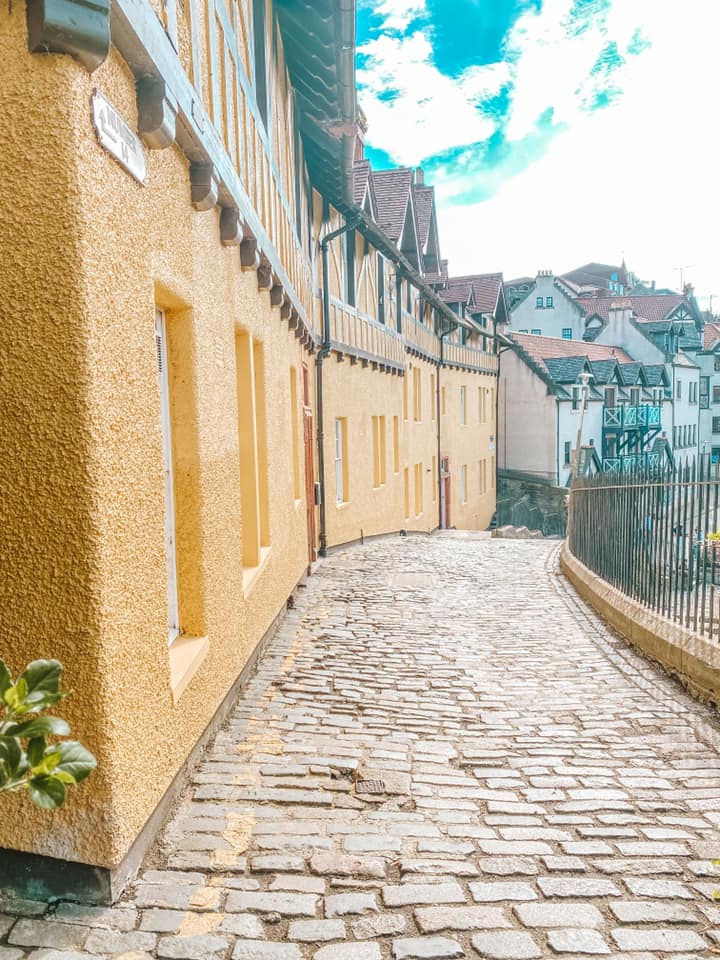
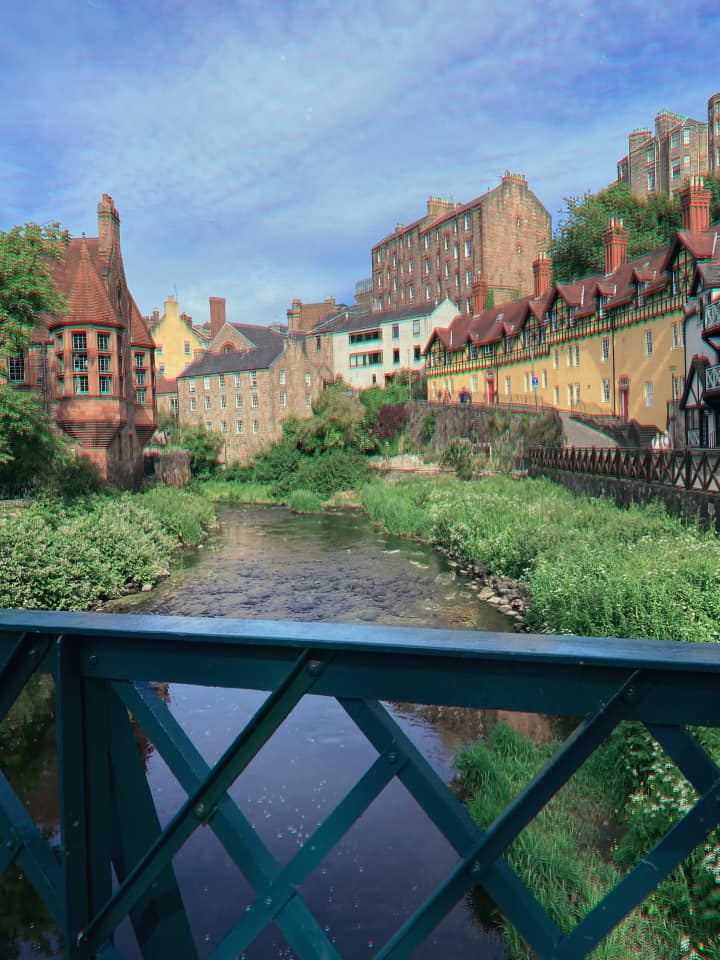
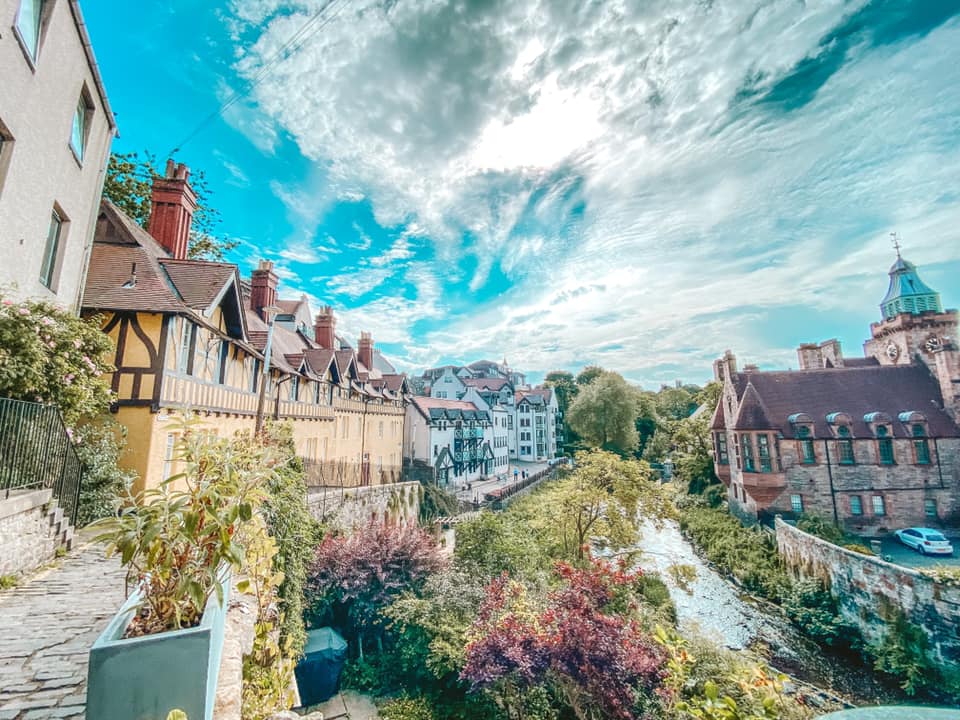
By the time we began heading towards Dean Village, I had stopped expecting the city to behave realistically. This turned out to be useful, because the transition felt almost theatrical. One moment we were surrounded by the movement of Edinburgh, with traffic, voices and the ordinary business of a capital city carrying on around us; the next, the streets seemed to fold inward and lead us somewhere quieter. The air felt cooler between the stone walls, the sound of the city softened, and cobbled paths curved past old façades, climbing plants and little doorways that looked as though they had been waiting patiently for somebody to put them in a storybook. It was not silent or untouched—people lived there, cars still appeared, tourists still wandered around with phones raised—but that somehow made it better. Dean Village did not feel like a set built for us. It felt like a real place that had accidentally preserved just enough dream around the edges.
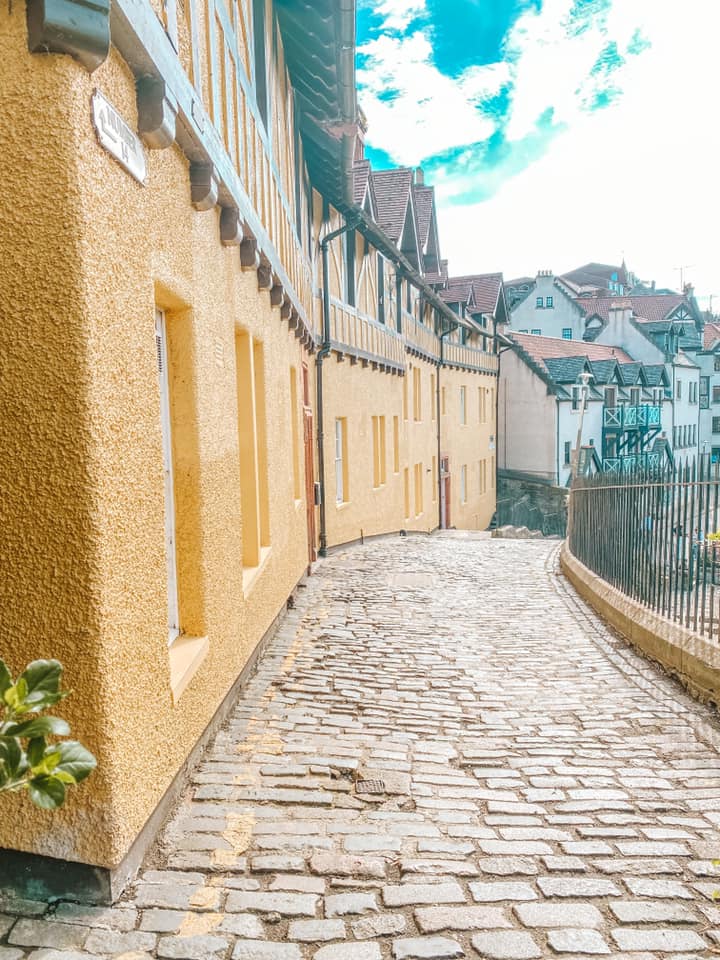
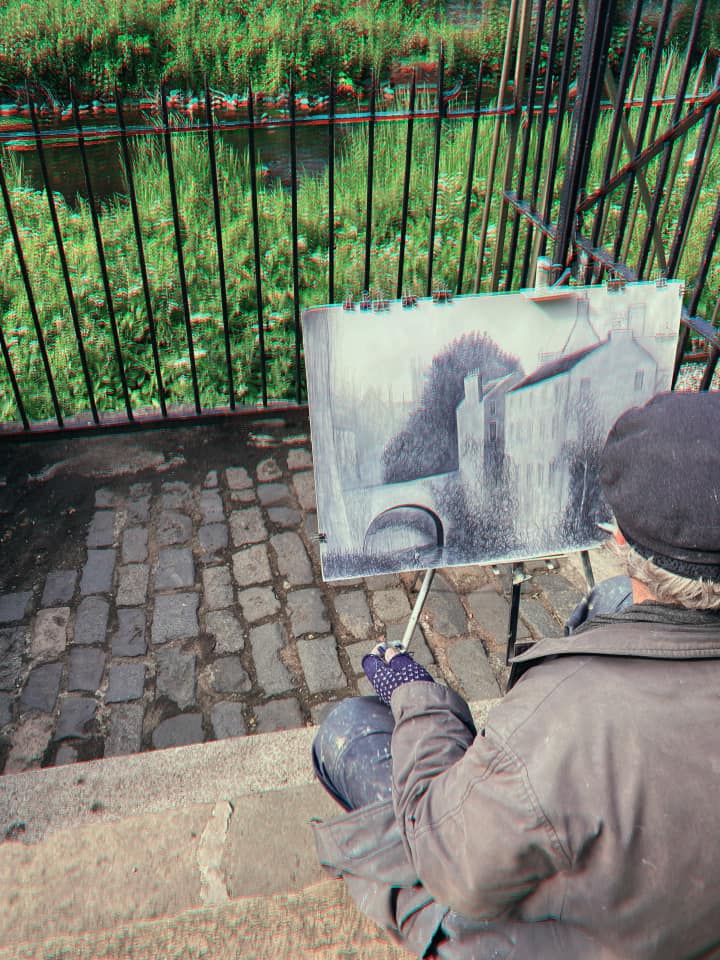


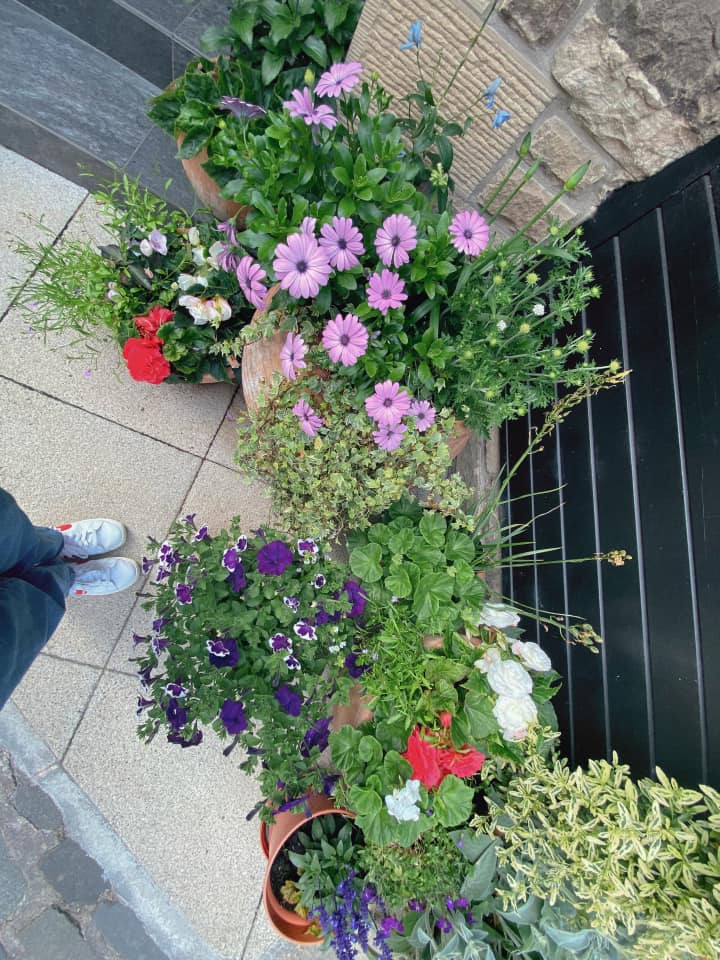
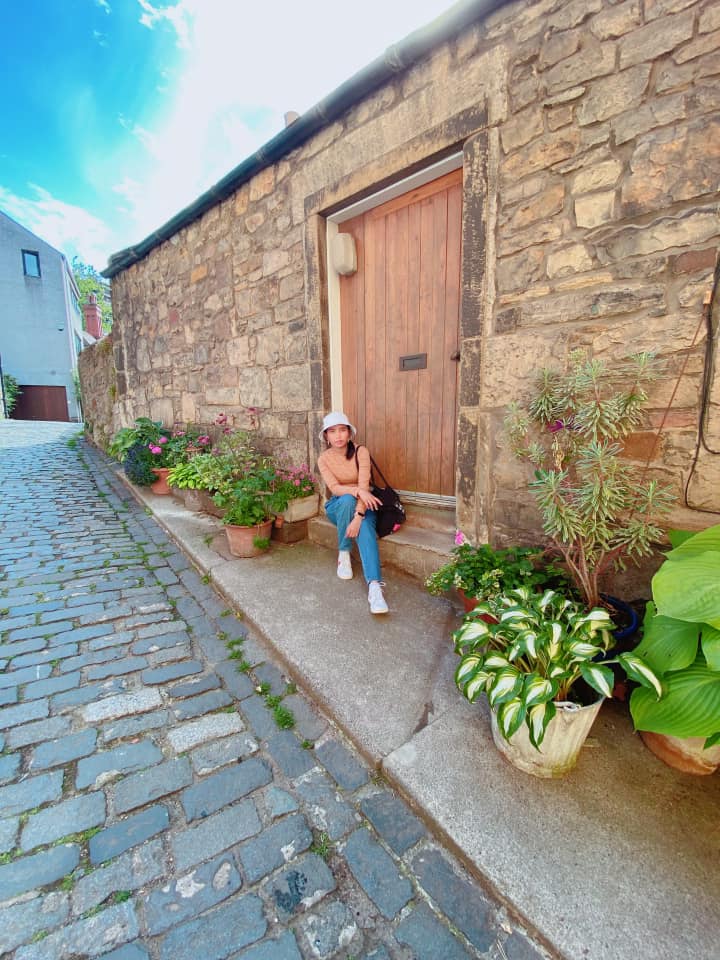
One wooden doorstep surrounded by plants caught my attention more than it reasonably should have. It was not a monument, there was no plaque explaining why I ought to care, and nobody had formed a neat queue to photograph it, which in tourist terms probably meant it had failed completely. Naturally, I loved it. I sat there for a while, looking at the weathered wood, the plants softening the stone around it and the little domestic details that made the place feel lived in rather than staged. I found myself wondering what it would be like to open that door every morning and step straight into this pocket of Edinburgh that seemed to have politely declined participation in the twenty-first century. It felt like the sort of doorstep where a fairy godmother might live if fairy godmothers also had mortgages, recycling schedules and council tax.
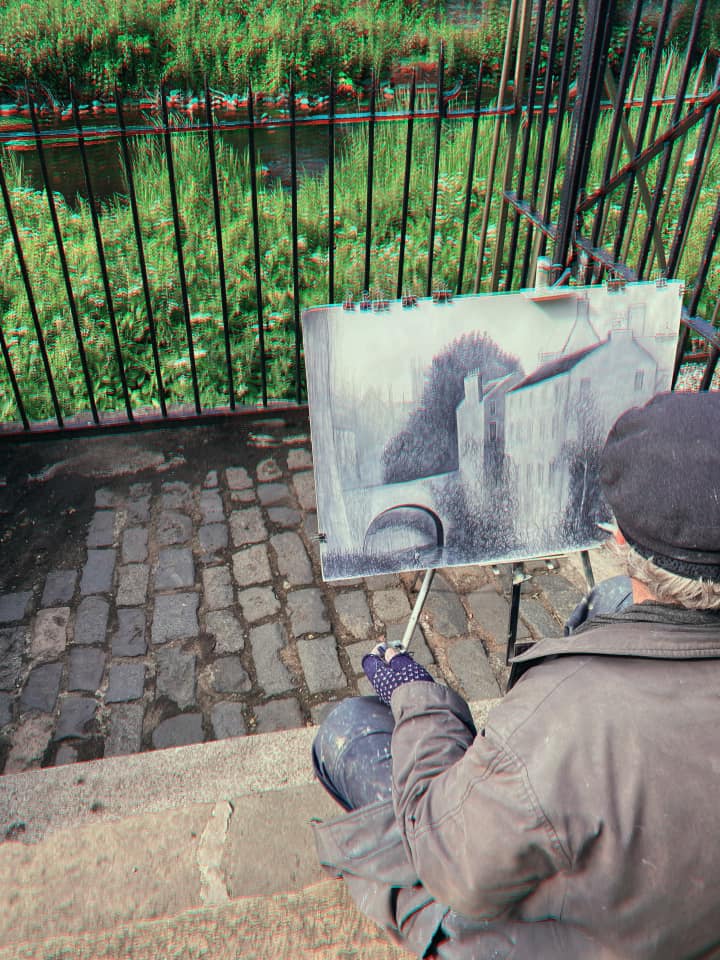
That was what I liked most about Dean Village. Edinburgh already had enough dramatic architecture elsewhere to satisfy anyone requiring towers, monuments and grand skyline photographs, but Dean Village worked differently. It made me look sideways. A plant spilling over a wall, a cobbled path disappearing around a bend, a faded doorway, a tiny window, a row of houses pressed into the landscape—none of these things needed to shout. They simply sat there looking interesting enough to interrupt whatever plan I had for walking in a straight line. I found myself peering into corners rather than searching for landmarks, which is usually a good sign that a place has managed to get under my skin.

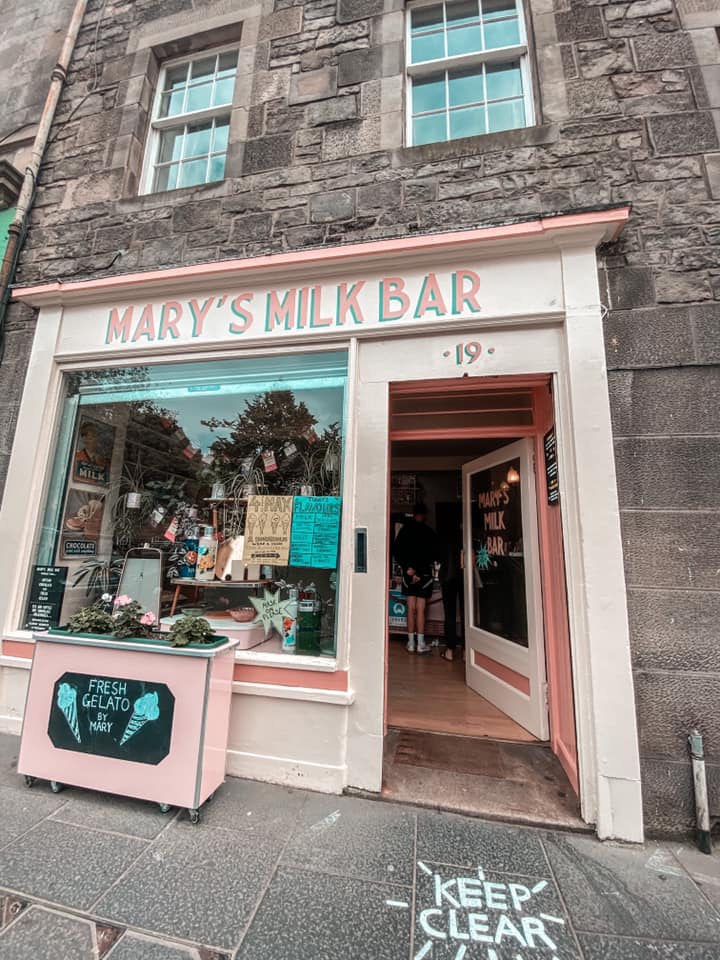
From there, the day took a very important turn involving chocolate gelato. We found ourselves at Mary’s Milk Bar near the Grassmarket, and whatever philosophical mood Dean Village had encouraged was immediately replaced by the far more urgent problem of eating ice cream before Edinburgh’s weather or my own lack of elegance destroyed it. The setting made the whole thing feel wonderfully absurd. Edinburgh Castle rose above the area with centuries of history and enough architectural confidence to dominate nearly every photograph, while I stood below concentrating intensely on preventing chocolate from running down my hand.
I appreciated the contrast. History was towering overhead, and I was losing a race against melting gelato.
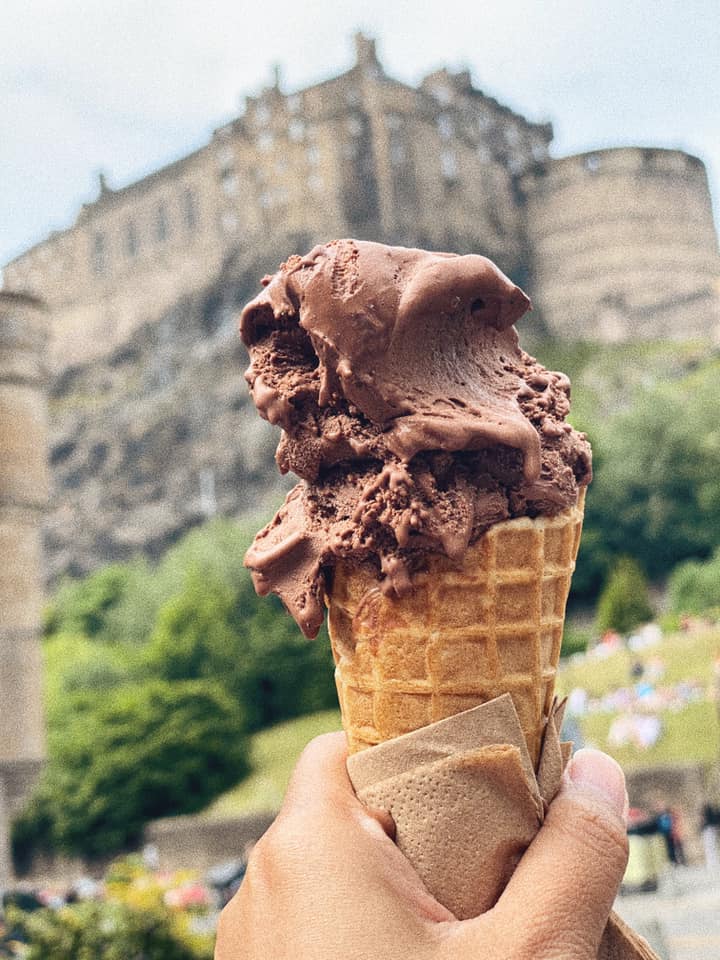
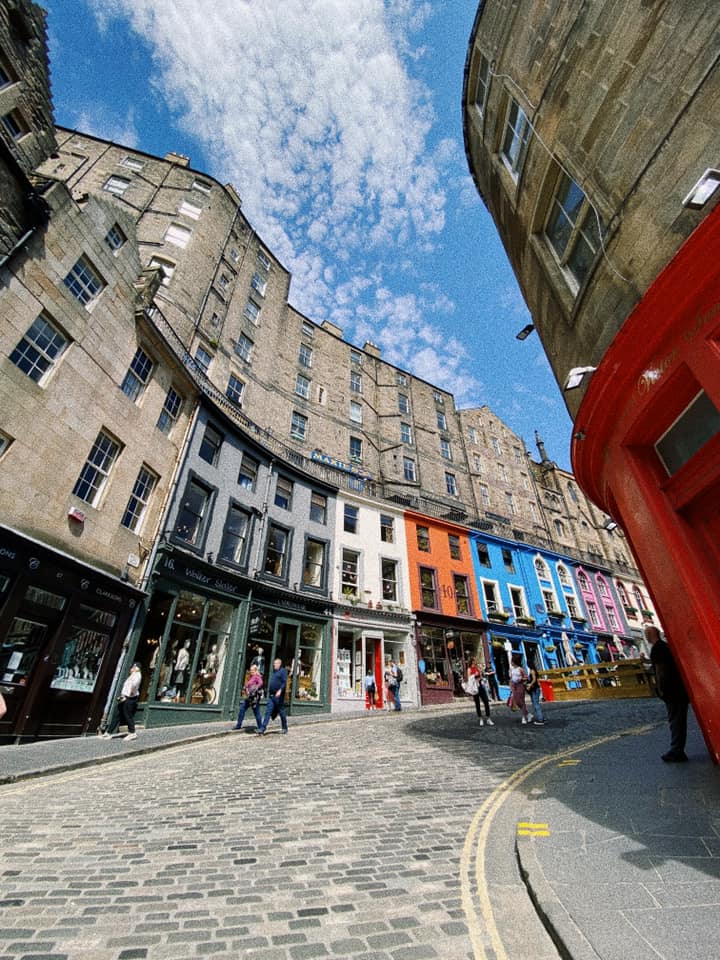
The Grassmarket seemed built for that kind of collision. The castle hangs above the streets with the confidence of something that knows perfectly well everyone is looking at it, while below, ordinary life carries on. People eat, shop, talk, cross roads, check phones and argue with maps while one of Scotland’s most famous landmarks simply sits above them like an extremely dramatic neighbour. Edinburgh does this particularly well. History is not kept neatly behind glass. It looms over lunch. You can spend one moment thinking about centuries of Scottish history and the next wondering whether ordering another scoop would be excessive.
I decided that chocolate had sufficient cultural value to justify the consideration.
That scoop became one of those travel memories that makes very little sense when reduced to a sentence. “I ate chocolate gelato while Edinburgh Castle watched” does not sound like a major cultural event, yet somehow it remains vivid. Maybe the castle improved the atmosphere. Maybe chocolate simply becomes historically significant when eaten in the correct postcode. Either way, memory kept it.
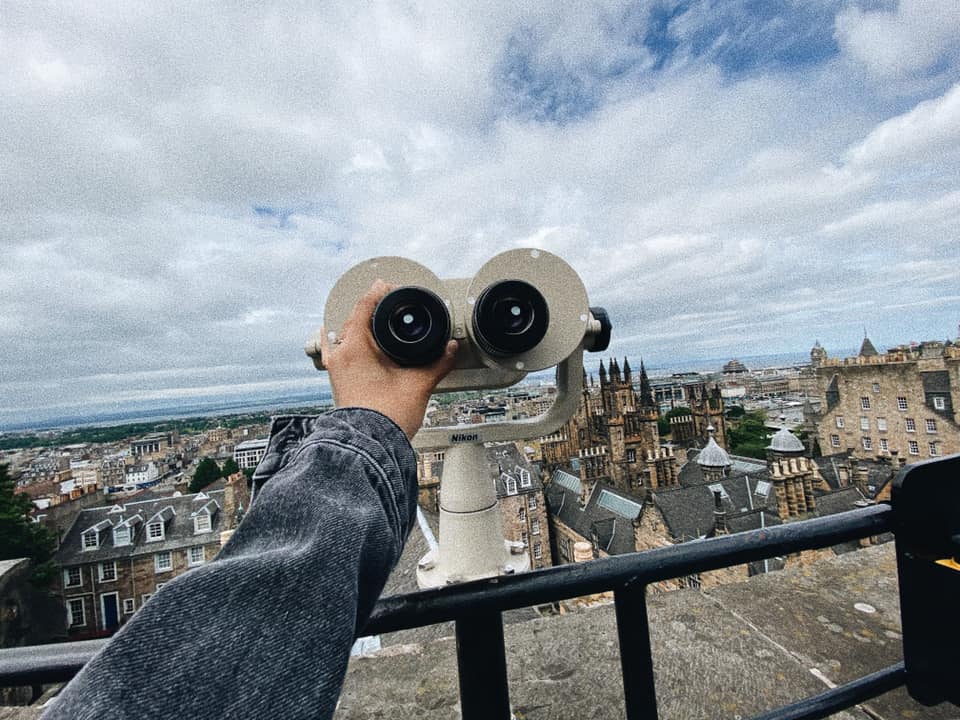
Later, we climbed towards Calton Hill, and Edinburgh changed character again. If Dean Village had been the hidden village tucked beneath the city and the Grassmarket had supplied the cheerful interruption involving chocolate, Calton Hill felt like the part of the story where the characters climb somewhere high because an important revelation is apparently overdue. The city opened beneath us in layers of rooftops, towers, streets and distant landscape, while the monuments around the hill gave the whole place the slightly surreal appearance of someone having dropped pieces of ancient Greece into Scotland and deciding they looked good enough to leave there.
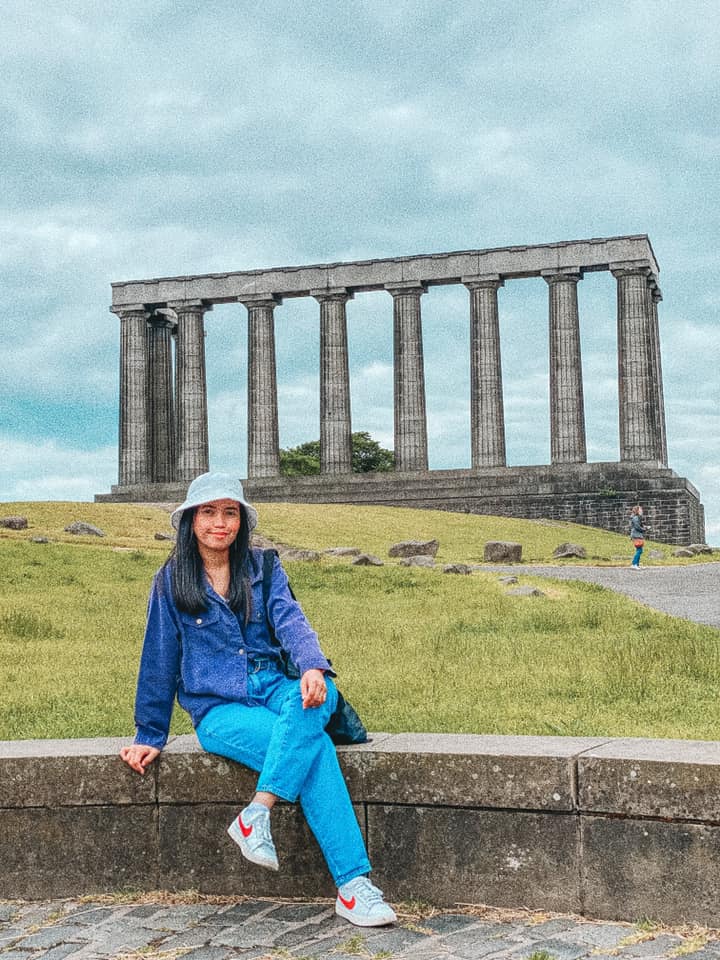
The National Monument fascinated me most. Its enormous columns rise with all the confidence of a completed classical temple despite the awkward historical detail that the project was never actually finished. It had been intended as a memorial to Scots who died in the Napoleonic Wars, designed in imitation of the Parthenon, but construction stopped before the original vision could be completed. What amused me was how little the monument seemed to care about this technical failure. Nobody had informed the columns that they were unfinished, so they simply carried on looking magnificent.
There was something strangely reassuring about that.
We are often taught to treat unfinished things as evidence of failure. A plan that stopped halfway, a goal postponed, an idea that did not become what we first imagined. Yet the National Monument had somehow turned incompletion into identity. A perfect replica might have been impressive, but the unfinished version was memorable because it made you curious. It asked what had happened. It left a gap large enough for a story to live inside.
Perhaps people work like that too. We are rarely as complete as we pretend to be. Most of us are walking around with unfinished plans, revised ambitions, abandoned versions of ourselves and several internal construction projects currently awaiting funding. We simply have the advantage of not being made from enormous stone columns where everybody can inspect the evidence.
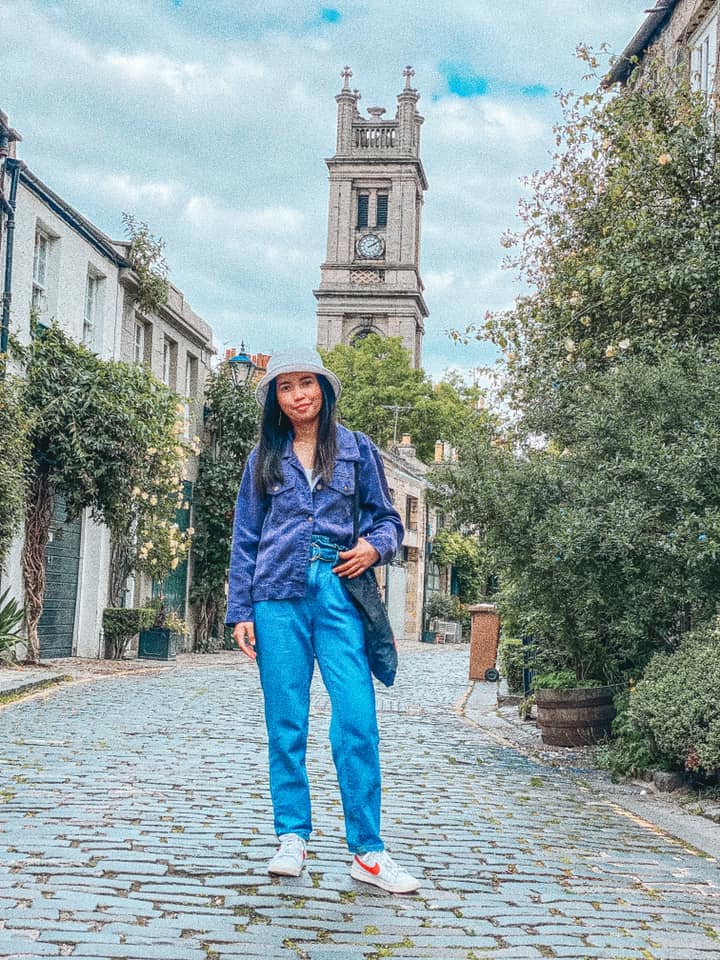
Then came Circus Lane, and Edinburgh apparently decided the day had not yet reached its maximum permitted level of charm.
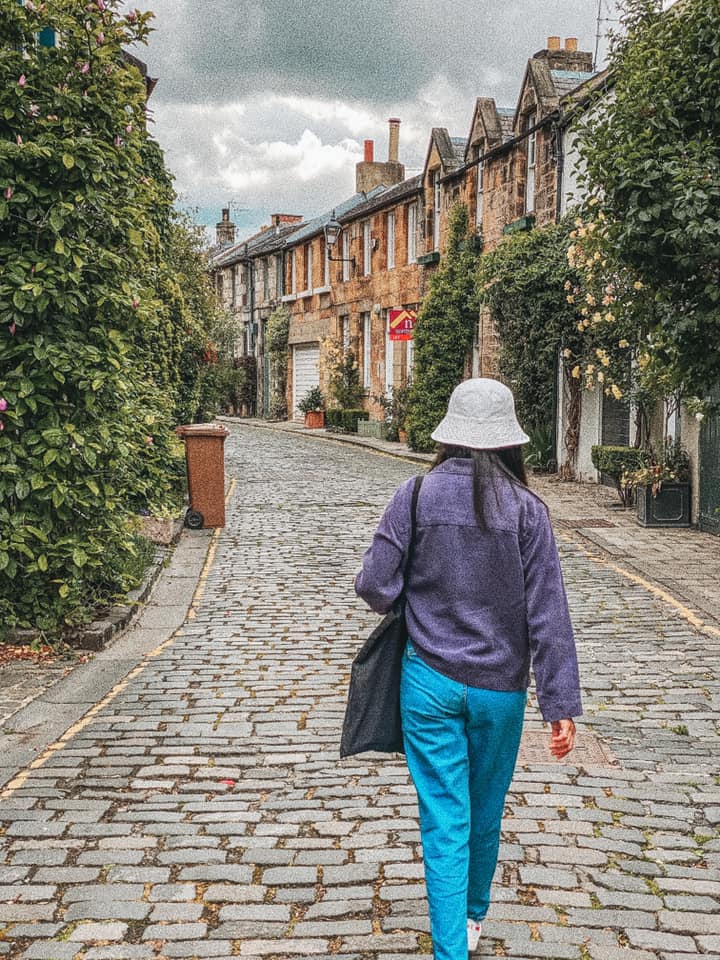
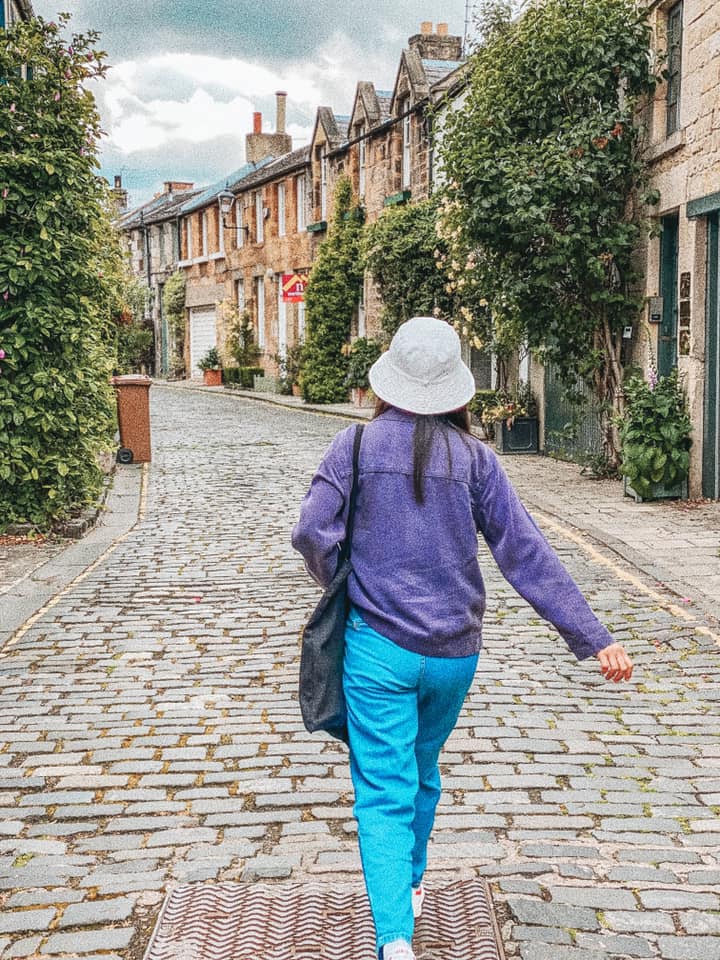
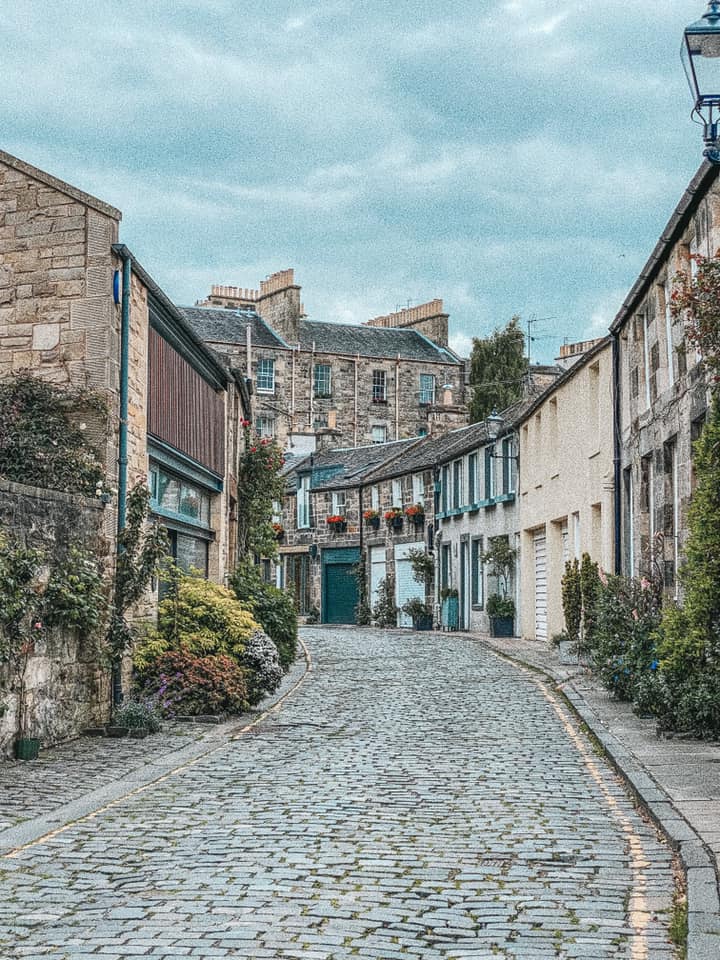
Near Stockbridge, the lane curved between little houses with colourful doors, climbing flowers and that carefully untidy beauty that makes you suspicious the entire street has signed a secret agreement about aesthetics. A clock tower rose beyond the rooftops, adding just enough drama to make the lane look like the opening shot of a British period series in which somebody is about to inherit either a cottage or a complicated family secret.
Circus Lane was not grand in the way Edinburgh Castle was grand. That was exactly why I liked it. It was small enough to miss if you approached Edinburgh with a checklist and military efficiency. The street curved so that you could never quite see everything at once. Flowers spilled over walls. Doors seemed to have personalities. Windows appeared framed by plants. Every few steps offered another tiny composition that looked suspiciously photogenic without seeming to have tried very hard.
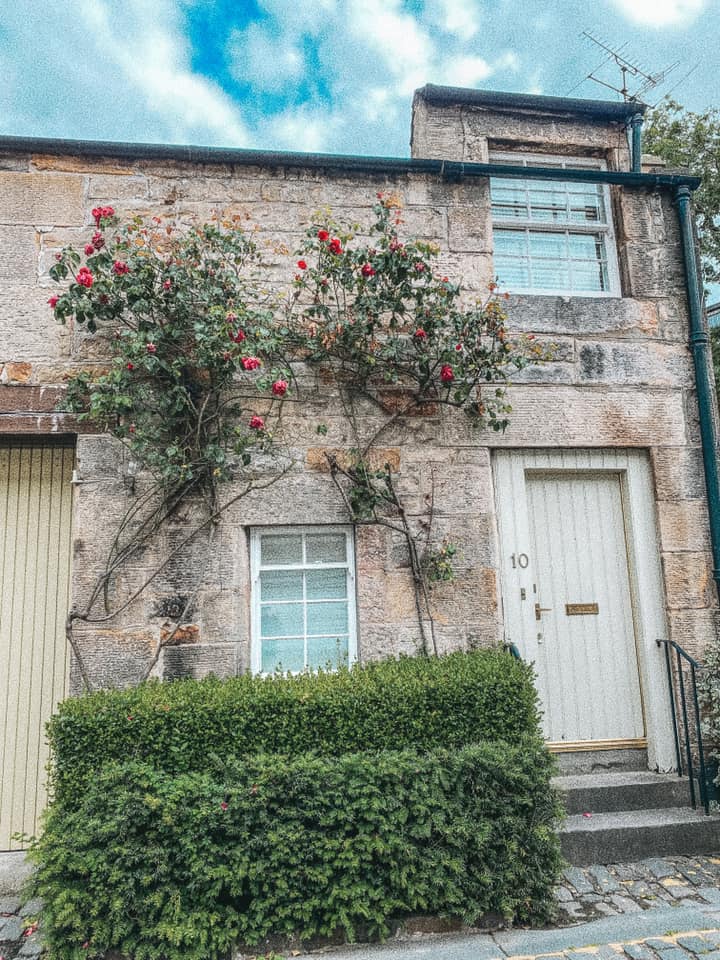
Then there was number ten.
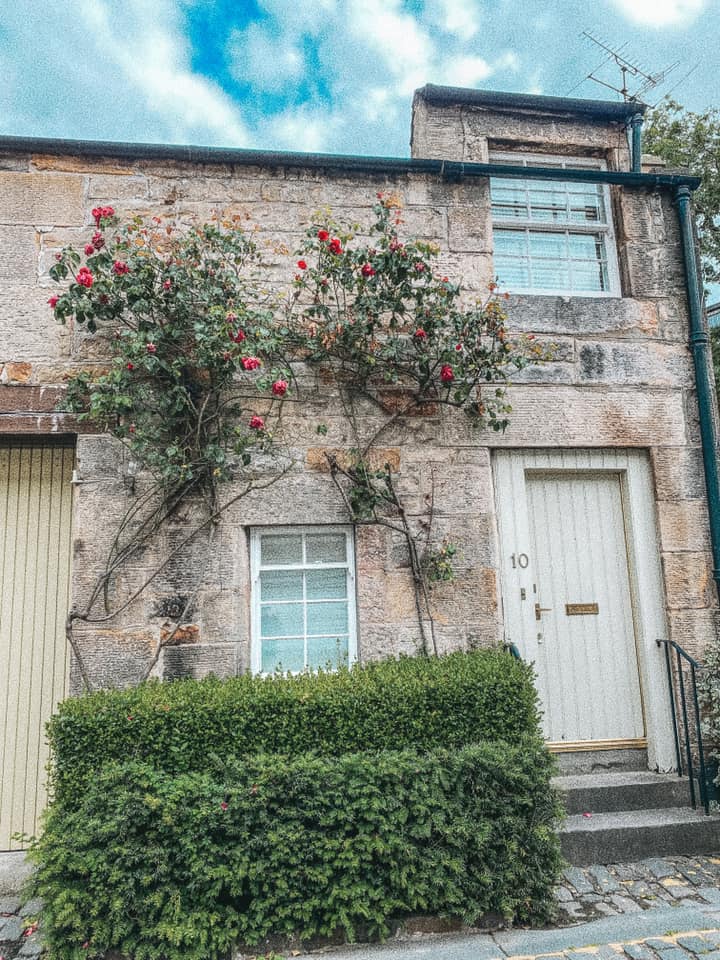
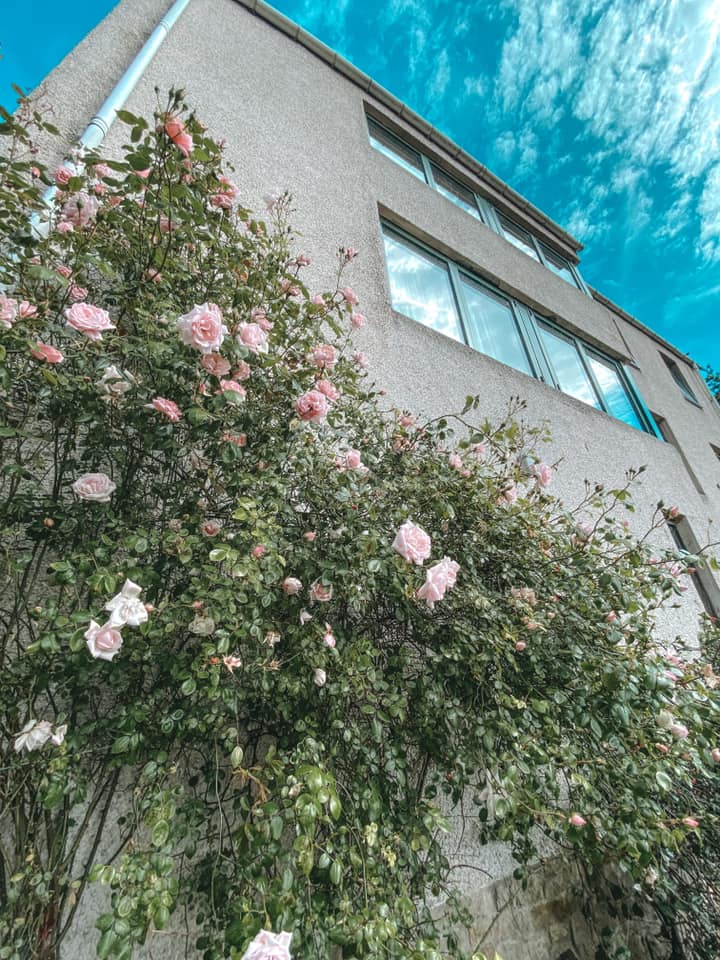
I remember the little white door, the number above it and red roses climbing around the house with the enthusiasm of plants that had apparently been informed tourists were coming. There was nothing historically important about the doorway, at least nothing I knew. No plaque. No famous resident. No guide standing nearby with an umbrella. It was simply somebody’s front door.
Naturally, I photographed it.
That is one of the strange privileges of travel. Somebody else’s ordinary can become your extraordinary. The person who lives behind that door may walk past those roses every morning while carrying groceries and barely glance at them. I stood outside behaving as though I had discovered an architectural treasure.
Travel does this to perspective. It makes us stare at laundries, windows, pavements, doors and grocery shops because they belong to somebody else’s version of normal.
By that point, the whole day had started feeling like we were moving between different genres of the same story. Dean Village gave us the hidden fairytale settlement. Mary’s Milk Bar provided magical provisions in chocolate form. Calton Hill supplied ancient-looking ruins and the mandatory elevated viewpoint for serious contemplation. Circus Lane gave us flowers, tiny doors and enough storybook charm to make me suspect that somewhere nearby a talking animal was probably paying rent.
What I loved was that Edinburgh did not need anyone to manufacture this atmosphere. The city already had it. The worn stone, narrow streets, uneven cobbles and layered architecture made it feel as though every building had lived at least one previous life and was not particularly interested in giving visitors the full biography. Some cities feel modern first, with historical buildings inserted into them. Edinburgh often feels like the opposite, as though the present day has carefully moved into an older world and agreed not to disturb too much.
That age shows itself through texture. The cobbles are imperfect. The stone façades carry stains and weathering. Plants climb wherever they please. Steps have been worn by generations of feet. Doors are not always freshly painted into obedience. Somehow, polishing all of that would make Edinburgh less beautiful. The city would look deeply suspicious if everything suddenly became spotless.
Perhaps this is why old cities work so well in films and novels. Atmosphere is already included in the construction. A new building often needs a story assigned to it. An old building makes you assume it has several and is simply choosing not to tell you. You pass a window and wonder who has looked through it before. You climb worn steps and know thousands of people have negotiated the same uneven stone. History stops behaving like a series of dates and starts feeling more like background noise.
Edinburgh Castle participated in much of the day even when we were nowhere near its entrance. From around the Grassmarket, it appeared above the rooftops exactly where a castle should appear in a story—high, imposing, theatrical and clearly uninterested in modesty. It is difficult to eat gelato beneath a castle without feeling that your snack has been upgraded.
The city also makes visitors work rather hard for all this atmosphere. Edinburgh contains enough slopes, stairs and cobbled surfaces to ensure that most elegant photographs have a considerably less elegant prequel. The postcard shows somebody standing serenely against a beautiful skyline. It does not show the same person several minutes earlier breathing heavily and wondering why every attractive European city seems to have been constructed uphill.
Still, I would climb again.
There was something satisfying about the way Edinburgh revealed itself gradually. One viewpoint gave us rooftops and monuments. Another turn narrowed the street. Walk a little farther and a castle suddenly appeared between buildings. Continue again and somehow we ended up in Stockbridge staring at roses around a stranger’s front door as though that had always been the central objective of travelling to Scotland.
Itineraries cannot predict these things. They tell you which places are famous, which monuments matter and what you should see before leaving. That is useful, of course, but they cannot decide what your own attention will keep. The castle may dominate the skyline, yet the photograph you return to could be a doorway. A national monument might supply the history lesson, while the memory that makes you laugh involves chocolate melting down your hand.
That is probably why Edinburgh became a fairytale in my memory. Fairytales are rarely remembered because of geography alone. They survive through images: a cottage, a tower, a path, a strange door, a feast, a hill. My Edinburgh somehow assembled its own version from completely real places. Dean Village became the village hidden beneath the city. Calton Hill became the hill of unfinished temples. Circus Lane became the street where every door seemed to belong to someone with an interesting backstory. Mary’s Milk Bar became the place where the heroic journey was temporarily suspended because chocolate was available.
Describing a city this way may not be particularly serious, but perhaps travel does not always need to behave seriously. Some trips teach history. Some broaden perspective. Some produce deep reflections that eventually become essays. Others remind you that adulthood has not completely bullied imagination out of you.
Edinburgh gave me both.
The history remained everywhere. The National Monument carried the memory of war despite never reaching its intended form. The streets showed generations of wear. The castle stood above a city that had changed enormously beneath it. Yet alongside all that history was the pleasure of allowing everything to become slightly fictional in my own mind.
Most adult life demands realism. There are shifts, deadlines, bills, emails, appointments, grocery lists and refrigerators containing ingredients that need to become dinner whether inspiration is available or not. We spend an enormous amount of time dealing with whatever is practical and measurable. Edinburgh Castle did not reveal a hidden passage containing my destiny. The National Monument did not complete itself while I stood there. The gelato melted exactly as physics promised it would. Number ten remained somebody else’s house.
Nothing supernatural happened.
That was not the point.
The lovely thing was that a completely real city made imagination feel reasonable.
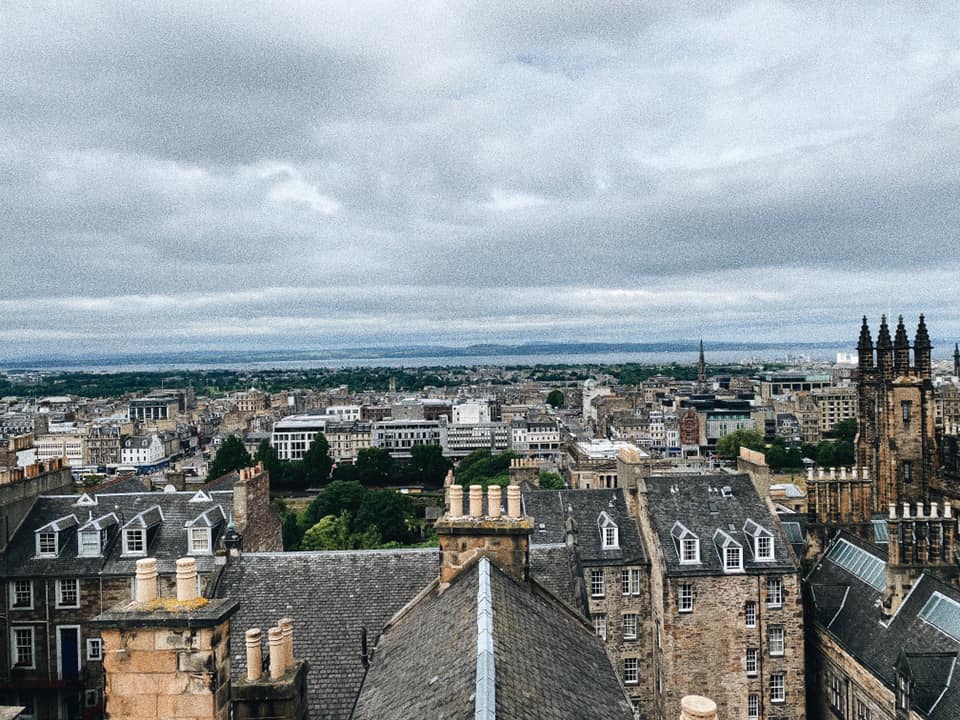
When I look through the photographs now, I can still see why. Dean Village seems tucked into its own world beneath the wider city. Calton Hill looks grand enough for a final scene. Circus Lane curves away as though deliberately withholding whatever happens next. Edinburgh Castle rises above the rooftops as though it has spent several centuries perfecting its entrance. Somewhere among all of this is me, probably wearing my white bucket hat again, because apparently every fairytale heroine requires a signature accessory and mine, regrettably, was practical sun protection.
Years from now, I may forget the exact route we walked or what time we arrived at each place. I may forget which street connected one stop to another or how long we spent somewhere. What I suspect I will remember is the personality Edinburgh acquired in my head that day. Cities do this in memory even though, logically, stone buildings possess no opinions. My Edinburgh was old, clever, theatrical and slightly eccentric. It had excellent taste in doors. It believed stone could never be overused. It enjoyed putting attractive things at the top of hills. It approved of chocolate gelato. It appeared to believe that ordinary streets should occasionally resemble film sets just to make visitors question how much reality was strictly necessary.
📸 Photo Memories












That may be what this part of Scotland ultimately gave me: not a lesson about productivity, self-improvement or finding myself, but proof that adulthood does not require immunity to wonder. I can understand perfectly well that a lane is merely a lane and still think it looks enchanted. I can know exactly why an unfinished monument exists and still let it resemble ancient ruins from another world for a few minutes. I can be a sensible adult with a job, responsibilities and a calendar and still become absurdly excited about somebody else’s white front door because the roses looked particularly good around it.
Reality and imagination are not enemies.
Sometimes the best journeys give both a chair at the table.
So if somebody asked me how to spend an afternoon in Edinburgh, I would certainly tell them to see the famous places. Walk towards Dean Village and pay attention to the houses. Find Mary’s Milk Bar and eat something sweet while the castle supervises. Climb Calton Hill and stand beside the unfinished columns. Wander towards Stockbridge and find Circus Lane, then accept that at some point you may photograph a stranger’s doorway because the flowers have defeated your dignity. But more than any checklist, I would tell them to look sideways. Edinburgh rewards that. Its best moments are not always hidden behind ticket barriers. Sometimes they are distributed between cobbles, windows, hills, flowers, stone walls and small details nobody can promise you will notice.
And when I think back to that morning now, I return to the light. Thin, grey, almost dreamy, sliding over the buildings while the city woke around us. I had stepped outside thinking Edinburgh looked as though somebody had built modern life inside the remains of an older story. By the end of the day, after the hidden village, the melting chocolate, the unfinished columns, the ridiculous hills and that little white door wrapped in red roses, I realised the city had spent the whole afternoon proving the thought correct.
Perhaps we had not wandered into somebody else’s dream after all. Perhaps Edinburgh simply reminded me that reality occasionally has enough imagination of its own.
With love,
Anj 🖤












Leave a Reply