The bag by the door looked impressively prepared for the end of civilisation. Water. Medication. Important documents. Torch. Charger. Cash. Sensible shoes. Enough snacks to survive either a major emergency or one unexpectedly long NHS shift. I stood there checking everything with the confidence of someone who had successfully converted uncertainty into compartments and zip pockets. Very reassuring. Very organised. Very me. If disaster had arrived with a clipboard and a checklist, I was ready to receive it. The slight flaw in the plan was that life’s worst emergencies rarely announce themselves by politely asking whether your power bank is fully charged.
I understand the appeal of practical preparedness. I work in healthcare, so thinking ahead is hardly unfamiliar. We assess risk, anticipate deterioration, make plans, escalate concerns, check equipment and try to stay several steps ahead because sometimes the difference between panic and response is simply having considered the possibility before it happens. In a real emergency, I would absolutely want the sensible things nearby. I am not going to stand in the dark insisting that resilience will charge my phone. Faith is useful. So is a power bank. But if life went badly wrong tomorrow, one of the first things I would reach for would not fit into any bag. I would reach for people.
That took me a long time to understand because I used to think preparedness meant independence. Be capable. Know what to do. Keep yourself together. Have a backup plan. Then have a backup plan for the backup plan because apparently anxiety also enjoys project management. There is satisfaction in being the person who can cope, the person who does not need much, the person who remains useful when things become difficult. Nursing probably reinforced that part of me. You learn to respond while frightened, function while tired and keep your voice steady even when the situation has become anything but steady. Those are useful skills, certainly, but life eventually teaches you that being capable and being invulnerable are not the same thing.
Some emergencies are obvious: a storm, a flood, a fire, a medical crisis, the sort of event that comes with warnings, sirens or somebody saying very clearly that this is not normal. Others arrive without any formal announcement. A phone call. Bad news. A relationship breaking. A loss you did not prepare for. A plan collapsing after you had already built half your future around it. One ordinary morning you are deciding what to eat, and by afternoon your life has acquired a before and an after. There is no emergency bag for that. You cannot pack enough bottled water to stop grief. A torch cannot illuminate every kind of darkness. A first-aid kit is excellent for a cut finger and considerably less impressive when somebody says the sentence you have been afraid to hear. Those are the emergencies that taught me to think differently about being prepared.
When the difficult days came in my own life, what I remembered most was rarely whether I had everything organised. I remembered who stayed, who answered, who checked again the following day after everyone else assumed the crisis had passed, who prayed, who listened without immediately trying to turn pain into advice, who gave me space without disappearing entirely and who managed to make me laugh at precisely the moment laughter seemed inappropriate but necessary. People become part of our emergency equipment without ever realising it. There are names I know I could call, and that knowledge is its own form of preparedness.
Living far from home has made me understand this even more. When your family is thousands of miles away, community stops being an abstract lovely idea and becomes very practical. You learn how much it matters to have people nearby who know you beyond polite conversation, people who can tell when “I’m fine” has several footnotes attached, people who know when to ask questions and when to simply sit beside you, people who can appear with food because Filipinos have long understood that emotional distress is at least partially a catering issue. I am convinced half of Filipino crisis management is, “Have you eaten?” The question sounds ordinary until you are the person having a terrible day. Then somehow rice becomes pastoral care.
There is wisdom in that kind of attention. Love often arrives through practical things: a meal, a lift, a message, somebody offering to cover something for you, somebody remembering an appointment you thought nobody else knew mattered, somebody standing beside you without making your difficulty about themselves. That is the kind of community I want around me. More importantly, it is the kind of person I want to be for other people. An emergency plan should not only answer the question, “Who would I call?” It should also make me ask, “Who could call me?” Would I be someone who answers? Would people feel safe asking me for help? Would I know how to listen without immediately taking over? Would I show up even when there is nothing impressive to do? Would I still be kind if somebody’s crisis arrived at an inconvenient time?
That last one is uncomfortable because emergencies are famously poor at scheduling themselves around our availability. Nobody receives terrible news and thinks, excellent, this fits beautifully between my errands. People sometimes need us when we are tired, busy, distracted or already carrying our own things. Of course, boundaries matter. We cannot rescue everyone, and we should not destroy ourselves trying. But there is a difference between having boundaries and becoming unreachable. I want to keep that distinction clear.
I also think we build our emergency plans during ordinary days. Trust is stocked slowly. Friendship is maintained before something goes wrong. Community is created through ordinary messages, shared meals, laughter, showing up, remembering, forgiving, checking in and making enough room in our lives that another person knows there is somewhere to go if the ground suddenly shifts. You cannot neglect every relationship for years and then expect a beautifully functioning support network to appear because life has become inconvenient. Relationships need maintenance too. Perhaps that should be written on emergency checklists beside “replace batteries”: check torch, check medication, check people.
Not in a transactional way. Friendship is not insurance. We do not care for people so they will eventually return the favour. But we do create lives in which mutual care becomes possible. There is a difference between expecting repayment and allowing reciprocity. I have also learned that having people around you does not mean they can fix what happened. Sometimes nobody can. There are losses no friend can reverse, questions no family member can answer and situations where the people who love you can do little more than stand close while you carry something painful. That can feel insufficient, but it is not. Presence is frequently underestimated because it produces no dramatic solution. The problem remains, the grief remains, the uncertainty remains, but you are no longer alone inside it. That changes the weight.
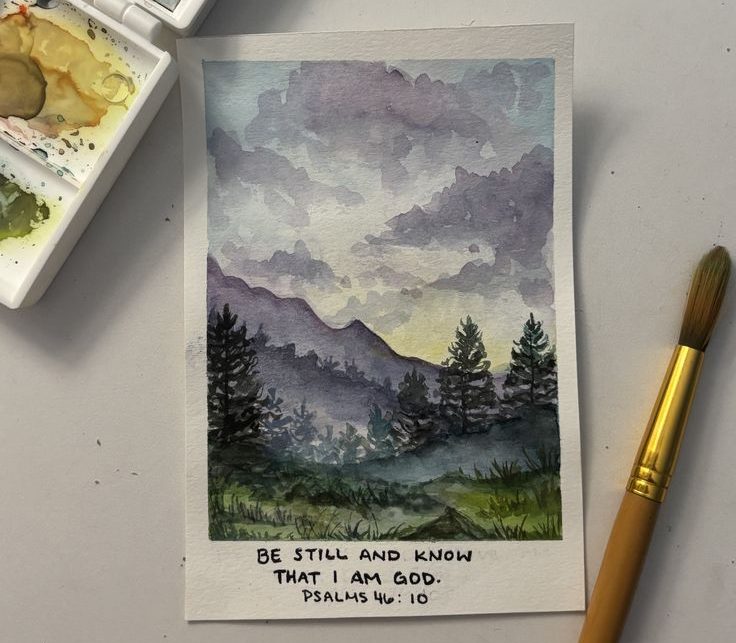
Faith belongs in my emergency plan too, although I do not think of God as something I keep packed away until disaster. Faith works better when it has already become part of ordinary life. Prayer should not have to introduce itself during catastrophe. For me, faith is the place underneath the plan. It is what remains when there is no sensible answer to the question, “What now?” I have prayed beautiful prayers before, but I have also prayed the spiritual equivalent of, “God, I have absolutely no idea what is happening.” I suspect those count too. Some emergencies reduce language to essentials: help, please, stay, guide me, give me strength for today. That can be enough.
I do not believe faith guarantees that frightening things will not happen. My own life has given me too much evidence to pretend otherwise. People we love still get sick. Plans still fail. Loss still enters homes that prayed hard. Good people still experience terrible days. Faith, for me, is not believing that nothing bad will happen. It is believing that bad things do not get the final authority over who I become. They may frighten me without turning me cruel. They may exhaust me without taking away my capacity to love. They may change the shape of my life without removing God from it. That is a different kind of preparedness.
Humour belongs in the plan as well. There have been periods in my life when laughter felt almost rebellious. Nothing had necessarily improved, yet somebody said something ridiculous and suddenly, for thirty seconds, the heaviness cracked. That matters. Humour does not minimise suffering. Used well, it helps us remain recognisably ourselves while suffering exists. I would like enough humour in reserve to survive the absurdity that often accompanies difficult times, because somehow even on terrible days a delivery still goes to the wrong house, somebody sends an inappropriate autocorrect and a cat chooses that precise moment to knock something onto the floor. Life does not always respect emotional tone. Perhaps that is merciful.
I would pack kindness too, if kindness were packable. Not because I expect myself to behave perfectly during stress, but because fear has a way of shrinking our attention until we can see only our own discomfort. Preparedness should include remembering that other people may be frightened too. A crisis does not give us permission to abandon decency. The exhausted person may need patience, the confused person may need explanation, the frightened person may need reassurance, and sometimes the person making your day harder is also having the worst day of theirs. That does not excuse everything, but it does make compassion worth keeping within reach.
Forgiveness belongs somewhere in there as well, although perhaps not in the front pocket. Some things require time. Still, I do not want to carry old anger into every future crisis as additional luggage. Life becomes heavy enough without dragging every historical offence behind you like an overpacked suitcase with one broken wheel. There are things worth confronting, boundaries worth keeping and people from whom distance is sensible, but resentment is expensive emergency equipment. It takes up too much space.
The older I get, the more I think preparedness is partly about travelling lighter. Know what matters. Know who matters. Know what you believe. Know which battles can wait. Know where to ask for help. Know when pride has become impractical. And please, for goodness’ sake, know where the charger is. I still believe in the practical emergency kit. Water matters. Medication matters. Important information matters. A charged phone matters. Knowing what to do in an actual emergency matters enormously. Being philosophical while ignoring practical safety is not wisdom; it is just poor planning with good vocabulary. But I no longer think preparedness ends with supplies.
The fuller plan is relational. It is knowing who would notice if you disappeared for a while. It is having people whose numbers you do not hesitate to call. It is being that person for someone else. It is building faith while the weather is good instead of waiting until the storm has already reached the roof. It is practising kindness on ordinary Tuesdays so that fear does not completely rewrite your character on the worst one. It is allowing yourself to need other people without interpreting need as failure.
If the sky turned strange tomorrow, I would still pick up the bag by the door. I would check the medication, grab the documents, take the water, make sure the phone was charged and probably add more snacks than any recognised emergency authority would consider necessary. The torch would still work. The power bank would still be full. The zip pockets would still give me the comforting illusion that chaos can be categorised. But before I left, I know what else I would do. I would take out my phone, ignore the fact that it had spent the entire essay being treated like emergency equipment, and use it for the reason that matters most.
I would call my people.
And I hope, somewhere, somebody knows they could call me too.
That is still the one thing no go-bag can pack for me.
With love,
Anj 🖤













Leave a Reply