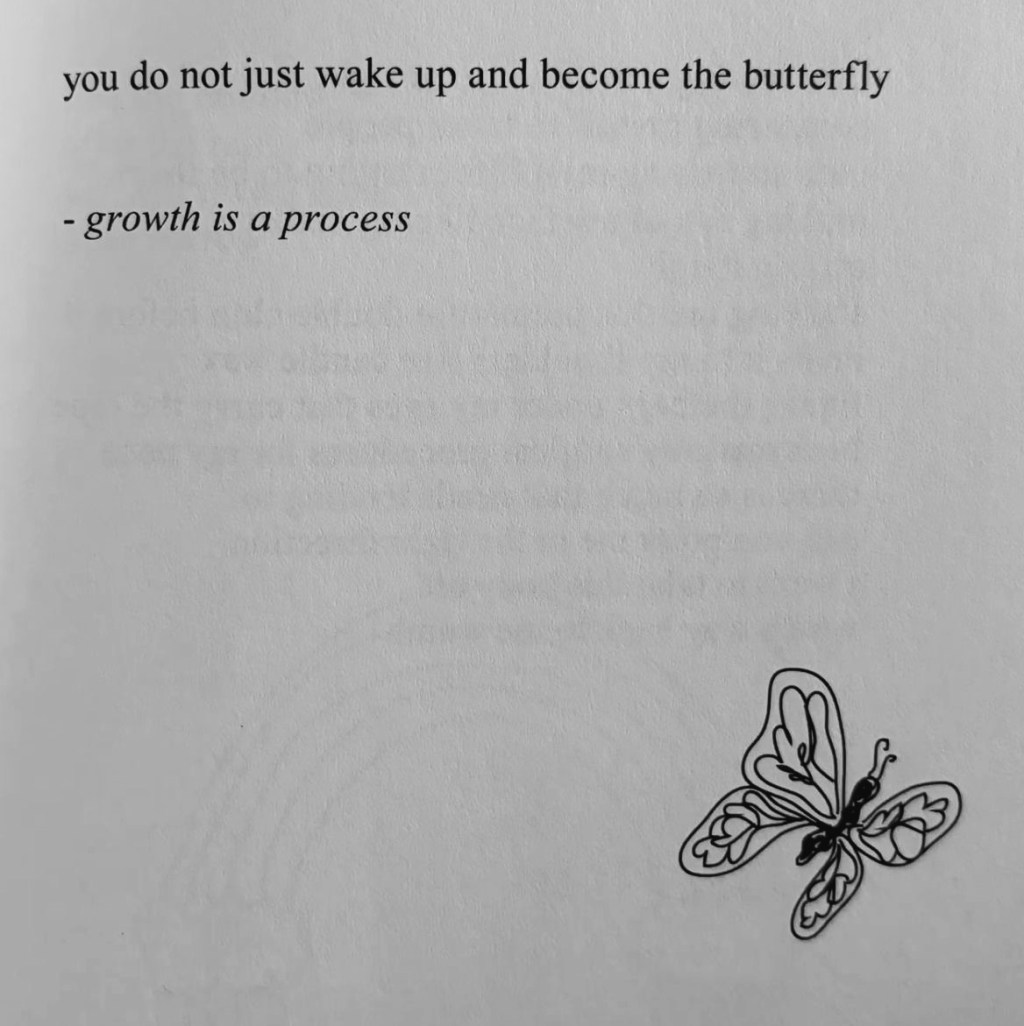
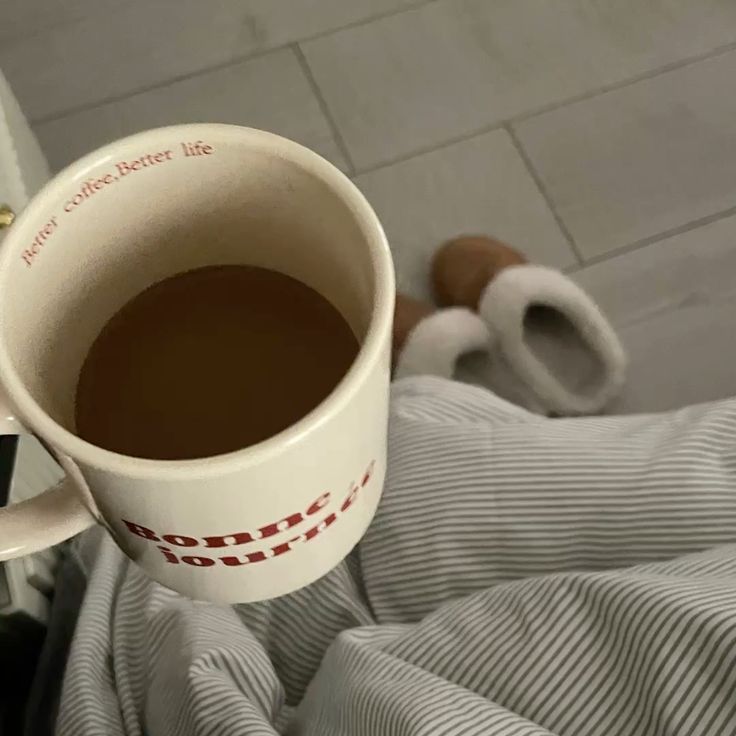
Nobody tells you the cocoon has terrible lighting. There are no flattering angles, no cinematic soundtrack swelling in the background, and certainly no small sign on the wall assuring you that this uncomfortable phase is temporary. Mine, at the time, involved a blocked nose, an aching face, hair that had apparently resigned from its duties, and a cup of tea I had reheated often enough for us to qualify as being in a long-term relationship. I was scrolling through my phone half-awake when I came across Rupi Kaur’s line about how we do not simply wake up and become the butterfly because growth is a process. Five years earlier, I might have double-tapped it, thought, That’s nice, and carried on scrolling. That day, though, sitting there looking considerably less like a butterfly and more like someone who had lost an argument with the flu, I stopped.
Perhaps it was the timing. Lately, I had been feeling as though I was living between two versions of myself. I was no longer entirely the woman I had been, but I could not clearly describe the woman I was becoming either. Certain things no longer fitted: old expectations, old ways of reacting, even some relationships I once assumed would remain exactly as they were. At the same time, whatever was coming next had not properly introduced itself. There was no grand unveiling, no wings, no dramatic music, just the strange awareness that something inside me had shifted while the rest of life continued asking whether I had replied to emails and remembered to buy milk. We celebrate transformation beautifully after it has happened because the before-and-after photograph is wonderfully efficient. Here is who I was. Here is who I became. Swipe to admire progress. The middle photograph rarely gets posted. Nobody is particularly interested in the Tuesday when you cried in the bathroom, doubted every decision you had made and then went downstairs to fold laundry because apparently existential uncertainty does not excuse you from household chores. The middle has poor marketing.
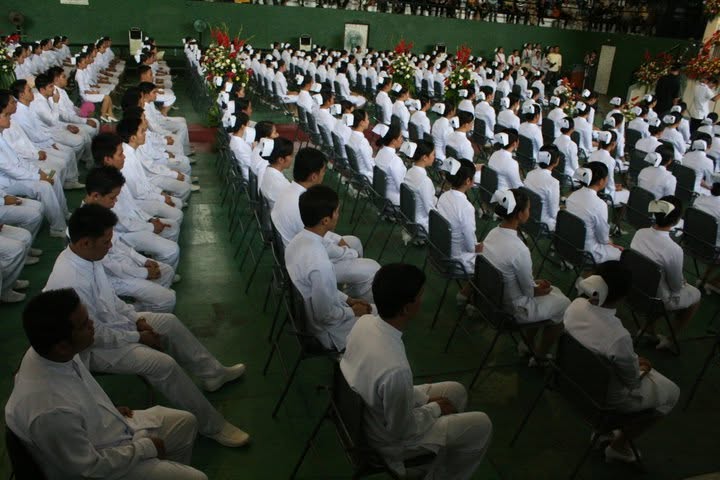
I know this because some of the biggest changes in my own life looked impressive only from a distance. Moving to the UK, for example, could easily be reduced to one tidy sentence: I left the Philippines, came to England and built a nursing career. Very inspiring. Excellent caption. What that sentence does not contain is the girl awake at two in the morning trying to work out why British people needed both “toilet” and “loo,” or what exactly someone meant when they said they were “miffed.” It does not show her crying privately because homesickness had chosen an inconvenient hour. It does not show the freezing walks to work because a taxi felt too expensive, or the strange experience of missing home while simultaneously knowing that leaving it had been part of the dream.
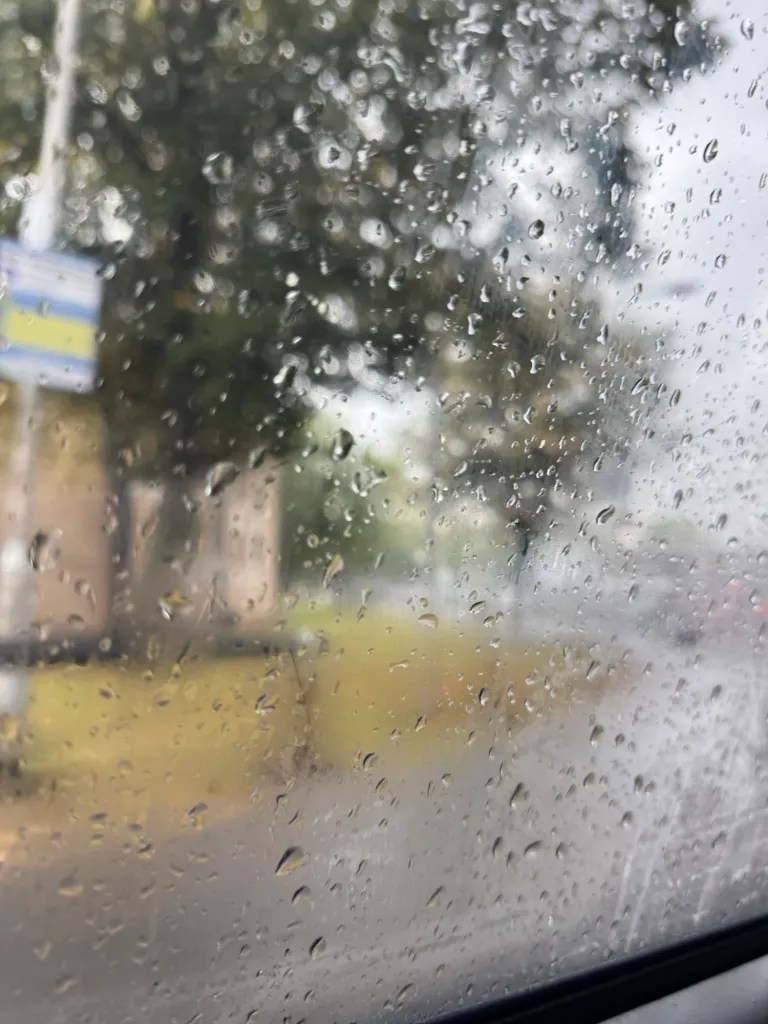
People saw the nurse. They saw the job, the uniform, the move abroad, the evidence that the plan had somehow worked. They did not necessarily see how much rearranging happened underneath it. Migration has a way of introducing you to yourself without providing much warning. You discover what frightens you, what you can tolerate, how resourceful you become when there is nobody nearby to solve the problem for you, and exactly how much rain one person can absorb before becoming personally offended by the British climate. You learn a country one bus route, accent, mistake and embarrassing misunderstanding at a time. Then one day somebody tells you that you are brave, and you think of all the moments when bravery looked suspiciously like having no alternative but to keep going.
That is the inconvenient thing about becoming: it rarely feels profound while it is happening. Sometimes growth looks like achievement, but sometimes it looks like sleeping through most of your day off because your body has finally submitted a formal complaint. Sometimes it looks like changing your mind. Sometimes it looks like saying, “I don’t know,” in a room where everybody expects certainty. Sometimes it means ending a friendship you once thought would follow you forever, not because the entire relationship was false, but because somewhere along the road you stopped being good for each other. Sometimes growth is staying. Sometimes it is leaving. The difficult part is that nobody hands you a diagram explaining which one is required.
I used to imagine personal growth as a steady upward movement. You learn the lesson, become wiser, and never repeat the mistake. Very efficient. Unfortunately, human beings appear to have been designed without that feature. We revisit lessons. We recognise familiar patterns only after walking halfway into them. We forgive something and then discover months later that a small corner of it still hurts. We become confident in one part of life while feeling completely lost in another. Healing, I have discovered, has very little respect for straight lines.
That used to frustrate me. If I had already survived something, surely I should be permanently excellent at surviving everything related to it. If I had learned boundaries, why did I still sometimes feel guilty for using them? If I understood that rest mattered, why did I occasionally treat sitting down as though I had been caught committing a minor offence? If I knew not everybody needed an explanation, why did my brain still occasionally prepare a closing argument for a courtroom that did not exist? Apparently, knowing something and becoming it are different processes, and the cocoon is full of that distinction.
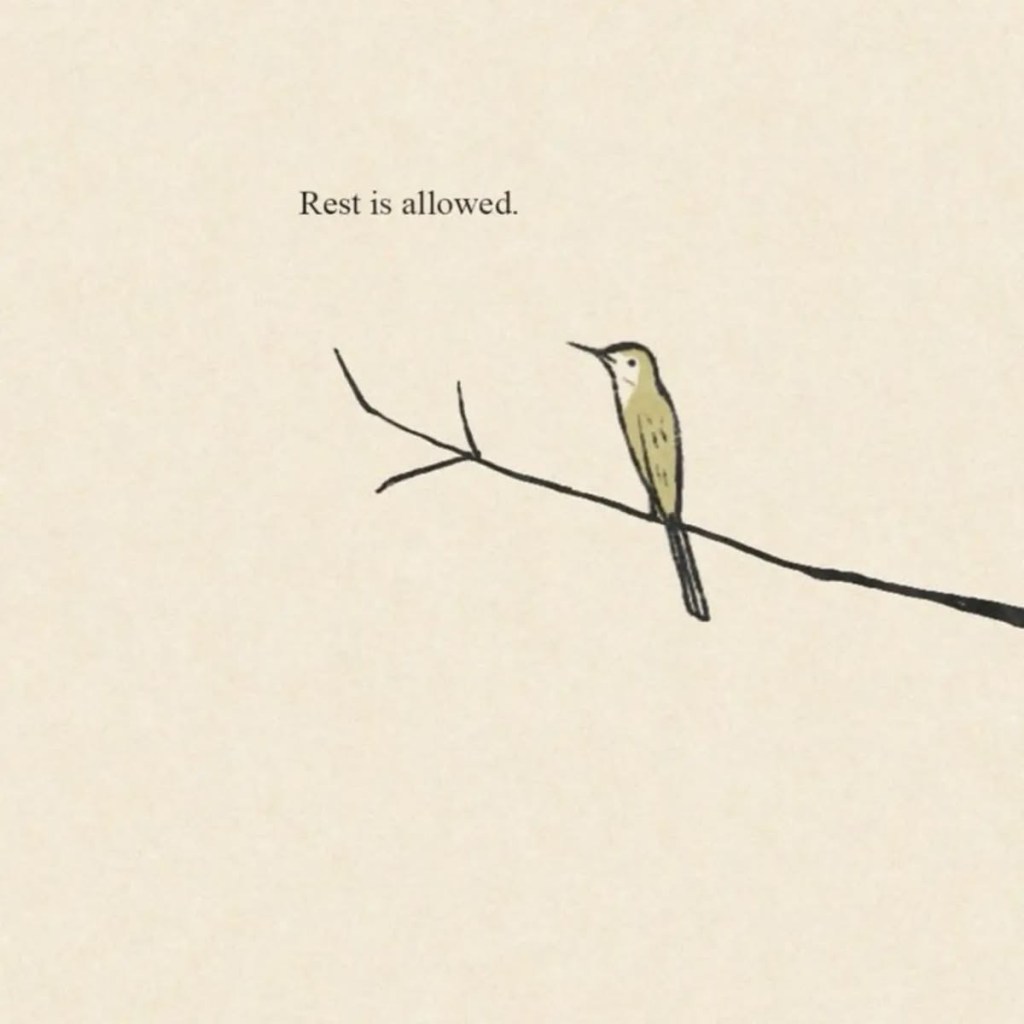
It is the place where old knowledge slowly becomes behaviour. Where boundaries stop being sentences you admire online and become actual doors you are willing to close. Where rest stops being something you earn after reaching the point of collapse. Where you learn that saying no does not require a twelve-paragraph apology with supporting evidence. Where you discover that being misunderstood is uncomfortable but survivable. Where you stop trying to be the hero of every ending and accept that sometimes closure is simply deciding not to knock on the door again.
There were periods when I worried that slowing down meant I was becoming less ambitious. I had spent so much of my adult life moving towards something: qualifications, jobs, responsibilities, another stage, another goal. Movement was easy to recognise. It came with deadlines and certificates and people saying congratulations. Stillness was harder. There is no certificate for finally sleeping enough. Nobody sends flowers because you stopped answering messages that drain you. There is no graduation ceremony for learning not to abandon yourself simply because somebody else is disappointed. And yet those changes have probably altered my life more than some of the achievements that came with official paperwork.
Perhaps that is why the butterfly metaphor bothers me a little now, even though I understand why we love it. We focus so much on the wings that the cocoon starts to look like an unfortunate waiting room. We speak as though the butterfly is the reward and everything before it is merely preparation. But the transformation happens there, inside the part nobody applauds. The creature does not sit inside patiently attaching decorative wings. It becomes unrecognisable before becoming recognisable again, and there is something frighteningly familiar about that.
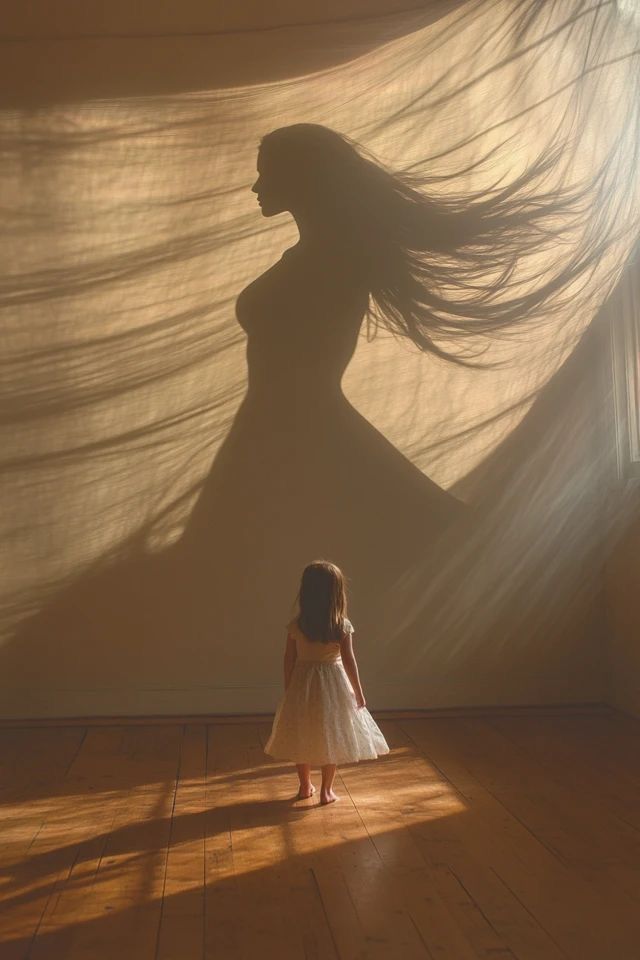
Some seasons ask us to become less certain of who we are before we can understand who we are becoming. Roles change. Relationships shift. Priorities rearrange themselves. Things we once tolerated begin to feel unbearable. Dreams we were once desperate to achieve lose some of their shine. Other desires appear and surprise us with how deeply they matter. It can feel like losing yourself when sometimes you are simply losing an old definition.
I have had to learn that not every unfinished part of me requires immediate fixing. There are questions that need time rather than answers. There are decisions that become clearer after the panic has passed. There are days when the most productive thing I can do is admit that I am tired. There are emotions that do not need to become lessons before I am allowed to feel them. Sometimes sadness is simply sadness. Sometimes disappointment does not contain a secret gift waiting to be discovered by an optimistic blogger with enough metaphors. Some things are simply difficult, and I think growth became more honest when I stopped insisting that everything painful had to become beautiful immediately.
That does not mean I have stopped looking for meaning. I probably never will. Writing itself is evidence of that. Give me an ordinary object and sufficient time and I will eventually make it represent half my childhood. But there is a difference between finding meaning later and forcing it while you are still bleeding. Some experiences need to be lived before they can be understood.
The cocoon allows for that. It allows you to be uncertain without declaring yourself lost. It allows you to rest without calling yourself lazy. It allows you to outgrow things without pretending they never mattered. It allows you to be grateful for an old version of yourself without inviting her to make current decisions. It allows you to say, “This is where I am,” without immediately following it with a five-year plan. That last one remains difficult for me.
I like knowing what comes next. I like plans, lists and the reassuring fiction that enough preparation can prevent life from behaving unexpectedly. God, unfortunately, has had years of evidence that my schedules are suggestions rather than binding agreements. Some of the most important changes in my life arrived through circumstances I would never have selected voluntarily. Some prayers were answered differently from what I had asked. Some doors remained closed long enough for me to realise I was standing outside the wrong building.
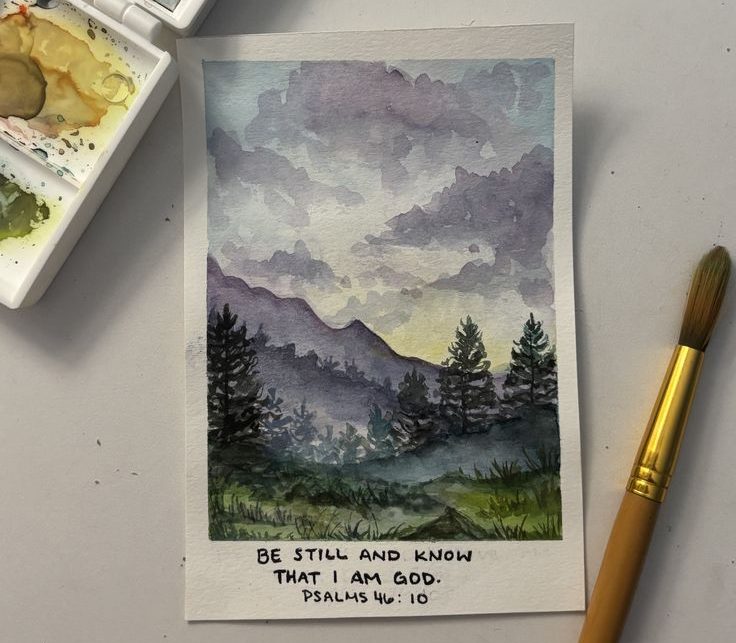
Faith has changed in the middle seasons too. I once thought trust meant feeling sure that everything would work out the way I hoped. Now I think trust sometimes looks more like admitting that I cannot see what is happening and refusing to confuse that with God doing nothing. There are seasons when faith feels less like standing triumphantly on a mountain and more like sitting under a blanket with a blocked nose saying, “Lord, I have absolutely no idea what You are doing here.” I suspect He can work with honesty.
That afternoon, with the quote still glowing on my phone and the tea once again requiring rescue from the microwave, I realised I had been treating my unfinishedness as evidence against myself. I kept looking for proof that I had become enough: healed enough, disciplined enough, wise enough, brave enough, settled enough. As though adulthood came with an inspection date and someone would eventually appear with a clipboard to check whether I had completed all required improvements. Nobody came, thankfully, because I am beginning to think the unfinished parts are not defects in the story. They are the story.
I am still learning to rest without turning it into another task to perform correctly. I am still learning which relationships deserve effort and which ones I keep trying to revive because I dislike accepting endings. I am still learning that protecting my peace does not mean avoiding every uncomfortable conversation. I am still learning that strength can look like asking for help, and that softness does not require surrendering discernment. I am still learning how to forgive myself for decisions made by versions of me who had less information than I do now. There are days when I handle all of this beautifully, and there are also days when I become irritated because someone has breathed incorrectly near me. Growth contains range.
Maybe that is the part motivational quotes cannot fit neatly into a square graphic. Becoming is not beautiful every day. Sometimes it is repetitive and inconvenient. Sometimes it smells faintly of menthol rub. Sometimes it involves reheated tea, unfolded laundry and a journal page containing three useful sentences surrounded by complete nonsense. Sometimes the great emotional breakthrough of the day is deciding not to send a message you will regret.
Still, something changes. Gradually, the things that once required enormous effort begin to feel natural. You stop chasing every explanation. You recover faster from disappointment. You become less frightened by other people’s opinions. You recognise when your body needs rest before it has to scream. You notice that the person who once terrified you by leaving no longer controls the atmosphere of your day. You catch yourself choosing differently and realise that perhaps transformation happened while you were busy complaining that nothing was happening.
That is the strange mercy of the middle. You rarely know exactly when you become someone new. There is no morning when the old self formally hands over the keys. One day you simply respond differently. Something that would once have destroyed your afternoon becomes merely annoying. Something you once begged to keep no longer tempts you back. Something you thought you needed approval for becomes a decision you can make peacefully on your own, and suddenly you see it. Not the butterfly, not yet perhaps, but evidence. The cocoon has been doing something after all.
By evening, my phone had moved on to other things. The quote disappeared somewhere beneath news, photographs, messages and whatever else the internet had decided I needed to see that day. My nose still hurt. I was still tired. No wings had appeared. The room certainly had not improved its lighting. But I felt differently about being there.
Maybe I do not need every season to look like progress in order for progress to be happening. Maybe I do not need to force open whatever is still forming simply because I am impatient to see the result. Maybe there is dignity in being unfinished, in admitting that some parts of me are still learning their shape. The butterfly will get plenty of photographs when it arrives. For now, I think I will give the cocoon some credit. The lighting may be terrible, but apparently, this is where some of the most important work gets done.
Still under construction behind poor lighting,
Anj 🖤
















Leave a Reply