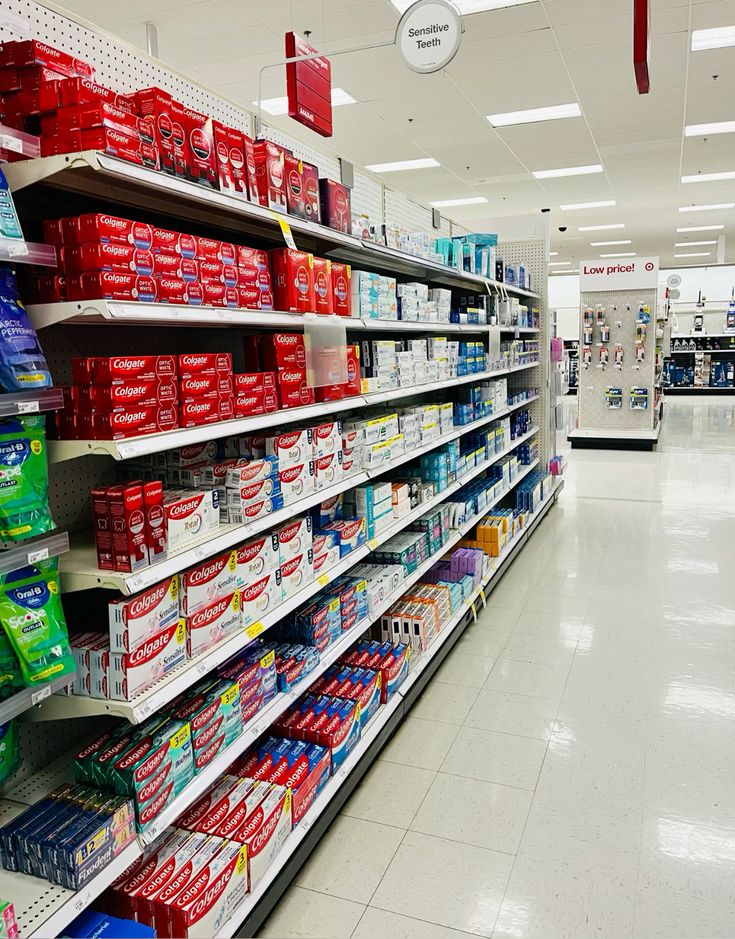
I went to the supermarket for toothpaste and came home with a minor philosophical crisis. It should have been a simple errand. I had money, I possessed teeth, and both circumstances strongly suggested that buying toothpaste was an appropriate use of the afternoon. I approached the aisle with the confidence of someone expecting to spend thirty seconds making a completely ordinary decision, and then I saw the selection.
There was toothpaste for whitening, strengthening, sensitivity, freshness, gum care, cavity protection and several other dental concerns I had apparently been neglecting without realising it. Some boxes promised impressive results, while others contained enough scientific terminology to make me wonder whether I was choosing toothpaste or applying for postgraduate study. There were different sizes, flavours, prices and packaging designs, each subtly implying that the future of my entire mouth depended upon making the correct decision. One box suggested my smile could become extraordinary, another seemed quietly disappointed in the smile I already had, and a third looked as though it had been developed by a committee of people who had never purchased toothpaste without consulting clinical evidence.
I stood there holding two boxes and trying to remember what I had originally wanted. Clean teeth. That was all, and apparently this was an embarrassingly modest ambition. After several minutes of comparing products, I eventually chose a familiar brand and left the aisle. The decision was perfectly reasonable, yet some part of my mind remained convinced that somewhere among the rejected tubes existed a superior option capable of transforming my dental future in ways I would never experience.
That was when I realised how strange modern choice can be. We have become extremely good at giving ourselves options and considerably less skilled at feeling satisfied once we choose one. Choice is usually described as freedom, and rightly so. Being able to choose what we study, where we work, how we spend money and which values shape our lives is profoundly important. People who lack meaningful options experience genuine restrictions on opportunity and dignity, but perhaps there is a difference between having enough alternatives to exercise freedom and having so many that every ordinary decision begins to resemble an investigation.
A person with no options may feel trapped, while a person with too many may feel overwhelmed. Those experiences are not equivalent, but both reveal that the sheer number of alternatives does not automatically make a decision easier or more meaningful. Sometimes freedom lies in having options, and sometimes it lies in knowing when to stop examining them.
I notice the difference most clearly when I think about a small sari-sari store in the Philippines. Depending on what is available, the process can be wonderfully uncomplicated. You ask for something, the owner reaches behind the counter, money changes hands and the transaction is finished. You wanted a biscuit, you bought a biscuit, and nobody required you to compare thirty-seven varieties according to texture, nutritional information, packaging design and whether the manufacturer appeared sufficiently committed to your emotional wellbeing.
A large supermarket offers a very different experience. Suddenly there are chocolate biscuits, cream biscuits, digestives, imported biscuits, economy packets, premium varieties and products whose packaging suggests they were handmade by deeply sincere bakers living somewhere picturesque. What began as hunger turns into a small identity crisis. Am I practical? Adventurous? Sensible? Someone who appreciates quality? Someone mature enough to recognise that all of this is ridiculous and simply buy whatever is on offer? The last option usually sounds excellent until I notice something more interesting two shelves away.
I sometimes wonder whether the real problem is that we confuse having alternatives with being obliged to evaluate every one of them. If twenty options exist, we feel we should compare twenty. If several opportunities are available, choosing one starts to feel like deliberately losing the others. And when a decision disappoints us, we assume there must have been a better option that we somehow failed to identify. Choice begins to feel less like freedom and more like a test, unfortunately one with no answer key.
Psychologists have explored related ideas through what is often called the paradox of choice: having options can be beneficial, but in some situations too many can increase indecision, comparison and dissatisfaction. This does not mean fewer choices are always better, or that every person becomes overwhelmed in the same way. It simply challenges the assumption that more possibilities automatically create greater happiness. More information can help us make better decisions, but too much can turn a simple choice into unnecessary work. More opportunities can expand our lives, but continual comparison can make it difficult to appreciate whichever one we eventually choose.
The problem becomes much more serious when the subject is no longer toothpaste. Take education. A young person may be asked to choose a course of study before having much experience of the professions attached to it. They are expected to consider interests, employment prospects, finances, personal abilities and what kind of life they may want ten or twenty years later. That is an extraordinary amount of forecasting to request from somebody who may still be undecided about lunch.
Of course, education deserves careful thought. It can require substantial time, money and commitment. But perhaps we sometimes expect young people to possess a level of certainty that even adults rarely achieve. “What do you want to become?” sounds like a simple question, but hidden inside it are several others. What kind of work will suit you? Which industries will change? What responsibilities will you have later? Will your interests remain the same? How much uncertainty will you tolerate? Which sacrifices will eventually feel worthwhile?
Most people cannot answer all of these questions confidently because the future has an inconvenient habit of refusing to provide advance documentation. A thoughtful choice does not have to be permanent. Someone can pursue one direction and later discover another interest. A decision can be reasonable based on present circumstances even if life eventually changes it. Good decision-making may have less to do with predicting everything correctly and more to do with examining what matters, choosing responsibly and remaining adaptable.
I think adaptability deserves more credit because we often behave as though one wrong choice will permanently destroy every good possibility afterwards. Some decisions certainly carry serious consequences and deserve substantial thought, but many are less final than anxiety suggests. A disappointing purchase teaches us what we prefer, a hobby can be changed, a job can sometimes lead unexpectedly to another path, and a plan that evolves does not automatically mean the original decision was foolish.
The trouble begins when we expect every choice to be optimal rather than simply reasonable and suitable. We want the absolute best possible decision among every imaginable alternative, and that standard can ruin perfectly good experiences. Imagine choosing a restaurant by reading menus, checking reviews, comparing prices, calculating travel time and asking several people for recommendations. Eventually, you select somewhere, enjoy the meal and then discover that another restaurant nearby has slightly better reviews. Suddenly a perfectly enjoyable dinner begins competing with an imaginary meal you never ate.
Reality has now lost to fiction. The imaginary restaurant never delivered the wrong order, never kept you waiting and never produced a disappointing starter because imagination benefits from not having to provide actual service. We do this far beyond restaurants. The course we did not study remains interesting. The city we did not move to remains full of possibilities. The job we rejected probably had wonderful colleagues, better hours and an office permanently bathed in flattering natural light. The paths we did not take enjoy excellent marketing because reality never got the opportunity to inconvenience them.
This is why I think the phrase good enough deserves rescuing. It often sounds like defeat, as though we have abandoned excellence and agreed to mediocrity. But sometimes good enough simply means that a choice satisfies the things that genuinely matter. A pair of shoes can be comfortable, affordable and suitable. A notebook can have decent paper and a sturdy cover. A restaurant can serve enjoyable food at a reasonable price. A toothpaste can clean teeth without also needing to revolutionise our self-esteem.
Perhaps the decision has already succeeded and does not need to defeat every competing option in an imaginary championship. I suspect some of us spend far too much energy comparing marginal differences. We can spend thirty minutes researching two almost identical products to save an amount of money too small to compensate for the attention we used finding it. Careful spending matters, especially when resources are limited, but time and mental energy have value too.
Not every difference deserves investigation, and choosing toothpaste should not require the same level of deliberation as choosing a profession, although toothpaste packaging occasionally seems offended by that suggestion. Maybe the useful skill is not simply learning how to choose. It is learning how much thinking a particular choice deserves. Some decisions require research, discussion and patience, while others deserve thirty seconds and a trip to the cashier.
I also think modern life has encouraged us to load ordinary choices with far too much identity. We do not simply buy clothes; we express ourselves. We do not merely choose food; we communicate taste. We do not simply work; we build a personal brand. Even small purchases can become symbols of intelligence, status, values or lifestyle. That is an unreasonable burden to place on a tube of toothpaste.
Sometimes I choose something because I like it, sometimes because it is cheap, sometimes because it is available, and sometimes because I have spent long enough standing in the aisle and would very much like to go home. None of these reasons represents a philosophical collapse. They are simply ordinary reasons people make ordinary choices.
The abundance of options becomes especially exhausting after we have already made a choice. I recognise this habit in myself. I can compare products carefully, purchase one, then perform the completely unnecessary act of checking whether another shop is selling it for less. Why? The purchase has already happened, the product works and the new information often cannot change anything. Apparently, however, part of my mind enjoys conducting a formal post-purchase inquiry into whether Present Me made the correct decision twenty minutes ago.
Occasionally, the information is useful. More often, it simply produces irritation. There may be wisdom in knowing when additional comparison no longer serves a purpose. Once a decision has been made responsibly, perhaps we should allow ourselves to live with it. Use the notebook, wear the shoes, eat the meal, take the trip and learn what actually happens. There will nearly always have been another option, but its existence does not automatically make ours wrong.
The idea becomes heavier when modern life tells us that almost anything is possible. We hear that we can pursue education, travel, change careers, start businesses, learn new skills and reinvent ourselves. Much of that message is encouraging because opportunities genuinely exist today that earlier generations may not have had. But unlimited possibility carries a hidden accusation. If everything is possible, then perhaps every disappointing outcome becomes our fault for choosing incorrectly.
If we are unhappy, perhaps we chose the wrong path. If another person appears more successful, maybe they made better decisions. If we feel stuck, perhaps we failed to identify the right opportunity. That story overlooks something important: people do not choose from identical shelves. One person may technically be free to study but unable to afford the course. Someone may have several employment options but only one that works around essential caring responsibilities. Another person may be encouraged to move abroad while lacking the financial security that would make such a risk realistic.
An option can exist without being practically available. Real choice requires more than alternatives; it requires some reasonable ability to pursue them. This is why comparing other people’s decisions can be misleading. We usually see the result and very little of the circumstances underneath it. Two people may choose different careers, cities or lifestyles, but they may never have been choosing from the same set of possibilities in the first place. Circumstances, resources, responsibilities and opportunity all matter.
The philosophy of choice becomes more useful when it reminds us both that our decisions influence our lives and that they do not control everything. We can gather information, seek advice and think carefully, but we cannot eliminate uncertainty. We cannot test every possible life before selecting one, and we cannot guarantee that the choice that fits today will remain ideal forever. Perhaps maturity means choosing responsibly without demanding prophecy.
This is what I think people are often really asking when they say, “Do you think I made the right choice?” Sometimes they genuinely want another perspective, but sometimes they are asking for something nobody can provide: a guarantee that this path will produce the best available future. Unfortunately, the guarantee department appears permanently closed. A more realistic reassurance might be that we made a reasonable choice using the information available and remain capable of responding to whatever follows.
Choosing also requires accepting loss because every yes quietly contains several noes. Choosing one course means not pursuing another, at least for now. Spending money on one thing reduces what remains for something else. Devoting time to one skill means less time for competing interests. These trade-offs are not evidence that a decision failed; they are what make decisions real.
We often want the benefits of choosing while preserving every alternative, but a life cannot remain permanently open in all directions. At some point, one path requires our feet. We do not need to prove that our choice was universally superior. We only need to decide whether it fits our circumstances, responsibilities and values well enough to pursue. Someone else may choose differently and be equally reasonable because there is no single lifestyle that wins.
One person enjoys travelling, another prefers remaining close to family, someone values professional advancement, another values stability and predictable evenings, and one person thrives in crowds while another considers four people a sufficiently ambitious social occasion. Which life is better? Better for whom? According to what? Choice becomes miserable when we begin evaluating our lives according to standards we did not personally select.
The hardest decisions are rarely between an obviously good option and an obviously terrible one. They are between two things we genuinely value: adventure and stability, independence and security, career growth and time, opportunity and familiarity. We cannot always have every advantage at once. Wisdom may involve less obsession with finding a choice that costs nothing and more honesty about which costs we are willing to accept.
Eventually, I return to the toothpaste aisle. The boxes remain lined up like tiny manifestos on oral hygiene. One promises freshness, another emphasises protection, and a third displays an enormous smile belonging to someone who has apparently never experienced a dental inconvenience in their life. I consider comparing the ingredients, then the prices, then the claims, and eventually notice something surprisingly important: I have already found one that meets my needs.
It is affordable, familiar and suitable, and it cleans teeth. This feels relevant. So I put it in the basket. A decision has been made, civilisation continues, and no emergency committee is required. I wish I could say I immediately experienced complete peace, but in reality I probably looked at one more box before leaving the aisle because old habits do not surrender that easily.
Still, I kept walking, and that may be the useful part. I did not need to identify the greatest toothpaste ever manufactured. I needed something reasonable for the job in front of me. Perhaps that principle applies to more important decisions too: gather the information that matters, consider the consequences, understand the limitations and choose according to priorities you can actually defend. Then stop demanding that the decision compete forever against perfect alternatives that exist only in imagination.
At the till, naturally, there was another display. Different toothpaste, slightly larger tube, special offer. For a second, my brain reopened the case, but then I looked at the one already in my basket. I had chosen it for sensible reasons, it would do what I needed, the price was fine and there was no actual problem requiring another decision.
So I paid and went home. The toothpaste worked perfectly well, my teeth survived and, to the best of my knowledge, none of the twenty-six rejected alternatives has ever filed a formal complaint. Perhaps freedom is not always keeping every possibility open. Sometimes it is having enough confidence in a reasonable choice to finally leave the aisle.
Still learning when enough is enough,
Anj










Leave a Reply