
The curtains across the street were new. I noticed them one afternoon while sitting near our window, supposedly reading a book that had become considerably less interesting than whatever was happening outside. The curtains were a deep red, heavy enough to suggest that something important had occurred in the household, and arranged with such precision that our own window coverings suddenly looked as though they had recently survived an argument.
The house had been painted too. There were new flowerpots near the entrance, a small decorative lamp beside the door and a gate that looked unusually clean, although I could not establish whether it had been repainted or merely attacked by somebody with exceptional enthusiasm and a bucket of water. I admired the improvements, then made the tactical error of looking around our own house.
Nothing was wrong with it. The walls were fine, the curtains worked perfectly well and no piece of furniture had deteriorated during the previous ten minutes. Yet somehow the room looked less impressive than it had before I noticed the neighbour’s renovation. Nothing in our home had changed, and still their improvement had managed to create a deficiency in mine.
That was the part I found interesting because the problem was not really the red curtains. It was what happened in my head after seeing them. There is a particular kind of dissatisfaction that does not begin because we need something; it begins because we see somebody else having it.
A new appliance, a renovated home, an impressive job, a holiday, a piece of jewellery, a professional achievement or simply a life that seems to be progressing according to a schedule far more efficient than our own can suddenly change the way we evaluate what we already have. Usually, our first official reaction is positive. We congratulate the person, admire the achievement or say how lovely something looks, and then somewhere behind the appropriate response another question slips in quietly: why have I not achieved something like that yet?
I find that reaction uncomfortable because it reveals how easily admiration can become competition. A neighbour’s curtains should be nothing more than a pleasant improvement to their home, but somehow they become a measuring instrument for mine. Their success has not reduced my opportunities, their possessions have not removed anything from my house and their happiness has not made mine less legitimate. Yet the comparison still manages to feel personal.
Perhaps that is because we naturally understand ourselves partly through other people. We learn what is common, desirable and possible by observing those around us. We notice what relatives achieve, how neighbours live, what friends pursue and which milestones receive approval. That awareness can be useful because it shows us opportunities we may never have considered and can encourage ambition.
The trouble begins when other people stop being reference points and become rulers. Seeing somebody complete an education may inspire us to study, and seeing someone purchase a home may motivate us to manage money more carefully. Those comparisons can be constructive, but the motivation changes when the real goal becomes avoiding the embarrassment of having less. At that point, we stop asking what would genuinely improve our life and start asking what would make our life appear equally impressive.
Filipino family gatherings offer an excellent laboratory for this kind of comparison. Eventually, conversation often turns towards achievements. Someone has graduated, a cousin received a promotion, an older sibling is working abroad, a relative bought a car or somebody has started a business. Families naturally celebrate these things, and there is nothing wrong with being proud of people we love.
But sometimes celebration quietly acquires a second job: comparison. “Your cousin is already earning.” “Your classmate has finished studying.” “Your neighbour’s daughter has a good job.” “Look at what their family has accomplished.” The comments may be intended as encouragement, and often they come from relatives who genuinely want someone to succeed, but encouragement can become difficult to distinguish from measurement when another person’s life is repeatedly used as the standard for your own.
A student receives excellent marks, but somebody else scores higher. A graduate finds employment, but another relative earns more. A family improves its circumstances, but somebody nearby purchases something more expensive. There is always another person available for comparison, which makes comparison a particularly efficient way of ensuring that enough never feels quite enough.
For me, there was another kind of window I kept looking through around that time, and it did not have curtains. It was Facebook. Every so often, somebody I knew seemed to be leaving the Philippines for work abroad. A former classmate had found an overseas job, someone else posted an airport photograph beside a suitcase, and another person had already started work in a country I knew mostly from maps and stories.
My first reaction was often genuine happiness for them because I knew those opportunities were not always easy to obtain. Working abroad could mean a better salary, more financial security, the ability to support family and the possibility of building a future that felt larger than the options available at home. In the Philippines, “naa na siya abroad” can carry more than geographical meaning. Sometimes it sounds almost like an unofficial promotion.
Then, after the congratulations, a quieter thought would arrive. I was already working, building experience and trying to make something of the opportunities I had, but I still did not have a job abroad. Suddenly, somebody else’s plane ticket made my own progress feel slower, even though nothing about my life had actually moved backwards. Their departure had quietly become a measuring tape.
It is strange how easily that happens. One person receives an opportunity and, instead of allowing it to remain their good news, we quietly turn it into evidence about ourselves. They are moving ahead, while I am still here. They have reached something, while I have not. The mind can transform two completely different lives into a race without asking either person whether they agreed to compete.
Working abroad carried particular weight because it was never simply employment. It could become proof that the years of studying and working had finally produced something visible. Airport photographs, contracts, unfamiliar cities and foreign uniforms carried a certain glow, especially when people around you were still waiting for the same possibility.
So when others began getting those opportunities while I was still building my career in the Philippines, comparison became difficult to avoid. I could tell myself that everybody had a different timeline, which was sensible, but sensible thoughts often arrive after the emotions have already held several unnecessary meetings. A classmate’s airport photograph could make an ordinary working day suddenly feel smaller. Somebody else’s overseas contract could make my own progress look unfinished.
Their destination became a reminder of somewhere I had not yet reached. The unfairness of the comparison was that I knew very little about what existed outside those photographs. I could see the airport, the new workplace or the unfamiliar city, but I could not see every rejected application, every expense, every worry carried onto the plane or every adjustment waiting on the other side.
I was looking through a window again, seeing only what happened to be closest to the glass and then generously allowing my imagination to furnish the rest of the house. Meanwhile, I knew my own life from the inside. I knew the frustrations, waiting, uncertainties and questions about what came next. Of course my life looked messier to me because I had access to every room.
Perhaps that is one reason comparison feels so convincing. We compare somebody else’s visible milestone with all the unfinished parts of our own life. Their best-documented moment is placed beside our private uncertainty, and then we wonder why their life looks further ahead.
Social comparison can still give useful information. A person may discover a goal worth pursuing because they see somebody else achieve it, and that happened with me too. Wanting to work abroad was not purely borrowed ambition. I genuinely wanted greater opportunities, a different future and the chance to build something beyond what I knew then.
But there is a difference between wanting something because it fits the life we hope to build and believing that our worth depends upon reaching it before someone else does. The first can motivate us. The second can make every period of waiting feel like failure. I was still working, still learning and still becoming more capable than the person I had been a year earlier.
None of that vanished just because someone else happened to reach an international departure lounge first. Progress does not become imaginary simply because it happens somewhere less photogenic. That is why I keep coming back to windows.
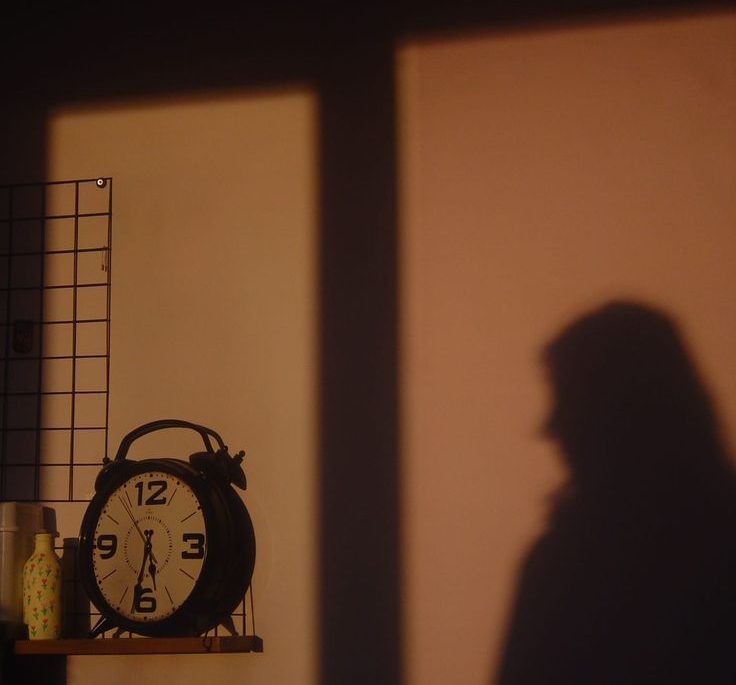
A window lets us see part of another home. We notice the curtains, furniture nearest the glass, light and perhaps a person passing through the room. What we cannot see is everything beyond the frame: the conversations, worries, responsibilities, disappointments and ordinary clutter hidden elsewhere. Social life works in much the same way.
We receive announcements, purchases, celebrations and visible achievements, then construct a story around them. Sometimes the story is partly true, but it is always incomplete. Envy becomes more convincing when we forget how much of the building remains out of sight.
Facebook had already become part of ordinary life for many people around me. Friends posted graduations, birthdays, outings, purchases and photographs from places that looked far more interesting than wherever I happened to be sitting. There was plenty to enjoy about that because families separated by distance could stay connected and friends could share important moments more easily.
But it also meant that within a single afternoon, I could encounter the highlights of dozens of other people. A classmate graduated, a friend attended a celebration, somebody purchased something expensive, another posted photographs from somewhere beautiful and someone else had finally flown abroad. Then I would look up from the screen and discover that I was sitting in an ordinary room, possibly in old slippers, doing absolutely nothing worthy of photographic evidence.
It may have been a perfectly respectable afternoon, but it simply looked disappointing immediately after twenty minutes of everybody else’s highlights. That is the distortion. Someone else’s holiday is compared with our Tuesday, their promotion with our uncertain period and their overseas opportunity with our waiting. We compare moments that were never meant to be equivalent.
The sensible response is not to dismiss other people’s achievements. Their good moments deserve to exist without being reduced simply because they trigger something uncomfortable in us. The responsibility belongs partly to the person looking at them to remember that a photograph is evidence of a moment, not an audit of an entire life.
Envy can also tell us something useful if we are willing to examine it rather than simply obey it. Sometimes another person’s achievement stings because it reveals something we genuinely want. Perhaps it is financial independence, travel, a qualification, an opportunity or a kind of freedom we have not yet reached.
That discomfort can become information. Instead of asking why they have something I do not, I can ask whether I actually want the same thing, why I want it, what obtaining it would require and whether it fits the life I am trying to build. That separates genuine aspiration from the much less reliable desire to possess something simply because somebody else does.
In my case, the desire to work abroad was real. I wanted the opportunity and was willing to work towards it, but perhaps I did not need to treat every year before it happened as evidence that I was falling behind. Waiting and failing are not the same thing, although comparison has a remarkable talent for making them look identical.
The same principle applies to material things. A phone is perfectly adequate until someone nearby buys a newer model. Furniture feels satisfactory until another household renovates. A career seems respectable until a former classmate receives a title that sounds more impressive. The object has not changed; our reference point has.
That is one of comparison’s hidden costs. It can redirect ambition towards standards we never consciously chose. Instead of building a life around what matters to us, we begin responding to whatever somebody else happens to display.
I am not against ambition. There is real satisfaction in improving, learning and accomplishing difficult things through sustained effort. But ambition seems healthier when it answers personal questions rather than social ones. Why do I want this? What would it allow me to do? What am I willing to sacrifice for it? Does it fit the kind of life I actually value?
Those questions are harder than simply deciding something must be worthwhile because another person has it. Comparison provides a ready-made answer, which is exactly why it is so tempting. The financial consequences can be significant too, because people do not always buy things simply because they need them.
We also buy symbols, reassurance and evidence that our lives are progressing acceptably. A brand can communicate status, a celebration can become proof of prosperity and an expensive purchase can function as an announcement. There is nothing wrong with enjoying beautiful things, but the difficulty begins when maintaining the appearance of success costs more than the life behind it can reasonably afford.
A family may organise an elaborate occasion mainly because people expect one, or someone may spend money needed elsewhere because a simpler option feels embarrassing. Sometimes the most expensive part is not the item itself. It is maintaining the appearance it represents.
I think hiya can make this more complicated because we often worry about how we will be perceived. We do not want to appear unsuccessful, unprepared or less capable than the people around us. That awareness can encourage responsibility, but it can also make people reluctant to live honestly within their actual circumstances.
I sometimes wonder what people would choose differently if nobody were watching. Perhaps some would spend less, choose different careers, celebrate more simply or pursue goals that looked unusual but suited them better. Perhaps we would discover how many decisions are shaped not by what we want but by how we imagine those choices will appear from somebody else’s window.
Envy also complicates the way we respond to good news. We want to be generous, and often we genuinely are. We congratulate someone, praise them and feel happy for what they achieved, while at the same time their success reminds us of something unfinished in our own life.
I do not think that automatically makes us bad people because two feelings can coexist. We can be genuinely pleased for someone and still experience disappointment about ourselves. Emotional maturity may lie less in preventing envy altogether and more in refusing to use it as permission to diminish another person’s joy.
We can notice the discomfort without searching for reasons why their achievement does not count. We can recognise what the feeling reveals and decide whether it points towards something meaningful for us or simply towards a comparison we should let go. Feelings provide information, but they are not always instructions.
Envy may tell me that I want something. It does not prove the other person is undeserving, and it certainly does not prove my own life is inadequate. The reverse mistake happens too, because we often assume people with more must automatically be happier.
Someone has money, a respected profession, a beautiful home or an overseas job, so when they express difficulty we struggle to understand why. Surely somebody with all that should be content. Material advantages do matter because financial security can remove serious sources of stress, while education and opportunity can widen choices, but material comfort does not eliminate every problem involving relationships, purpose, health, identity or expectation.
Likewise, someone living modestly can experience genuine happiness without that happiness proving poverty is harmless. Human wellbeing has more than one dimension, and comparison becomes misleading when we select one visible dimension and treat it as the entire life.
That is why I think living well is much harder to compare than appearing successful. Some of the things that make a life worthwhile are almost impossible to display convincingly. A repaired friendship receives less attention than a renovated house, better judgement rarely comes with a ceremony and the peace that follows a difficult decision is considerably harder to photograph than a new purchase.
A meaningful conversation, the confidence of learning something difficult, being trusted by somebody you respect or contributing to work that matters may never attract public admiration. That does not make them insignificant. Perhaps we lose sight of those quieter achievements because comparison prefers things it can count.
Gratitude can help correct that distortion, although I dislike the version of gratitude that demands we pretend everything is satisfactory. Being grateful for a home does not mean we cannot repair it. Appreciating employment does not mean we must ignore poor conditions. Valuing an opportunity does not require pretending it has no difficulties.
The kind of gratitude I find useful allows me to recognise what is already good without requiring me to stop improving what reasonably can be improved. Comparison can make familiar blessings look smaller, while gratitude restores their original size.
The balance, I think, is pursuing improvement for reasons that actually belong to us. Not because the neighbour has newer curtains, a cousin has a certain title, a classmate has already flown abroad or someone on Facebook appears to be living a more exciting life, but because we have identified something that genuinely matters to the life we want.
That motivation may be less dramatic, but it may also survive longer. I wonder how much easier relationships would become if we could let another person’s success remain theirs for a moment.
A friend receives an opportunity and we congratulate them. A neighbour improves their house and we admire it. A relative achieves something important and we celebrate. Their good news does not have to trigger an immediate audit of our own lives.
Not every race includes us, not every prize is one we actually wanted and not every person’s progress contains useful information about our own direction. Eventually, I return to the red curtains across the street because they really did look beautiful.
The colour suited the house, the flowerpots made the entrance warmer and the newly painted walls looked clean and welcoming. I could appreciate all of that without changing anything about our own home. At least, that was the sensible conclusion, although sensible conclusions often arrive after the emotions have already conducted several unnecessary meetings.
I looked again at our own curtains. They were older and a little faded around the edges, but they continued performing their duties with admirable professionalism. They provided privacy, softened the sunlight and moved gently when the windows were open. Most importantly, they had never once suggested that they should be replaced because the neighbours had developed better taste.
I laughed at myself because I had somehow created a competition between pieces of fabric. Across the street, the neighbours were probably enjoying their renovated home with absolutely no idea that their curtains had triggered a philosophical crisis in mine. That may be one of envy’s more ridiculous features because often the person we think we are competing with does not even know the competition exists.
They are simply living, choosing, improving and pursuing whatever matters to them, while we assign their decisions an importance they were never intended to have in our own lives. And perhaps the same was true of the people leaving for work abroad. They were not departing in order to prove that I was late. They were simply moving into their own next chapter, and their plane ticket was never a judgement on mine.
I was still writing my own story, even if the next page had not appeared yet. I closed the book I had failed to read and looked out of the window once more. The red curtains were still beautiful, our curtains were still useful and absolutely nothing required correction. The afternoon remained ordinary, but it no longer felt deficient.
I could admire their house and then return to my book. I could congratulate someone who had already found work abroad and still continue preparing for my own chance. Their progress did not require me to reduce mine, and their departure did not mean I had been left behind.
Perhaps that is the habit I want to practise more often: appreciating the light in somebody else’s window without immediately switching mine off in comparison. A person can spend an entire lifetime looking into other people’s houses and still understand very little about what makes a home.
And perhaps another person’s brighter window, newer curtains or earlier departure was never proof that my own life had gone dark. It only meant their light happened to be visible from where I was standing, while mine was still becoming something I had not yet learned how to see.
Still waiting without calling it failure,
Anj






























Leave a Reply