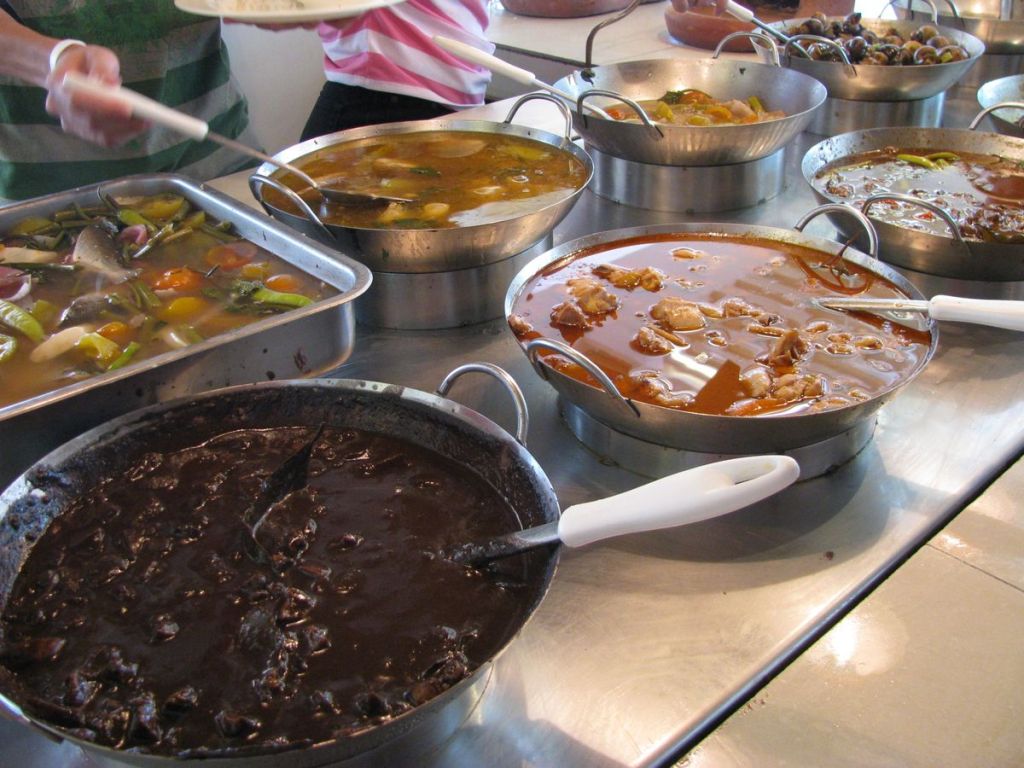
The woman at the carinderia knew what I wanted before I opened my mouth. “Rice, one serving. Then sabaw?” she asked, and I looked at her with the mild offence of someone who had just discovered that her personality had become predictable enough to be summarised through lunch. Apparently, mystery had left the building and taken my menu choices with it.
She reached for a plate, scooped rice from the large metal container and placed it beside the dishes behind the glass. The afternoon was humid, the electric fan had been working tirelessly without achieving anything resembling victory, and somewhere behind me a customer was discussing the price of vegetables with the intensity of someone negotiating an international trade agreement. I looked over the food while she waited, then she smiled and asked, “Pareha ra gihapon?” Same as usual? I laughed because, yes, it was exactly the same as usual.
There is something both comforting and embarrassing about becoming a regular customer. You gain the pleasure of being recognised while surrendering the illusion that your habits are mysterious or sophisticated. She knew which dishes I usually considered, which ones I rarely ordered and how much rice I preferred. She had probably served hundreds of meals that week, yet somehow those tiny details had stayed with her.
What struck me was that I knew far less about her. I recognised her face and voice. I knew where she worked and had watched her remember orders while handling money, answering questions, checking several pots and responding to customers almost simultaneously. But I did not know what time she woke up, how far she travelled to work, what she enjoyed when the carinderia was closed or whether the person who remembered everybody else’s preferences had anyone regularly asking what she wanted.
I looked down at my plate. It was an ordinary lunch, the kind of meal that could disappear from memory before the afternoon was over, yet the interaction stayed with me longer than the food itself. Perhaps being remembered is one of those modest human pleasures we barely notice until someone offers it unexpectedly.
We like recognition, although not always the grand version of it. We do not necessarily require applause, awards or people announcing our importance. Sometimes it is enough for another person to remember our usual drink, how we take our coffee, the name of someone we mentioned before or a small detail that would have been perfectly reasonable to forget. There is something reassuring about realising that somebody paid attention.
That afternoon also made me think about how easily we overlook the people who make ordinary life possible. The person who sells breakfast, the driver who takes passengers along the same route each day, the cleaner who maintains a public building, the vendor who recognises familiar faces and the security guard who greets the same people every morning all become part of the scenery of routine. Their work surrounds us so consistently that it can disappear precisely because it is being done well.
A clean room rarely attracts much attention until it becomes dirty. A reliable worker is often noticed most clearly when absent. A properly prepared meal is eaten without ceremony, while one disappointing plate can produce a remarkably detailed review. Perhaps one of the disadvantages of performing ordinary work well is that people eventually begin treating the result as though it happens naturally.
The customer sees the finished product. The worker experiences everything that had to happen before it appeared. A simple meal at a carinderia may take only a few minutes to order and eat, but before it reaches the serving counter somebody has bought ingredients, prepared vegetables, cooked rice, monitored supplies, cleaned equipment, arranged dishes and guessed how much food would be needed that day.
The plate has a history. I only arrive for the conclusion.
The same is true of much of the labour we consume every day. We see stocked shelves without watching the work of putting everything there. We step onto clean floors without meeting the person who cleaned them. We board transport and think mainly about reaching our destination, rarely considering how many hours the driver has already spent concentrating on traffic, passengers and the road.
Perhaps ordinary work becomes invisible because its purpose is to remove inconvenience from somebody else’s day. When it succeeds, we simply continue with our own lives.
I also think about the difference between the economic value assigned to work and the amount of social respect attached to it. Some occupations arrive carrying prestige before the person has even spoken. Professional titles suggest education, authority and expertise, and there are good reasons to respect specialised competence. But other occupations are treated as insignificant despite being necessary for communities to function.
A market vendor, cleaner, domestic worker, food server, labourer, driver or rubbish collector may perform work requiring physical endurance, practical knowledge, patience and years of experience. Yet society often behaves as though the title of the job tells us something about the value of the person doing it.
That has never made sense to me. A job can differ in complexity, pay, responsibility or training without the worker becoming less deserving of ordinary courtesy. Respecting expertise is sensible. Assigning unequal human worth is something else entirely.
I have noticed how differently people can speak depending on whom they believe they are addressing. A person with an impressive title may be greeted carefully and listened to with visible attention. The individual behind a food counter may receive commands instead of conversation. Some customers speak to service workers with an impatience they would never display toward somebody whose approval might matter to them.
Money pays for a service. It does not purchase another person’s dignity.
A customer should reasonably expect accurate information, fair treatment and an appropriate standard of service. A worker should reasonably expect to be spoken to as a human being. Those expectations do not contradict each other.
Perhaps manners are revealed most clearly when there is no advantage attached to having them. It is easy to be charming toward people whose opinion may influence our opportunities. The more interesting test is how we behave toward someone from whom we expect nothing beyond the service we are paying for.
Restaurants expose this quite efficiently. Someone can be funny, generous and excellent company at the table, then become unnecessarily rude the moment a waiter forgets an utensil or an order takes longer than expected. A minor inconvenience suddenly becomes a character investigation. One mistake is treated as proof of incompetence, as though forgetting a spoon has revealed something profound about the worker’s entire life.
Service interactions contain an imbalance that makes courtesy particularly important. The customer can complain, leave, refuse to return or demand attention. The worker may still be required to remain composed even when the customer is unreasonable because their employment depends on professional behaviour. Respect matters most when the other person has less freedom to challenge us.
There is also labour involved in maintaining that composure. Some jobs require people not only to perform physical or practical tasks but to manage their expressions and emotions throughout the interaction. They must remain pleasant, patient and welcoming even when dealing with confusion, impatience or complaints. The work we can see may be only half of what they are carrying.
I thought about this again while watching the woman at the carinderia. She did much more than place food onto plates. She remembered customers, answered questions, dealt with payments, moved between different requests and maintained the familiar warmth that kept people returning. Some interactions were probably enjoyable, while others may have tested the limits of human patience before lunch.
I could not know which kind of day she was having. That was precisely the point. A person does not stop having a private life simply because we encounter them during working hours.
There are social skills involved in this kind of work that become easy to underestimate because experienced people make them appear effortless. Remembering a regular customer, recognising confusion before somebody asks, explaining something patiently and keeping track of several conversations at once may seem like tiny things. Together, they create the atmosphere of a place.
A restaurant can serve excellent food and still feel unwelcoming. Another can serve something simple and become a favourite because the people working there make customers comfortable. Hospitality is often built from details too small to appear on a menu.
I think our desire to be remembered says something about modern life too. We have countless brief exchanges with people we may never know deeply. We buy something, pay a fare, ask a question, collect a document and continue walking. Most interactions disappear almost immediately.
That is why being recognised feels unexpectedly personal. A vendor may know nothing about our family but remember what we usually order. A driver may not know our name but remember where we normally get off. A shopkeeper may ask where we have been after not seeing us for several weeks.
These are not deep relationships. They are something quieter: evidence that we have existed in another person’s field of attention.
Perhaps belonging does not always arrive through profound emotional connection. Sometimes it begins with the small reassurance that someone recognises us as a person who has been here before.
That does not mean we should suddenly interrogate every worker about their private life in the name of being friendly. There are boundaries. Some people enjoy conversation, while others prefer professional distance. A person should not have to provide their biography before we decide they deserve consideration.
The point is simply to remember that a biography exists.
The woman serving my lunch had a life before I arrived and would continue having one after I left. She had thoughts, worries, preferences, relationships and plans that had nothing to do with whether I wanted soup. My order mattered within the transaction. It did not define the person serving it.
We forget this easily because jobs create convenient labels. Teacher. Nurse. Driver. Vendor. Cleaner. Engineer. Farmer. The description tells us what somebody does, then our minds become lazy and behave as though it tells us who they are.
Nobody exists exclusively within working hours. A market vendor might spend evenings reading novels. A driver may be the person everyone in the family depends upon. A cleaner may sing beautifully. A food server may be saving money for something entirely unrelated to the job we happen to see them doing.
None of those possibilities should be surprising. The surprising thing is how often we forget to imagine that other lives continue outside the roles in which we encounter them.
I have also noticed the phrase just a attached to ordinary occupations. Just a vendor. Just a cleaner. Just a driver. Just a worker. The phrase is small, but it quietly shrinks the significance of somebody’s contribution.
If enough of these “just” workers stopped for one day, the importance of their work would become visible remarkably quickly. Transport would be disrupted, rubbish would accumulate, food would not be prepared, shops would struggle and buildings would become harder to maintain. Essential labour has an unfortunate habit of appearing unimportant only while somebody continues doing it.
Practical skill deserves more respect than it receives. An experienced market vendor can calculate prices rapidly while dealing with several customers. A driver remains alert to road conditions, passengers and other vehicles for hours. A cook coordinates timing, temperature, ingredients and several dishes at once. A cleaner knows which products and methods work for different surfaces.
Formal qualifications are valuable, but not every form of intelligence arrives with a certificate.
Perhaps that is something community work is making me notice more carefully too. Once you begin paying attention to how communities actually function, it becomes harder to believe that only the most visible roles are important. Everyday life depends upon countless people performing responsibilities that rarely attract recognition precisely because those responsibilities have become familiar.
There is invisible work inside families as well. Cooking, cleaning, organising appointments, caring for relatives, monitoring household supplies and remembering everybody’s needs often happen without wages and sometimes without much acknowledgement. One person may quietly keep the household functioning for years until something prevents them from doing it.
Then suddenly everyone discovers how much work was hidden inside “nothing.”
Ordinary consistency rarely receives applause because it lacks drama. Somebody prepares breakfast today, then does it again tomorrow and again the day after that. The act becomes predictable, and predictability slowly disguises effort.
Perhaps appreciation should arrive before something stops working.
We do not need to wait until a cleaner is absent to notice the clean room, until a parent becomes exhausted to notice everything they manage or until a reliable employee leaves before acknowledging how much depended on them. Some of the best work is the work that prevents us from ever seeing the problem it solved.
I also like something about the human familiarity that develops around small businesses. A sari-sari store is not merely shelves containing household necessities. A carinderia is not only a place where food is sold. A market stall can become part of somebody’s routine for years, sometimes serving several generations of the same family.
Stories accumulate around these places. People notice changes. Greetings gain histories. A person walks in and discovers that somebody remembers what they usually buy.
Of course, Filipino familiarity occasionally develops into an impressive unofficial intelligence service concerning everybody else’s business, but at its best it offers recognition without demanding explanation. Nobody needs a detailed biography. The simple message is: I remember you.
That is a small kind of belonging.
The relationship can be reciprocal without becoming intimate. The vendor remembers the order, while the customer remembers to say thank you. Someone gives a patient explanation, and the other person responds without treating kindness as an optional extra. A mistake happens, and both sides manage to address it without converting the transaction into an international incident.
These gestures are almost embarrassingly small. Perhaps that is why they matter. The character of daily life is formed more often through repeated ordinary interactions than through dramatic speeches about how people should treat one another.
I sometimes wonder why we reserve our best manners for occasions that look important. We prepare carefully for formal meetings, celebrations and encounters with people whose opinions might affect our opportunities. We choose our words, monitor our expressions and behave with polished courtesy.
Then we enter an ordinary shop and speak without looking at the person behind the counter.
Perhaps courtesy should not depend on the price of the transaction. The person serving a fifty-peso meal is no less human than someone participating in a fifty-thousand-peso agreement.
The more useful questions may therefore be ordinary ones. How do I behave when the queue is long? Am I patient when somebody makes an honest mistake? Do I speak respectfully to workers whose occupations carry less social prestige than mine? Do I acknowledge assistance without acting as though a sincere thank-you is an excessive administrative burden?
Those questions probably reveal more about what I believe about human dignity than anything eloquent I could write about equality.
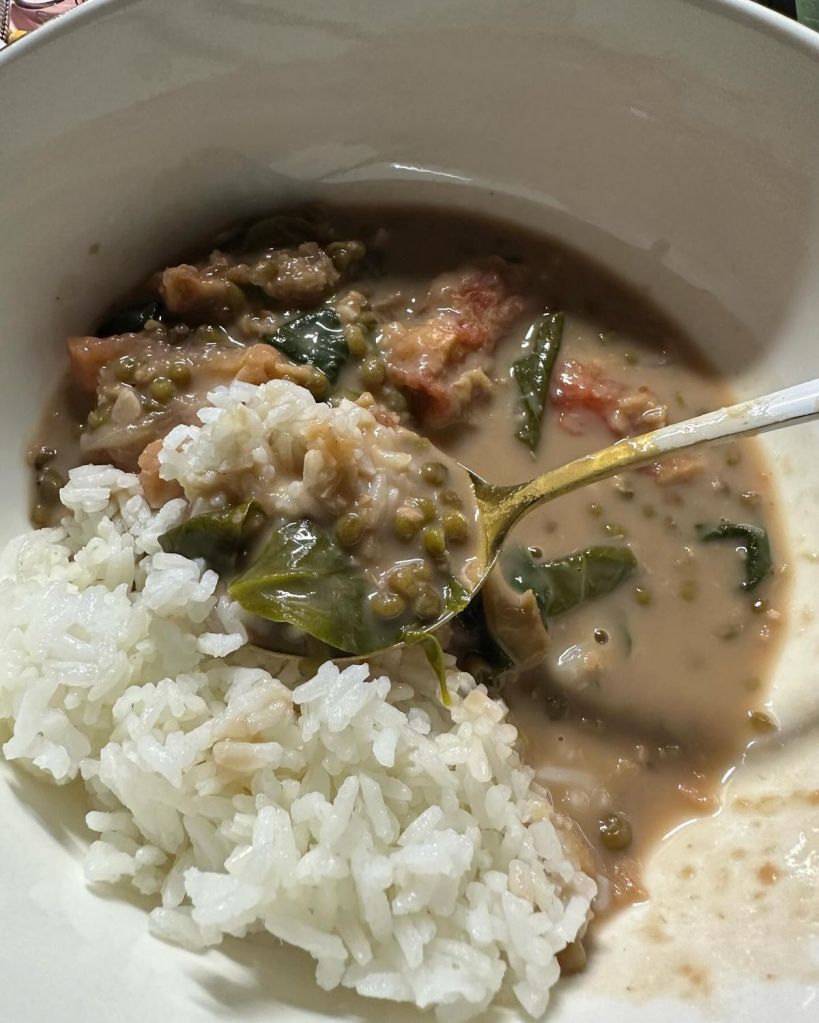
Eventually, I return to my lunch. The woman places the plate in front of me, the rice is warm and the food smells exactly as I expected. Somebody behind me asks about another dish, and she answers while already preparing the next order.
I take a sip of soup and feel the comfort of familiarity. But this time I find myself thinking less about the meal and more about the person who made that familiar experience possible: the preparation completed before I arrived, the attention required to remember regular customers, the patience needed to manage several demands and the hours that continue after I finish eating and return to my own work.
I still do not know much about her life, and perhaps that is perfectly fine. She does not owe me her story simply because she remembers my lunch.
When I finish, I return the plate and pay. “Salamat kaayo,” I say. Thank you very much. She smiles and replies, “Balik unya.” Come again.
The exchange lasts only seconds, but perhaps ordinary exchanges are where much of our humanity is actually practised. Not in declarations about kindness, not in speeches about equality, but in how we treat people whose work quietly makes our lives easier.
The next time I return, I suspect she will remember my order again: rice, the familiar dish and soup. My culinary reputation will remain embarrassingly predictable. But perhaps I would like to remember something too.
The person who knows what I want for lunch has a life extending far beyond the plate she puts in front of me. Her work deserves recognition even when everything goes smoothly, and the ordinary skills involved in making people feel welcome are still skills even when nobody thinks to name them.
Perhaps I will never know her entire story, and perhaps she will never know mine. That does not prevent either of us from remembering that the other person has one.
As I step outside, the afternoon heat meets me with its usual lack of consideration. A motorcycle passes, a tricycle driver calls for passengers and the familiar sounds of town life continue around the little establishment. Behind me, another customer approaches the counter, and I hear the woman ask, “Pareha ra gihapon?” Same as usual?
Someone laughs, and suddenly I understand that what makes a place familiar is not always the building, the food or even the road leading towards it. Sometimes it is simply the presence of someone who remembers that we have been there before.
Still learning to notice who notices us,
Anj



























Leave a Reply