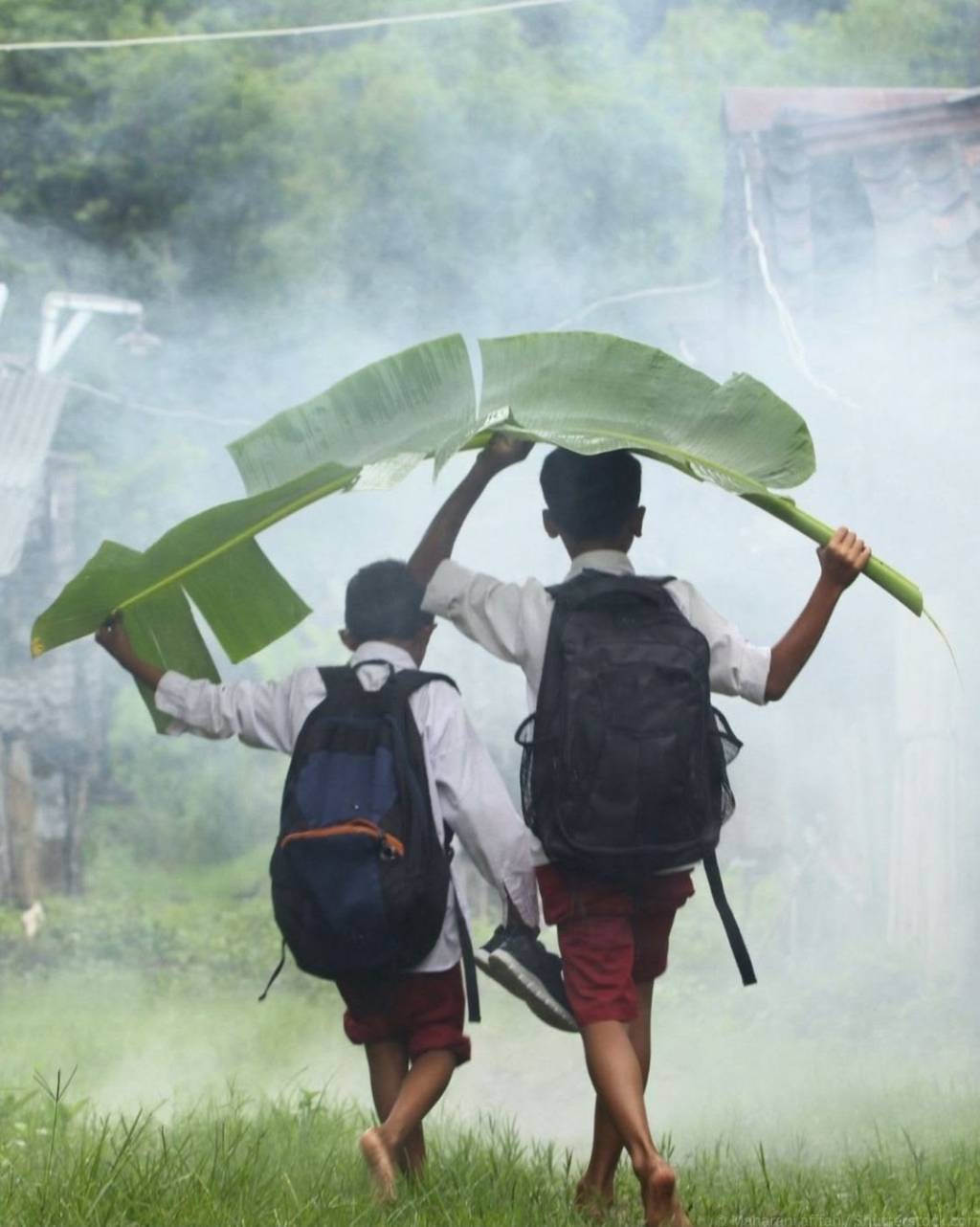
The schoolbag was larger than the child carrying it. It was an ordinary morning in Cebu, the kind when the streets smelled of freshly cooked rice, petrol fumes and the occasional dried fish that announced its presence long before the household responsible for preparing it could be identified. Tricycles moved along the road, vendors arranged their goods and schoolchildren in neatly pressed uniforms hurried towards another day of lessons, friendships and examinations they would probably complain about before lunchtime.
I noticed a little boy standing outside a sari-sari store, examining the coins in his hand. He counted them once, then again, while the shopkeeper waited. Behind the glass were biscuits, small packets of snacks, sweets in transparent containers and the familiar collection of brightly coloured products strategically positioned at the eye level of people who had not yet developed a sophisticated understanding of household budgets.
The boy pointed to something, the shopkeeper told him the price and he looked down at his palm again. After a moment, he shook his head, chose something cheaper, handed over the money and walked away. The entire exchange lasted perhaps a minute, which was nowhere near enough time for me to know why he changed his mind. He may simply have wanted to keep some change, he may have been buying something for somebody else or he may have preferred the cheaper item after all.
A stranger watching a child for sixty seconds has no right to construct an entire financial history around him. Still, the scene left me with a question. Some children first encounter arithmetic through coloured blocks, school exercises and counting sweets they hope to receive, while others learn the practical meaning of subtraction much earlier. They discover what happens when the money in their hand does not match the price of the thing in front of them.
Perhaps that is one of the quieter ways poverty enters childhood. It is not always announced by hunger, torn clothes or dramatic stories. Sometimes it appears as a hesitation before asking for something, an instinct to choose the cheaper option or the habit of checking whether a household can afford a school requirement before mentioning it aloud.
We like to imagine childhood as a season of games, curiosity and wonderfully impractical ambitions. Children invent rules nobody remembers establishing, quarrel over whose turn it is, build entire kingdoms out of cardboard and become deeply offended when a sibling receives a slightly larger portion of dessert. Their concerns may seem small to adults, but there is something valuable about having a stage of life in which the world has not yet transferred all its calculations onto your shoulders.
That version of childhood is not available equally.
Some children grow up hearing regular conversations about bills, transport money, school expenses and what must wait until payday. They notice when parents hesitate before agreeing to a purchase or when a school project creates tension around the table. They may not understand the household budget in full, but children are often remarkably good at recognising the emotional weather of a room.
Two children can sit beside each other in the same classroom, wear similar uniforms and copy the same lesson from the board, yet return to very different afternoons. One may have homework and time to play. Another may have younger siblings to watch, household tasks to finish or errands that cannot be postponed simply because an examination is approaching.
Both are children.
Their available childhoods may not be identical.
My work in community development has made me think more carefully about this. It has not given me permission to assume that I understand every family I encounter, and I do not want to turn brief observations into convenient stories about people I barely know. If anything, the work has made me more cautious about that. But it has also made certain questions harder to ignore.
What does poverty mean to a child? Is it simply the absence of money, or does it also influence how much time they possess, how easily they can participate in school and how early they begin thinking about responsibilities that other children meet much later?
Education makes the question particularly visible. Filipino families often treat schooling as one of the clearest routes towards a better future. Parents save for uniforms, shoes, notebooks, projects and transportation because education represents possibility: a qualification, employment, financial independence and perhaps the ability to help the family in return.
But education itself costs more than tuition. It requires transport, meals, writing materials, school projects, time, electricity and often a quiet enough place to study. An expense that seems minor to one household can require adjustments in another.
A teacher may ask the entire class to bring the same materials the following day. One child tells a parent and receives them that evening. Another waits until money becomes available. A third improvises or arrives with an explanation. The assignment is equal on paper, while the effort required to participate is not.
This is why educational achievement needs context. Some children study at a desk in a quiet room, while others work wherever space can be found. Some have adults available to help with lessons, while others are largely independent because their parents are working or managing other responsibilities. Some travel a short distance to school, while others spend substantial time and money simply reaching the classroom.
Equal instruction does not automatically create equal opportunity to benefit from it.
We sometimes admire children for overcoming these obstacles, and their perseverance may genuinely deserve respect. A child studies beneath inadequate lighting and the photograph becomes inspirational. Another walks a considerable distance to school and people celebrate the determination. Someone completes assignments after substantial household responsibilities and adults call the child disciplined.
I understand the admiration. I also think another question should accompany it: why must a child overcome that particular obstacle in the first place?
There is a difference between recognising resilience and becoming comfortable with the conditions that continually demand it. A child can be impressive and the situation can still deserve improvement.
The phrase responsible child carries similar complications. Filipino parents often use it proudly, and there are good reasons to teach children responsibility. Helping with age-appropriate chores, caring about other family members, learning how money works and contributing to household life can develop cooperation and maturity.
The difficulty begins when responsibility stops being a lesson and becomes a burden that primarily belongs to adults.
A child may supervise younger siblings for long periods, contribute income, manage substantial household tasks or become the emotional reassurance for parents facing serious difficulties. These arrangements do not always arise because adults are careless. Sometimes families have very limited alternatives.
That matters because love and hardship can exist inside the same home. Parents can be deeply devoted to their children while lacking the resources to shield them from every burden. A family may make decisions nobody would choose if better options existed.
The fairest response is not always blame. Sometimes it is understanding the circumstances that reduced the number of available choices.
Children notice those circumstances even when adults try to protect them. They hear the change in a parent’s voice when money is discussed, notice the pause before someone agrees to buy something and recognise which requests create tension. Over time, some begin adjusting themselves.
They stop asking for particular things. They say they no longer want something they had mentioned before. They avoid bringing up a school activity or volunteer to help because they have noticed how tired everyone is. These behaviours can look like extraordinary maturity, and sometimes they are expressions of empathy.
They may also be evidence that a child has learned to make themselves financially smaller.
A child does not need an economics textbook to understand scarcity. Sometimes they learn it through the sound of coins being counted at the table.
Those experiences can follow people into adulthood. Someone who grew up with financial uncertainty may become extremely careful about spending, save small amounts diligently and feel uneasy when their savings decrease. Another may become determined to buy things that were unavailable during childhood because those purchases now represent freedom.
A full refrigerator can mean more than food. A reliable pair of shoes can mean more than footwear. Being able to purchase school supplies without calculating which other expense must wait can feel like success in a way that somebody raised with financial security may never need to understand.
This does not mean childhood determines every future financial habit. People respond differently, and adulthood introduces new experiences. But money often acquires meanings long before we earn it ourselves.
For some people, money means status. For others, independence, safety or the ability to help family. For somebody raised around repeated shortages, it may simply mean no longer having to choose between two necessities.
Perhaps that is why adults can disagree so intensely about money even when both believe they are being sensible. One person wants to save everything because security feels fragile. Another wants to enjoy what they have worked for because deprivation taught them that waiting forever is not living either.
The disagreement may appear to concern a purchase. Underneath it can be an argument between two different memories of scarcity.
Childhood ambition is shaped by visibility too. Ask children what they want to become and the answers can be gloriously varied: doctor, teacher, engineer, pilot, artist, police officer, business owner or occasionally something for which no university has yet thought to create a degree.
The question assumes that imagining a future is easy.
But children often imagine from examples they have encountered. A child who knows professionals in several fields may understand those careers more clearly. Another may only know the occupations visible within the immediate community.
The difference is not necessarily ambition. Sometimes it is exposure.
Access to information is itself a form of opportunity. Someone explaining what a career involves, what qualifications are required and what support might exist can make a distant future easier to picture.
Even then, imagining a future and being able to pursue it are different things. A child can dream freely. Eventually, the family must calculate.
That tension is difficult to ignore. A young person can possess intelligence, curiosity and potential while living in circumstances that make developing those qualities much harder. Their abilities remain real, but opportunity also depends on schools, transport, household finances, available time and people able to support the journey.
Perhaps society should be less fascinated by children who achieve extraordinary things despite severe obstacles and more interested in reducing the number of obstacles children are required to defeat before their abilities can even be seen.
Play belongs in this conversation too. Adults sometimes treat play as something expendable when more important duties appear. There is homework, housework, younger siblings or errands to manage, so games can wait.
But play is not simply the absence of useful activity. Children learn through it. They negotiate rules, practise communication, solve disputes, experiment with roles and discover interests that may have no immediate practical value.
That matters.
A child who spends most of their free time managing responsibilities may lose opportunities for development that do not look productive on a household checklist. Responsibility is valuable, but children should not have to become miniature adults before they have had a reasonable chance to be children.
There should still be room for gloriously impractical afternoons.
A cardboard box should occasionally be permitted to become a spaceship instead of storage.
I think about children who are praised for being unusually mature. “Buotan kaayo.” So well-behaved. “Responsible kaayo.” Very responsible. They rarely complain, help younger siblings, understand household difficulties and avoid asking for unnecessary things.
The praise may be deserved. But I sometimes wonder what created the maturity.
There is maturity that develops through ordinary growing up, and there is maturity demanded because circumstances left little room for anything else. From outside, they can look identical.
A child accustomed to prioritising everybody else may later struggle to recognise their own needs. Someone praised for never needing help may become uncomfortable asking for it. Another may feel guilty enjoying an opportunity that younger siblings do not have.
These outcomes are not inevitable, and children are not simply passive products of hardship. But perhaps early responsibility deserves curiosity before celebration.
We should be careful not to mistake adaptation for preference. A child may be accustomed to helping with substantial household tasks without choosing that arrangement. They may stop complaining about limited resources because complaining changes nothing. They may smile and play despite difficulty.
None of that proves the circumstances are harmless.
Children can be resilient.
They should not have to use resilience as the foundation of everything else.
It is impossible to discuss childhood poverty fairly without considering parents. Families are often judged by what they cannot provide. A child lacks certain school materials and somebody blames the parents. Transport becomes difficult and people question the household’s priorities. A young person carries heavy responsibilities and observers assume the adults are irresponsible.
Sometimes genuine concerns about a child’s welfare do require attention. But resource limitations do not automatically prove an absence of love or effort.
A mother may desperately want to buy what her child needs and still not have enough money. A father may want more time at home while depending on work that requires long hours or distant travel. Parents may be choosing among several inadequate options, none of which looks ideal from outside.
Love cannot manufacture resources out of thin air.
That is one reason children’s opportunities cannot depend entirely on what individual households can provide. Schools, healthcare services, public infrastructure, relatives, neighbours, community organisations and social programmes all shape childhood too.
A safe and reliable route to school matters. Access to healthcare matters. A functioning community facility can create space for activities and services. A reliable water system can reduce the time a household spends obtaining something essential.
These improvements may look like infrastructure on a project document. In a child’s day, they can mean something far more personal.
A better road may mean less time travelling to school. Reliable water may mean fewer household tasks consuming the afternoon. Accessible services may reduce expenses that would otherwise compete with educational needs.
The value of development is not only in what gets built.
It is in what people can do more easily afterwards.
My work as a Community Facilitator has made that question increasingly important to me. A project may eventually be described through measurements, costs and completed structures, but communities experience it through time saved, barriers reduced and possibilities opened.
When thinking about children, perhaps the most useful questions are simple. What can families now do more easily? What expenses have become less severe? What time has been recovered? What becomes possible for children because an everyday difficulty has been reduced?
Progress can sometimes be a child arriving at school more consistently.
That may not make an impressive headline.
It can still alter a future.
Material differences also enter children’s relationships with one another. In school, family income becomes visible through shoes, bags, phones, supplies and participation in paid activities. Children may notice these differences years before they understand the economic systems behind them.
A classmate wearing worn shoes is not less intelligent. A child without an expensive device is not less interesting. Someone unable to join a paid activity should not automatically become excluded from the social world surrounding it.
Adults know these principles in theory.
Children often need us to demonstrate them in practice.
I also think we should be careful about the way gratitude is taught. Sometimes a child complains and an adult responds by pointing towards somebody experiencing greater hardship. “Look at those children. They have even less.”
The intention may be to create perspective, but another person’s deprivation should not become a teaching prop.
A child can learn gratitude by understanding the work involved in providing what they have. They can be encouraged to appreciate resources without being asked to feel better because another child has fewer.
Gratitude and compassion can exist together.
We can value what we have and still believe others deserve enough too.
This becomes especially important in the way stories about childhood poverty are told. A photograph shows a child studying beside dim light, or a story describes someone walking a long distance to school. People are moved by the determination, and sometimes the child later achieves something extraordinary.
Those stories can be inspiring.
But hardship should not have to produce an exceptional ending before the child becomes worthy of concern.
Not every child experiencing poverty will graduate with honours, become a professional or lift an entire family into financial security. Their dignity does not depend upon becoming an inspirational success story.
Children should not have to become extraordinary before society decides their circumstances matter.
Even the language of “potential” can accidentally create that problem. We say children deserve support because they are the future. They may become doctors, teachers, engineers or leaders.
That is true.
They also deserve support because they are children now.
Their friendships matter now. Their health matters now. Their need for food, security, play and education matters before we know whether they will ever become economically impressive adults.
A child is not merely a future worker waiting to become productive.
They are already a person.
Poverty can also change the meaning of ordinary pleasures. A schoolbag may be a routine purchase in one household and something carefully saved for in another. Shoes may be replaced when uncomfortable or worn until they cannot reasonably survive another repair.
A small outing can be ordinary for one child and memorable for another.
These differences matter, but we should also resist the opposite mistake of assuming children with fewer resources experience no joy. Children laugh, play, make friends and create extraordinary entertainment from objects adults would probably throw away.
A cardboard box becomes a vehicle. Stones become game pieces. A narrow street becomes an entire kingdom.
There is genuine joy in those moments.
Their creativity does not make deprivation desirable.
That balance matters whenever poverty is written about. We should recognise resilience without turning suffering into something beautiful. We should describe disadvantage without reducing people to disadvantage. We should acknowledge structural barriers without pretending individuals have no agency.
A child experiencing poverty is still a child.
They may be funny, stubborn, curious, competitive, generous, impatient, terrible at waking up early or personally convinced that homework is an organised campaign against happiness.
Household income cannot summarise personality.
The language used in community work can sometimes make this easy to forget. We speak about vulnerability, access, risk, development and need because these concepts help identify problems and organise support. They are useful terms.
The children behind them are not permanently thinking about those categories.
They may be thinking about a difficult maths lesson, an argument with a friend, a favourite game, an upcoming school event or what they hope will be waiting for them at home.
Economic circumstances shape their lives.
They do not replace the lives themselves.
I also wonder how many children quietly absorb the meaning of family sacrifice. They notice when parents postpone purchases, when older siblings contribute money and when a celebration becomes simpler because the household is prioritising something else.
Slowly, they learn that money represents time, labour and decisions invisible to the person spending it.
That awareness can encourage gratitude.
It can also become pressure.
A child may begin believing they must succeed academically because too much has been sacrificed for them to fail. An examination result becomes larger than a number on paper. It becomes evidence of whether the family’s effort was worth it.
That is too much weight for a young person to carry.
Children should be encouraged to work hard and appreciate opportunity, but they also need permission to struggle, change interests and make mistakes. Their future cannot reasonably be expected to repay every sacrifice previous generations were forced to make.
In families facing financial hardship, this pressure can become especially strong. Education may appear to be the clearest route towards stability, so the child who performs well begins carrying everyone’s hopes.
The intention may be loving.
Hope can still become heavy.
Perhaps genuine progress would mean giving more children enough security to imagine their own futures without believing they are personally responsible for rescuing everyone from the past.
Families will always be interconnected. Helping one another is part of what gives many Filipino families their strength. The goal is not to remove responsibility completely.
It is to prevent childhood from becoming the first instalment of an adult burden.
Eventually, I return to the little boy outside the sari-sari store. The morning has continued, the coins have changed hands and the shopkeeper is already serving somebody else. A motorcycle passes and briefly sends dust across the road while the boy walks away with his small purchase and that oversized schoolbag moving behind him with every step.
I still do not know what he originally wanted, and I do not know why he changed his mind. Perhaps the decision had nothing to do with hardship at all. That uncertainty is important because a brief encounter should never become permission to invent somebody’s entire life.
But the scene remains useful as a question.
What does it mean for children to have choices? When do they first understand the relationship between money and possibility? How early should they have to think about what can and cannot be afforded?
Every child should gradually learn responsibility. They should understand that resources are limited, appreciate what others do for them and develop the judgement adulthood will eventually require.
But there is a difference between learning the value of money and worrying constantly about its absence. There is a difference between helping at home and feeling responsible for holding the household together. There is a difference between understanding sacrifice and believing childhood itself must be sacrificed.
The boy disappears around the corner and I imagine the rest of his day: lessons, friends, perhaps an argument over a game, a teacher explaining something complicated and a notebook slowly filling with writing. Ordinary childhood things.
I hope there is room for all of them.
I hope there is room for curiosity and laughter, for mistakes that do not carry enormous consequences and for ambitions that can change without creating a family emergency. I hope there is time for the particular kind of imagination that allows a child to believe the world contains possibilities they have not yet discovered.
As I continue walking, I think again about the coins in his palm. I had watched him count them carefully, and that much I knew. Everything else remained beyond my view.
Perhaps the better measure of a society is not how early its children learn to calculate what they can afford. It is how many of them are given enough security that they can spend at least part of childhood thinking about something else.
The coins disappear into the cash drawer, the shopkeeper turns back towards the shelves and somewhere another child opens a notebook beneath a question waiting to be answered. I hope the future gives them more than arithmetic.
I hope it leaves enough room for them to dream before life asks them to count the cost.
Still hoping childhood keeps some room for wonder,
Anj
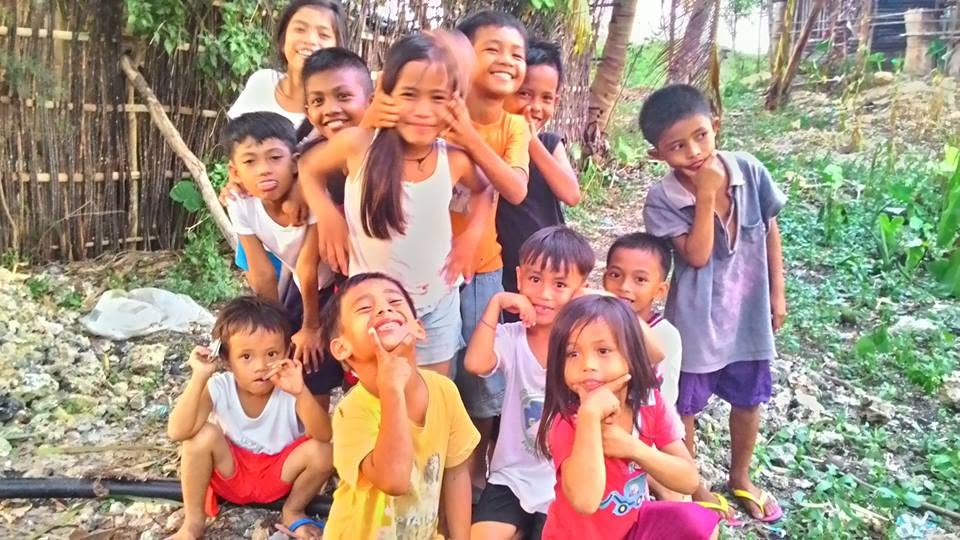
source of featured photo: Qithmieralhafiy




























Leave a Reply