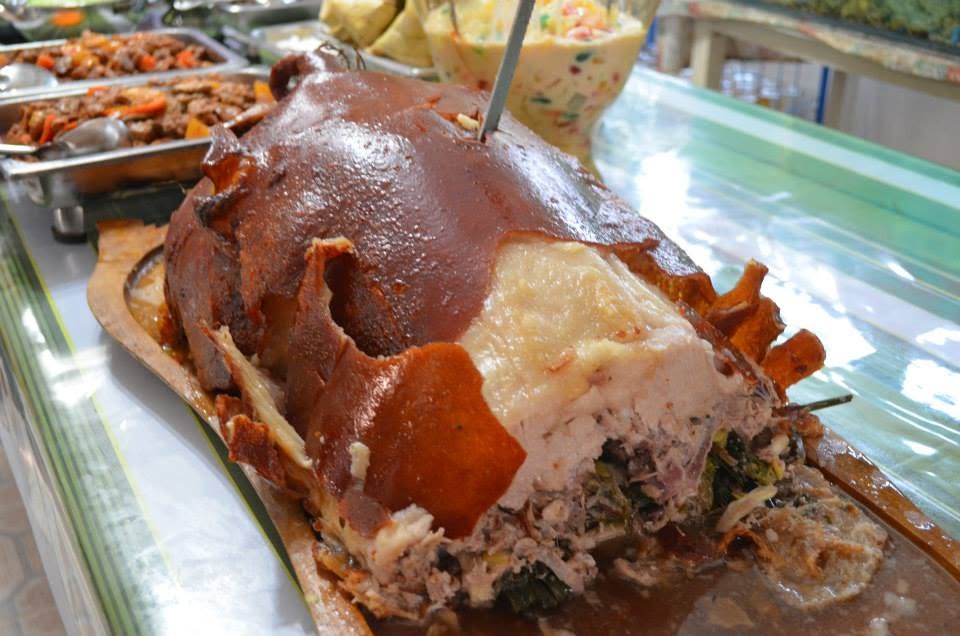
The pig had done nothing to deserve its popularity, yet there it was in the centre of a long wooden table, roasted to a magnificent reddish brown and wearing the permanently unconvinced expression of something that had become the main attraction without being consulted. Children circled the table like small investors waiting for the market to open, adults inspected the food with professional seriousness, and somewhere in the kitchen a woman was shouting for another serving spoon while somebody else searched for a missing plastic chair. It was fiesta season, which in a Filipino household can transform otherwise sensible adults into ambitious event planners with no apparent concept of portion control.
The living room became a dining area, the dining area became temporary storage and the kitchen began operating like a commercial establishment experiencing an unexpected surge in demand. Tables were borrowed from neighbours, chairs materialised from relatives and ownership rights would probably need to be discussed after the celebration. Someone prepared the pancit, someone supervised the rice, someone counted the soft drinks and, inevitably, somebody standing in front of several enormous cooking pots announced that there might not be enough food.
There could have been enough food to feed half the barangay, but the possibility of one visitor leaving slightly hungry remained unacceptable. So another dish was prepared, naturally, just in case. I have often wondered whether Filipino hospitality should be classified as a national virtue or a highly sophisticated strategy for avoiding the embarrassment of insufficient spaghetti. Perhaps it is safest to say both.
Growing up in Cebu, I became familiar with the peculiar atmosphere that surrounds barangay fiestas. There is music, cooking, visiting, noise, familiar faces and the strange temporary suspension of ordinary household rules. On a normal day, a guest might be offered coffee and something simple to eat, while during fiesta the same household can produce a spread large enough to suggest that an international delegation is expected.
Nobody wants visitors to feel unwelcome, and nobody wants relatives to go hungry. But if we are being sufficiently observant, there is often another concern quietly sitting beside generosity: nobody particularly wants the neighbours to conclude that the household did not prepare properly. Somewhere between hospitality and social expectation, a very interesting economic question appears.
How much of a celebration is really for the pleasure of sharing, and how much of it is shaped by the fear of looking inadequate?
Fiesta spending fascinates me because it often follows a different set of rules from ordinary household spending. For weeks or months, a family may compare prices, postpone purchases and carefully manage expenses, but as the celebration approaches, the definition of necessity starts changing. Another tray of food seems reasonable, new curtains suddenly become urgent, somebody suggests repainting the front of the house and a relative remembers three additional people who might come.
The guest list expands in a way that would disturb any respectable accountant. Then the household budget acquires a category that may never appear in a financial textbook: basin maulaw ta. We might be embarrassed.
It is impressive how much power embarrassment can have over money.
This is not uniquely Filipino, of course. Weddings, birthdays, religious celebrations and family gatherings across many cultures carry expectations about generosity, presentation and status. But the Filipino fiesta brings several things together at once: faith, community, family, hospitality, reputation and enough carbohydrates to disable an army.
A fiesta is not merely a meal. It can be a religious celebration, a marker of community belonging and an occasion that brings relatives and neighbours together. Food becomes part of the way people participate in a shared tradition, and that meaning deserves respect.
But around the tradition grows another set of unwritten rules. How many dishes are enough? Who should be invited? What will visitors think? Will the table look too simple? If the neighbour prepared an impressive feast, does that now require everybody else to reconsider their own arrangements?
Nobody distributes a manual explaining the minimum number of dishes required for respectable participation. Still, people somehow seem to know when they are at risk of falling below the unofficial standard.
That is what makes social expectations so powerful. They can influence behaviour without becoming formal obligations. A household may prepare several elaborate dishes because the family genuinely enjoys doing so, but they may also worry that offering less will attract comments.
A simpler celebration can require explanation in a way an extravagant one rarely does. Money has been tight, someone has been unwell, there were other expenses, the family is saving for something important. Somehow, spending less can begin to sound like a decision that requires a defence.
I find that revealing.
Why should a family need an excuse for celebrating within its means?
Perhaps because food and presentation communicate more than hospitality. They can be read as signs of financial position, family standing and respectability. An abundant table attracts admiration, while a modest one may attract questions, and questions in a small community have impressive travelling ability.
There is a sociological idea often described as conspicuous consumption, where spending is used not only for practical benefit but also to communicate status. I would not reduce every fiesta to that because generosity can be sincere, religious devotion can be meaningful and sharing food genuinely strengthens relationships. But the idea does help explain why celebrations can become increasingly elaborate even when the expense does not sit comfortably within a household’s resources.
Sometimes the spending itself becomes a message: we are doing well, we can provide, our family is respectable, we have not forgotten our obligations and we belong here. Beneath all of that may sit another message nobody says aloud: please do not judge us for having less.
The pressure becomes more complicated when families have limited resources. A financially secure household may prepare an expensive feast without affecting the rest of its budget significantly, while another family may have to save for months, postpone purchases or borrow money to create something that looks almost identical from the outside. Visitors see the food, decorations and smiling hosts, but they do not necessarily see what the household sacrificed to produce the scene.
That is the strange thing about visible abundance. The table can look the same while the financial consequences behind it are completely different.
Generosity itself is a beautiful part of Filipino culture. Food is almost a language. Somebody arrives and “Kaon ta” appears before a formal invitation has had time to organise itself. A relative visits unexpectedly and something is immediately placed on the table. A friend passes by and somehow leaves having eaten.
The invitation says more than eat. It says you are welcome here.
But generosity changes character when people feel compelled to demonstrate it regardless of what they can afford. A meal freely offered is different from an expense made mainly to avoid criticism. The plates may look identical, but the emotional experience behind them can be very different.
Perhaps that is one of the uncomfortable truths hidden inside many admired traditions. Genuine kindness and social pressure can exist in the same custom at the same time. The task is not always to label the tradition good or bad, but to notice when participation starts becoming financially punishing.
Comparison can intensify that pressure quickly. Imagine one household planning a simple celebration with enough food for expected guests. Everyone is perfectly satisfied until another family begins preparing something larger, with more dishes, more chairs, louder music and more visitors.
Nothing has changed about the first household’s actual needs. Their food is still sufficient and the guest list is still the same. But suddenly what was enough begins to feel inadequate.
Another person’s abundance has a curious ability to make our own sufficiency look small.
This is how social standards escalate. One household adds another dish because the neighbour prepared six. Another family does the same because nobody wants to appear ungenerous. The next year, everyone remembers what happened before and prepares slightly more.
Nobody formally established the rule.
Everybody eventually pays for it.
Perhaps social pressure is strongest when it disguises itself as tradition. Traditions can hold real meaning, but not every expensive practice attached to them is essential to preserving that meaning. Devotion is not automatically deeper because the decorations cost more, and a family’s sincerity is not measured by how many serving dishes fit on the table.
Reason suggests that a household can celebrate meaningfully without competing in an unofficial exhibition of purchasing power. Whether the neighbourhood agrees may depend on how closely everyone has inspected the menu.
There is another side to fiesta spending that deserves equal attention. Celebrations can support local economic activity. Markets sell more ingredients, food vendors receive orders, transport services carry visitors and small businesses benefit from increased demand. Families reunite, friendships are renewed and traditions remain alive because people continue participating in them.
Money spent on social life is not automatically wasted money. A family gathering can create memories that remain valuable long after the pancit has disappeared. People with limited income do not lose their right to celebration simply because an observer believes every peso should be directed towards something practical.
That judgement can become unfair in its own way. We are often harsher when poorer households spend money on pleasure than when wealthier households do exactly the same thing on a larger scale. A financially struggling family celebrates and somebody asks why they did not save the money instead, while a wealthier family spends far more and nobody demands an economic justification for their happiness.
People do not live on necessities alone.
Community, celebration, recreation and tradition matter too.
The more useful question is whether the expense was freely chosen, responsibly managed and proportionate to the household’s means. A modest celebration that brings genuine pleasure without harming essential needs may be entirely reasonable. A celebration financed through burdensome debt simply because the family fears embarrassment deserves a different conversation.
Outsiders rarely know enough to judge confidently. A large feast may have been paid for through savings, shared among relatives or prepared collectively. Another may have required borrowing. The table does not reveal the full financial arrangement.
Food itself carries a special role in Filipino ideas of hospitality. A guest is rarely allowed to eat once and disappear without negotiation. “Dugang pa,” someone says. Have some more. “Busog na ko,” the guest replies, already full. “Gamaya ra gud nimo og kaon,” comes the accusation, as though the guest has personally insulted the rice.
Anyone who has attempted to refuse a second serving from a determined Filipino host knows that this can become a surprisingly complex diplomatic situation.
At its best, the insistence is affection. The host wants the visitor to feel cared for and abundant food becomes visible evidence of welcome. But perhaps it also shows how strongly we associate generosity with quantity.
Enough can begin to look suspiciously close to insufficient.
I wonder whether we could preserve the warmth without making abundance the principal measurement of hospitality. A modest meal can be generous, a carefully prepared dish can communicate affection and a sincere welcome can mean more than the number of items arranged on the table.
A comfortable guest may have received more hospitality than an overfed one.
This also connects to the way material conditions influence respectability. Sometimes people do not want wealth merely for luxury; they want relief from the embarrassment of being judged for having less. A parent may prepare an extravagant celebration because they remember years when the family could offer very little. A young adult may spend heavily on appearance because being visibly poorer once affected how others treated them. Not every unnecessary expense begins with vanity. Sometimes it begins with memory. Sometimes it begins with insecurity. Sometimes it begins with wanting to be treated like everyone else.
Public occasions make financial differences especially visible. Clothing, food, decorations, the condition of the house and even the number of visitors become informal signs through which people assess one another. Most comments may be harmless, but repeated comparisons can still produce pressure.
A guest casually says another household had more dishes, and someone remembers the comment the following year. A relative jokes about old furniture and suddenly perfectly functional chairs become embarrassing. A remark that costs the speaker nothing can become another family’s expense.
Our words have a strange way of entering other people’s budgets.
Perhaps being a considerate guest means refusing to behave like an inspector of domestic prosperity. Enjoy what is offered. Appreciate the work behind it. Do not treat somebody’s home as evidence in a financial investigation nobody requested.
I sometimes imagine what a fiesta would look like if every household genuinely believed that hospitality did not need to be expensive. There would still be food, music, visitors, stories and children running around with enough energy to power the barangay for several hours. Somebody would still complain about the heat, another person would still insist the pancit needed more seasoning and the chairs would still fail spectacularly to accommodate the actual number of relatives present.
It would remain recognisably Filipino.
Perhaps the difference would be that a simple meal would require no apology.
Guests might contribute food more freely, communities could celebrate collectively and families with fewer resources could participate without feeling that their financial capacity was on display. Traditions survive through participation, and a tradition that becomes too expensive can slowly exclude the very people it was meant to bring together.
Maybe preserving tradition sometimes means allowing its performance to change while protecting its purpose.
Why do we celebrate in the first place? To express faith, maintain cultural continuity, welcome visitors, reconnect with family and enjoy one another’s company. If those are the purposes, then the quality of a fiesta should perhaps be measured by how well it achieves them rather than by the length of the menu.
An extravagant gathering can do that beautifully.
A modest one can do it too.
There is also labour hidden inside the feast. A large celebration requires more than money. Somebody has chopped vegetables for hours, somebody has washed enormous numbers of plates, somebody has arranged furniture and somebody will still be cleaning after the final guest has gone home.
Often, the people creating the celebration experience the least of it.
They are cooking while everybody else eats, refilling dishes while everybody else talks and clearing plates while everybody else laughs in the next room. By the time they finally sit down, the celebration has almost finished.
I have always found that slightly ironic. We organise festivities to enjoy life, then sometimes create so much work around them that the people responsible barely get to participate.
Bigger therefore does not automatically mean better. More food requires more preparation, more guests require more coordination and more elaborate presentation demands more time and energy. These costs may not appear on the receipt, but somebody still pays them.
This is especially worth noticing because the labour of hospitality often falls disproportionately on particular relatives. Guests remember the food; the person who spent hours preparing it may remember mostly the kitchen.
Perhaps a thoughtful celebration should consider what hosts are required to give, not merely what guests receive.
The same pattern appears in birthdays, weddings, Christmas gatherings, christenings, graduations and reunions. We begin with something meaningful and gradually build expectations around it. The venue needs to look right, the food must impress, the decorations need photographs and the entire occasion begins resembling a performance judged by standards nobody remembers agreeing to.
The fiesta is simply a particularly colourful version of a wider human habit. We want meaningful experiences, but we can become distracted by how those experiences will appear to other people.
Personal choice is the part worth protecting. A family that genuinely loves large celebrations, plans carefully and can comfortably afford them should enjoy every tray of food it wishes to prepare. Another household that prefers something simple should not be treated as though simplicity indicates failure.
Generosity should not require recklessness.
Simplicity should not require an apology.
Hospitality works best when both hosts and guests are comfortable. Nobody feels unwelcome, nobody feels compelled to prove anything and people share according to what they can reasonably give.
Eventually, I return to the roasted pig. The children have finally been allowed closer to the table, one relative is examining the crispy skin with the concentration of a jeweller assessing precious stones and somebody in the kitchen announces that there is enough rice for everyone. Naturally, another person immediately asks whether more should be cooked.
I smile because there is something deeply human in our determination to make sure everyone has enough. We want visitors satisfied, relatives comfortable and our homes remembered warmly. Beneath all that preparation may simply be the desire to know we have done enough for the people who came. Enough for the family. Enough for the neighbours. Enough for the tradition. Enough to feel that we belong.
That is why I would never reduce fiesta culture to irresponsible spending. There is too much affection, history, devotion and community inside it. But I do think we should become more careful about separating what we genuinely value from what we feel pressured to display.
We can preserve generosity without turning it into an examination of financial capacity. We can honour tradition without requiring every household to prove prosperity. We can welcome visitors warmly without preparing enough food to suggest that an additional barangay has been invited by administrative error.
Guests can help too. Perhaps the best guest is not the one who eats the most, praises the most expensive dish or compares this year’s feast with somebody else’s. Perhaps the best guest is the person who receives what is offered graciously and does not convert hospitality into another standard the host must satisfy next year.
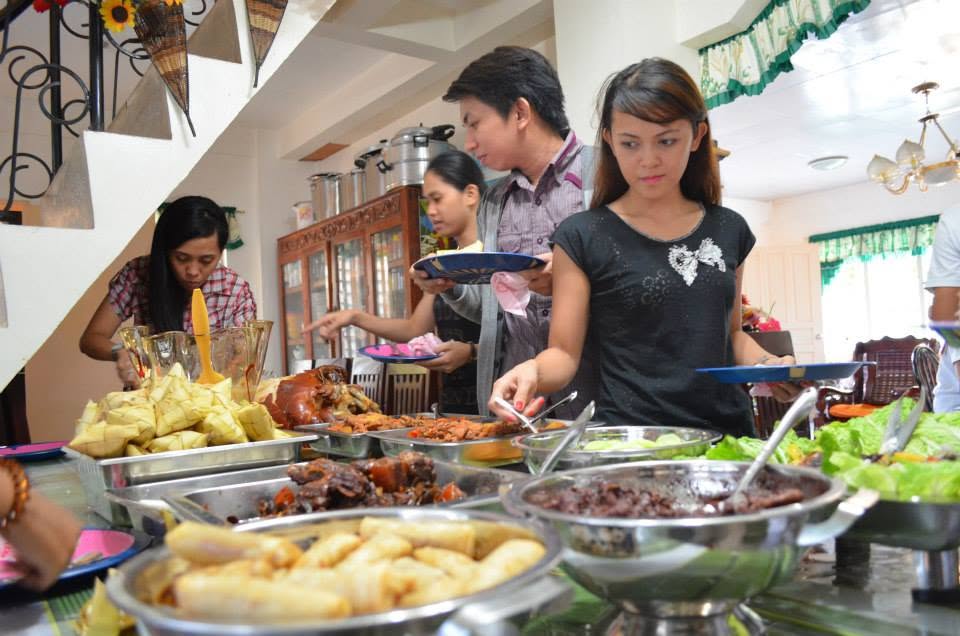
By evening, the pig has disappeared into plates, the pancit has diminished and the soft drinks have begun approaching room temperature. Borrowed chairs start their journey back to their rightful households, although there is a strong possibility at least one will live with the wrong family for several weeks before anybody notices. The music fades, visitors leave and somewhere in the kitchen an impressive mountain of dishes remains as evidence of everything that happened.
I wonder what the hosts will remember once the house becomes quiet again. Perhaps the laughter, the relatives they had not seen for months, the children running through the rooms and the familiar stories told for the fourth time as though nobody had heard them before. Perhaps they will remember the expenses too.
Probably both.
That is the complicated beauty of celebrations. They reveal generosity and insecurity, belonging and comparison, joy and exhaustion, tradition and the pressure to perform it correctly. None of those things cancels the others. The fiesta remains one of the warmest expressions of Filipino community life. I simply think the size of the feast should never become the measure of the worth of the household. The finest host is not automatically the one who spends the most. The finest celebration may be the one people remember fondly without needing several months to recover from it.
As for the pig, it has fulfilled its unfortunate destiny. Tomorrow nobody will gather around the empty table to discuss how expensive it was. They will remember who came, what everyone talked about, the relative who told the same story again and the moment somebody laughed hard enough to make everyone else start laughing without knowing why.
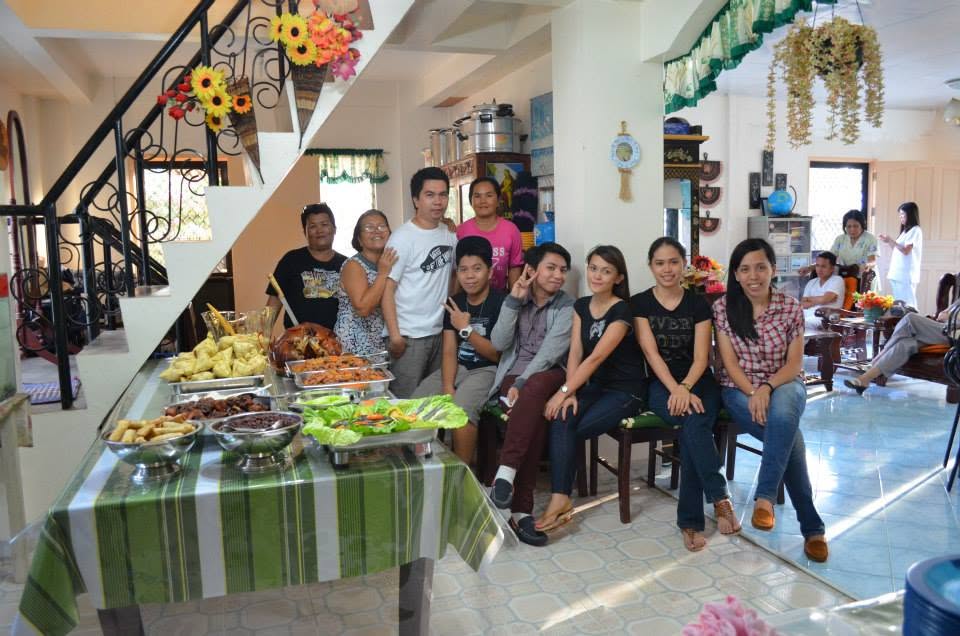
Those memories are why people keep celebrating. The food helped gather everyone around the table. It was never supposed to prove who deserved to sit there. Perhaps when the next fiesta arrives, somebody will finally look at the enormous cooking pots, study the overflowing table and say, “Enough na ni.” This is enough. I suspect somebody else will immediately prepare another dish anyway, because some traditions are considerably easier to analyse than to negotiate.
Still learning when enough can remain enough,
Anj
























Leave a Reply