My First International Trip
📍 Originally posted: November 2015
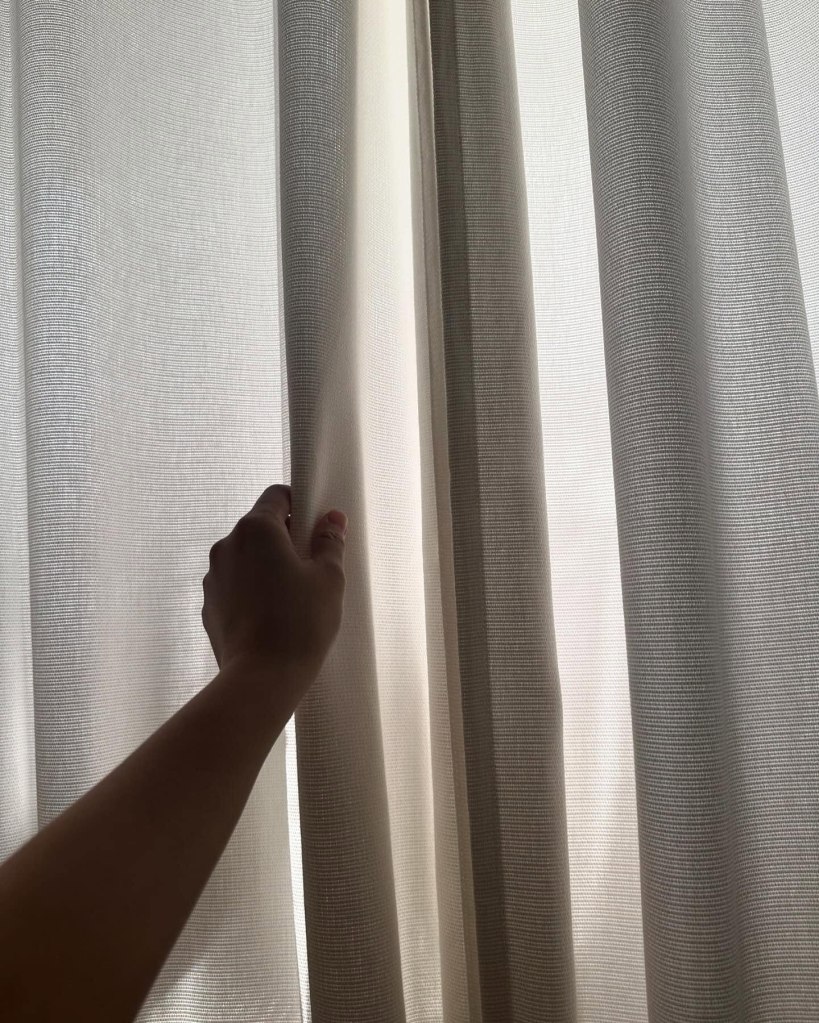
The morning sun peeked through my window, grinning like an old friend eager to show me the day’s secrets. It spilled across the room and landed directly on my suitcase, which stood beside the door looking far too pleased with itself. For once, that ordinary piece of luggage seemed to know something important: today it was not carrying clothes to another city in the Philippines. It was going abroad. So was I. I had imagined this morning countless times, but imagination had always been generous enough to remove the practical details. In my head, international travel had looked glamorous—airports, clouds, unfamiliar streets and photographs beneath foreign signs. Nobody in those daydreams had mentioned checking a passport seventeen times, wondering whether I had forgotten something crucial, or surviving the previous night on approximately three minutes of useful sleep because excitement had decided to throw a party inside my brain.
Sleep and I had, in fact, separated on rather unfriendly terms the night before. Every time I closed my eyes, my mind opened another window. Hong Kong appeared behind one of them, covered in skyscrapers and bright signs. Macau appeared behind another. Then came airports, trains, food, buildings, unfamiliar streets and imaginary situations my brain had kindly prepared without being asked. What if immigration asked me something complicated? What if I got lost? What would Hong Kong actually smell like? Would everything look exactly like the photographs? By two in the morning I had already visited half the city mentally. By three, I was probably redesigning the itinerary. My body wanted sleep; excitement was standing beside the bed shaking pom-poms.
It was my first international trip, and those four words carried more weight then than they probably do now. I had travelled within the Philippines, but crossing the border of my own country felt different. Growing up in a small province, the wider world had spent most of my life introducing itself from a distance. Countries sat politely inside maps. Famous cities appeared on television. Cultures arrived through school lessons, books and other people’s stories. I knew there was an enormous world beyond the Philippines, of course, but knowing something exists and actually stepping into it are entirely different things. Until November 2015, international travel had lived comfortably inside the word someday. That morning, someday finally packed its bags.
I was travelling to Hong Kong and Macau for five days with my workmates, and although I did not realise it then, that trip would become one of the golden bookmarks in the story of my life. It would also create a problem. Once I discovered what it felt like to arrive somewhere unfamiliar, my curiosity became rather difficult to return to its original packaging. One country made me wonder about another. One airport made me imagine the next. Somewhere during those five days, travelling stopped being a single dream and quietly became an appetite.
Pre-flight butterflies and sky-high joy

The airport only made the excitement worse. It seemed to hum with possibility. Suitcases rolled across the floor like obedient little travellers following their owners towards different futures, while the departure board casually displayed cities as though choosing another country were as ordinary as choosing something from a restaurant menu. I remember sitting near the boarding gate watching planes taxi across the runway, each one carrying strangers towards stories I would never know. Some people around me looked completely unimpressed, scrolling through their phones or drinking coffee as though flying to another country were no more remarkable than catching a jeepney. I wanted to ask them how they were managing such composure.
My boarding pass suddenly felt like the most important piece of paper I had ever owned. My passport seemed to develop a personality of its own, one that required constant supervision. I knew exactly where I had placed it, but every few minutes my hand would return to my bag to confirm it had not somehow developed legs and emigrated without me. This is apparently one of the symptoms of first-time international travel: an irrational belief that passports are mischievous creatures that disappear the moment you stop checking them.
Then the announcement came.
Boarding.
That simple word seemed to push the entire dream forward.
Years of saying, “One day I want to travel abroad,” had somehow narrowed themselves into a very ordinary sequence of actions. Stand up. Lift the bag. Join the queue. Show the boarding pass. Walk through the gate. Dreams can be terribly dramatic from a distance, but when they finally happen, they often disguise themselves as practical instructions.

Once I was inside the aircraft, my excitement climbed into the seat beside me. I looked through the window, watched the airport preparing itself below and thought about the strange fact that when this plane landed, I would be in another country. The Philippines had always been the centre of everything familiar to me. Home had its own language, food, humour, chaos, routines and instincts I barely had to think about. Beyond it were places I knew mostly through screens, photographs, history lessons and stories from people who had already travelled.
For the first time, I was about to have one of those stories myself.
When the aircraft finally lifted, the ground slowly loosened its grip on us. Buildings became smaller, roads turned into thin lines and the familiar world beneath me began folding itself into the distance. I remember looking down and feeling a peculiar mixture of happiness and disbelief. I was not leaving home because I loved it any less. I was simply discovering that loving where you come from does not stop you from wondering what exists beyond it.
The clouds eventually swallowed the view below, and for a while there was only that strange suspended world of an aircraft cabin: people sleeping, people eating, people staring at screens and one first-time international traveller trying very hard to behave as though all of this were perfectly normal.

Then Hong Kong appeared.
Stepping into Hong Kong International Airport felt slightly unreal, as though someone had taken one of the airports I had seen in films and allowed me to walk inside it. Everything seemed polished, modern and remarkably organised. Signs pointed confidently in every direction. People moved through the terminal with the efficiency of ants who had been given excellent project management training. The airport seemed to know exactly what everyone was supposed to do, which was fortunate because I was still mentally repeating, I’m in Hong Kong. I’m actually in Hong Kong.
That sentence followed me for a while.
First trips make you notice things experienced travellers have learned to ignore. Airport architecture becomes fascinating. Escalators deserve attention. Signage becomes photographic material. Even finding baggage claim feels vaguely triumphant because everything belongs to the enormous category of I have never done this here before. Hong Kong had not yet had time to become ordinary to me, so almost nothing escaped inspection.
Essential first step: Getting an Octopus Card
Before leaving the airport, one of my workmates, who had visited Hong Kong several times, immediately became our unofficial Minister for Transport, Navigation and Preventing the Rest of Us From Becoming Missing Persons. Her first instruction was simple: get an Octopus Card. At the time, ours cost HKD 150, including HKD 100 in usable credit and a refundable HKD 50 deposit. It could be used across much of Hong Kong’s public transport network and even for purchases in certain shops and restaurants.
I was ridiculously impressed.
One card could take you on trains, buses and ferries and could even help you buy something from a convenience store. The Octopus Card sat in my hand like a tiny plastic key to the city, quietly announcing that Hong Kong had already solved several inconveniences I had simply accepted as part of normal life. Tap. Beep. Go. No dramatic search for coins. No standing in front of a ticket machine while an impatient queue formed behind you. The little card seemed almost smug about how efficient it was.
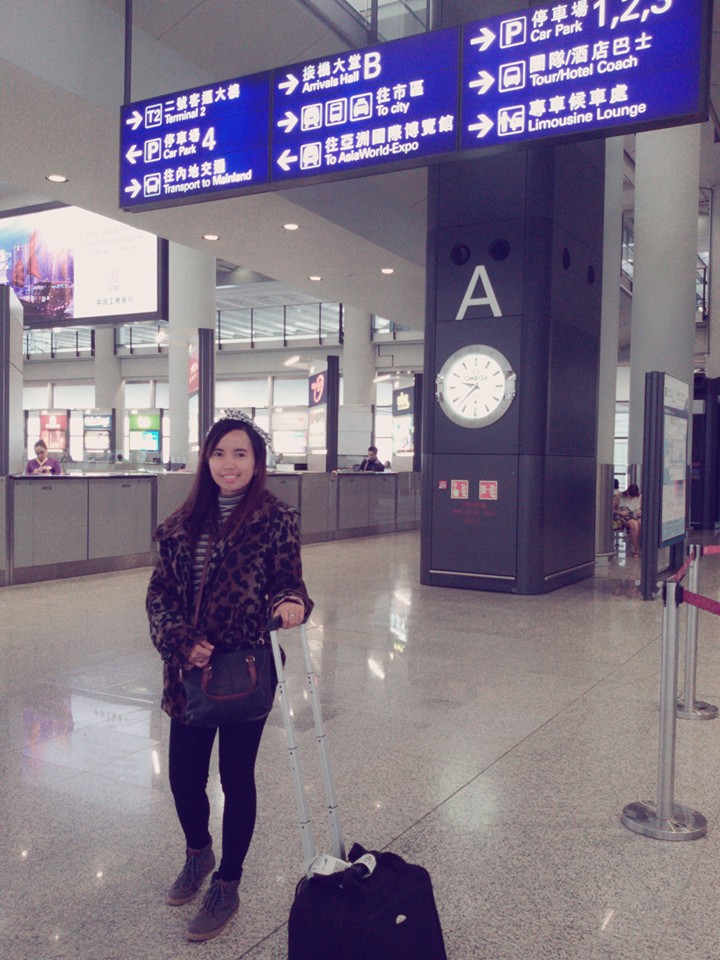
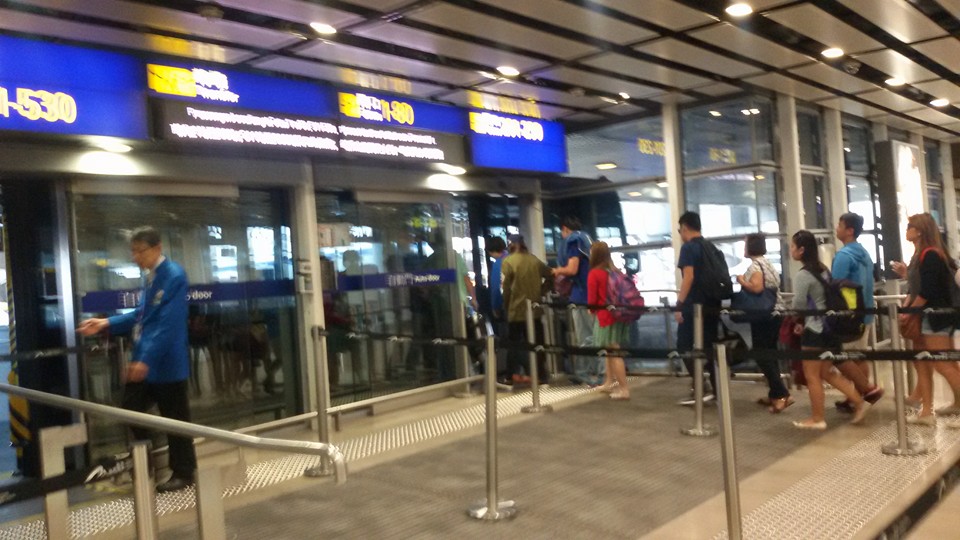


From the airport, we took a bus towards Tsim Sha Tsui in Kowloon, where we would be staying at the Golden Crown Guesthouse. I claimed a window view whenever possible because the city outside had started performing and I did not want to miss the opening act. Roads stretched ahead of us, bridges carried traffic across unfamiliar landscapes and buildings gradually gathered around the route as though Hong Kong were assembling itself piece by piece for our arrival.
I kept looking outside like a child on a school trip. Everything was interesting simply because it was not mine. A normal residential building fascinated me because people in Hong Kong woke up there every morning. Shops fascinated me because somebody bought groceries there after work. Roads fascinated me because people used them without considering them foreign or exciting at all. Travel has a funny way of making you intensely curious about somebody else’s ordinary Tuesday. Then Tsim Sha Tsui introduced itself properly. If Lantau and the areas near the airport had allowed Hong Kong some breathing room, Kowloon seemed to inhale every available inch of space. Buildings rose shoulder to shoulder like neighbours who had long ago accepted that personal boundaries were a luxury. Signs hung above streets competing for attention, shops occupied every practical gap, traffic flowed beneath towers and pedestrians moved through it all with the confidence of people who had memorised the choreography years ago. I loved watching it.
Our guesthouse was simple, affordable and centrally located, which mattered far more than luxury. Golden Crown Guesthouse put us close to transport connections and places such as Kowloon Park and Victoria Harbour. The room itself was modest and, by Hong Kong standards, efficiently acquainted with the concept of limited space. There was no danger of becoming lost between the bed and the door. But I did not care. I had not travelled internationally for the first time to develop a meaningful relationship with a hotel room. The city was outside.
We dropped our luggage, and my suitcase finally collapsed into a corner looking as though it had completed its main assignment for the day. Any sensible traveller might have taken this opportunity to rest. We had barely slept, travelled internationally, navigated an enormous airport, bought transport cards, taken a bus into Kowloon and found our accommodation. Our itinerary laughed at the suggestion. There were places to see.
So we went outside again.

Walking around Hong Kong for the first time became an education in the tiny mechanics of city life. I noticed how people queued for trains, how commuters moved quickly without the same kind of pushing I had expected from such crowded spaces, and how escalators seemed to come with their own social code. People understood where to stand and when to move. Traffic lights appeared to possess actual authority. Pedestrians waited. Stations swallowed thousands of people and somehow released them again with astonishing efficiency.
The discipline fascinated me because none of these things belonged to the list of famous attractions I had travelled to see. Nobody had put “people forming an orderly queue” on my itinerary, yet I remembered it.
That was another first lesson of travelling: a country reveals itself just as much through its habits as through its landmarks.
Inevitably, I compared what I was seeing with the Philippines. Travel does that quietly. You leave home expecting to look at another country, only to discover that another country becomes a mirror pointed back towards your own. You notice what works elsewhere and wonder why it cannot work at home. You also eventually notice things home does better and begin missing them with surprising speed.
Hong Kong’s transport system immediately became one of those comparisons.
The MTR seemed to know where it was going even when I did not. Stations were connected logically, signs were clear, trains arrived with impressive regularity and the Octopus Card continued performing its tiny electronic miracle every time we tapped through a gate. Coming from the Philippines, I could not help wishing our own public transport could one day feel as seamless.
If an efficient railway system could have been purchased as a souvenir, I might have tried to squeeze one into my luggage.
Unfortunately, even budget airlines have limits.
Getting to the Big Buddha: A traveller’s guide
Our first major destination was the Tian Tan Buddha, more commonly known as the Big Buddha, on Lantau Island. Long before Hong Kong became my first international destination, I had already encountered Buddhism and Asian history through school. Monuments such as giant Buddha statues belonged to the world of textbooks and photographs—the kind of thing I could recognise while still feeling that it existed somewhere impossibly far from my own life.
Now one of them was on that day’s itinerary. Even writing that now gives me a small thrill.
By Cable Car (Ngong Ping 360)
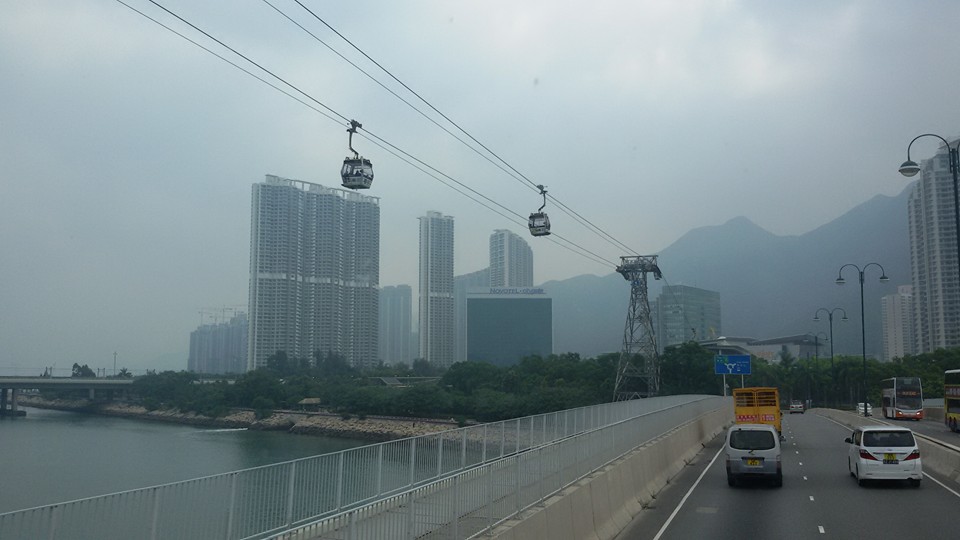
We travelled towards Tung Chung with the intention of continuing to Ngong Ping. One of the most famous ways to reach the area was the Ngong Ping 360 Cable Car, which promised spectacular views over mountains, sea and airport. In my imagination, naturally, we would glide gracefully above Lantau Island like seasoned travellers in an advertisement.

Then the queue introduced itself. It stretched ahead with the confidence of something that had no intention of moving quickly. We looked at it. It looked back. Plan A quietly packed its belongings and left.
By Bus (budget-friendly option)
Instead, we chose the more budget-friendly New Lantao Bus No. 23 towards Ngong Ping Village. The journey took around fifty minutes to an hour, winding through mountain roads and greener parts of Lantau Island, and what initially felt like a compromise quickly became another experience altogether. The bus carried us away from the Hong Kong I had been imagining as skyscrapers loosened their grip on the horizon, green hills appeared and roads curled around mountains like ribbons trying to find their way through the landscape. It felt as though the city had stepped politely aside to let another version of Hong Kong introduce itself.

By Ferry and Bus (scenic alternative)
From Central Ferry Pier 6, take a ferry to Mui Wo on Lantau Island, then ride New Lantao Bus No. 2 to Ngong Ping Village. This route takes longer but is more leisurely and offers a glimpse into the quieter side of Hong Kong life.
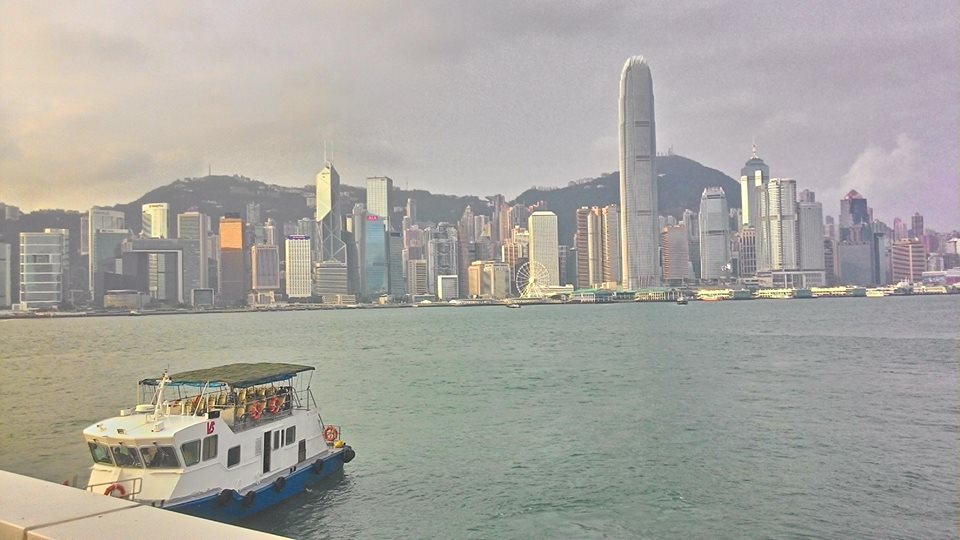
Until then, I had associated Hong Kong with towers, crowds, lights and dense streets, yet here was countryside, vegetation and long stretches of open space. Lantau seemed to wink at me through the bus window as if to say, You have been here only a few hours and already you thought you understood me. Fair enough. The road climbed and curved while I continued staring outside, and the bus seemed determined to reveal the island slowly, one bend at a time. Every turn opened another view, and because this was my first international trip, even sitting inside public transport somehow felt adventurous.
An hour on a bus at home could easily feel like an inconvenience, but an hour on a bus through another country suddenly became sightseeing. Travel is very skilled at rebranding ordinary things. A long journey becomes a scenic route. Getting slightly lost becomes exploring. Exhaustion becomes “making the most of the day.” By the time we reached Ngong Ping Village, I had almost forgotten that the bus had originally been our second choice.
The atmosphere shifted again when we arrived. Mountains sat around the area like enormous green walls, while small shops, tea houses and pathways led visitors towards the monastery and Tian Tan Buddha. The air carried traces of incense, and the noise of the denser city seemed to have been left somewhere behind us. Then, above everything else, I saw the Buddha.
Even from a distance, it commanded the landscape without appearing to demand anything from it. The giant bronze figure sat against the sky while people below continued walking, talking, photographing and checking directions. There was something almost humorous about the contrast. We had spent the entire day rushing through airports, immigration, buses, guesthouse check-ins, trains and more buses, while the destination we had hurried towards had apparently mastered the difficult art of simply sitting down.
I stood there looking upwards and recognised something I had previously known only through photographs and lessons. That feeling is difficult to reproduce once you have travelled more because first encounters have a peculiar intensity. The first time you stand before something you once thought of merely as “somewhere in the world,” there is a small collision between memory and reality. The photograph stored in your head meets the actual thing in front of you and quietly admits that it had failed to explain the scale.
The Big Buddha was real. Hong Kong was real. More importantly, I was there too, somehow standing inside a place that had once existed for me only through pictures, school lessons and imagination. That was perhaps one of the strangest and most satisfying parts of a first international trip: realising that the places you once viewed from a distance were not sealed away inside books or screens. They had roads leading towards them, buses stopping nearby and actual ground beneath your feet.
That first day became the beginning of many discoveries. I learned that planning matters, but so does abandoning a plan when the cable-car queue starts resembling a long-term commitment. I learned that local transport can become part of the adventure rather than simply the gap between attractions. I learned that watching how people queue, commute and move through ordinary streets can sometimes tell you as much about a place as any landmark printed on a postcard.

Yet something more important had already started changing underneath all of that. Hong Kong did not satisfy my curiosity; it multiplied it. Standing there on my first day abroad did not make me think, Good, now I have travelled internationally. Instead, it made me wonder what else was waiting beyond the next border. What would Japan feel like in person? What would Europe look like beyond photographs? What other cities had their own rhythms, foods, transport systems, histories and ordinary people getting on with daily life while someone like me stared at everything as if the entire place had been arranged specifically for her arrival?
Crossing one border suddenly made all the others feel less impossible. That may have been the most important thing my first international trip gave me—not confidence exactly, but permission. Permission to imagine myself elsewhere, permission to believe that places I had previously known only through books or screens were not reserved for other people, and permission to become curious beyond the boundaries of home.
The rest of that first Hong Kong day would lead us closer to Tian Tan Buddha and later into museums larger and more immersive than anything I had experienced growing up. Those stories deserved another chapter of their own because, apparently, after travelling internationally, navigating Hong Kong and heading towards a mountain, we still looked at the clock and decided we had enough energy for museums. First-time travellers possess a dangerous level of optimism, especially when daylight remains and the itinerary is still looking at them accusingly.
Years later, however, I remember something that came even before the Buddha, the MTR or the bright streets of Kowloon. I remember that morning: the sunlight creeping through my window, the suitcase waiting beside the door and the exhausted excitement of someone who had barely slept because her imagination had travelled ahead without her. At the time, I thought the morning sun was simply showing me the beginning of Hong Kong. I know now that it was showing me something much larger.
That first flight did not merely take me out of the Philippines for five days. It opened a door I would spend years wanting to walk through again and again. Hong Kong became the first answer to a question I had barely learned how to ask: How much of the world could I actually see? I still do not know the full answer, and perhaps that uncertainty is exactly why I keep travelling.
The morning sun had peeked through my window as though it knew a secret, grinning at a version of me who still thought Hong Kong was simply one destination on one itinerary. By the end of that first day, I finally understood what it had been so pleased about. The world was waiting beyond the familiar, much larger than I had imagined, and now I knew I could go and meet it.
📍 Next up on the blog: Day 1, Part 2 – The Big Buddha Up Close & A Visit to HK Museums
💛 Thank you for joining me on this journey. More stories and snapshots soon!
Love,
Anj 🌸













Leave a Reply