Originally posted: 2015
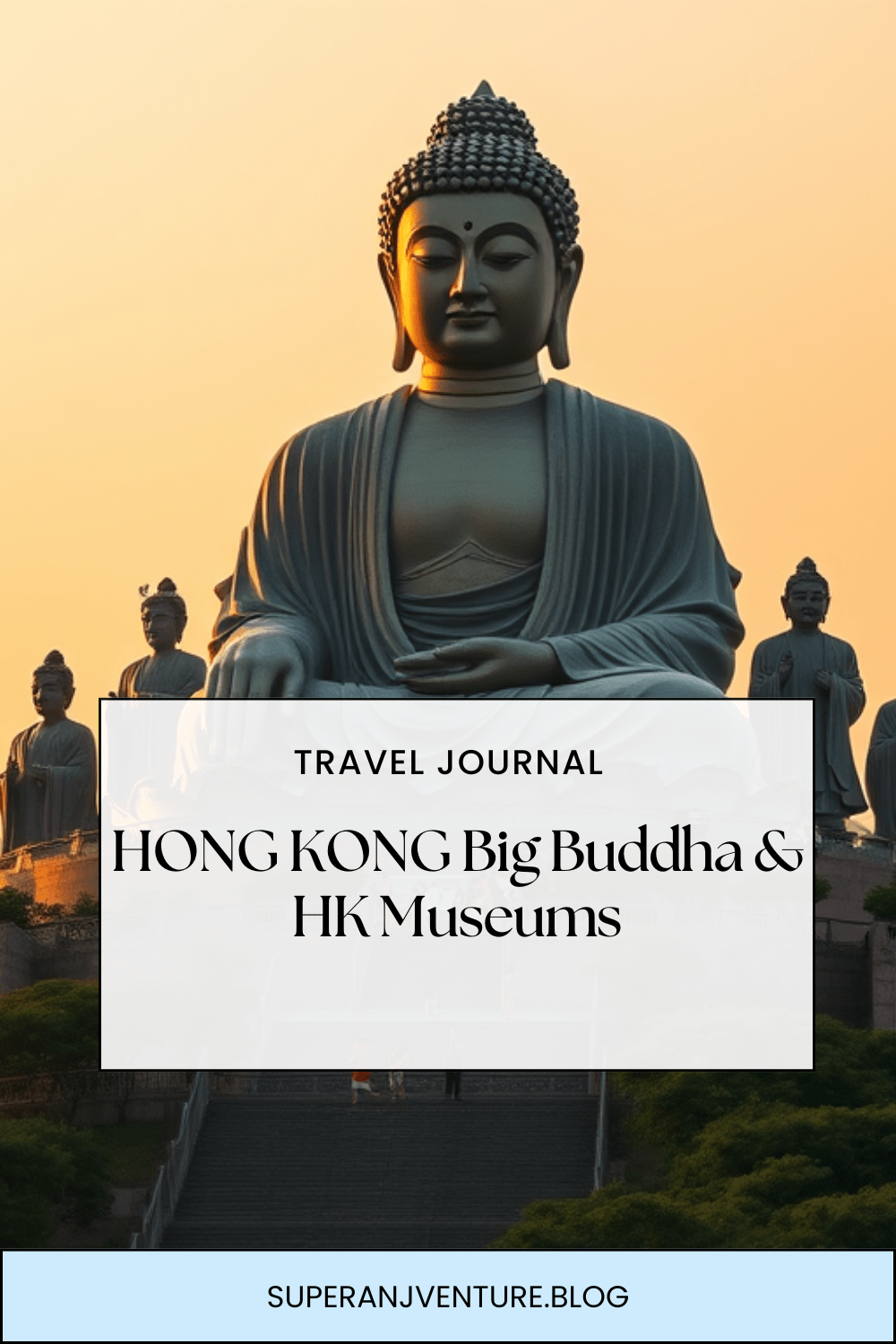
Before my first international trip, a surprising amount of the world existed for me at textbook size. Countries fitted neatly onto maps. Historical places occupied half a page beside a photograph. Religions, cultures and monuments appeared in lessons, followed by dates I was expected to remember for an examination and would occasionally forget at the least convenient moment. Growing up in a small province in the Philippines, I was curious about places far beyond what I knew, but many of them still felt wonderfully distant—the sort of places other people visited while I encountered them through books, television, photographs and whatever my history teacher could fit into an hour. I had heard about Buddhism in class. I knew that enormous Buddha statues existed somewhere in the world. But there is a considerable difference between reading about a Buddha while sitting behind a school desk and eventually standing at the bottom of a very long staircase with the Tian Tan Buddha above you, looking enormous, serene and completely unconcerned that your legs have just discovered the consequences of putting historical curiosity on a bucket list.
Perhaps that was one of the reasons Hong Kong affected me so much. It was my first international trip, which meant almost everything arrived with the small thrill of first time. First immigration experience as a traveller. First foreign streets. First time navigating a transport system in another country. First time seeing places I had previously known only from photographs. Even the ordinary things seemed worth studying because my brain had not yet learned what to ignore. A train was not simply a train; it was a Hong Kong train. A bus journey became scenery. A road sign deserved attention. I probably behaved like someone who had recently been released into a much larger version of the world, which, in a way, I had.
The Big Buddha had been on my bucket list precisely because it belonged to that world I had known first from a distance. I had heard about Buddhist culture and history in school, but lessons inevitably flatten things. A photograph can tell you that a statue is enormous, but it cannot make you tilt your head backwards. A textbook can mention a mountain, but it cannot make you climb it. It certainly does not include the exact point on the staircase when your thighs begin questioning whether spiritual enlightenment was really supposed to involve this much cardiovascular effort. Standing there in Lantau Island, looking up at Tian Tan Buddha, made something I had once regarded as “history” suddenly occupy actual space in front of me. That was a peculiar feeling: the world had stepped out of the page and become inconveniently life-sized.
We had barely checked in and dropped our bags before setting off, because apparently during a first international trip rest feels suspiciously like wasting the visa. Our original plan was to take the Ngong Ping 360 Cable Car, which in my imagination would have provided the appropriately dramatic entrance: floating gracefully above Lantau Island towards a giant Buddha while looking like someone in a tourism advertisement. Then we saw the queue. It was long enough to inspire immediate spiritual detachment from the original plan, so we took New Lantao Bus No. 23 instead. It was cheaper and took around an hour, but that accidental change gave us something the cable car would not have shown in quite the same way. Through the window, Hong Kong gradually loosened its skyscrapers and revealed hills, greenery, winding roads and a rural side of Lantau Island that looked completely different from the city I thought I had only just begun to understand.
I remember looking out of the bus window and thinking that this was another thing photographs had failed to explain. From home, Hong Kong had largely existed in my imagination as towers, neon signs, crowds and famous skylines. Yet here we were winding through green countryside on our way towards a giant Buddha. My first international trip was already correcting me. Apparently countries were not required to resemble the few photographs through which I had first discovered them.


🧿 The Twelve Divine Generals
When we eventually reached Ngong Ping, the landscape began to feel different again. The approach towards Tian Tan Buddha carried a sense of ceremony, especially when we encountered the Twelve Divine Generals standing along the way. Each represented one of the Chinese zodiac signs, armed and imposing, with the sort of posture that suggested they had been assigned guardian duties and intended to take the job very seriously. I remember wanting photographs of everything, naturally, because first-time travel apparently creates the belief that if you fail to photograph something, it may legally cease to have happened.
Unfortunately, the internet connection at the time had its own spiritual journey and refused to cooperate properly with uploading. There is something wonderfully modern about standing near figures connected with centuries of belief and tradition while becoming mildly irritated because your mobile connection will not load a photograph. Humanity contains multitudes.
🕉️ The Big Buddha Experience

Then came the Buddha.
I had seen photographs beforehand. I knew Tian Tan Buddha was large. I knew it was a famous bronze statue of Sakyamuni Buddha and one of Hong Kong’s best-known landmarks. None of that information prepared me for the simple physical experience of looking up. Photographs are very bad at scale. A picture can show you an enormous statue, but it cannot make your neck tilt backwards. A book can tell you that something sits high above the surrounding landscape, but it cannot give you the steps. It certainly cannot recreate the point halfway up when everybody becomes slightly less conversational because breathing has suddenly become the group priority.
At the bottom, I was enthusiastic. Somewhere in the middle, enlightenment began sounding suspiciously like a bench.
I had wanted to see it because it was on my bucket list, but standing there made the accomplishment feel different from simply ticking something off. This was one of those strange moments when something learned abstractly becomes physical. Buddhism had once been a topic in school. The Buddha had been an image beside a paragraph. Now I was standing beneath an enormous bronze representation of something I had first encountered inside a classroom thousands of miles away. The textbook had become life-sized. That idea stayed with me because first international trips are full of those collisions. You recognise something you have technically never seen before. A name from a lesson becomes a real location. A photograph becomes a building you can walk around. A culture previously compressed into several pages suddenly has sounds, smells, food, streets and people living ordinary lives inside it.
I think that was one of the quiet achievements hidden inside my bucket list. I was not simply visiting a famous statue. I was proving to a younger version of myself that some of the places she had heard about were not permanently out of reach.

After spending time around Tian Tan Buddha and the surrounding area, we finally took the Ngong Ping 360 Cable Car on the way back. The enormous queue that had defeated our enthusiasm earlier had become more manageable, and this time we got the dramatic journey I had originally imagined.
🚠 Ngong Ping 360 Cable Car

It was worth it.
The cable car lifted us above Lantau Island, and the view opened in every direction. Green mountains folded into valleys beneath us. The sea stretched beyond them. The airport appeared in the distance, and Tung Chung gradually came into view as we travelled back towards the more urban side of Hong Kong.

I remember being awestruck by how much could fit into one view. There was nature below us, infrastructure in the distance, aircraft moving around the airport, buildings ahead and water everywhere between. Earlier, the bus had shown us Lantau from ground level. The cable car now rearranged the same landscape from above.

For roughly twenty minutes, we floated somewhere between mountains and city. Earlier, Bus No. 23 had shown us Lantau from road level, twisting through its quieter side, while the cable car rearranged the same island from above. It felt like looking at two different versions of the same place. That was another lesson Hong Kong kept teaching me without formally announcing it: changing where you stand can completely change what you think you are seeing.

The Big Buddha had already felt like enough achievement for one day, and any sensible traveller might have returned to the guesthouse, found dinner and congratulated themselves on successful tourism. We were apparently not sensible travellers. We still had time, which is one of the most dangerous sentences anybody can say during a holiday because “we still have time” is often how a perfectly reasonable afternoon turns into several additional kilometres of walking.
Somehow, museum hopping entered the plan. I had never experienced museums on this scale before, and that mattered because I had grown up in a small province where museums simply were not these enormous spaces containing multiple galleries, reconstructed environments and enough material to swallow several hours of your day without apology. I knew such museums existed, of course, just as I had known giant Buddha statues existed, but once again there was an enormous difference between knowing something existed and physically walking through its doors.
🏯 Hong Kong Museum of History

The Hong Kong Museum of History fascinated me almost immediately. Its permanent exhibition, The Hong Kong Story, moved through an extraordinary stretch of time, from Hong Kong’s natural history and prehistoric beginnings into the cultures, communities and ordinary lives that shaped the city. For someone whose school experience of history had often involved desperately trying to keep names and dates alive in my brain until an examination paper appeared, this felt completely different. History was no longer behaving like material waiting to be memorised. It had rooms, streets, houses, clothing, tools, shops and people.

The prehistoric section gave me a glimpse of early life through reconstructed scenes and artefacts made from stone, pottery and bronze. Standing close to objects that had survived for such an extraordinary length of time made me wonder about the people who had once used them. Somebody had made those things because they were useful, ordinary or necessary. They could never have imagined that centuries later a Filipina on her first international holiday would be staring at them inside a huge museum and wondering who last held them before history decided they were important.

Prehistoric Hong Kong: The life-size exhibits give you a glimpse at the early inhabitants’ lives and customs. There are also prehistoric artefacts of stone, pottery and bronze in display.

Hong Kong Folk Culture displays. Picture above shows the customs displayed in a very colorful array of exhibits and replicas, this was perhaps one of our favorite galleries.
The folk-culture galleries fascinated me even more because they restored all the messy human detail that textbooks tend to compress. There were exhibits connected with Hakka communities, traditional homes, religious practices, temples, celebrations, lion dances, shops and Cantonese opera. Rather than looking at isolated objects in glass cases, we could walk through spaces arranged to suggest the lives those objects had belonged to. Suddenly history had kitchens, costumes and errands again.


That may have been what I loved most about the museum. School history often arrives after somebody has already decided which events deserve bold print: wars, rulers, political changes, important dates and dramatic turning points. A museum quietly reminds you that people living through all those “important historical periods” were also trying to make dinner, earn money, raise children and remember whether someone had bought rice. Imagine living through an era future historians will analyse for centuries while your personal crisis is that somebody has used the last of the cooking oil.
Walking through reconstructed old-Hong-Kong streets made that thought even stronger. I began imagining the actual people who once moved through streets like those: vendors opening shops, families carrying groceries, workers going home, people gossiping, worshipping, celebrating, arguing and probably running late. I had spent the morning looking at something monumental in the Big Buddha, but the museum made me think about all the ordinary lives that continue underneath monuments and around historical events.
🔬 Hong Kong Science Museum

Then we went to the Hong Kong Science Museum, because apparently several hundred million years of history had not yet provided enough mental stimulation for one afternoon. The mood changed almost immediately. The history museum had encouraged me to look carefully and imagine the past, while the Science Museum seemed to greet me with a completely different philosophy: Here is a button. Press it and see what happens.
This was dangerous information.

The museum stretched across several floors and contained hundreds of exhibits exploring subjects such as light, sound, motion, energy, mechanics, robotics, computers, life science, earth science and meteorology. What made it especially exciting to me was how much of it was interactive. These were not simply exhibits you stood in front of politely with your hands behind your back. Many were designed to be touched, tested, turned, pushed or operated, which immediately transformed me from thoughtful museum visitor into someone who needed to investigate every available control.
Children were clearly a major audience for the museum, but I saw no reason they should monopolise curiosity. If an exhibit had a handle, I wanted to turn it. If something had a button, I wanted to press it. If a machine promised to demonstrate a scientific principle after some minor human intervention, I considered it my civic duty to assist. There is apparently very little separating a grown adult from a six-year-old once both are placed in a room full of flashing interactive exhibits.
The sections exploring light and sound particularly captured my attention because they took things we experience every day and made them behave like discoveries again. Light could be bent, reflected and manipulated. Sound became something visible through demonstrations of waves and vibration rather than simply something you heard. Concepts that had once appeared in science lessons as diagrams and explanations suddenly became effects happening directly in front of me.
The mechanics and energy displays had the same effect. Levers, motion, forces and machines transformed ideas that had once seemed trapped inside textbooks into things I could actually observe. In school, a diagram might show an arrow indicating force and expect you to accept that something was happening. In a science museum, you could pull, push, spin or lift something and immediately discover that physics had consequences.
I found this much more persuasive.
There were also exhibits connected with computers and robotics, which at the time felt particularly futuristic to me. Watching machines respond to commands or demonstrations gave me that familiar mixture of fascination and mild suspicion we tend to reserve for technology doing something unexpectedly clever. I had grown up during a period when computers themselves still felt exciting, so walking through displays about how machines process information or perform tasks seemed like peeking at what the future might become.

The life-science exhibits shifted the focus towards the human body and living systems. Again, what fascinated me was not simply the information but the way it was presented. Things I had previously encountered as drawings and labels in school could suddenly be explored visually and interactively. You were not simply told how something worked; wherever possible, the museum tried to make you see the mechanism or experience the principle.

Earth science and meteorology added another layer, turning the planet and weather into subjects you could examine rather than simply complain about. Weather, in particular, becomes far more interesting inside a museum than when you are standing outside being rained on. There were displays examining natural processes and atmospheric phenomena, and once again I found myself thinking about how much easier some school topics might have been if somebody had replaced a few textbook chapters with machines you were allowed to touch.
What struck me most was that approximately three-quarters of the museum seemed designed for hands-on exploration. That completely changed the experience for me. I had assumed museums were places where you entered quietly, looked respectfully and tried not to accidentally touch anything valuable. The Science Museum seemed to have reconsidered the contract. It wanted participation.

There was also a large area designed especially for children, filled with opportunities to explore and experiment freely. Watching children move around these exhibits made me slightly envious because I could imagine how different learning must feel when curiosity is allowed to move before being given an examination paper. They could press something, observe what happened, try again and discover the principle almost accidentally.
Of course, I was doing much the same thing.
I simply had a larger handbag.
What I loved about the Science Museum was that it restored play to learning. School inevitably teaches us that knowledge comes with homework, memorisation and the possibility of being asked a question we definitely remember seeing somewhere but cannot currently retrieve. Inside the museum, learning had no threat attached. Nobody was going to ask me to explain the law of anything for ten marks. Nobody was going to collect my paper afterwards. I could simply be curious.
That may have been one of the greatest luxuries of visiting such a museum for the first time.
There was no exam at the exit.
By then I began noticing the strange theme running through our entire day. School had given me ideas, while Hong Kong kept giving those ideas dimensions. Buddhism became a towering bronze Buddha against a mountain. Prehistoric life became stone, pottery and reconstructed scenes I could stand beside. Traditional culture became homes, temples and old streets I could walk through. Science became lights, sounds, levers, machines, buttons and experiments that responded when I touched them.

For someone on her first international trip, that was exhilarating. The world suddenly seemed much less like something neatly divided into school subjects and much more like one enormous place where history, science, religion, transport, geography, architecture and ordinary human life were all happening at once.
By the time we left the museums, my brain remained enthusiastic while my feet had formally withdrawn support for the educational programme. We took the MTR back towards our guesthouse, and even that became part of my fascination because Hong Kong’s transport system seemed remarkably organised and efficient. Trains arrived, people flowed through stations with purpose and the network connected different parts of the city with an ease that impressed me.
I could not help comparing it with home. Travelling abroad for the first time does that almost automatically. You do not only discover another country; you begin seeing your own from a new angle. You notice things another place does well and wonder why they cannot exist at home, while also noticing things you suddenly miss from where you came from.
Looking at Hong Kong’s rail system, I remember wishing we could have transport that organised back in the Philippines. I suspect many Filipinos travelling abroad have experienced some version of this thought while standing inside an efficient station. If only reliable public transport could be purchased as a souvenir, I would have happily considered it, although I suspect a metro system would exceed even the most generous airline baggage allowance.
By the time we reached our guesthouse, the energy I had possessed when we dropped our luggage earlier had completely disappeared. My body had finally remembered that this was the same day in which we had travelled, climbed towards a giant Buddha, crossed mountains by cable car, walked through millions of years of history, experimented our way through several floors of science and navigated an unfamiliar city.
It had been an ambitious first day, perhaps unnecessarily ambitious, but that was the thing about being abroad for the first time. Everything felt too valuable to postpone. If something was nearby, I wanted to see it. If another gallery existed, I wanted to walk through it. If we could squeeze one more attraction into the remaining hours, apparently I regarded this as a challenge issued personally by Hong Kong.
First trips make time feel unusually expensive because you do not yet trust that you will return. Beneath all the excitement sits a small question you may not even say aloud: Will I ever be here again? Perhaps that was why we tried to fit so much into those days. We were collecting experiences while the opportunity was open.
Years later, I no longer remember every museum label I read or every scientific explanation behind the displays I enthusiastically touched. I could not reproduce the entire history exhibition from memory, nor could I pass an examination based on every experiment I tried. What remained was something more personal: the feeling of discovery.
I remember looking up at Tian Tan Buddha and thinking that I had actually made it there. I remember entering museums far bigger and more immersive than anything I had experienced growing up and realising that entire worlds could be reconstructed inside a building. I remember discovering that science could be something you touched rather than merely copied from a blackboard. Most of all, I remember the pleasure of learning without anybody announcing that there would be a test afterwards.
The younger me sitting in a classroom in a small Philippine province would probably have found the entire day difficult to imagine. History then meant textbooks, notebooks, teachers and examinations, while the wider world was real but distant enough to feel slightly theoretical. She could not have known that one day a lesson about Buddhism would acquire mountain air, hundreds of steps and an enormous Buddha sitting against the sky, or that “going to a museum” would one day mean wandering through prehistoric settlements, traditional Hong Kong streets, Cantonese culture, interactive science experiments and several floors of buttons she was actually encouraged to press.
Perhaps that was the real accomplishment hidden inside the bucket list. I had thought visiting the Big Buddha would simply mean crossing another famous landmark off my list. Instead, the entire day became evidence of something much larger. Places I had once encountered only through books were reachable. History had coordinates. Museums had doors I could walk through. Science could move when I touched it. The map was not something I had to keep looking at from one small corner forever.
That first Hong Kong trip would eventually give me louder memories: Victoria Peak, Ocean Park, Disneyland, harbour lights, Macau and countless photographs. Yet I think this first day carried a different kind of importance because it changed the scale of things.
Before Hong Kong, much of the wider world had existed for me at textbook size. By the end of that day, I knew better. The Buddha was much taller than the photograph, the museums were much bigger than I had imagined, history was far messier than the chapters made it look, and science had considerably more buttons.
The world, thankfully, was larger than the page.
💬 Next Post: Day 2 – Part 1: Victoria Peak and More Adventures
Stay tuned for more Anjventures in Hong Kong! 🧳✨
— Anj







Leave a Reply