This is a late post, which means Cardiff has had plenty of time to move from “recent trip” into the slightly unreliable department of memory where photographs start doing most of the administrative work. By now, my camera roll has collected hundreds of newer images, my shoes have walked through other places, and life has already moved on to several other things. Still, Cardiff kept resurfacing whenever I scrolled past those photos, particularly because the sky was so aggressively blue that I remain slightly suspicious of it. Britain does not usually hand out weather like that without expecting something in return.
The sunshine changed everything. Buildings looked sharper, the water seemed brighter, and I immediately became the sort of tourist who believed every angle deserved documentation because the lighting was behaving itself. There are days in Britain when you photograph a beautiful place and later discover that the entire image appears to have been filtered through damp grey wool. Cardiff gave us the opposite. The sky was blue, the city looked awake, and for several hours I forgot to carry an emergency emotional relationship with the weather forecast.

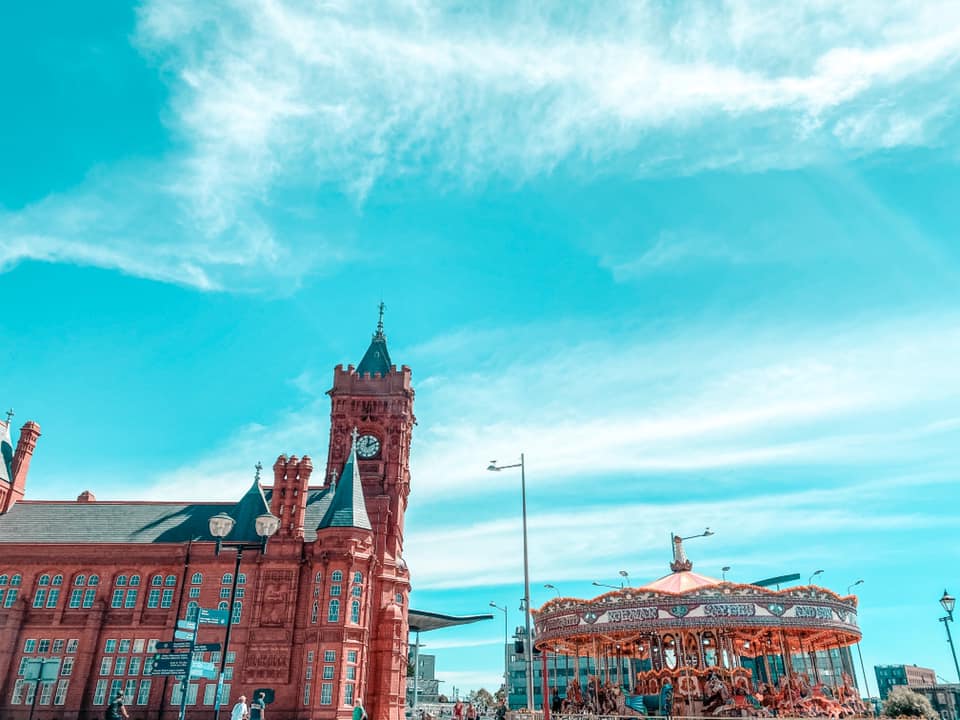

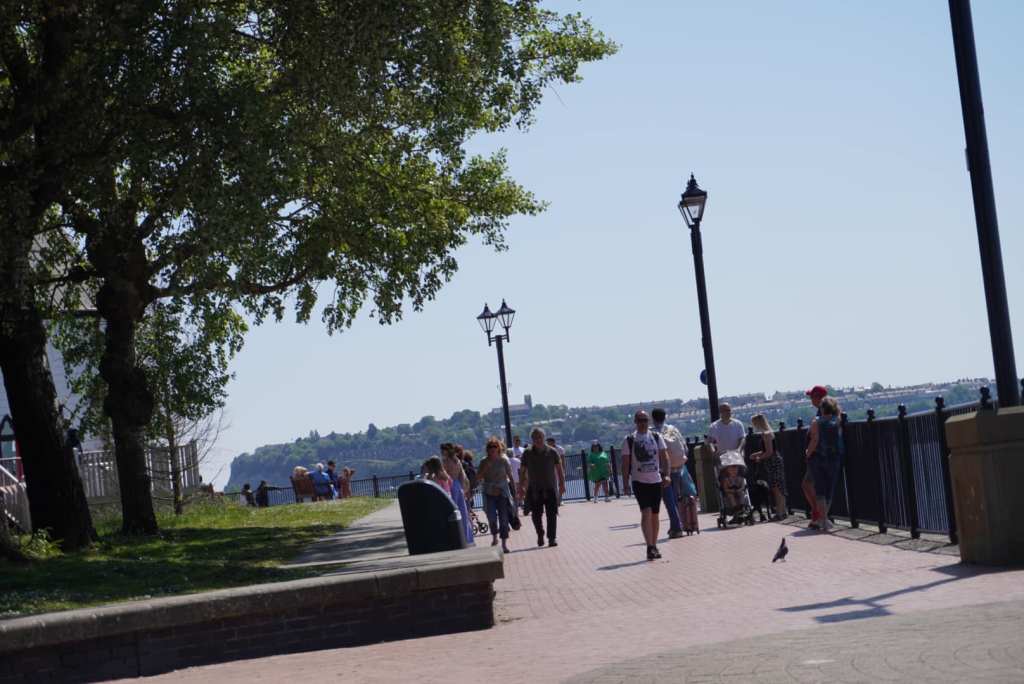
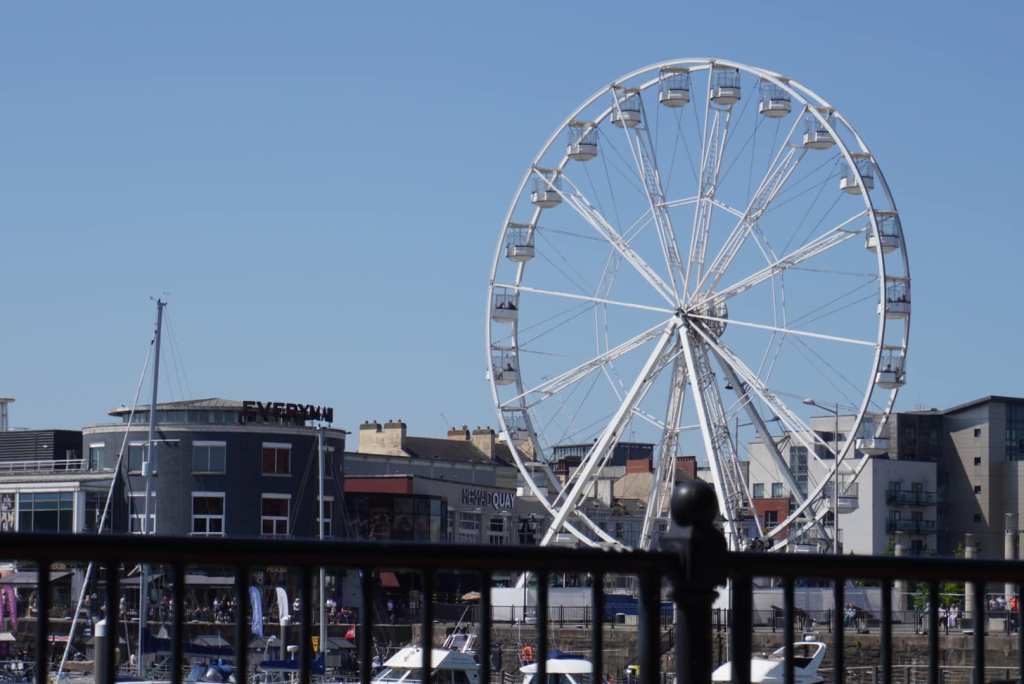
We headed towards Cardiff Bay, which was an excellent place to begin because it gave the day room to breathe before I inevitably started assigning philosophical meaning to historic buildings. The waterfront had movement without feeling frantic. Boats sat along the harbour, people wandered beside the water, and the Ferris wheel turned at the sort of pace that would be completely unacceptable for most modern technology but somehow looked perfectly sensible there. It went round and round without appearing remotely concerned about productivity, which I found both admirable and personally challenging.
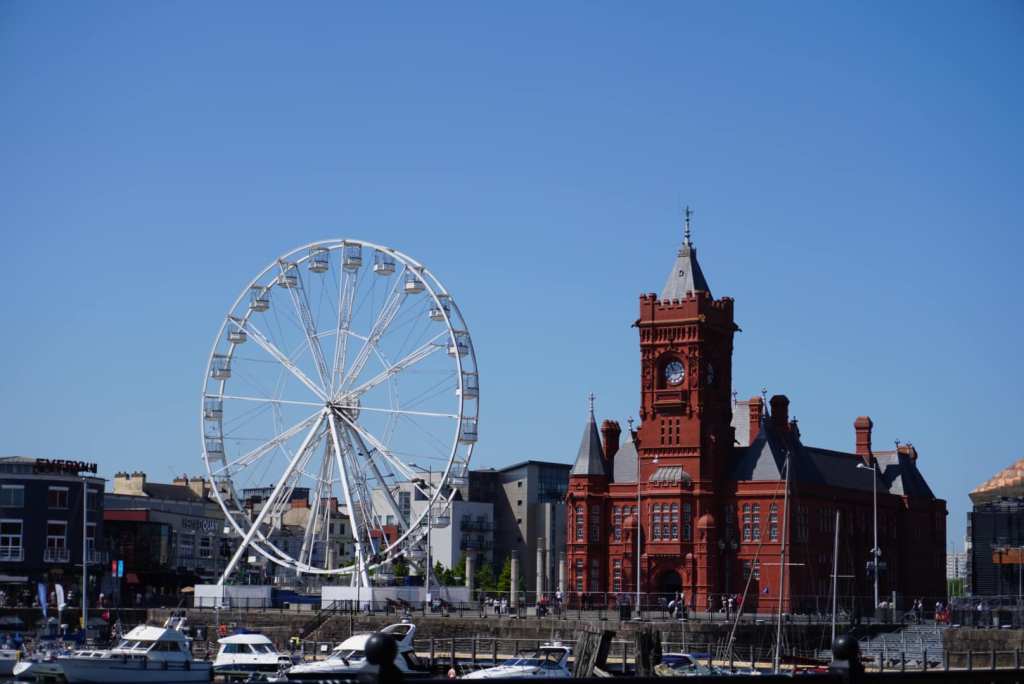
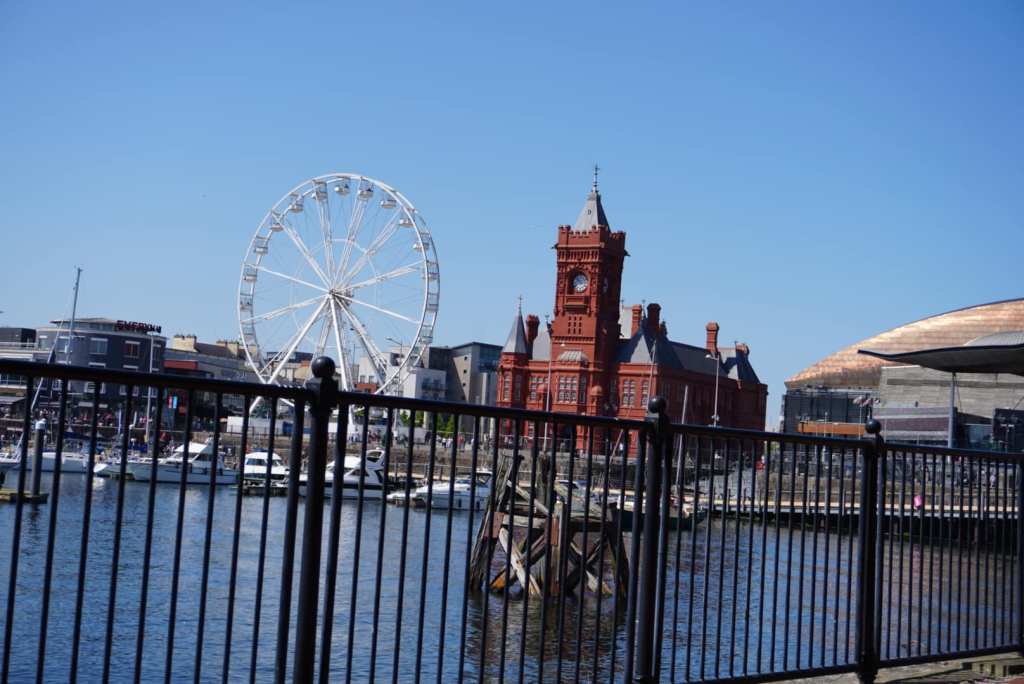
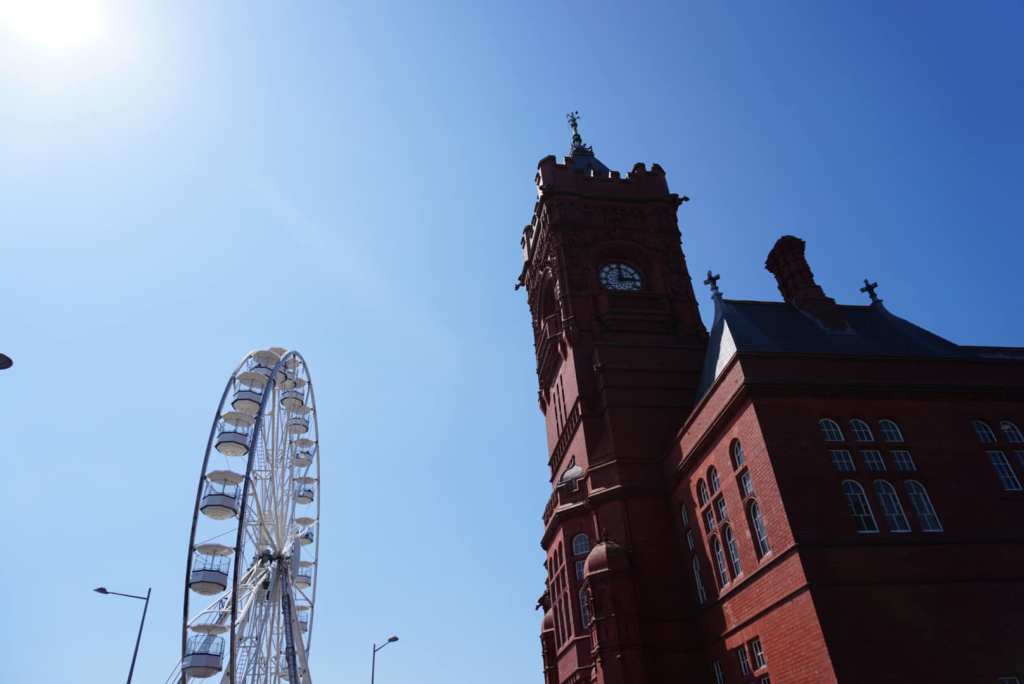

Then there was the Pierhead Building, standing against all that blue in unapologetic red. It is not a building that seems interested in blending in. Some architecture politely occupies its location; this one looked as though it had arrived with opinions. The contrast between the red brick, open sky and water made it almost impossible not to photograph, although by that point I was already behaving as though Cardiff Council had personally commissioned me to document the city.

I have always liked being near water when I travel. I could offer a deeply reflective explanation about perspective and how water reminds us that life keeps moving, but sometimes I simply like looking at it. That is allowed too. There is something pleasant about standing beside a harbour with nowhere urgent to be and watching everybody else move around you. Your problems do not disappear, but for a while they are forced to share your attention with boats, sunlight and whatever bird has decided to patrol the area like unpaid security.
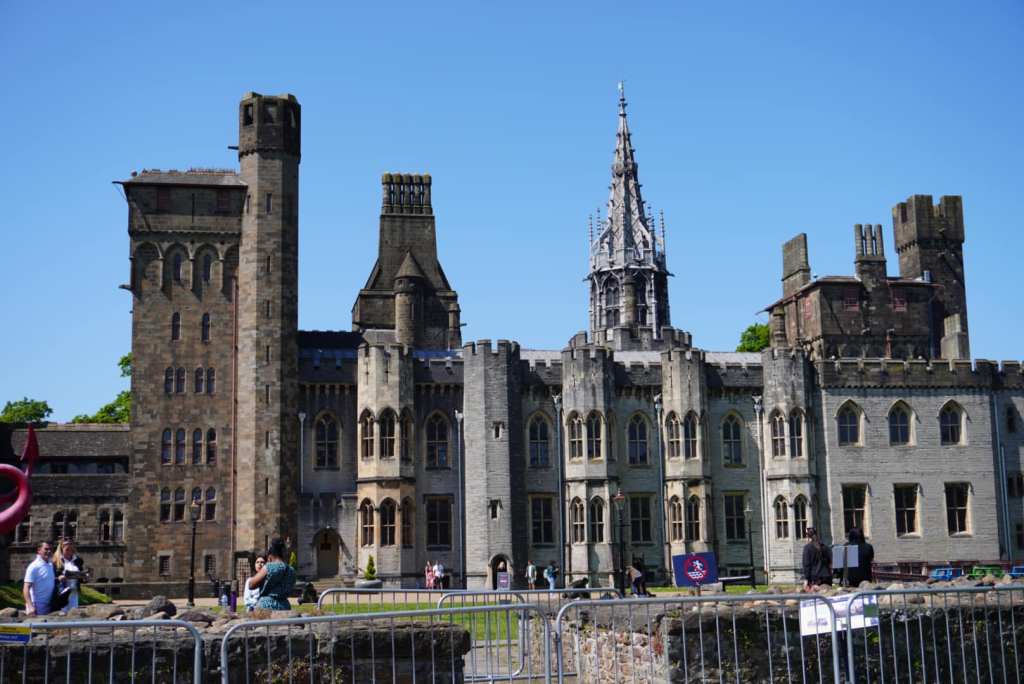
From the bay, we moved towards Cardiff Castle, and this is where my brain predictably became unhelpful. Some people enter castles, admire the architecture, read the information boards and leave with several interesting facts. I enter a castle and eventually start wondering who walked through the same spaces centuries ago, what they worried about, what ordinary days looked like for them and whether anybody complained about work with the same intensity we do now. Historical buildings clearly deserve more disciplined visitors. Cardiff Castle got me instead.
There is something about old walls that makes the present feel less enormous. We spend so much time inside our own timelines that a stressful week can feel like an entire era. Then you stand somewhere that has survived generations and realise that people before us also had worries they believed were urgent. They loved people, lost people, waited for news, made plans and probably became irritated by inconveniences that would now be completely incomprehensible to us. History is very good at reminding us that the present is important without agreeing that it is permanent.
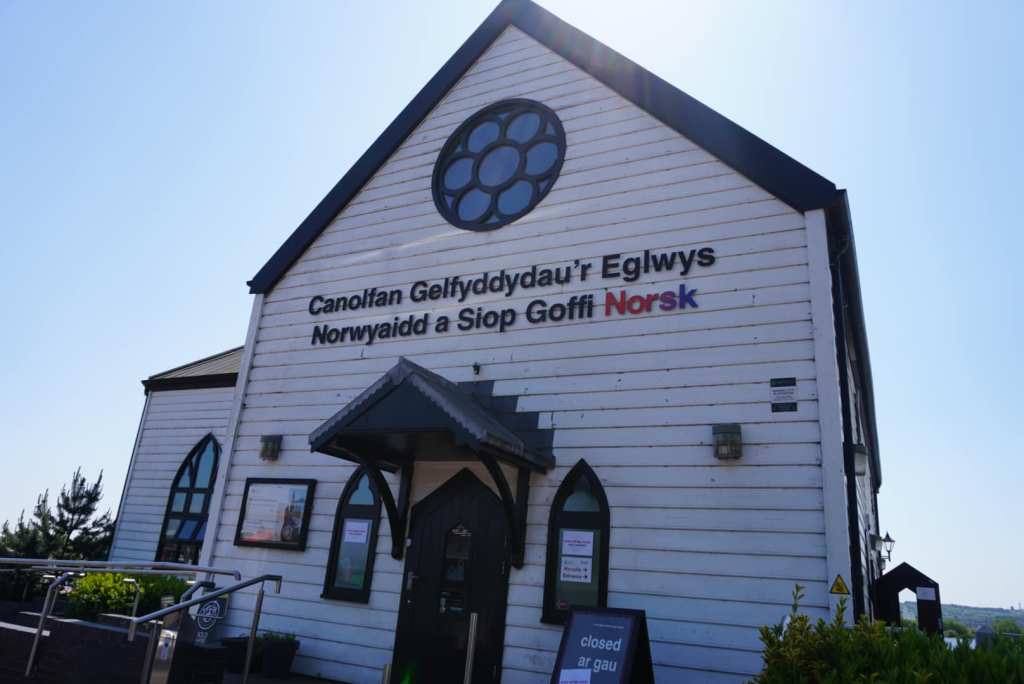
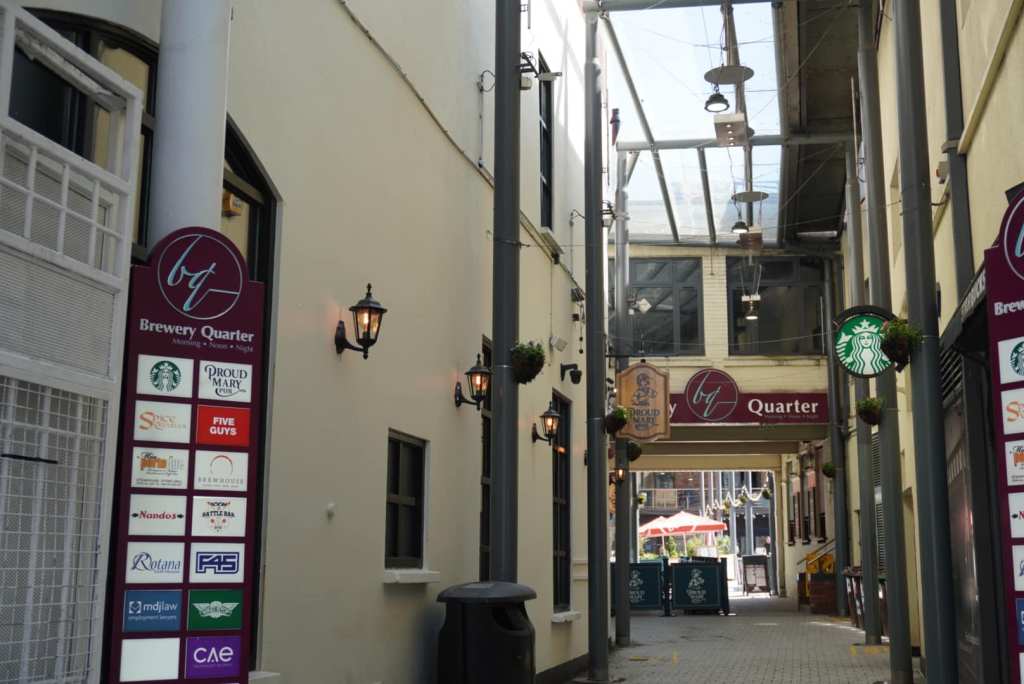
Cardiff Castle also made the contrast between old and new difficult to ignore. The city around it is very much alive in the present, yet the castle remains part of the landscape rather than something sealed away from everyday life. That coexistence interested me more than the usual idea that history sits behind us while modern life marches confidently ahead. Sometimes the past simply remains in the middle of everything, refusing to relocate for our convenience.
Inside, I found myself noticing the details: Gothic architecture, stained glass, carved stone and the amount of work devoted to making things beautiful rather than merely functional. Humans have always been slightly unreasonable in this way, and I mean that as a compliment. We could build plain walls, but we carve them. We could write perfectly functional sentences, but some of us insist on turning a day trip into a 2,000-word blog post several months later. Apparently unnecessary beauty has always been one of our favourite hobbies.
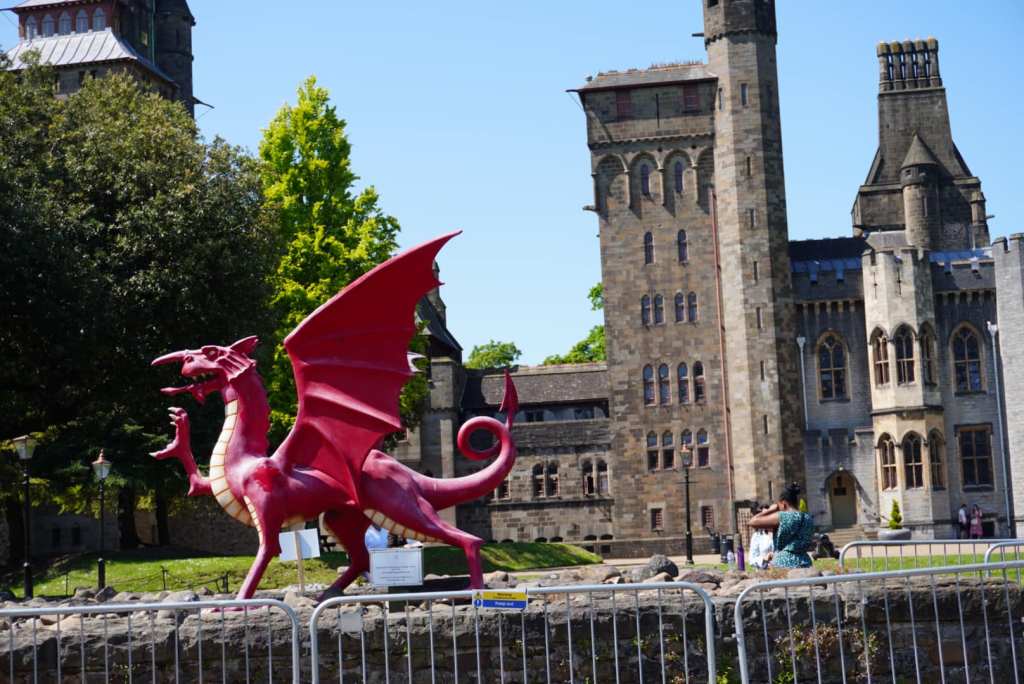
The Welsh dragon added another layer of personality to the place. There is something impressive about a country choosing a dragon as part of its identity because subtlety was clearly never the assignment. I respect that. Symbols become shorthand for stories, history and belonging, and travel makes those things easier to notice because you are looking at them from outside your usual environment. Cardiff felt confidently Welsh without behaving as though identity had to be explained every five minutes.
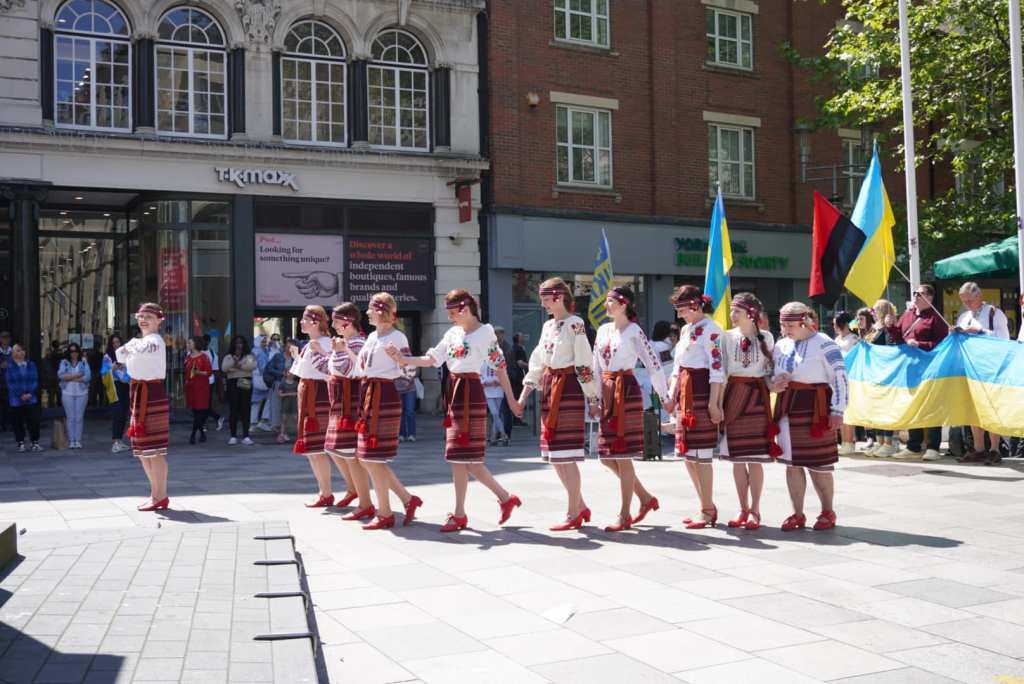
One of the best moments of the day, however, had absolutely nothing to do with anything we had planned. Somewhere along our wandering, we came across a Ukrainian dance performance. Music filled the street, colourful costumes appeared among ordinary city movement, and people who had been heading in completely different directions stopped to watch together. It was the sort of moment no itinerary could have predicted, which is probably why I remember it so clearly.
I love travel moments like that because they expose how limited planning really is. You can research opening times, read reviews, create the most efficient route and calculate exactly how many attractions can reasonably fit between breakfast and dinner. Then somebody starts dancing in the street and suddenly the spreadsheet has lost authority. Some of the best parts of travelling happen because you happened to be standing in the correct place when something unscheduled decided to occur.





Watching that performance also made me think about what people carry with them when they live far from where they were born. Culture travels in surprisingly portable forms. It fits inside language, food, music, clothes, gestures, celebrations and traditions repeated often enough that distance cannot erase them. As someone who was born in the Philippines and has built a life in Britain, I notice those moments differently now. Home is not always an address. Sometimes it turns up in the middle of another country wearing traditional clothes and dancing in a street.
After that, we continued through the city without trying too hard to optimise the afternoon, which may be one of the healthier developments in the way I travel. I used to think a good trip meant seeing as much as possible. There was a strange invisible scoreboard: more attractions, more photographs, more proof that the day had been used efficiently. Apparently leisure also needed performance indicators. Over time, I have become less interested in proving that I travelled well and more interested in actually noticing where I am.
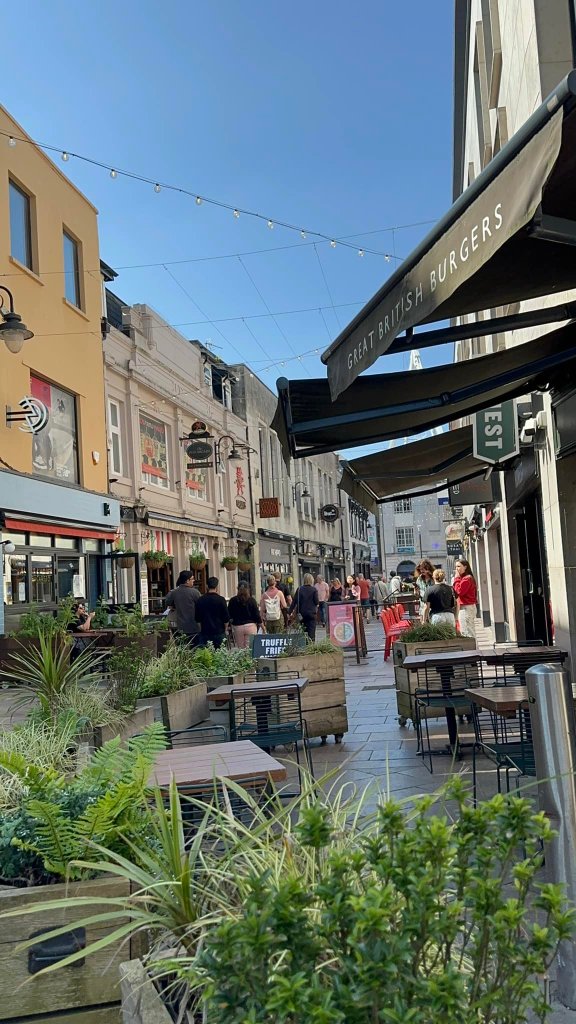
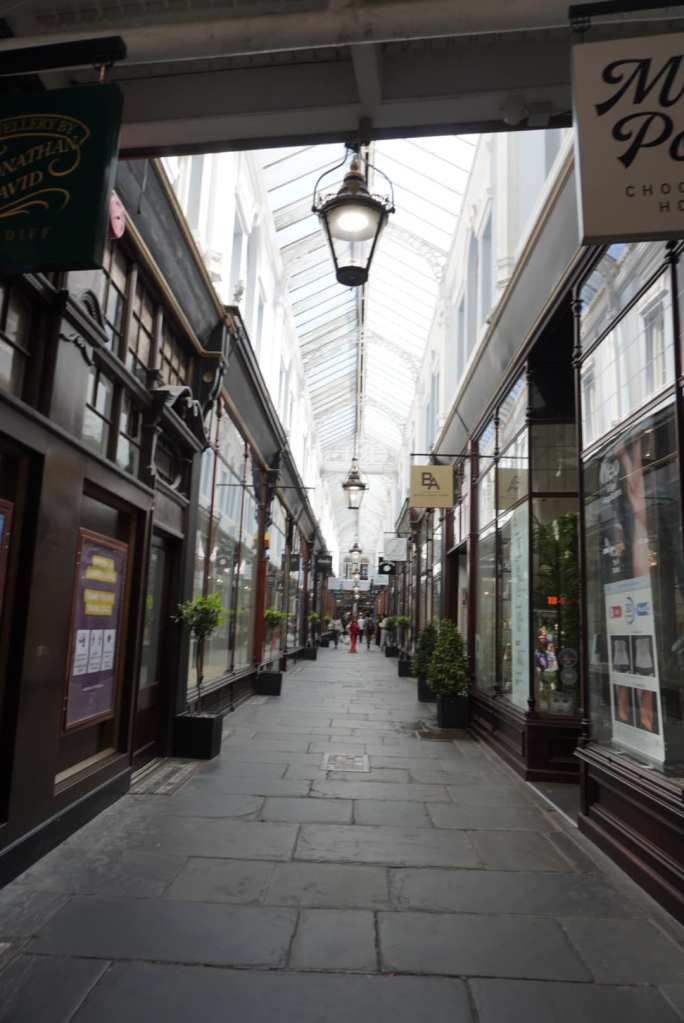
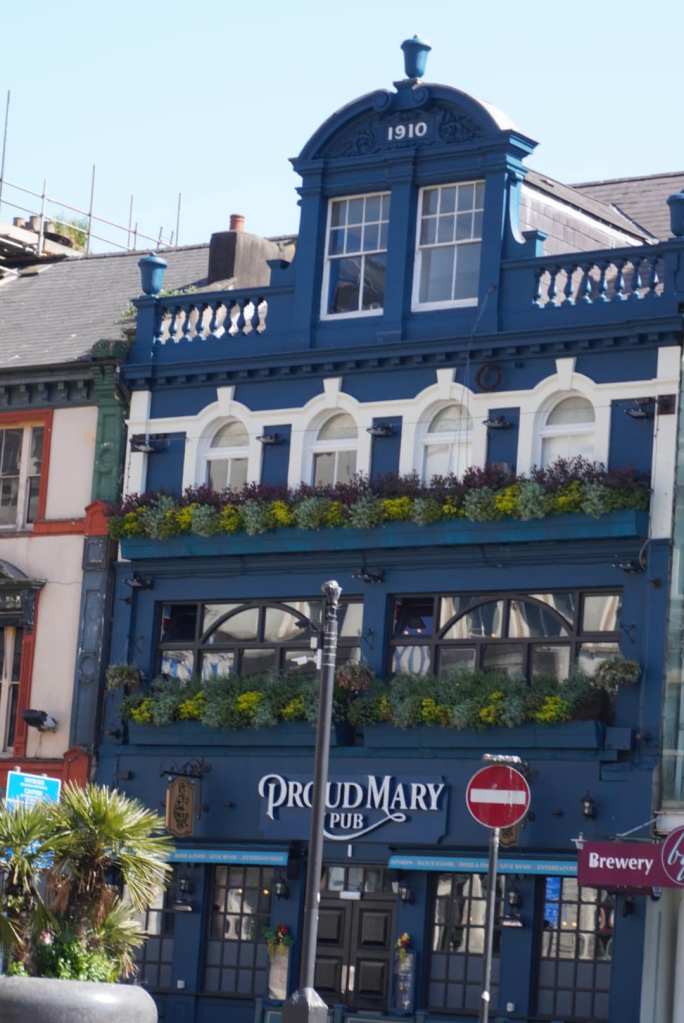
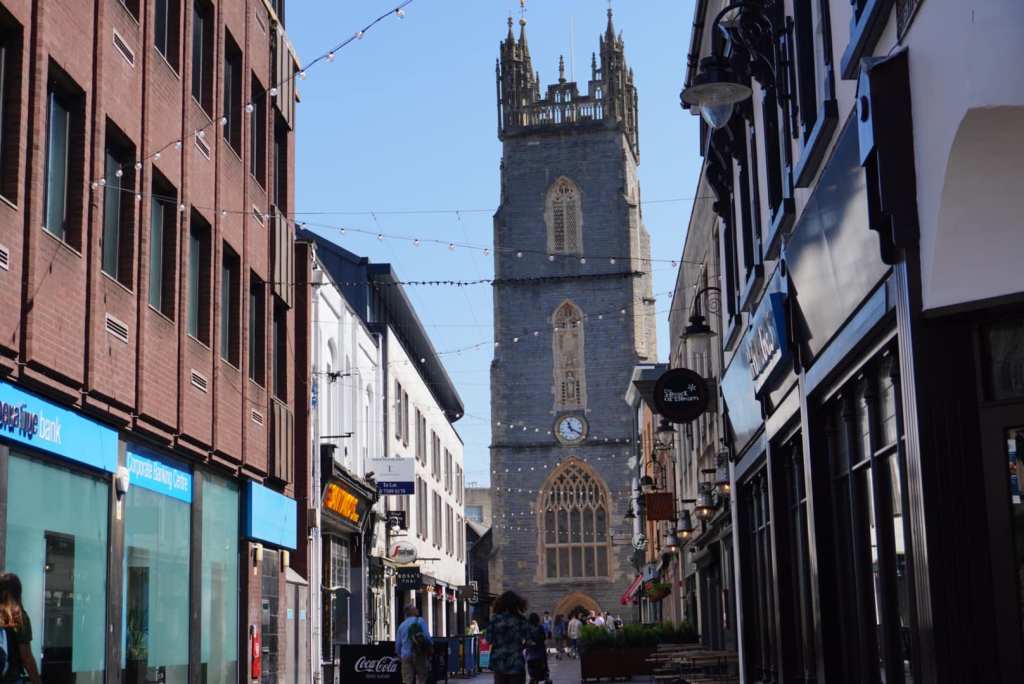
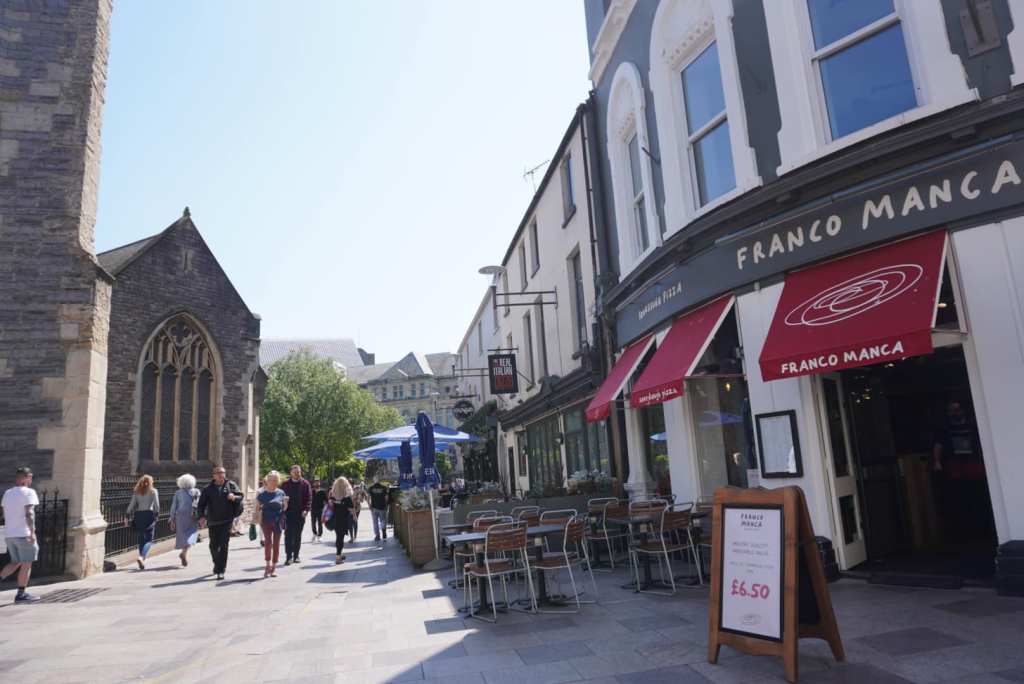
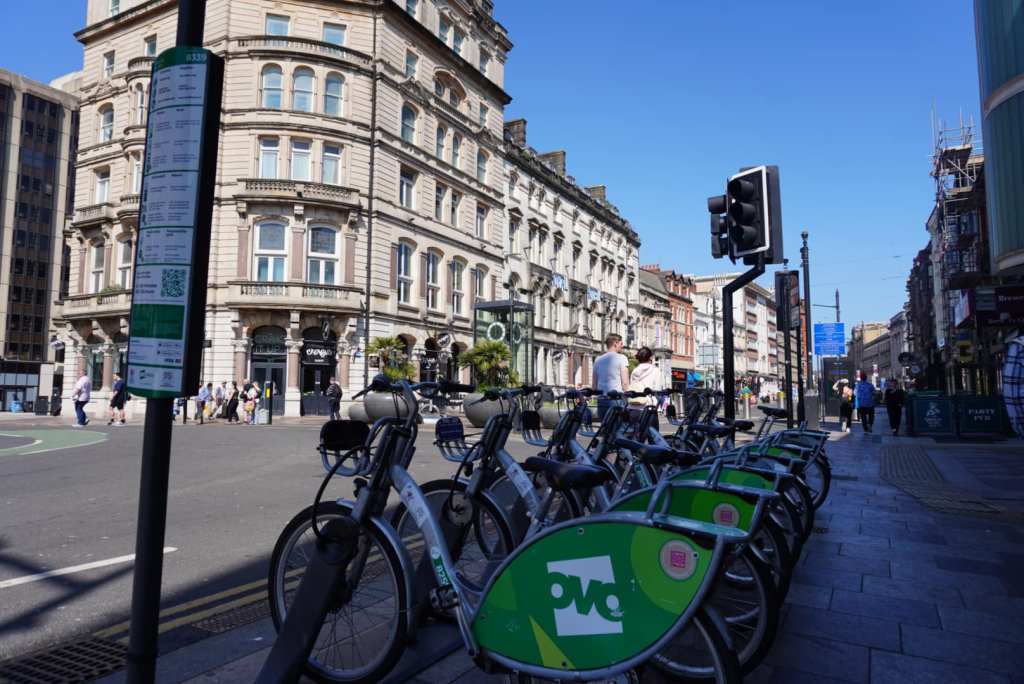
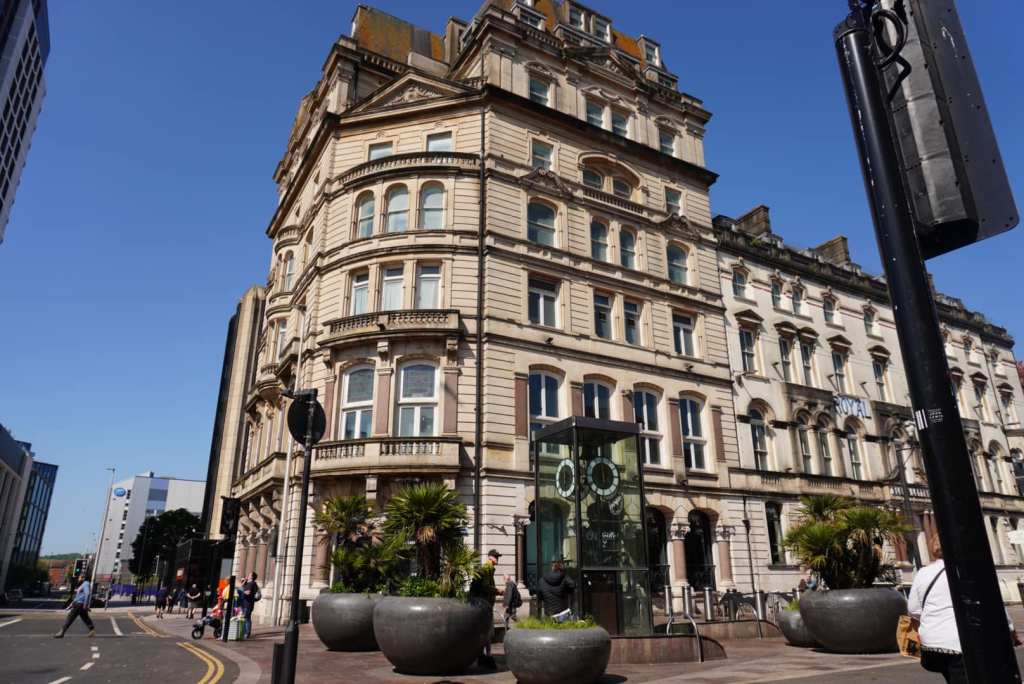
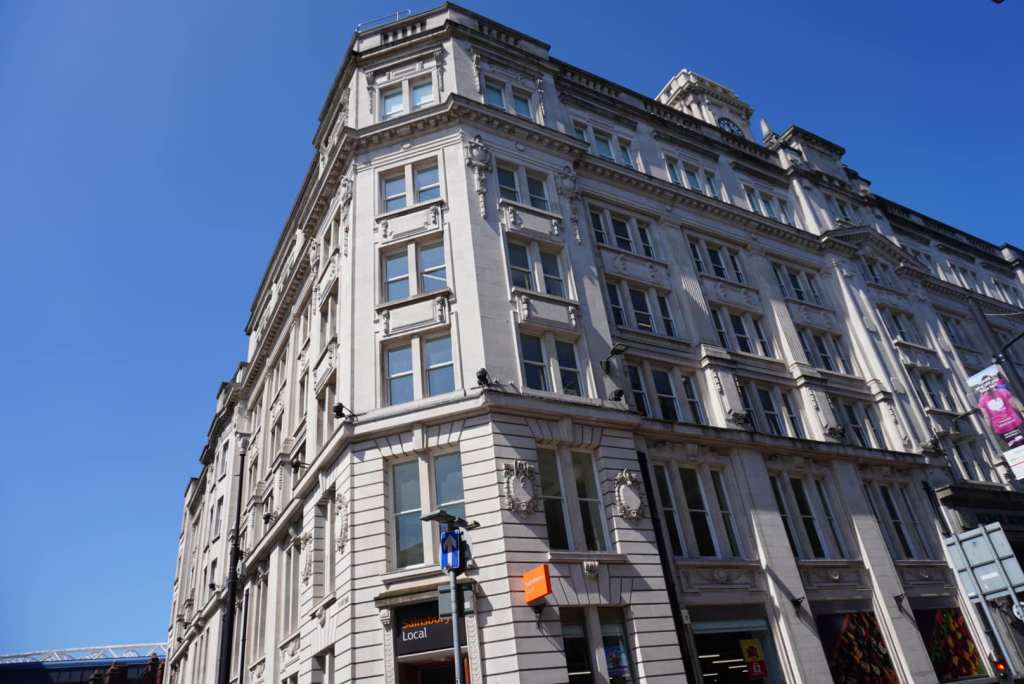
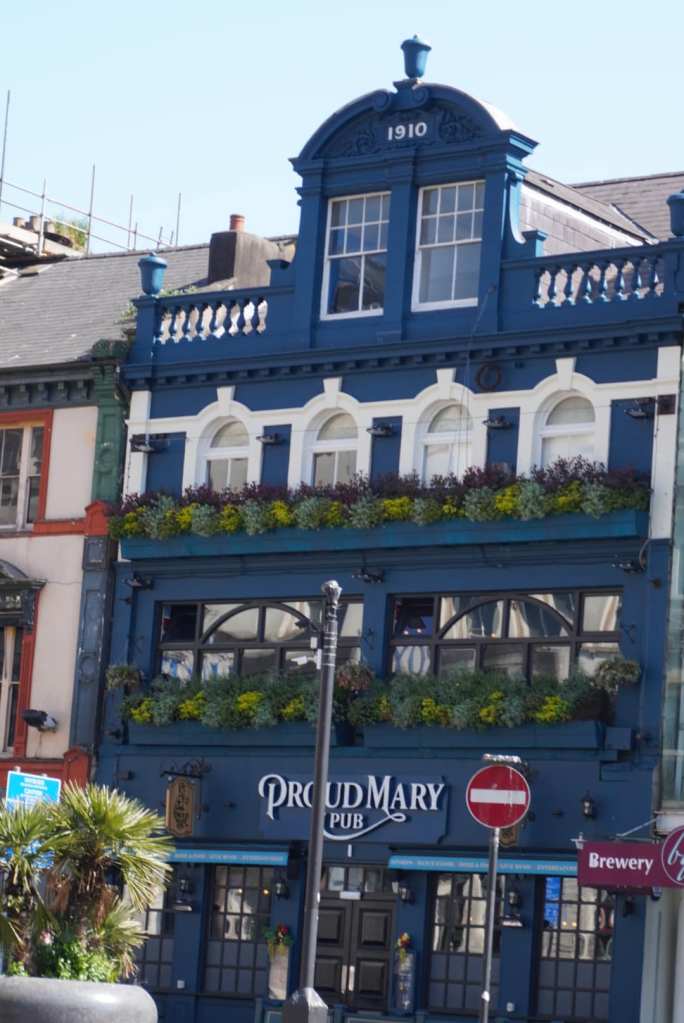
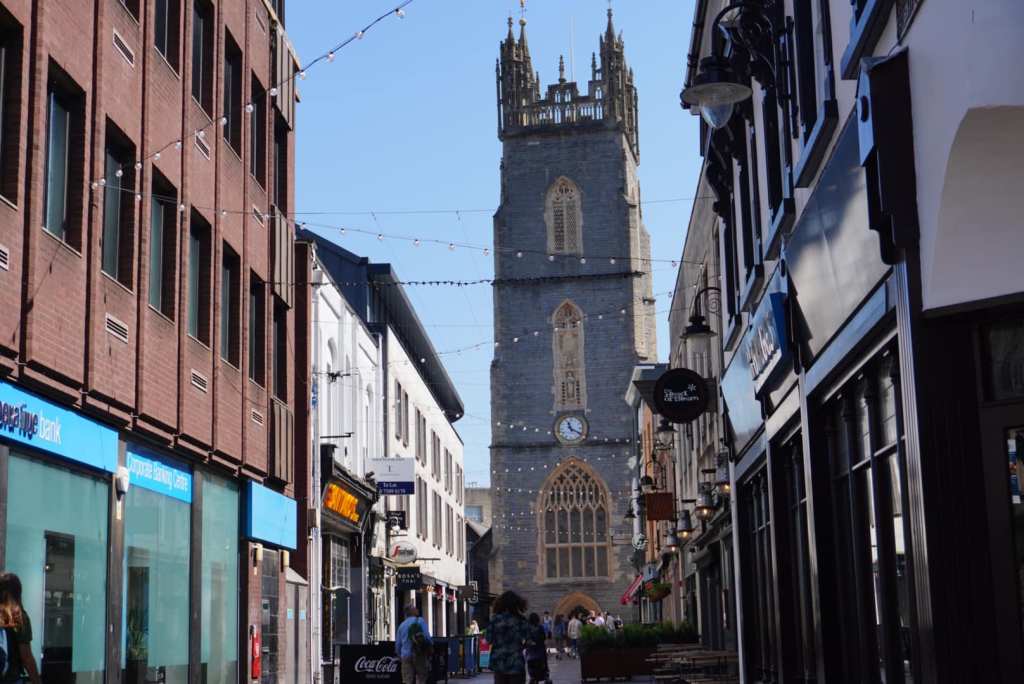
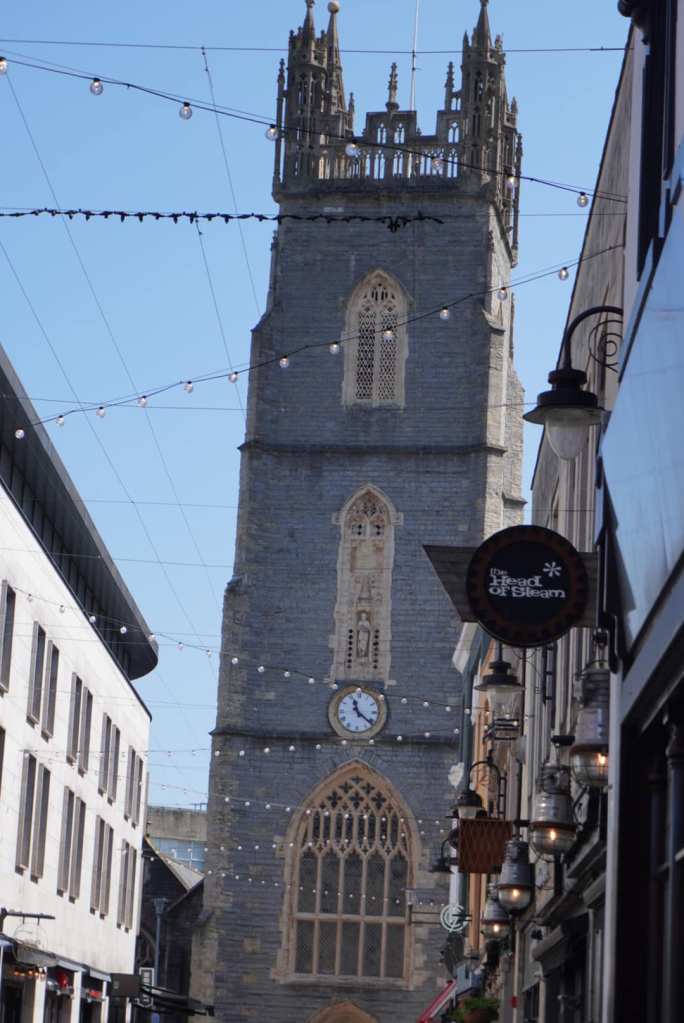
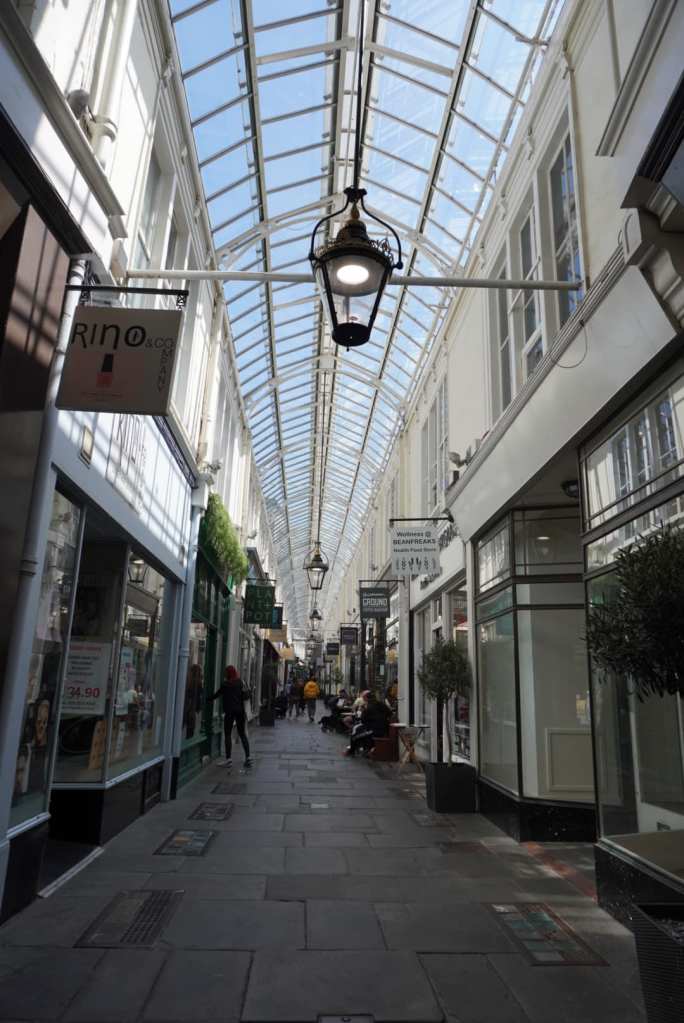
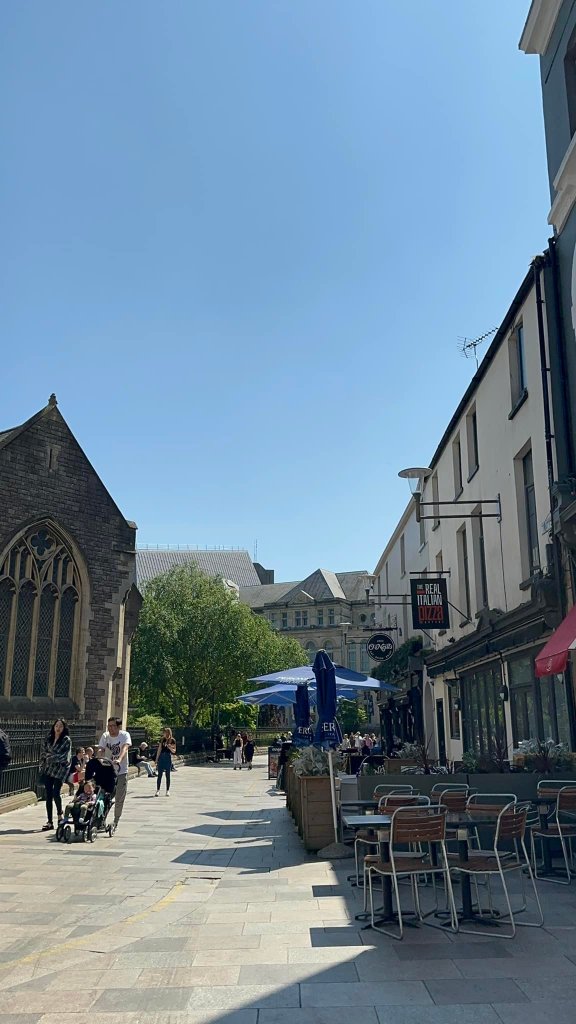
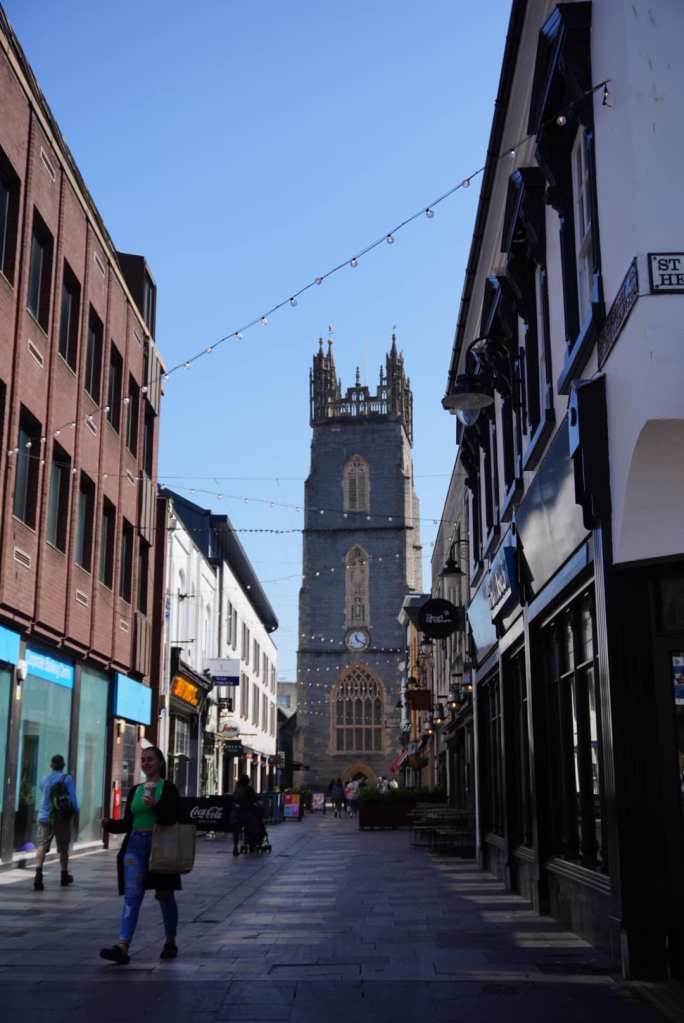
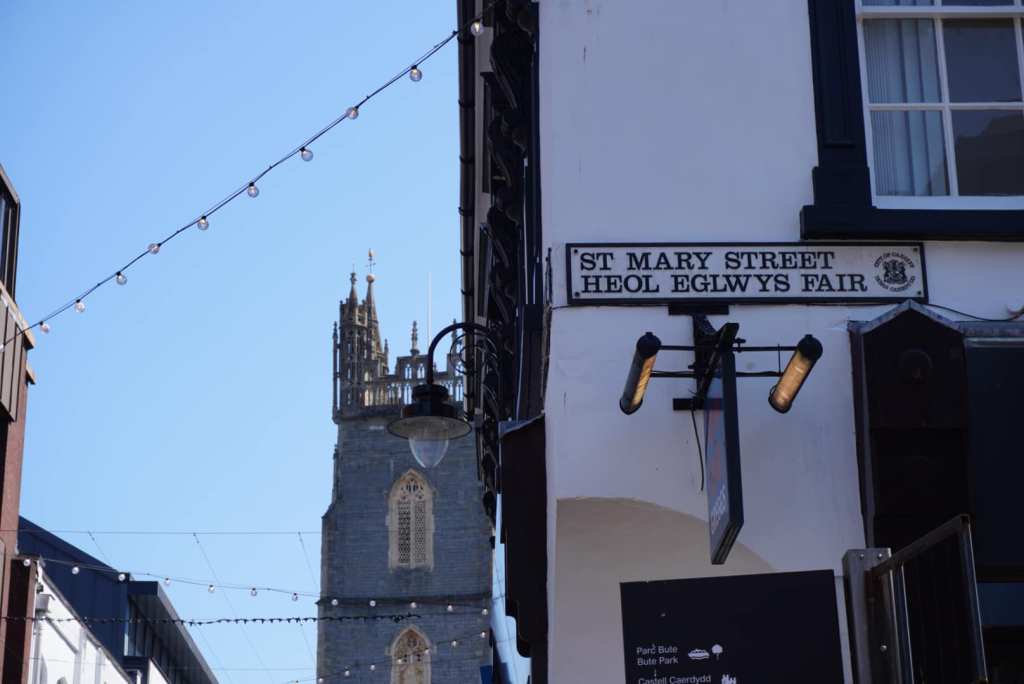
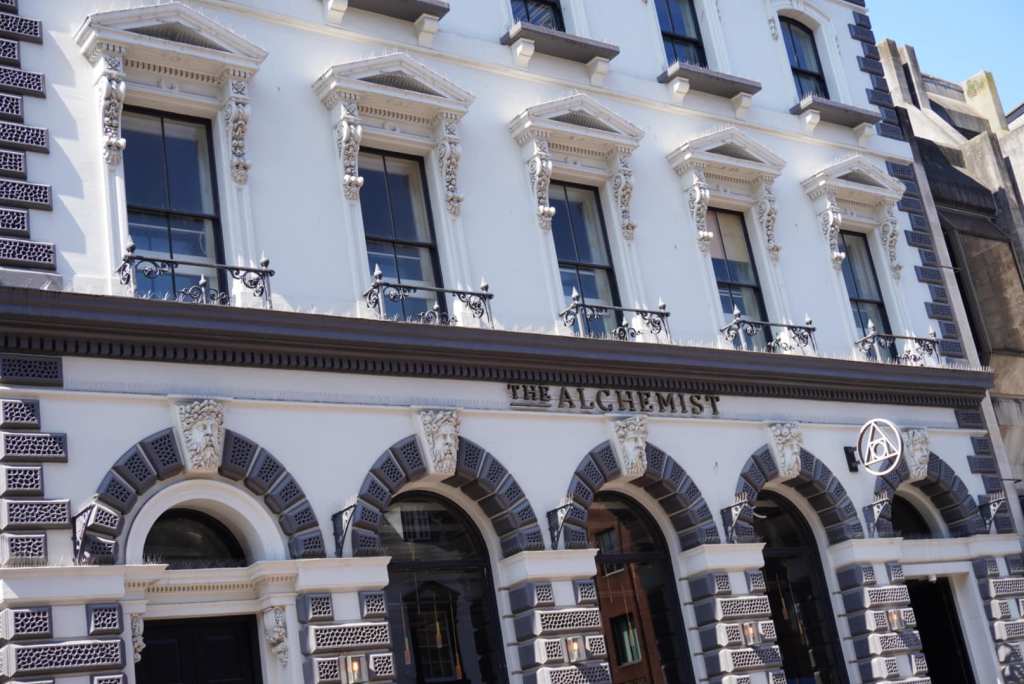
So we wandered. We passed old churches, Victorian façades, busy shopping streets and quieter corners. We stopped because something looked interesting rather than because it had been assigned a slot between 14:15 and 14:40. There were cafés, details above shopfronts, old inscriptions and ordinary city scenes that would probably never appear on a “Top Ten Things to Do in Cardiff” list but became part of how I remember the place anyway.
Travel has a strange way of temporarily repairing our eyesight. At home, we can pass the same building for years without really seeing it. Put us in another city and suddenly we are deeply invested in someone else’s windows, paving stones and decorative cornices. Familiarity is efficient, but it also makes us lazy observers. A trip interrupts that. For a day, everything earns attention simply because it is not ours.
Cardiff also made me think about contradiction, although I promise I did try to resist turning the city into another life lesson. The city seemed comfortable holding several things at once: old and modern, relaxed and busy, unmistakably Welsh and openly multicultural. Nothing appeared to require one identity to disappear before another could exist. That felt familiar.
Human beings spend an impressive amount of time trying to put ourselves into neat categories despite providing very poor material for the task. I can be Filipina and have built a life in Britain. I can miss home while being grateful for the home I have here. I can be ambitious and tired, practical and sentimental, independent and deeply attached to people. I can know exactly what I want in one area of life while having absolutely no clue what I am doing in another. Adulthood has not made me more consistent. It has mostly given the inconsistencies better paperwork.
That may be one reason cities with visible layers interest me. Cardiff Castle does not stop mattering because modern Cardiff exists around it. The waterfront can look contemporary without requiring the older parts of the city to apologise for surviving. Different cultures can share the same streets without cancelling one another out. A city can change and still remain recognisably itself. People probably work in much the same way, although we are less architecturally impressive.
Looking back now, what I remember most clearly is not a perfectly organised sequence of attractions. I remember that suspiciously blue sky. I remember the water catching the light at Cardiff Bay, the Pierhead Building standing red against all that blue, the old stone of the castle, music appearing unexpectedly in the street and the feeling of having nowhere particularly urgent to be. Those details survived long after I forgot the exact order of everything else.
That is probably the advantage of writing about a trip late. Immediately afterwards, I would have told you what we saw, where we walked and which places were worth visiting. With enough distance, memory becomes less interested in itinerary management. It keeps the things it liked and quietly deletes the administrative details. I cannot remember every turn we took through Cardiff, but I remember the atmosphere. Apparently my brain has its own editorial policy.
I also like that Cardiff did not need to be a major expedition to stay with me. Travel does not have to involve a long-haul flight, several currencies and a suitcase that inevitably weighs more on the return journey. A nearby city can be enough to interrupt routine. An old building can make you look at time differently. A harbour can shrink a worry back to its proper size. An unexpected performance can remind you that people carry home with them wherever they go.
None of this means every trip needs to change us. I am becoming increasingly suspicious of the expectation that every holiday, meal, birthday and walk must produce character development. Sometimes you are allowed to visit somewhere because it is interesting, eat because you are hungry and take a photograph because the sky looks unusually good. That is already enough.
Cardiff did give me something, though. It reminded me that some places are best experienced without trying to extract maximum value from every hour. We walked, looked, stopped, listened and allowed the day to be slightly inefficient. For someone who can turn even leisure into project management, that is probably significant progress.
By the time we left, the city had managed to give us waterfront views, a castle, architecture, history, street performance, questions about identity and weather good enough to make me distrust the entire meteorological system. That is a respectable amount of material for one day.
So when I think of Cardiff now, I do not remember one grand revelation. I remember a city that seemed comfortable being many things at once, a day that became better once I stopped trying to measure it, and a blue sky over Wales that looked far too convincing to be British.
I still have questions about that sky.
But Cardiff can keep the secret.
💡 Lesson of the day:

















Leave a Reply