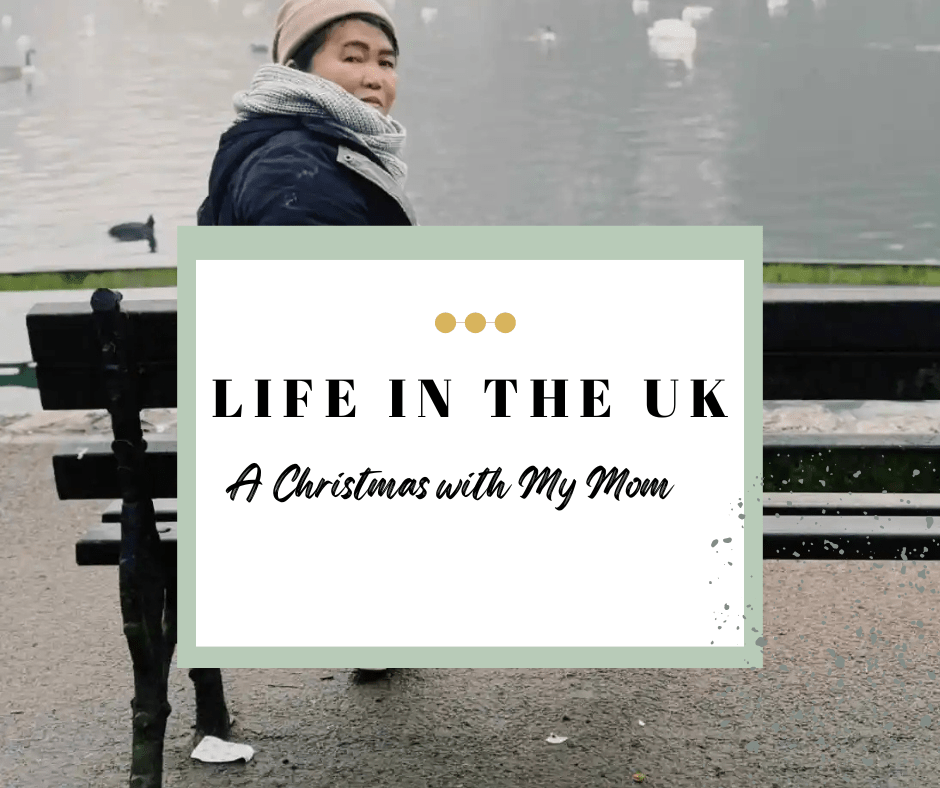
My mother came to the UK in December, which meant two things immediately: I was very happy to see her, and British winter was about to meet a Filipina mother who had already decided, before landing, that she could handle the cold. This confidence lasted impressively well until the temperature introduced itself properly. Suddenly there were scarves, layers, careful steps on icy ground and the familiar Filipino question of whether one really needed this many clothes just to go outside. The answer, as Britain repeatedly demonstrates, is yes. Preferably all of them.
Having Mama here felt strange in the best way because for years she had known my life in the UK mostly through photographs, video calls and stories. She knew the hospital, the weather complaints, the routines and the places I mentioned, but knowing a place through a phone screen is different from actually standing in it. Suddenly she was here, looking at the streets I walk, the shops I visit, the roads I complain about and the grey skies I have learned to consider normal. It felt a little like giving someone a tour of a life I had built while they were thousands of miles away.

One morning we went to the lake. The weather had apparently decided to become artistic: mist over the water, swans moving across it as though they had been given very specific instructions to look elegant, and the sort of cold air that makes you question whether your nose is still attached to your face. Mama sat on an old bench wrapped in winter clothes, and for a moment I just looked at her and laughed to myself at how far life had carried us.
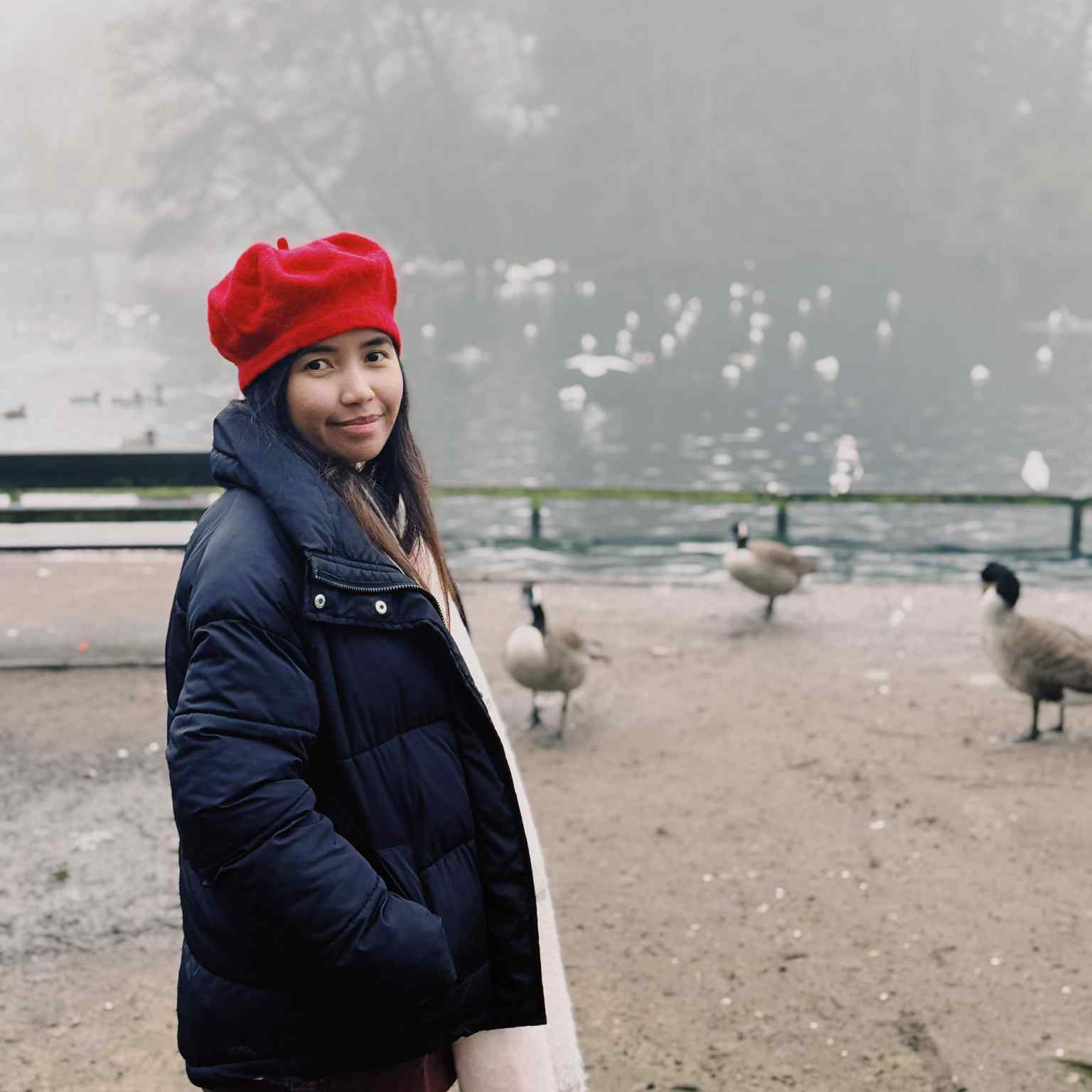




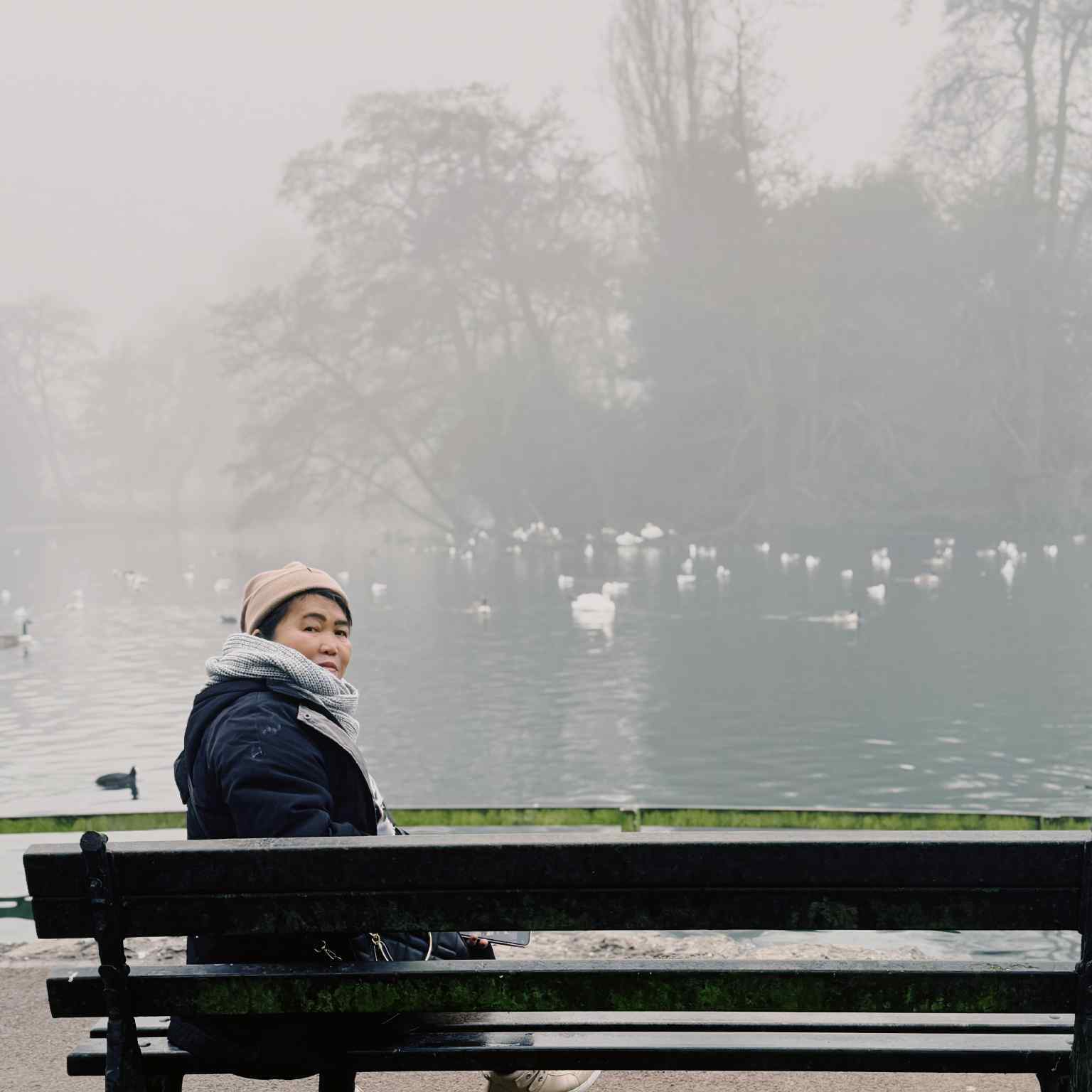
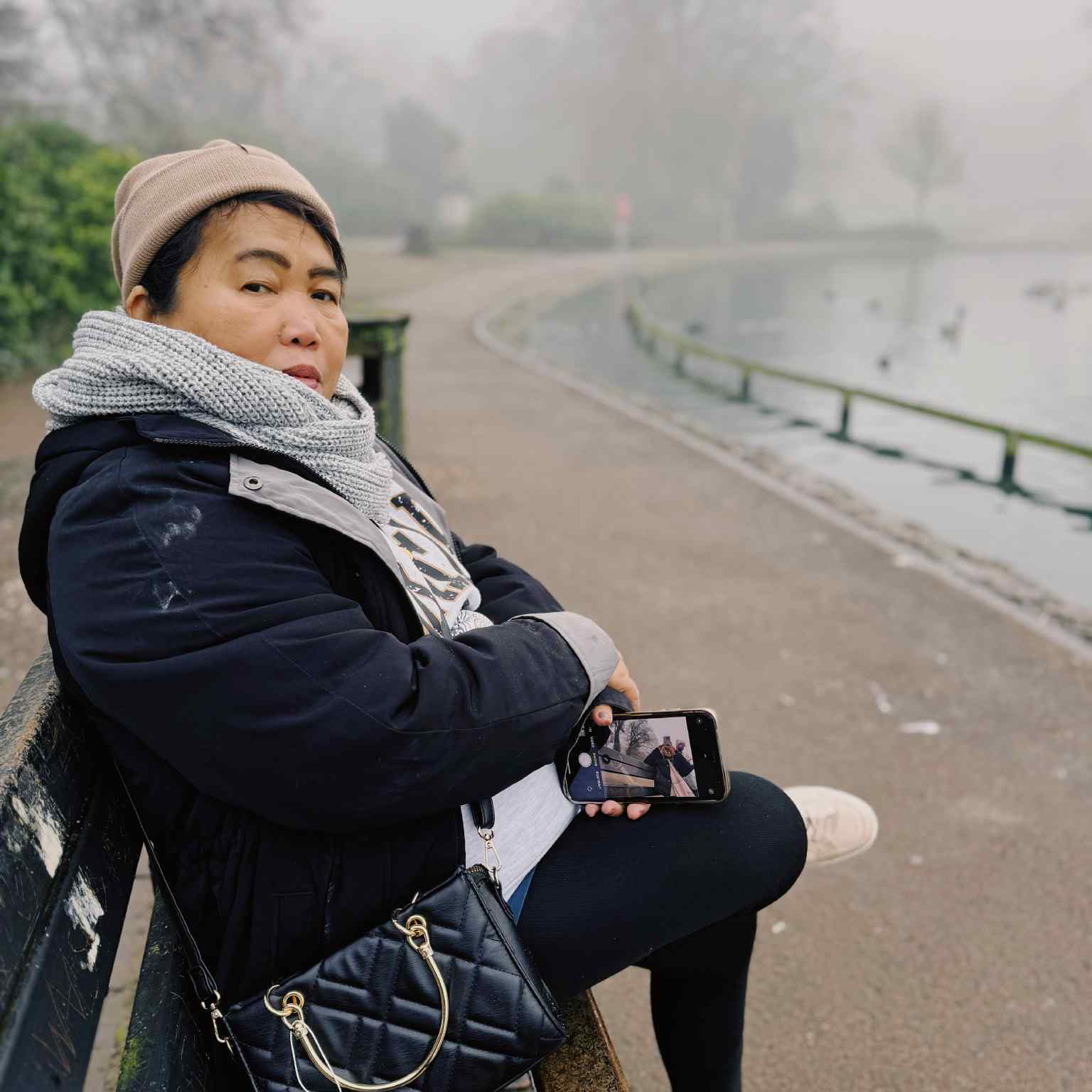
I had sat beside this woman in jeepneys, waited with her outside school gates, followed her around markets and spent years seeing her in places that belonged completely to my childhood. Now here we were beside a lake in England watching swans behave as though they owned the property. Life has a strange sense of geography.
I think she enjoyed the novelty of it all, although Filipino mothers have a wonderful talent for remaining practical even in picturesque surroundings. You can place them in front of a beautiful winter lake and some part of their brain is still capable of asking whether you have eaten yet. This may be the most reliable law in Filipino family life.
Watching her explore my world made me notice it differently too. Places I had stopped paying much attention to suddenly became interesting again because she was seeing them for the first time. A lake was no longer just somewhere I had passed before. A Christmas market became something worth properly looking at. Even the cold became part of the experience, although I suspect Mama would have happily removed that particular feature from the itinerary.
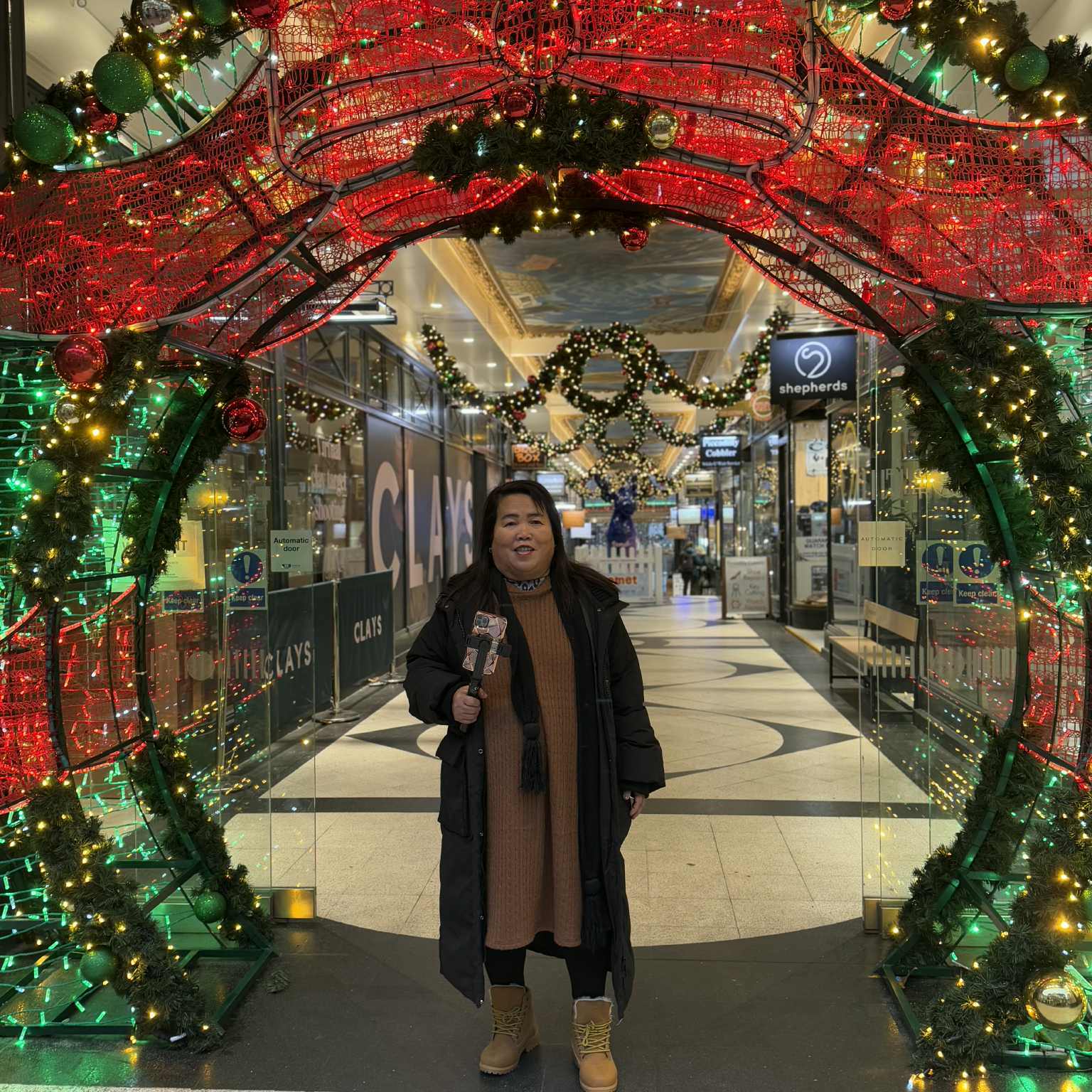
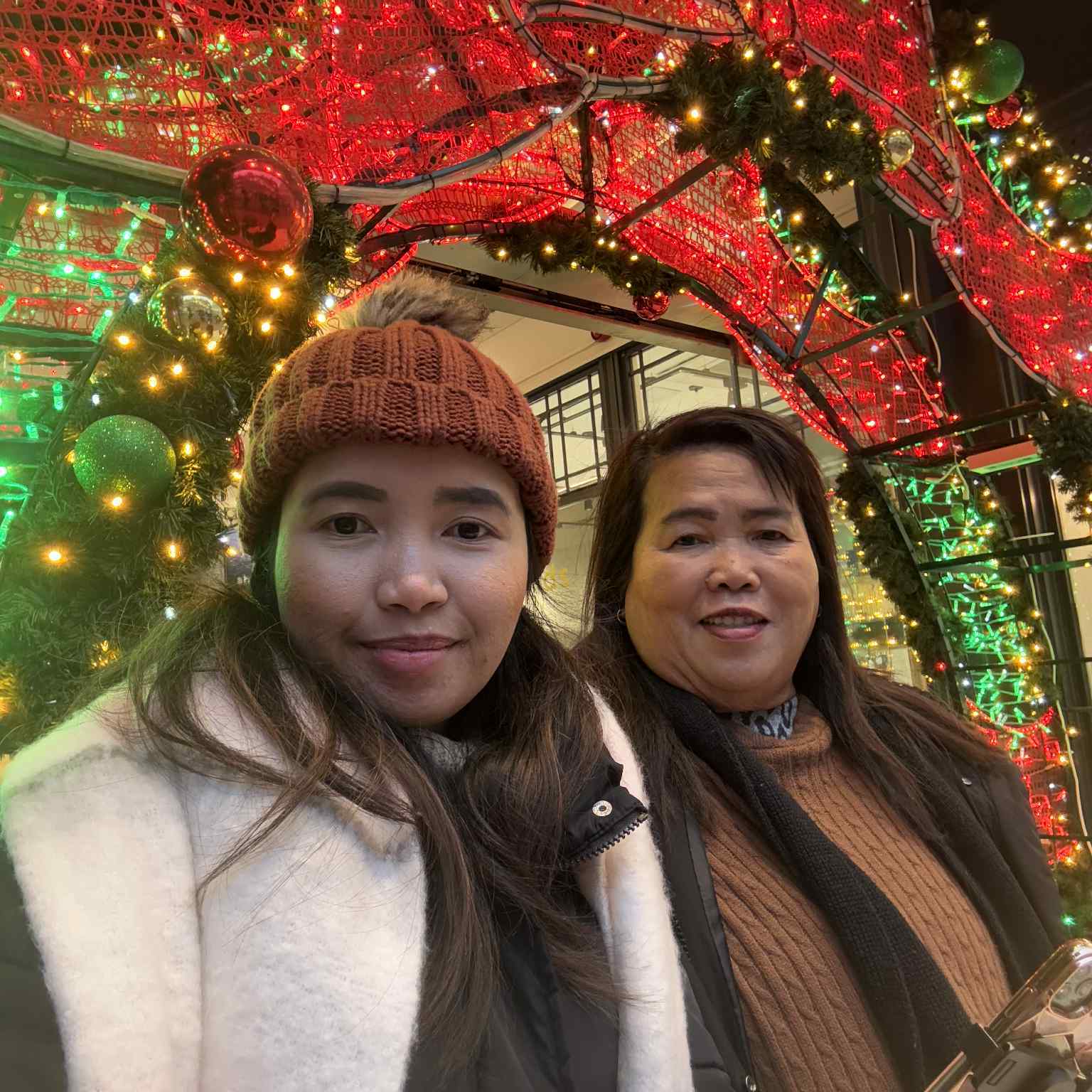
Then came the Christmas markets, where Britain apparently tries to compensate for having approximately four hours of daylight by switching on every decorative light available. The city looked beautiful. There were stalls, music, people carrying hot drinks, the smell of food everywhere and enough Christmas decoration to make subtlety officially unavailable until January.
Mama was delighted.
I was delighted that she was delighted.
My bank account remained neutral.
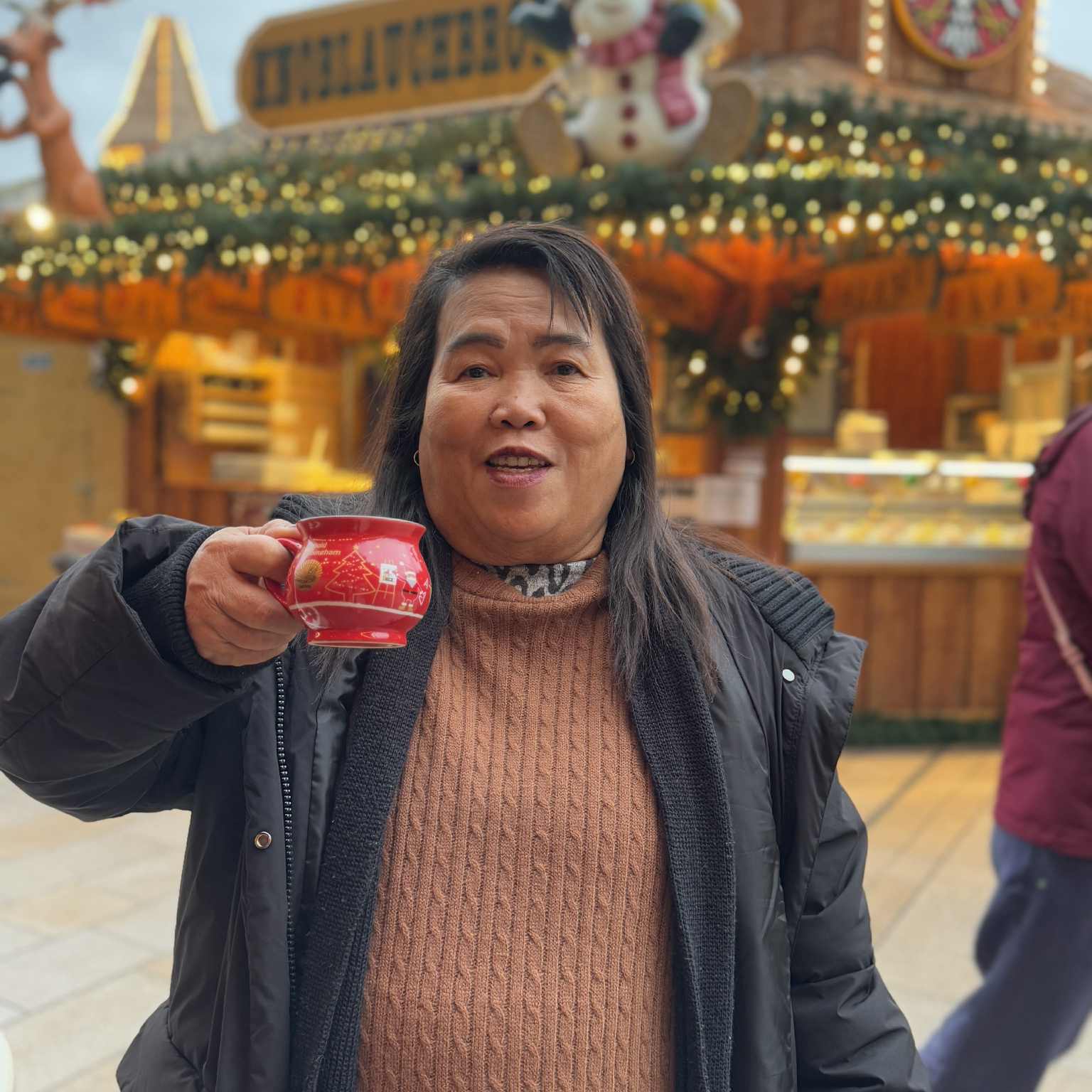
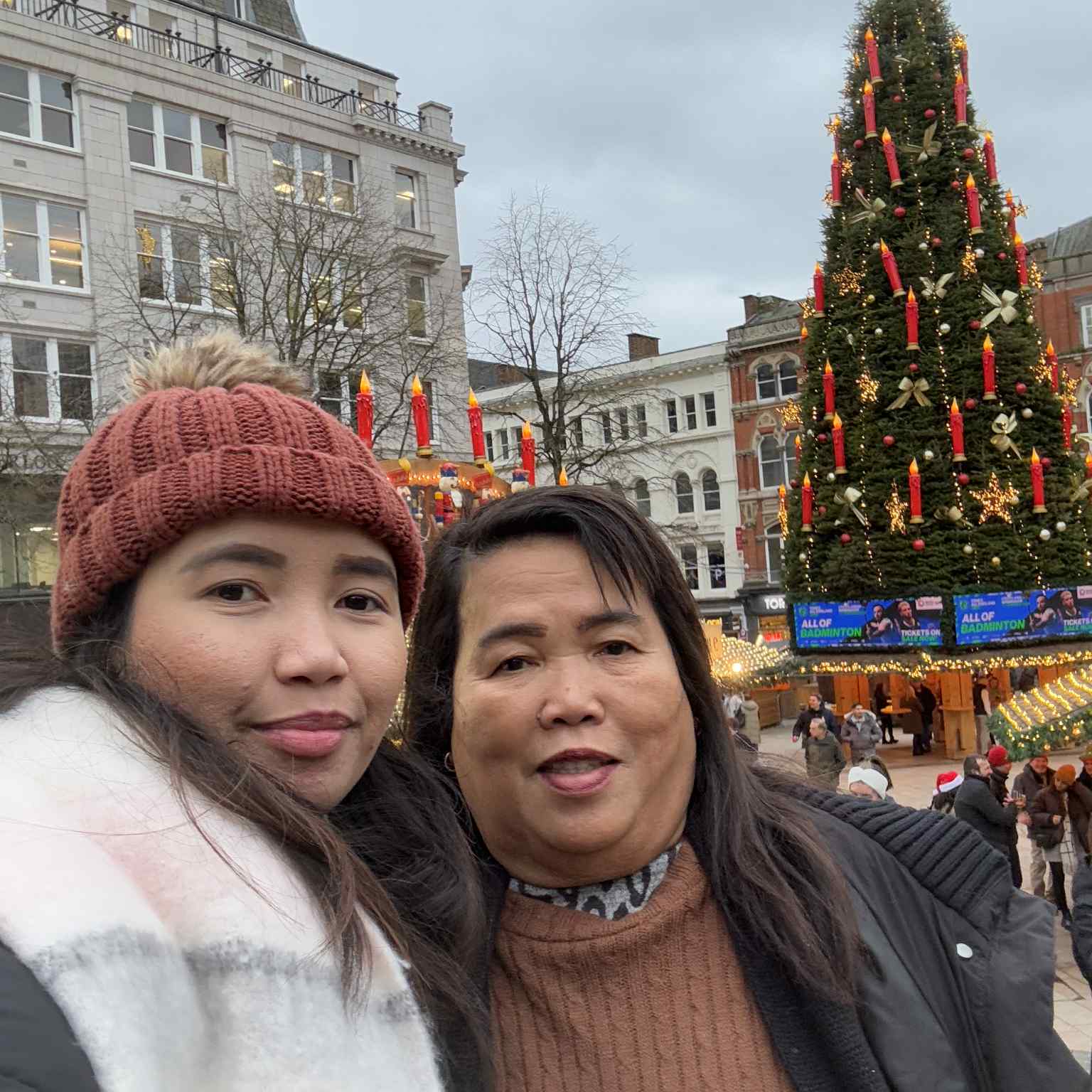
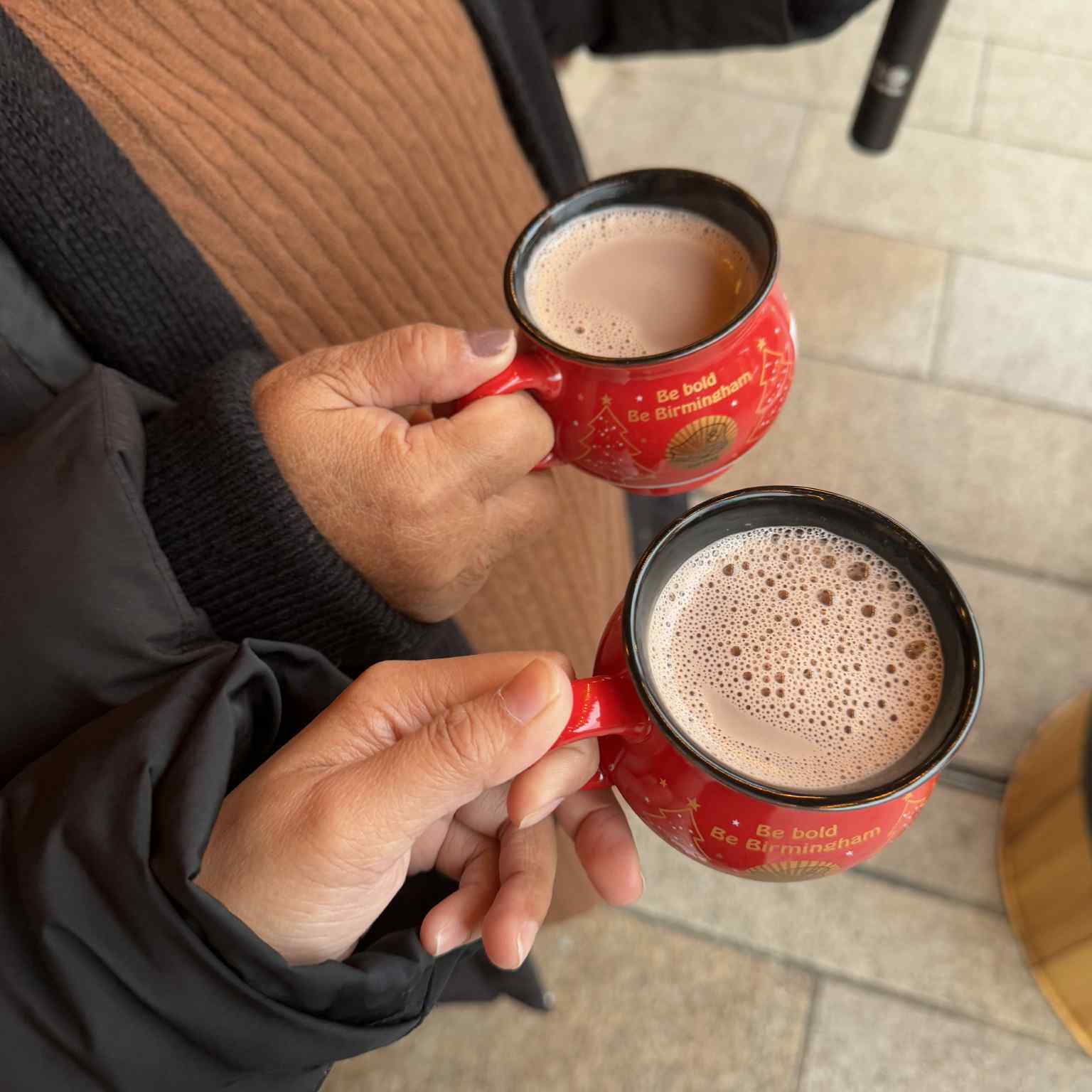

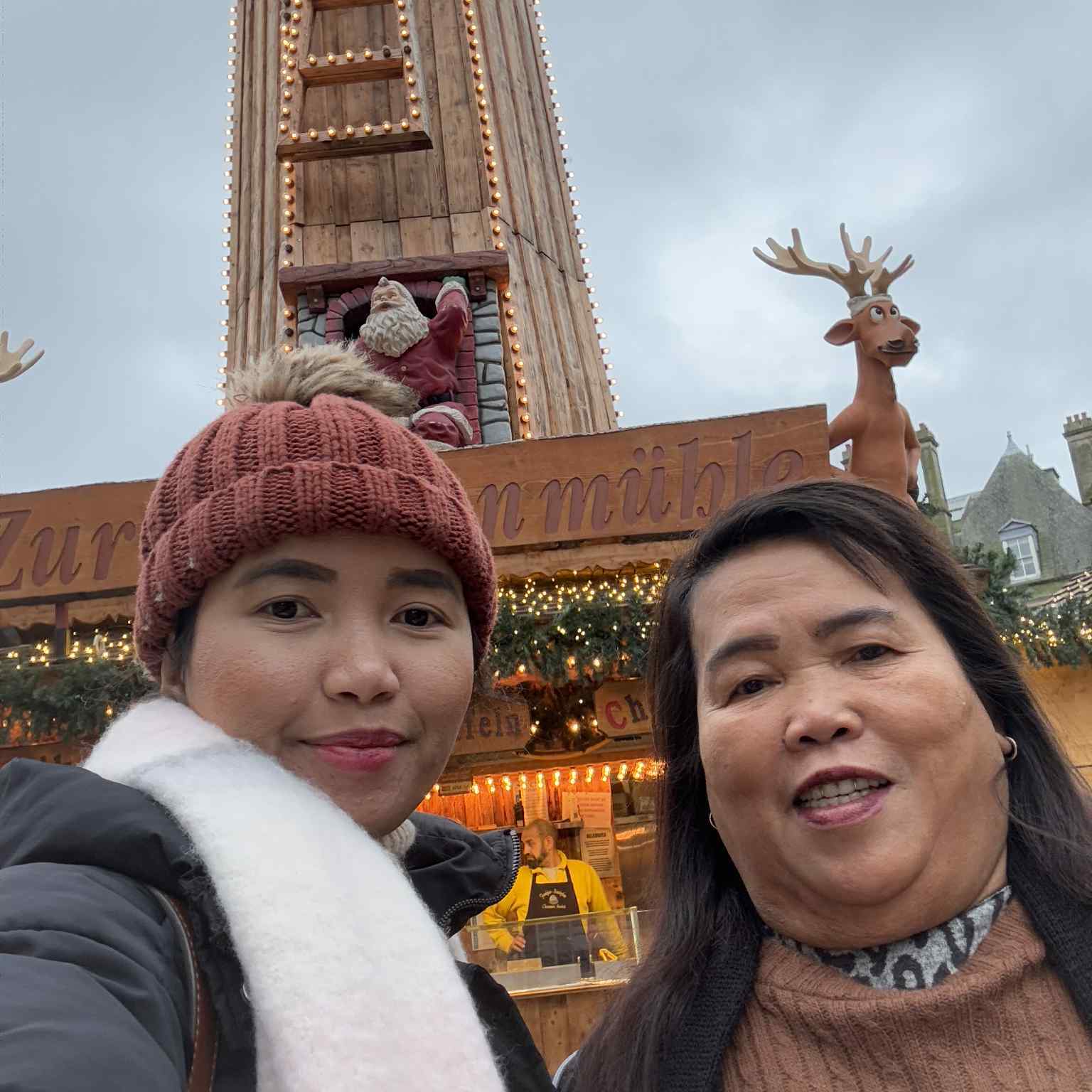
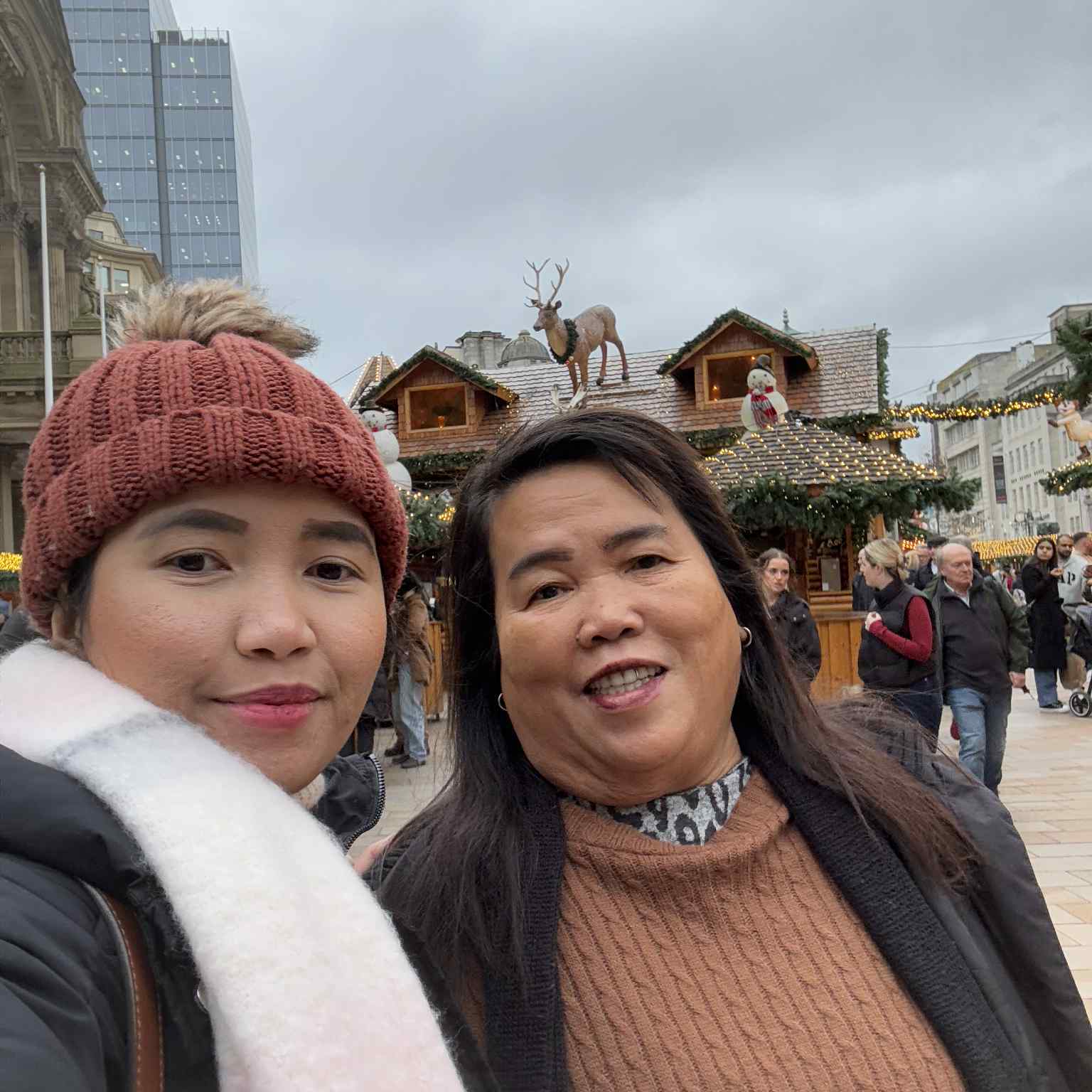
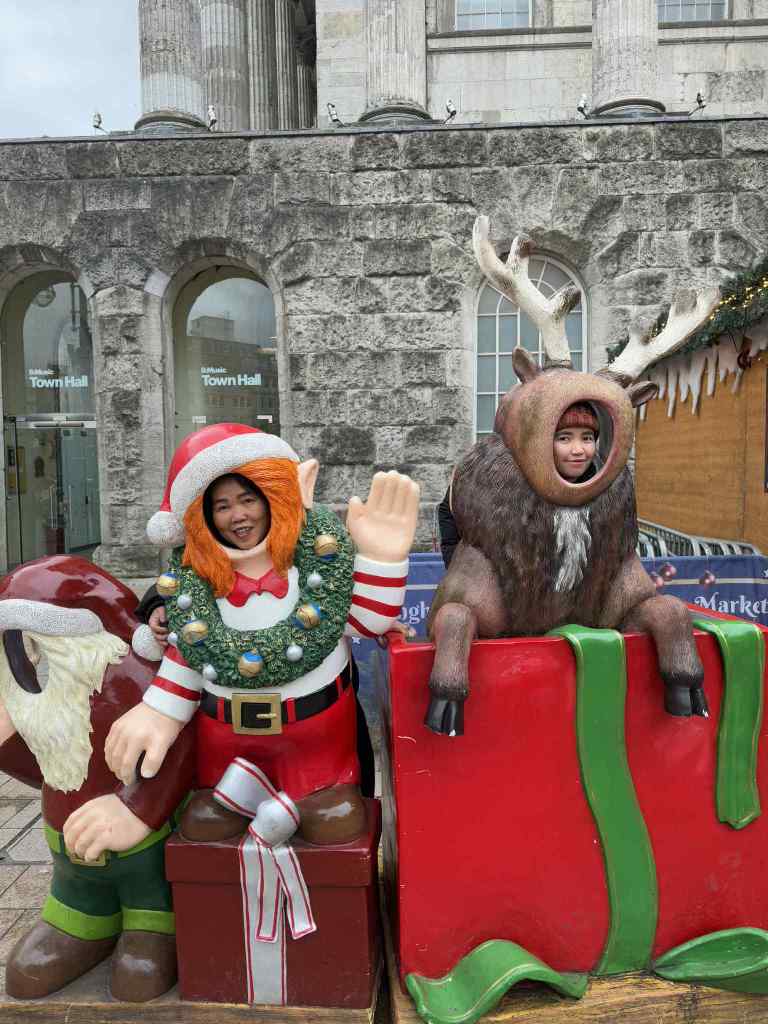
She held a drink in one of those Christmas bauble-shaped cups and raised it as though she had been attending festive markets all her life. Then came the European hotdog, which deserved its own moment because it was enormous, heavily decorated and clearly had no interest in portion control. She took a bite and laughed, which immediately made the whole purchase worthwhile.
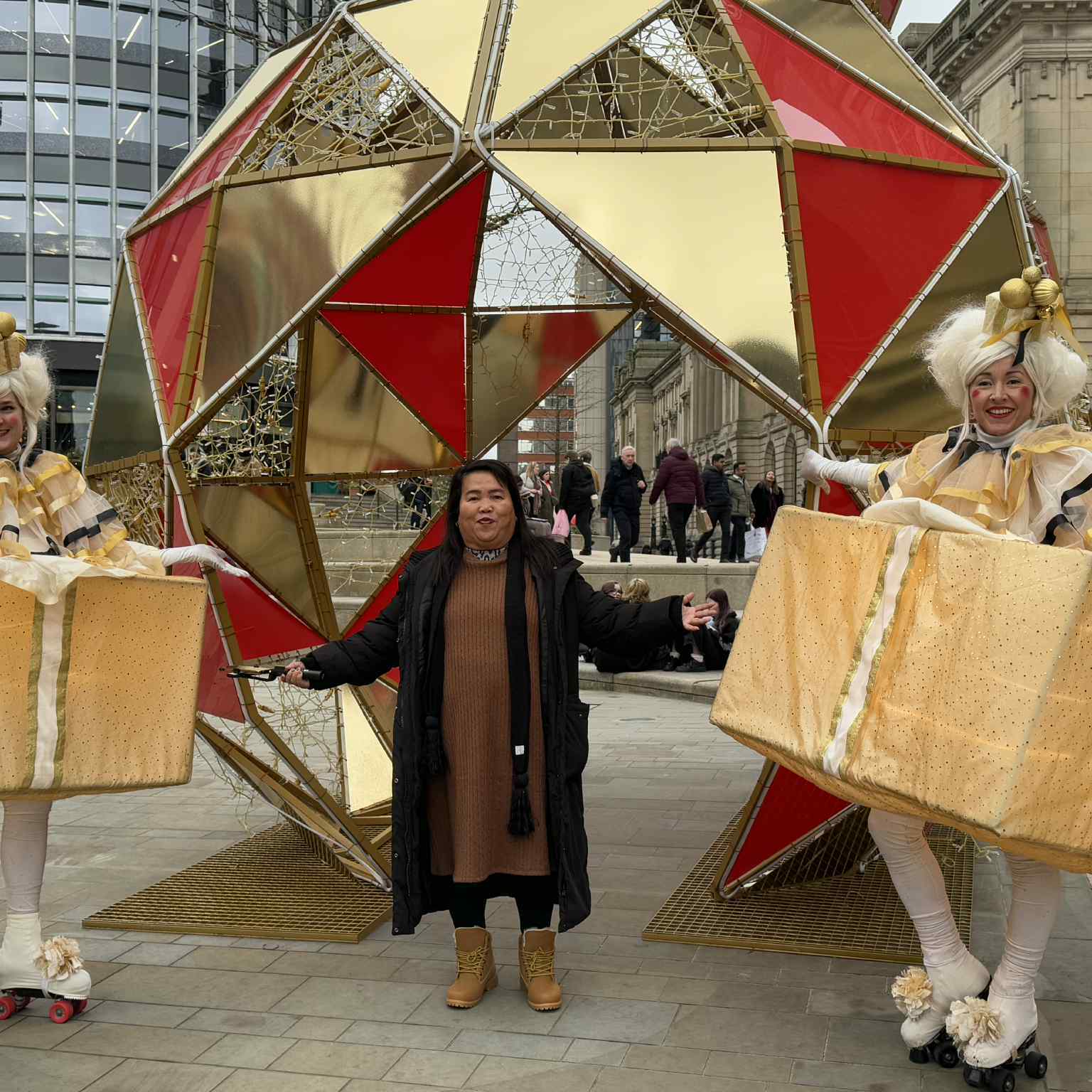
That became one of my favourite parts of having her here: watching her encounter completely ordinary things with fresh eyes. A festive drink. A market stall. A ridiculously long hotdog. People dressed as presents and decorations dancing around strangers. None of it was life-changing, but it did not need to be. Sometimes the funniest and best memories are built from someone you love being slightly amused by something you have already stopped noticing.
I also realised how strange it must have been for her to look at the adult life of the child she once worried about constantly. Mothers remember versions of us we barely recognise anymore. They remember school fees, packed lunches, illnesses, exams, stubborn phases, poor decisions and whatever strange ambitions we announced at seventeen. They remember when our entire future existed only as hope and prayer.
Then one day they visit your home in another country and you are the one asking whether they are warm enough.
That reversal caught me more than I expected.


For most of my life, Mama was the one checking everything. Had I eaten? Did I bring what I needed? Was I cold? Was I safe? Had I remembered the thing I absolutely insisted I would not forget?
Now I found myself doing it to her.
“Mama, are you warm enough?”
“Do you need another layer?”
“Careful there.”
“Have you eaten?”
Apparently motherhood is hereditary through repeated exposure.
I am not claiming the roles completely reversed. Filipino mothers do not surrender authority that easily. You can be a fully grown adult with a career, bills and several years of independent living and still somehow become twelve years old when your mother gives you a certain look. Some systems are too established to reform.
But I liked taking care of her.
I liked making sure she was comfortable. I liked bringing her places, buying food, taking photographs and seeing her enjoy things that once felt impossibly far from the life we knew. It was not about repaying her for everything she had done for me because that kind of accounting would be ridiculous. You cannot calculate a mother’s life in receipts and settle the balance over Christmas.
It was simply my turn to do some of the looking after.
The photographs from that December make me smile because they capture such an odd combination of worlds. Mama beside a misty British lake. Mama among Christmas lights. Mama holding a festive cup. Mama eating food she would never have encountered during the ordinary days of my childhood. In the pictures, she looks completely at home in places that would once have sounded very far away.
And perhaps that is what stays with me most.
Not the market itself. Not the decorations. Not even the heroic hotdog.
It is the fact that she was there.
For years, so much of my adult life happened at a distance from my family. There were birthdays watched through screens, stories told over calls and updates squeezed between different time zones and busy schedules. Living abroad teaches you how much connection can survive distance, but it also teaches you that a video call can never quite reproduce someone sitting beside you on an ordinary bench.
That December, I did not need a screen.
She was simply beside me.
We could walk slowly. Take too many photographs. Decide where to eat. Complain about the cold. Laugh at something ridiculous. Go home tired and do it all again the next day.
It sounds ordinary because it was.
That is why I treasure it.
As I get older, I have become less interested in forcing every meaningful memory to sound profound. Some memories are precious because nothing dramatic happened. Everyone was safe. Everyone was fed. Nobody was rushing. You had time with someone you love and, for once, you knew enough to appreciate it while it was happening.
December gave me that.
It gave me the slightly surreal sight of my mother wrapped in winter clothes thousands of miles from the place where she raised me. It gave me photographs I know I will keep returning to. It gave us markets, cold mornings, hot drinks and enough festive food to justify several future walks.
And it gave me a very funny reminder that no matter how adult your life becomes, your mother can still visit and immediately make the whole place feel slightly more like home.
I spent years building a life far away from where I started.
Then Mama came to visit it. She inspected the weather, survived the cold, approved of the food, posed with the Christmas decorations and, as far as I know, left no formal complaints.
I will consider the inspection passed.


















Leave a Reply