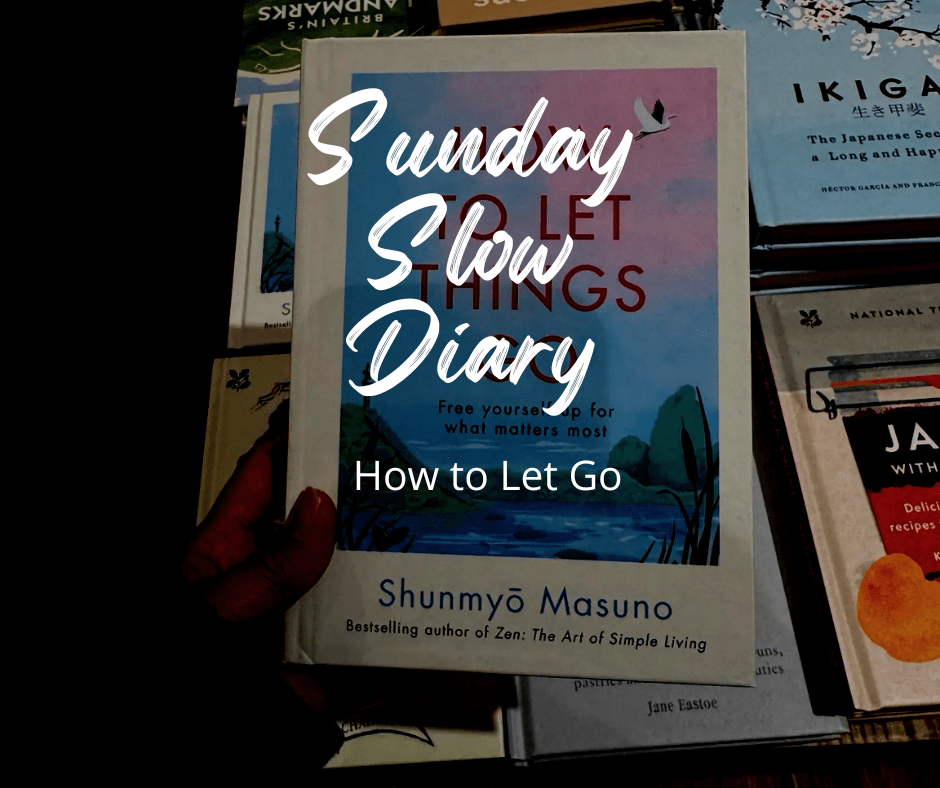
I did not go to the mall looking for wisdom. I went there with no particular plan, which is usually how trouble begins. Give me a list and I can be sensible. Let me wander freely and there is a fair chance I will come home with something I never knew I needed, a receipt I would rather not inspect too closely, and a new opinion about storage baskets. That day, though, I ended up in a bookshop. I was not looking for a particular title. I was doing what I always do in bookshops: picking things up, reading the backs, opening random pages and behaving as though I have unlimited shelf space at home. Then I found a book about letting go. I read a few pages, felt mildly exposed by a stranger’s sentences, and stood there wondering why a book I had not invited into my life had suddenly decided to conduct an assessment.
The funny part is that I did not buy it. This matters because I have historically treated bookshops as places where self-control goes to die. I can convince myself that almost any book is necessary if given enough time. Philosophy? Obviously useful. Psychology? Essential. A novel about a woman disappearing into the Norwegian wilderness? I may need that emotionally. But this one went back on the shelf. I walked out empty-handed, which felt suspiciously mature. Unfortunately, the thought came with me. Apparently you can leave the merchandise behind and still take home the problem.
The question that followed me was annoyingly simple: what am I still carrying because I have become used to carrying it? Not because it is useful. Not because it is helping. Just because it has been around long enough to qualify as mental furniture. We do this constantly. Someone says something irritating on Monday and by Wednesday we have replayed the conversation from six different camera angles. We construct better replies long after the other person has forgotten the discussion. We revisit decisions that have already been made, imagine futures that never happened and keep old disappointments polished enough to remain emotionally operational.
My brain is particularly talented at this. It does not simply have tabs open; it opens duplicate tabs, forgets which one is playing audio and then complains about the battery. A perfectly ordinary week can feel exhausting when half the tiredness is coming from things that are not actually happening anymore. Nothing dramatic needs to occur. Sometimes you are simply mentally hosting too many former conversations, hypothetical disasters and unfinished thoughts at the same time. I have spent entire evenings solving problems that did not exist outside my own head. The solutions were excellent, for the record. Completely unnecessary, but excellent.
I used to think constant thinking meant I was being responsible. If I worried about something long enough, surely that proved I cared. If I analysed every possible outcome, I was being prepared. If I revisited a conversation enough times, I might eventually discover the perfect interpretation. This sounds reasonable until you realise you are conducting a full internal review at 1 a.m. over something another person probably forgot before dinner. Reflection can be useful. Repetition wearing spectacles and carrying a clipboard is still repetition.
That was probably what caught me about the idea of letting go. I had always imagined it as something dramatic. A final conversation. A deleted number. A door closing. Possibly rain. Definitely a soundtrack. In reality, most things leave much less impressively. You simply stop checking. You stop rehearsing the argument. You hear someone’s name and notice your body no longer reacts. You remember something that once hurt and realise it has become information rather than an active emergency. Nobody applauds. There is no certificate. One day, something that occupied half your mind has been demoted to a minor administrative file.
And not everything we need to release is a person. Sometimes it is an expectation. A timeline. A version of yourself you are still trying to impress. I think this is harder because we become loyal to old identities. The ambitious version. The reliable one. The one who always copes. The one who has a five-year plan and colour-codes it. The one who never needs help because apparently needing help would collapse civilisation. Some of those versions of us were useful. They got us through difficult years. They protected us, pushed us, kept us moving. But something can have served you well without receiving a lifetime contract.
I am slowly becoming less interested in forcing my present self to honour every decision made by a younger woman who did not yet know what was coming. She had plans. Some were sensible. Some were ambitious. Some were questionable. She did her best with the information available at the time. I do not need to spend the rest of my life fulfilling every promise she made to herself simply because she once wrote it down with confidence. People change. Priorities change. Sometimes the bravest thing is not persistence but admitting that you no longer want what you spent years wanting.
The same applies to people and experiences. Something does not become fake merely because it ended. A friendship can have been genuine and still belong in the past. A dream can once have mattered enormously and later lose its grip. A disappointment can shape you without being allowed to run the rest of your life. I used to think letting go required downgrading the past, as though the easiest way to move forward was to decide that none of it mattered. I do not believe that anymore. I can admit that something mattered and still refuse to carry it into every room I enter.
Closure is another concept I have become suspicious of. It sounds wonderfully organised, like life will eventually issue a final report explaining exactly what happened, why it happened and what lessons should be filed under Personal Growth. Unfortunately, many situations end with terrible paperwork. Some questions remain unanswered. Some people never explain themselves properly. Some conversations simply stop. If peace depends on receiving a satisfactory explanation from everybody who has ever confused or disappointed us, many of us are going to be waiting a very long time.
I have learned that sometimes the ending is simply the fact that it ended. That is all the information available. You can either keep reopening the file or get on with your afternoon.
Faith makes this even more interesting because surrender is one of those words that sounds beautiful until it involves something you genuinely care about. I like knowing what comes next. I like explanations. I like plans. Ideally, my prayers would come with a reference number, estimated processing time and a polite email confirming that my request has been received. Apparently heaven has declined to adopt this system. Some prayers have been answered quickly. Others have taken routes I would not have selected. A few remain unresolved, despite what I consider perfectly reasonable follow-up enquiries.
For me, faith has become less about pretending I do not want a particular outcome and more about admitting that I do while also accepting that I cannot control how everything unfolds. That is much harder. “Whatever happens is fine” is easy to say when you are not emotionally invested. Trust becomes real when you have a preference and still loosen your grip enough to accept that the answer may look different.
I am not particularly elegant at this.
I can surrender something to God at breakfast and request a progress report by lunch.
Still, I think that counts as practice.
The strange thing is that carrying less has not made me care less. If anything, I have more attention for what is actually happening when I am not spending so much energy negotiating with what has already happened. There is more room for the people who are here now. More room to enjoy an ordinary day without comparing it with an imaginary version that was supposed to be better. More room to notice the meal in front of me, the conversation I am actually having, the life that exists rather than the life I thought I would have by now.
That day after the bookshop was wonderfully ordinary. I ate. I walked around. I had a drink. Nothing transformational happened. I simply noticed that I was enjoying things more because I was not mentally dragging every unresolved issue around with me. It turns out an ordinary afternoon becomes much more pleasant when your brain is not hosting a tribunal.
I am also trying not to turn “letting go” into another task I can fail. That would be very on-brand: take an idea about releasing pressure and immediately create performance criteria for it. Some things take longer. Some memories remain tender. Some worries return after we thought we were finished with them. That does not mean we have gone backwards. It may simply mean we have to decide more than once that we are not going to feed the same thought today.
Maybe that is what letting go actually looks like most of the time. Not throwing something dramatically into the sea, but noticing you picked it up again and putting it back down. Then doing the same thing tomorrow. And possibly Thursday. Repetition, unfortunately, appears to be involved in almost every form of personal development. Very inconsiderate.
I still have things I am carrying. Of course I do. I am not writing this from a mountaintop after achieving complete emotional detachment. I still overthink. I still revisit conversations. I still occasionally attempt to solve other people’s behaviour as though there is an answer key hidden somewhere. I still catch myself trying to control outcomes that have not requested my management.
The difference is that I notice it sooner now.
And sometimes that is enough.
So no, I did not buy the book. I left it exactly where I found it, which may be the most appropriate ending possible for a story about letting go. I went into the shop with nothing in particular on my mind and came out with no shopping bag, no receipt and one irritatingly useful question.
For once, personal growth cost me nothing.
Although, knowing me, I may still go back and buy the book.
Still putting things back on the shelf,
Anj






















Leave a Reply