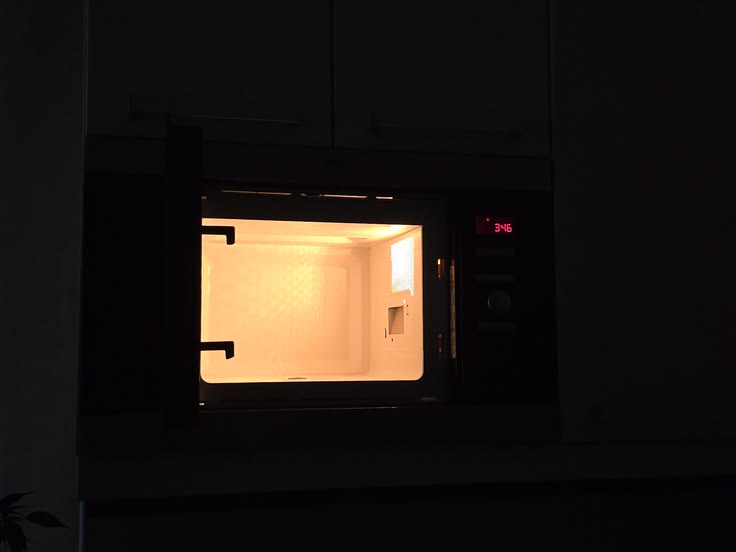
I was standing in front of the microwave watching thirty seconds behave as though it had been allocated an entire afternoon. There is something deeply unreasonable about how slowly time moves when you are staring directly at it. Thirty seconds while doing anything else disappears unnoticed. Thirty seconds while waiting for food becomes a philosophical experience. By second twelve, I had already checked the display twice, opened the cupboard for no reason and begun questioning whether patience was genuinely a virtue or merely something invented by people whose food was already warm.
There is something comforting about a countdown, though. However impatient you become, at least you know there is an end. Twenty seconds becomes ten. Ten becomes five. Eventually the machine beeps, your food is warm, and civilisation continues. Life is far less considerate. Some of the things we wait for come with no timer, no estimated completion date and no helpful little message saying, “Your request is being processed.” You pray, wait, carry on with your life, pray again, and from where you are standing, absolutely nothing appears to move.
Perhaps that is why waiting on God has always tested me more than believing in Him. I can cope remarkably well with uncertainty when uncertainty has a deadline. Give me a date and I will organise myself around it. Give me a rough timeframe and I will probably survive. Give me silence, no visible movement and the instruction to trust, and suddenly I have several follow-up questions and, if necessary, a spreadsheet.
Twenty-year-old me would have understood this immediately. She liked timelines. She wanted to know when things would happen, how old she would be when they did, whether the plans survived and at what point life finally stopped feeling uncertain. She had already built an invisible timetable for adulthood without anyone formally asking her to: education, career, stability, love, home, answered prayers. Somewhere in her head, each one had an acceptable arrival date. And, naturally, life ignored most of it.
Nobody had handed her that timetable. There was no official document declaring that education must lead neatly into career, career into stability, love must appear at a socially respectable age and prayer should eventually produce recognisable results. She had simply absorbed the idea that life ought to progress in a sensible sequence. Work hard, pray sincerely, make good decisions, and surely the rest would arrange itself with reasonable punctuality. I do not blame her. I still occasionally operate under the same theory, except now I am thirty-six, old enough to know that life has never signed that agreement and stubborn enough to keep checking whether perhaps it has changed its mind.
Back then, delay never felt neutral. It felt personal. An unanswered prayer could feel suspiciously like being overlooked. I carried different versions of the same question everywhere: When? When will this happen? When will I finally get there? When will the opportunity come? When will God answer? When will everything settle enough for me to stop waiting and simply enjoy my life? There is something exhausting about arranging your entire emotional world around a future date you cannot see. You can become so focused on what has not happened that the life already happening begins to look like scenery behind the main event.
People speak beautifully about waiting once the answer has arrived. Afterwards, it becomes preparation. Redirection. Growth. God’s timing. A testimony with a satisfying ending and perhaps a verse written over a sunset. While you are actually inside the waiting, however, it rarely feels that elegant. Often it feels repetitive. You wake up and the situation is still there. You pray again. Nothing obvious changes. Someone else receives precisely the thing you have been asking for, and you congratulate them sincerely while a smaller, less spiritually impressive part of you wonders whether heaven has misplaced your paperwork.
Faith can become rather untidy there.
I have had seasons like that. Dreams I carried for so long that they seemed to gain weight simply through being carried. Opportunities I wanted and did not receive. Plans arranged carefully enough to deserve their own folder, only to collapse with an efficiency I might have admired had they belonged to somebody else. Sometimes my prayers were so detailed that, looking back, I suspect I was less asking God for guidance and more submitting a finished proposal for approval. I had already considered the outcome, Lord. The preferred timeline is attached. Please sign on page four. He did not always sign. I found this inconvenient.
Believing in God was rarely the difficult part for me. Trusting God while privately disagreeing with how He seemed to be managing the situation was harder. “God’s timing is perfect” is a beautiful sentence when the timing has just delivered something we wanted. It becomes much more demanding when months become years, when you have done everything you know to do and still cannot see movement. Some prayers begin as long, careful conversations and eventually become one exhausted sentence because every possible variation has already been said. Lord, I do not understand this.
Perhaps that is still faith.
Looking backwards, I can now see that some periods I labelled empty were not empty at all. Circumstances were changing beyond my view. People were moving into places that would later affect mine. Opportunities I wanted did not yet exist. Paths I thought had closed permanently eventually made sense in ways I could not have predicted. And then there is the possibility my younger self would have particularly disliked: sometimes I was the unfinished part of the answer.
We are remarkably confident about being ready for blessings. Of course we are ready. We have prayed repeatedly. We have imagined the outcome. We have mentally rehearsed how grateful we will be when it arrives, preferably before Friday. But wanting something and being ready to carry it are not identical. There are responsibilities in my life now that younger me would have requested enthusiastically but would not have handled in the same way. There are things I appreciate precisely because I remember not having them. There are situations I can manage now because something earlier frustrated me, humbled me or forced me to develop skills I did not realise I would eventually need.
Preparation has poor public relations because it rarely introduces itself. Sometimes it looks like beginning again after you had already announced you were moving forward. Sometimes it looks like someone else receiving the opportunity you wanted. Sometimes it is an ordinary year with nothing impressive to report. Nobody looks at those seasons and says, “Wonderful, I appear to be undergoing essential character development.” Usually we call them slow, frustrating or unfair.
That is probably why the image of a seed beneath soil makes more sense to me now. From above, the surface looks almost offensively inactive. Dirt. Nothing else. If the seed could see only what we see, perhaps it would panic too. Yet roots form before anything appears above ground. We prefer flowers because flowers are visible, photogenic and reassuring. Nobody uploads a picture of an empty patch of soil with the caption, “Excellent root development happening below.” But without the hidden part, the visible part has nothing strong enough to hold it. Perhaps some of my years were root years. I certainly did not call them that while living them.
There are also things I once wanted desperately that now make me grateful they never became mine. I do not want to turn every disappointment into a disguised blessing, because that can become dishonest very quickly. Some losses remain losses. Some questions never resolve themselves into something comforting. Faith does not require us to decorate every wound until it resembles a lesson. But there are also prayers I once repeated with complete sincerity and, years later, found myself thanking God for not answering in the way I requested. There is something mildly embarrassing about eventually thanking God for the same answer you previously complained about.
Time has a sense of humour.
What changed was not always the answer. Sometimes I changed. Distance allowed me to see things that had been impossible to see while I was emotionally pressed against the problem. We make complete judgments using incomplete information because incomplete information is all we possess at the time. When we cannot see movement, we assume nothing useful can be happening.
I used to read the words from Isaiah—“My thoughts are not your thoughts, neither are your ways my ways”—and find them comforting. I still do, though I now also find them slightly inconvenient. Believing God’s ways are higher sounds lovely until it requires accepting that my beautifully organised plan may be wrong. I happen to like my plans. I spend time on them. They make excellent sense to me. Yet if every prayer I made in my twenties had been granted exactly as submitted, I sometimes wonder what sort of life I might accidentally have constructed.
There may have been people I would have kept simply because losing them frightened me more than admitting they no longer belonged in my life. There may have been opportunities I would have accepted because they came quickly rather than because they were right. There may have been things I would have called blessings simply because they resembled what I had requested. I will never know. We do not receive alternate versions of our lives to compare at the end. We receive the one we are living.
Looking backwards, however, I can identify moments when timing mattered. Opportunities came when I had more experience. Lessons I resented became useful later. People entered my life at times when their presence meant something it could not have meant years earlier. Some prayers took long enough that the woman receiving the answer was almost a different person from the one who had first asked. The earlier version wanted the answer immediately. The later version sometimes understood why immediately might not have been kind.
I pray differently now, although certainly not with perfect spiritual maturity. I still ask specifically for what I want. I still make plans. I still study, prepare, apply, work and hope because trusting God has never meant sitting on the sofa waiting for heaven to complete the paperwork on my behalf. The difference is that I am slowly learning not to grip every outcome so tightly that any deviation feels like betrayal.
There is a difference between making a plan and worshipping it.
Twenty-year-old me would have needed that sentence repeated. She compared timelines far too much. Thirty-six-year-old me occasionally needs the refresher course too. It is difficult not to compare when somebody else receives the very thing you have been asking for. Their career moves forward. Their relationship progresses. Their house appears. Their family grows. Their prayer seems to receive a reply while yours remains stubbornly unresolved. Comparison can take another person’s good news and somehow translate it into criticism of our own lives.
But lives are terrible at synchronising. Someone else’s twenty-seven tells me almost nothing about what my thirty-six should look like. I wish I could make my younger self understand that before she spends so much energy wondering why another person appears ahead. Then again, perhaps she needs to waste some of that energy. Certain lessons seem determined to become ours only after we exhaust the wrong way of thinking about them.
If I could tell her anything now, I would tell her not to rush through the years she considers unfinished. That may be the part I care about most. She would spend so much time staring towards the next achievement that she would sometimes fail to notice the people still sitting beside her. She would assume there would always be another dinner, another phone call, another ordinary afternoon with the same people. She would not yet know how quickly ordinary things become precious once repetition stops.
I would tell her to look around more. Pray for tomorrow, certainly, but do not spend all of today staring at it. Take the photograph. Stay for another coffee. Go home when you are exhausted instead of treating rest as a character flaw. Write even if nobody asked you to. Travel when life allows. Celebrate another person’s happiness without treating God’s blessings as though they came from limited stock and somebody else has just taken the last one. Keep asking for what you want, but do not reject every happiness that arrives before it.
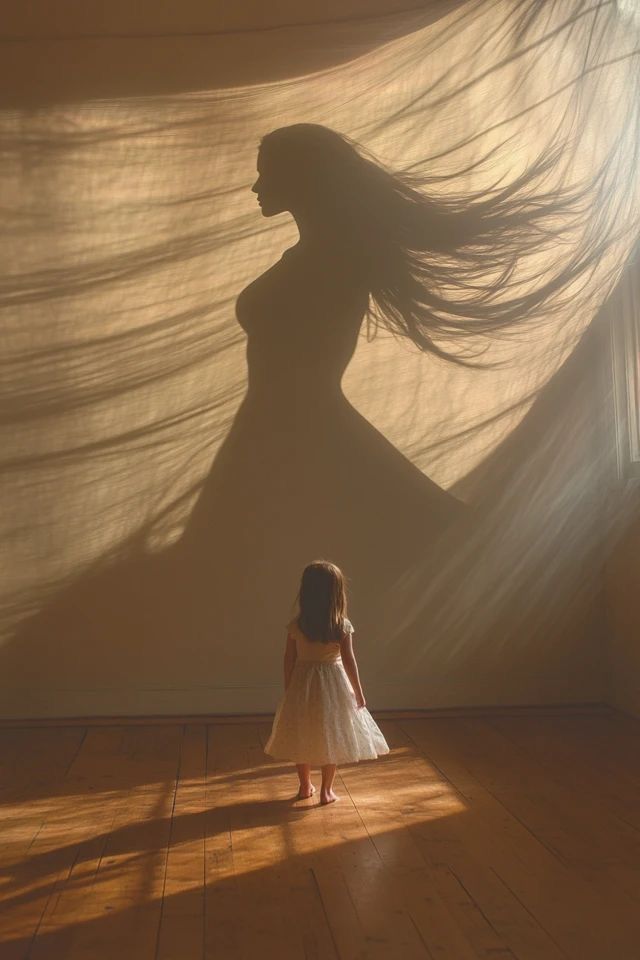
She would struggle with that because she liked destinations. She thought the sections between milestones were merely preparation for something more important. I would tell her what I learned much later: people love you during those years too. You laugh there. You travel there. You pray, work, lose things, find things, become tired, begin again and change. Sometimes, by the time the answer finally comes, the person who originally asked the question no longer exists in exactly the same form. She would probably nod, drink her coffee and continue worrying. I know this because I am thirty-six and still occasionally do exactly that.
Age has not transformed me into a magnificent example of patience. There are prayers I would still prefer answered sooner. There are situations I bring repeatedly to God and occasionally think, surely now? I continue submitting detailed scheduling suggestions to heaven and remain mildly surprised when they are not implemented.
What age has given me is evidence. Not evidence that everything works out precisely as I want, because that would be a dishonest version of faith. I have evidence that uncertainty has visited before and eventually changed shape. I have evidence that something can feel enormous while I am inside it and later become one page among many. I have evidence that God remained present during periods when I had absolutely no idea what He was doing. That does not resolve every unanswered question, but it makes the existence of unanswered questions less frightening.
If twenty-year-old me eventually leaned across the table and asked, “So when does everything finally make sense?” I think that might be the moment I disappointed her most. I would have to tell her that it does not. Not all of it. Some things become obvious several years later. Some remain strange. Some dreams come true. Others stop being dreams because we change first. Some prayers receive yes. Some receive no. Some appear to receive an answer in a language we understand only after enough time has passed.
There will be losses she cannot explain and gifts she could never have planned. There will probably always be another part of life asking her to trust God without granting her full access to the reasoning behind it.
I once thought faith would eventually make me certain. Now I think uncertainty may be precisely where faith earns its name. If I knew everything beforehand, I would not need trust. I would need information. Perhaps that is why, if I really could sit across from my younger self, I would refuse to give her the complete preview she wanted. I would let her keep her plans because plans are hopeful things. They mean we still believe tomorrow is worth preparing for. I would let her dream, work and pray as fiercely as she wanted. I would simply ask her to leave a little room around the edges for God to write something she had not considered. Some of those additions would annoy her. Some would hurt. Some might eventually save her from versions of the future she once thought she wanted.
And perhaps years from now, an older version of me will sit across from the woman I am today and recognise all the questions I am still carrying. Maybe she will know what happened to prayers that remain unresolved now. Perhaps she will smile at how impatiently I asked, “How much longer?” I hope she is kind about it. I hope she remembers what it felt like to stand here inside the unanswered part rather than becoming one of those people who reaches the other side and suddenly speaks as though waiting had been easy all along. I suspect she may also find it amusing that thirty-six-year-old me was still doing exactly what twenty-year-old me had to learn: trusting God while quietly wondering whether He might appreciate a few scheduling suggestions. I may never completely stop doing that.
Faith, for me, has not become the absence of questions. It has become the decision to remain with God while some of them stay unanswered. I still ask when. I still plan. I still become impatient. But I no longer believe every delay means I have been forgotten, or that another person arriving somewhere first proves that I am behind.
Somewhere between twenty and thirty-six, I stopped requiring every part of life to make sense before I could trust God inside it. Not completely, obviously. I am still me. But perhaps I have learned to loosen my grip on the stopwatch.
The microwave eventually beeped.
Thirty seconds had passed, exactly as promised. My food was warm. The countdown had reached zero. Everything had happened when the little glowing numbers said it would, which is perhaps why microwaves are considerably easier to trust than life. I still wish some prayers came with displays like that. I would happily accept a glowing timer above every unanswered question: three months remaining, six days until clarity, twelve minutes until the thing you have been worrying about finally makes sense.
Apparently, heaven has no timer.
Perhaps that is the point. Because if every prayer came with a countdown, every delay with an explanation and every future with an estimated arrival time, I would not be learning trust. I would simply be watching numbers fall. And knowing myself, I would still be standing there at second twelve, checking twice and opening the cupboard for no reason.
Still leaving the timing to Him,
Anj🖤














Leave a Reply