One evening, I was sitting at the table with my phone beside me doing several things that would probably have looked like witchcraft to someone born a few centuries ago. I checked the weather without looking outside, replied to someone thousands of miles away, searched for something I had forgotten, and asked artificial intelligence a question because apparently even my curiosity now has customer service. The answer arrived almost immediately. I stared at the screen for a few seconds and thought about how ridiculous it is that all of this feels completely normal. That may be one of the strangest things about progress. The extraordinary has a very short shelf life. Give humanity something miraculous long enough and eventually we complain because it takes four seconds to load.
There was a time when people waited weeks for letters. Now we become mildly offended when somebody reads a message and does not reply within the same calendar day. Paper maps once occupied half the passenger seat and occasionally caused arguments between married couples who were both absolutely certain they knew where they were going. Now a calm voice from our phones tells us to turn left in two hundred yards, recalculates without judgement when we ignore it, and somehow still manages to get us home. Photographs used to be developed before anyone discovered that somebody had blinked. Today we take twelve versions of the same picture and still complain that none of them looks natural. We carry libraries in our pockets. We can speak face-to-face with someone on another continent while waiting for the kettle to boil. Watches monitor heart rhythms. Machines translate languages. Doctors can look inside the body without opening it. Satellites floating somewhere above the planet quietly tell ordinary people how to find the nearest Tesco. And now we have artificial intelligence.
Machines can analyse enormous amounts of information, identify patterns, write, create images, assist researchers, answer questions and perform tasks that would have sounded absurdly futuristic not very long ago. I find that impressive, but what fascinates me just as much is the creature who built it: us. Human beings have always been terribly dissatisfied with limitations. We see darkness and invent light. We encounter distance and start building bridges. Disease appears and somebody somewhere decides to spend half a lifetime trying to understand it. We look at birds and eventually become annoyed enough about not being able to fly that we build aeroplanes. We stare into the night sky for thousands of years and, apparently unsatisfied with simply admiring it, eventually send machines into space. There is something beautiful about that restlessness.
Curiosity may be one of humanity’s strangest gifts. Every discovery begins with someone asking a question that could easily have been left alone. What is inside this? What happens if we combine these? What is beyond there? Why does the body do that? How far does the universe go? Can we reach it? And perhaps the question that matters more now than ever: should we? I have never understood why science and faith are sometimes treated as though they are two relatives who cannot be seated beside each other at dinner. Learning how something works has never made God smaller to me. If anything, understanding more about the world often makes it harder for me to regard existence as ordinary.
The human body alone is enough to ruin any attempt I make at being unimpressed. A heart starts beating before a child has any understanding of what a heart is. Cells divide according to instructions nobody consciously wrote. The brain stores the face of someone we loved decades ago, produces dreams while we sleep, recognises a song within seconds and somehow manages to remember an embarrassing incident from years ago precisely when we are trying to fall asleep. Then there is the universe, which appears determined to make us feel appropriately small. We live on one planet circling one star among billions of stars, and the numbers quickly become so enormous that my brain politely stops participating. We have built telescopes capable of looking unimaginably far into space, and every time humanity sees farther, the universe seems to respond by becoming even more complicated.
I do not think God needs to hide in whatever science has not explained yet. That would be a very fragile place to put Him. Every discovery would become a threat, and faith would slowly shrink as knowledge expanded. I would rather believe that knowledge and wonder can occupy the same room because knowing how something works does not always tell us what it means. We can study the chemistry involved in love. We can identify hormones, neurological pathways and patterns of attachment. But those explanations still do not tell me why someone chooses to remain beside another person through sickness, disappointment, poverty or old age. We can study what happens inside the brain during grief, but no scan can measure exactly what an empty chair weighs after someone dies. We know what tears are made of, but that information becomes remarkably useless when somebody you love is crying in front of you. Some things can be measured, and some things have to be lived.
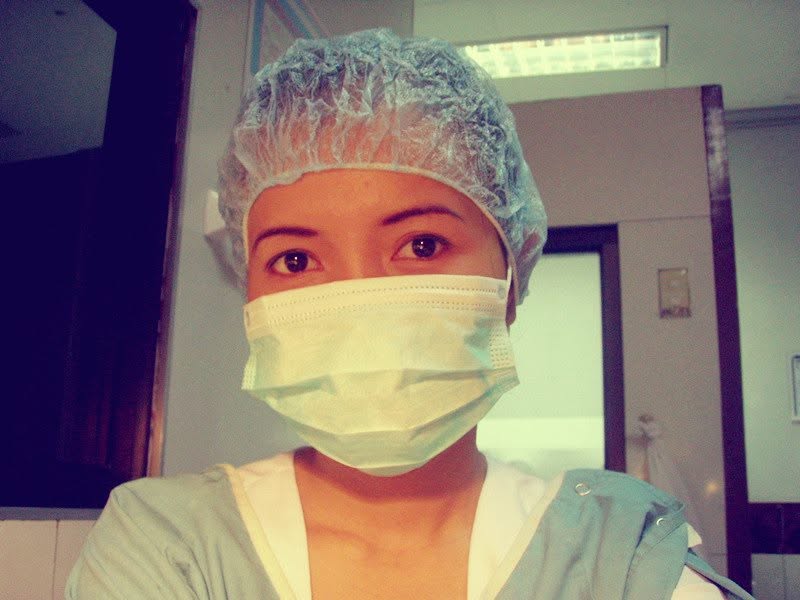
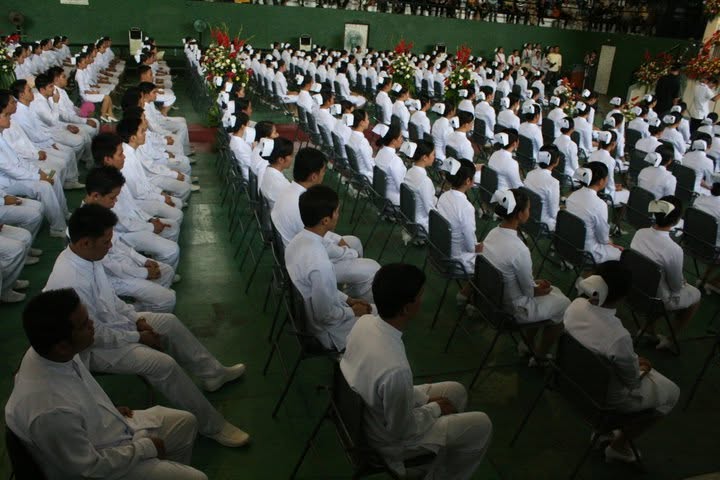
Perhaps artificial intelligence is forcing us to look at that distinction more closely. For a very long time, we placed intelligence somewhere near the centre of what made human beings special. We reasoned, calculated, created, remembered, imagined and solved problems. Now we have built machines capable of doing several of those things extraordinarily well, and they will probably become much better at them. I hope they do. As a nurse, I find the possibilities in healthcare particularly exciting. If technology can identify disease earlier, detect something the human eye missed, help clinicians make safer decisions or accelerate research into conditions we still struggle to treat, then I want that technology to succeed. I do not feel threatened by a machine being better than me at finding a tiny abnormality on a scan. If it helps someone receive treatment earlier, excellent. Let the machine win that competition.
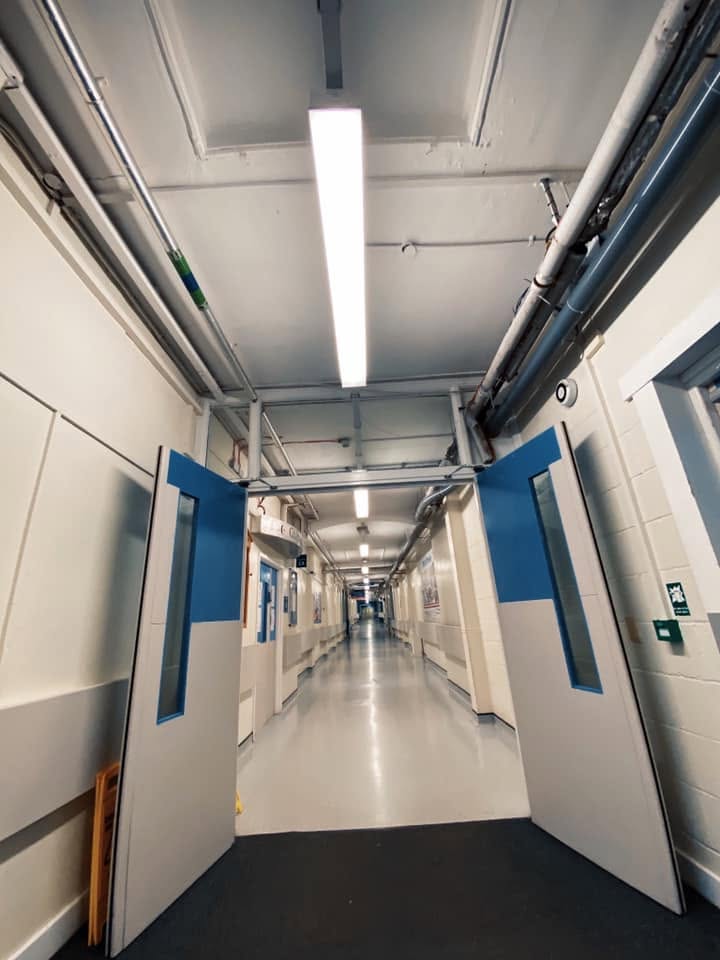
But healthcare has also taught me that information eventually reaches a border. There are moments when the diagnosis is already known. The scans have been reviewed. The prognosis has been explained. The family understands what is happening. Every question medicine can answer has already received an answer, and somehow none of those answers has made the room feel lighter. At that point, somebody still has to sit beside the bed. Somebody has to notice that the relative who keeps saying, “I’m fine,” clearly is not. Somebody has to understand when another explanation will help and when silence is kinder. Somebody has to remember that the person lying beneath the hospital blanket is not merely a stroke, a cancer, a failing heart or an abnormal scan. They belong to someone. They had a childhood. They have stories nobody in the room knows. Somebody once waited for them to come home. A machine may one day recognise illness better than we do, and I genuinely hope it does, but recognising suffering and responding to suffering are not quite the same thing.
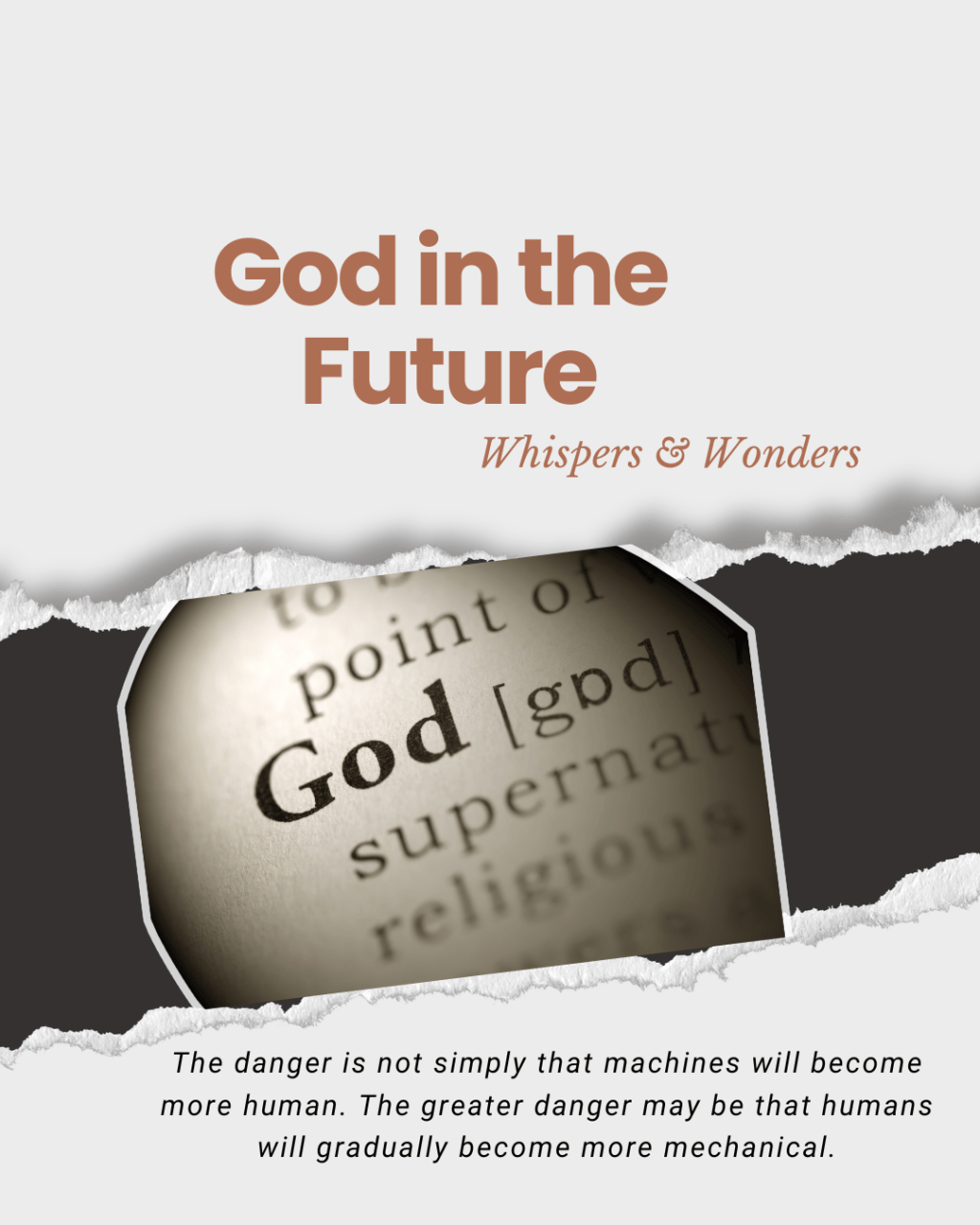
That distinction makes me think about the future more than the machines themselves do. We are entering a world where technology can imitate more things we once considered unmistakably human. Voices can be reproduced. Faces can be generated. Photographs can depict things that never happened. Conversations with machines are becoming increasingly natural. Stories, music and images can appear within seconds. The danger, I think, is not simply that machines may become more human. It is that humans may become more mechanical.
We already worship efficiency with surprising devotion. Faster deliveries. Faster messages. Faster diagnoses. Faster entertainment. Faster careers. Faster success. We dislike waiting so much that entire industries exist to remove it from our lives. Yet almost everything important about being human remains irritatingly slow. Trust takes time. Grief takes time. Forgiveness takes time. Raising a child takes years. Loving another person properly requires an enormous amount of repetition. Character does not arrive through next-day delivery. Even becoming comfortable with ourselves seems to take most people considerably longer than advertised.
Efficiency is useful, but it is a terrible way to calculate human worth. A newborn baby contributes almost nothing to household productivity. An elderly parent who needs help may make daily life considerably less efficient. Sitting beside someone who is dying accomplishes very little in measurable terms. Friendship can be inconvenient. Grief has absolutely no respect for deadlines. Love frequently requires doing things that make no practical sense whatsoever, and yet we know instinctively that these things matter.
Perhaps that is one reason Christianity continues to make sense to me in a world becoming increasingly obsessed with output. At its centre is the uncomfortable idea that a person does not have to prove usefulness before they deserve value. Worth is not something earned after sufficient productivity. A human being matters when they are strong and when they are dependent, when successful and when forgotten, when admired and when nobody outside their family knows their name. That is a difficult idea to maintain in a world constantly asking what we have achieved lately.
Of course, believing in God does not make life tidy. If anything, faith has given me more questions than I expected. There are prayers that appear unanswered. Good people suffer. Families pray desperately for someone to recover and still end up having to say goodbye. People lose children, parents, partners and futures they thought they were entitled to have. Sometimes life happens in ways that make every easy sentence about God sound embarrassingly small, and I do not think faith should pretend otherwise. A faith that only functions when everything is going well would be little more than optimism wearing religious clothing.
For a long time, I think I understood God’s goodness too closely alongside the idea of rescue. If God is good, then surely the situation improves. The door opens. The prayer is answered in the way we hoped. The person gets better. The thing we feared does not happen. Life has made that definition difficult to maintain. Sometimes goodness looks less like rescue and more like being carried through something you would never have chosen. Sometimes it appears as the person who stayed when everybody else disappeared. Sometimes it is enough strength for one more day. Sometimes laughter returns months after grief and surprises you because you had forgotten you could still make that sound. Sometimes nothing makes sense at all, and all you can say is that the thing you thought would completely destroy you somehow did not.
I am still learning that faith does not always mean receiving an answer. Sometimes it means remaining in the conversation. The Bible is full of people who apparently did not receive the memo that believers are supposed to be permanently calm. They waited. They complained. They grieved. They doubted. They became afraid. They asked questions that did not come with immediate explanations. Even people closest to God experienced moments when life made very little sense. I find that comforting because real human beings are complicated. We can believe in God and still become angry with Him. We can pray while frightened. We can trust and still ask why. We can be grateful and exhausted simultaneously. Faith does not always look like serene certainty. Sometimes it is simply continuing to speak to God when the conversation has become messy.
And despite everything humanity has invented, we still pray. We pray before operations. We pray beside hospital beds. We pray when someone is travelling. We pray before examinations. We pray during disasters. We pray when the phone rings at an hour when phones should not ring. Even people who have not spoken to God for years sometimes discover His name returning when life suddenly becomes bigger than their ability to control it. Maybe some of that is fear, but perhaps it is also because intelligence has never completely satisfied the human need for meaning.
We do not merely want to know how life works. We want to know what it is for. We want love to matter even though everybody we love is temporary. We want goodness to be worth choosing even when selfishness occasionally seems much more profitable. We want suffering to mean something other than pain. We want to believe the people we lose amount to more than memories preserved inside our own brains. We want our lives to mean more than salary, productivity, achievements or the opinions of other people.
Artificial intelligence can discuss those questions. It can summarise theology, explain philosophical arguments, compare beliefs and produce paragraphs about meaning within seconds. It may even sound more articulate than many of us while doing it. But no machine can make the moral decisions of humanity on our behalf. We are learning how to build increasingly intelligent systems, but perhaps the more important question is whether the people building and using them are becoming any wiser. Intelligence tells us what can be done. Wisdom still has to ask whether it should be done.
History has already given us enough evidence that knowledge does not automatically make people good. Human beings have created medicine and weapons, hospitals and prisons, charities and systems designed to exploit other people. The same internet that allows families separated by oceans to watch their grandchildren grow can send hatred around the planet before breakfast. Technology expands what human beings are capable of doing, but it does not decide what kind of people will use that capability. Progress does not come with morality pre-installed.
Perhaps that is one of the oldest questions God continues to place before humanity: what will you do with what has been put into your hands? Not simply what will you invent, but what will you protect? Not only what can you discover, but what will you do once you know it? Not merely how powerful can humanity become, but what kind of humanity will be trusted with that power?
I hope artificial intelligence becomes something overwhelmingly useful. I hope it helps researchers discover treatments sooner. I hope it makes dangerous work safer, gives people better access to education, improves healthcare and helps us understand problems that currently take human beings years to untangle. I hope future generations look back at this strange period of history and see the beginning of something that genuinely improved millions of lives.
But I also hope that while our machines become better at imitating us, we do not accidentally become worse at being ourselves. I hope we still visit lonely people even when sending a message would be easier. I hope families still occasionally sit around tables without documenting every plate before eating. I hope children are allowed to wonder about something for a little while before a screen supplies the answer. I hope doctors continue seeing the person behind the scan. I hope nurses remember that sometimes care is the extra few minutes spent beside someone after the clinical task has already been completed. I hope scientists continue discovering things without losing their capacity for awe. I hope people with power remember that history has never suffered from a shortage of intelligent people; it has often suffered from a shortage of conscience.
Most of all, I hope we resist the temptation to believe that everything valuable can be measured. Some of the most important things human beings do leave almost no data behind. Nobody records every moment a tired parent gets up again for their child. There is no dashboard for forgiveness after years of pain. No algorithm awards points to the person who stayed when leaving would have been easier. Somewhere tonight, someone will do something kind for another person and nobody except the two of them will ever know.
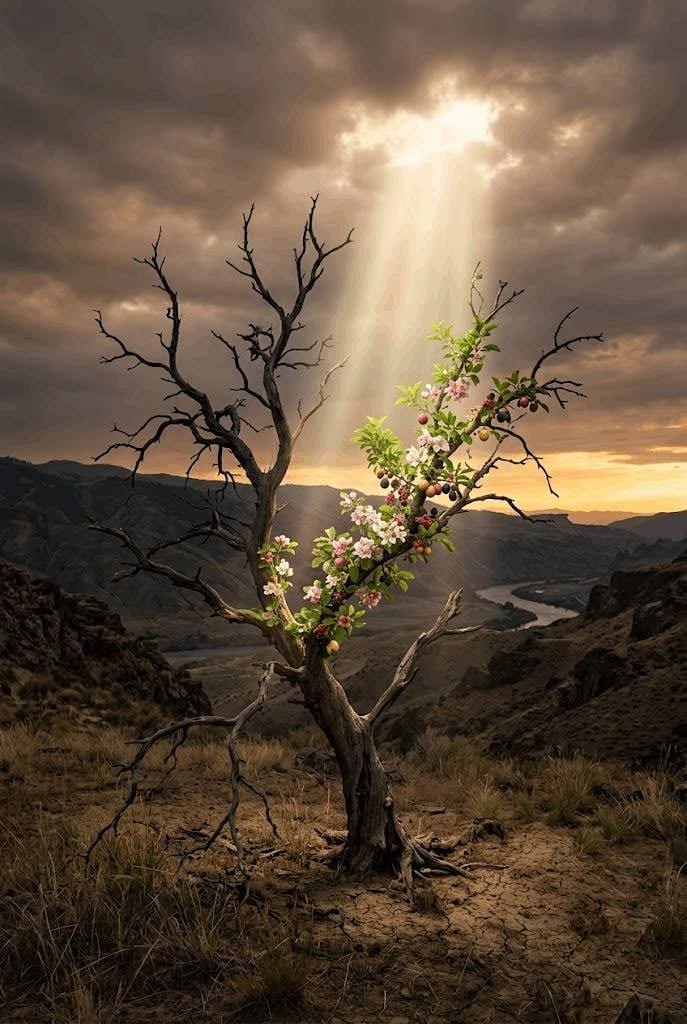
Perhaps this is where I recognise God most easily now. Not only in the grand moments people call miracles, but in the stubborn survival of goodness inside a world that gives us plenty of reasons to abandon it. There is something remarkable about mercy when revenge is available. There is something extraordinary about someone remaining compassionate after suffering. Human beings can be terribly cruel, but we are also capable of choosing goodness when goodness costs us something. Maybe that is one of the places where I still see God’s fingerprints most clearly.
We are building an extraordinary future. There will be more discoveries, more machines and more questions. Some developments will excite us. Others will frighten us. A few will probably become so ordinary that future generations will laugh at the fact that we once found them unbelievable. Yet I suspect that a hundred years from now, however advanced the world becomes, somebody will still sit beside a person they love and fear losing them. Someone will still stare at the night sky and wonder why anything exists. Someone will still struggle to forgive. Someone will still wonder whether their life matters. Someone will still pray.
That is because underneath every invention, every screen and every century of progress, humanity remains painfully human. We are intelligent but fragile, powerful but temporary. We can map galaxies and still fail spectacularly at understanding ourselves. We can build machines capable of producing beautiful sentences in seconds and still spend years trying to find the right words to apologise to someone. Perhaps that is one of the great ironies of progress: humanity may eventually create machines capable of answering almost every factual question we ask, while the questions that shape an actual life remain stubbornly personal. What is worth loving? What deserves sacrifice? Who are we when nobody is watching? What do we owe one another? What makes a life good? And after everything we spend our lives building, what remains?
For me, those questions eventually bring me back to God. Not because I understand Him completely; I do not. Not because faith has neatly answered everything I have ever asked; it has not. I return because after all the knowledge humanity has accumulated, I still believe intelligence is not enough to guide what we become. We need conscience, compassion, humility and love. We need enough wisdom to understand that the ability to create something does not automatically tell us what should be done with it.
The future may be filled with machines more capable than anything we currently understand, and humanity will continue building because that is what we have always done. But perhaps the greatest test of that future will not be whether we manage to create machines that resemble human intelligence. It may be whether, surrounded by everything our intelligence has created, we can still recognise what deserves our humanity.
Maybe one day our machines will know almost everything we have managed to teach them. They may calculate faster than us, remember more than us and recognise patterns that escape us entirely. But somewhere there will still be a person sitting beside a hospital bed, holding somebody’s hand because there is nothing else left to do. Somewhere a mother will still whisper a prayer for her child. Somewhere someone will choose kindness when cruelty would have been easier. Somewhere another person will forgive when nobody could have blamed them for walking away.
And perhaps that is where the question finally becomes less about what machines are becoming and more about what we are choosing to remain.
Humanity may build the future. But intelligence alone will not decide whether that future is good. We will. And after all the inventions, all the knowledge, all the speed and all the astonishing things we may eventually teach machines to do, I hope we are still wise enough to remember that progress is not only measured by how far humanity can go. Sometimes it is measured by what we refuse to leave behind.
For me, goodness is one of those things.
And wherever goodness survives, I still believe God is there.
Still asking, still believing,
Anj ✨










Leave a Reply