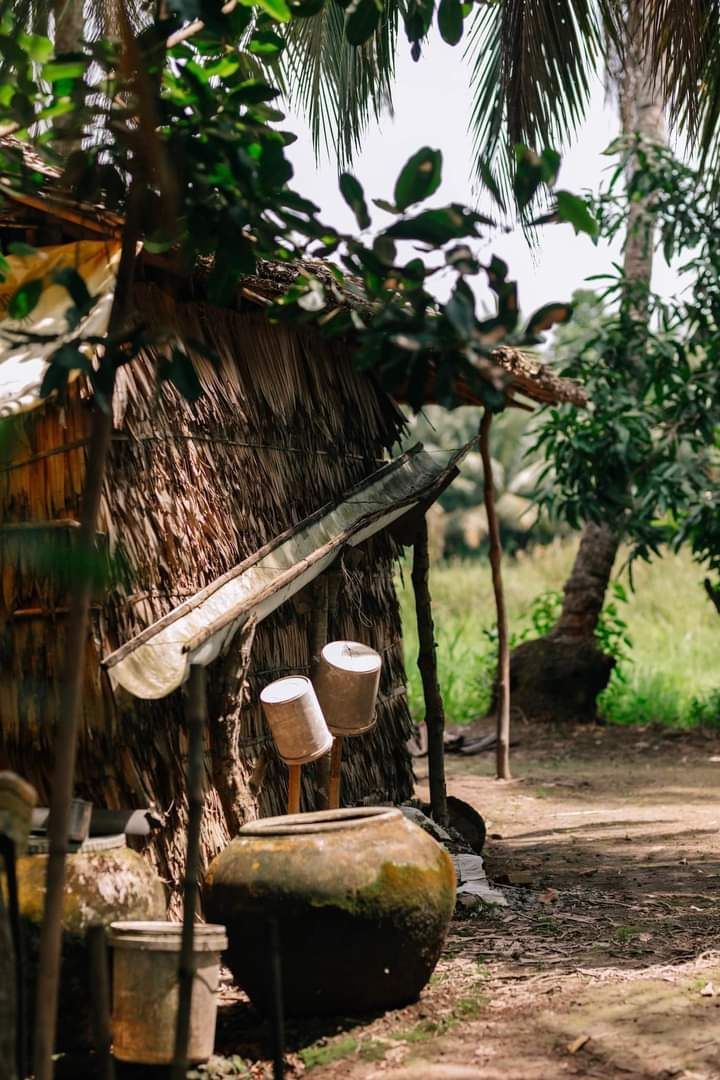
The mathematics of a Filipino household has always seemed slightly suspicious to me. A pot of rice intended for five people somehow feeds eight, one electric fan is expected to cool an entire room despite possessing roughly the same authority over the afternoon heat as a spoon has over the Pacific Ocean, and a modest living room can accommodate twelve relatives, three children, an elderly visitor and somebody’s sleeping uncle provided everyone agrees that personal space is a foreign invention designed for people with larger houses.
Sleeping arrangements require an even more advanced branch of mathematics. The youngest children take the mattress, two cousins share a folding bed, somebody volunteers for the sofa before discovering that the sofa is several inches shorter than their legs, and another person announces that a thin banig on the floor is perfectly comfortable with the confidence of someone who has not yet met the mosquitoes assigned to the night shift. By midnight, the house resembles a puzzle whose pieces have developed strong opinions about where they should be placed.
And still, when another relative arrives, somebody will say, “Sulod lang. Naa pa’y lugar.” Come in. There’s still room. I have always found that sentence both beautiful and mildly alarming, because the house is usually already operating at a capacity that would concern a reasonably qualified building inspector. Yet a pillow appears, somebody moves over, the furniture is rearranged and space is somehow made without a single wall physically changing.
For a long time, I thought this was simply one of the familiar features of Filipino family life. We share rooms, meals, expenses, errands, celebrations and occasionally arguments that began before some of the participants were born. But the more I have been thinking about communities, families and economic life, especially through my work as a Community Facilitator, the more I have wondered what these crowded households reveal about the difference between having very little and having nobody.
Can a household be financially poor and still possess another kind of wealth? Can people have limited material resources while being surrounded by relatives willing to share what they have? And how do we appreciate the strength of those relationships without making poverty look charming simply because people remain capable of laughter inside it?
That last question matters to me because poverty is usually described through absence: insufficient income, limited savings, inadequate housing, restricted access to education and difficulty obtaining essential services. Those descriptions are necessary because material conditions affect what people can actually do. But they do not describe the entirety of a household.
A family may struggle financially while possessing strong relationships, humour, practical knowledge, traditions and an extraordinary willingness to cooperate. The same family may also experience tension precisely because those relationships are being asked to carry pressures that money or better services might otherwise relieve. Both realities can exist inside the same room.
I think we make one mistake when we imagine financially struggling households as places where happiness cannot possibly exist. We make another when we see people laughing despite hardship and decide the hardship therefore matters less. A crowded house can contain affection and exhaustion at the same time. A shared meal can communicate generosity while also revealing how carefully limited food must be divided.
Perhaps the more respectful position is to recognise the humanity inside difficult circumstances without treating the circumstances themselves as desirable.
Money remains an essential resource. It pays for food, housing, education, healthcare, transport and the thousands of ordinary things that allow a household to function. But families also depend upon resources that never appear neatly in financial records: grandparents who help with children, relatives who know how to repair broken appliances, neighbours who share practical information and somebody in the family who can stretch ingredients far enough to turn a small amount of food into dinner for far more people than seemed mathematically possible.
Those forms of knowledge and cooperation matter. They can reduce costs, save time and make difficult periods more manageable. But their value should not become an excuse for pretending material security is optional.
A grandmother who can stretch a household budget with remarkable skill deserves admiration. She should not have to spend her entire life proving how little money a household can survive on.
In many Filipino families, resources move in several directions at once. One adult child may contribute towards school fees, grandparents may provide childcare, relatives may share housing and somebody with a particular skill repairs household items instead of paying somebody else to do it. The arrangement can be practical because money, time and responsibilities are distributed across several people.
The difficulty is that risk becomes shared too. If one person loses work, somebody else may need to contribute more. If an unexpected medical or household expense appears, savings intended for another purpose may disappear. A planned purchase is postponed and the family rearranges itself again.
That is one of the strengths of closely connected households. People rarely fall alone.
It can also become one of the pressures.
A person may know with great comfort that family will help during hardship, while also knowing that one day the same family may need help in return. Support becomes reciprocal, although rarely in equal amounts or at convenient moments. A younger sibling depends on an older one, then years later circumstances reverse. Parents provide for children, and eventually children may assume greater responsibility for ageing parents.
There is nothing inherently wrong with that. Family life has always involved interdependence. The complication begins when care becomes an expectation so large that one person’s own future is permanently postponed.
Helping because we love someone is different from being made to feel that our entire life must remain available for everybody else’s needs.
This distinction becomes especially important when money is limited. A young adult may want to save for further education while the household needs immediate financial support. A parent may want to work fewer hours because they are exhausted, yet the family cannot afford the reduction in income. An older relative may need care, forcing other family members to reorganise work and responsibilities.
These are not simple conflicts between selfishness and generosity. Often, several legitimate needs are competing for the same limited resources.
I think this is why Filipino families speak so often about sacrifice. Parents sacrifice for children, older siblings sacrifice for younger ones and adult children sacrifice for parents. The language appears so frequently that sacrifice can begin to sound like a natural requirement of love.
Sometimes it is admirable. People do extraordinary things for those they care about. But I wonder whether we occasionally praise sacrifice so enthusiastically that we forget to ask why so much of it was necessary in the first place.
A mother works exhausting hours and we celebrate her devotion. An older sibling postpones education or personal plans to help younger siblings and we praise generosity. A family remains crowded into one small house because separate housing is unaffordable and we admire their closeness.
The devotion may be genuine. The hardship still deserves attention.
Love does not make economic insecurity harmless.
This is one of the dangers of beautiful stories about poverty. We see a family laughing around a simple dinner and feel moved by their happiness. Perhaps we tell ourselves that possessions are not important and that people only need love.
There is truth in the idea that material wealth does not guarantee contentment. But there is something dangerous in using somebody else’s deprivation to prove that material conditions do not matter.
The family may genuinely enjoy that meal. They may also be worried about tomorrow’s expenses. Their laughter does not mean every need has been met.
People should be allowed to be happy without having that happiness used as evidence that they need nothing more.
I suspect cheerful stories about hardship appeal partly because they reassure those of us watching from outside. They remind us that people retain humour, affection and dignity even when circumstances are difficult. That is true and worth recognising.
But resilience can become convenient for observers. If people continue smiling, perhaps the problem feels less urgent. If neighbours keep helping one another, maybe formal support seems less necessary. If children keep playing, inadequate resources become easier to overlook.
Human adaptability is remarkable.
It should never become an excuse for leaving avoidable difficulties unchanged.
Filipino households are especially skilled at extending the life of ordinary objects. An empty container becomes storage, old clothing is altered, furniture is repaired and appliances receive increasingly creative interventions before anyone agrees that replacement may finally be necessary. Some objects achieve second, third and fourth careers with more professional development than many adults.
There is wisdom in that. Repairing rather than replacing can reduce waste and preserve money. But even the same behaviour can carry different meanings depending upon whether the person had another realistic option.
A financially secure person repairs old furniture and may be praised for sustainability. A family with limited income repairs the same furniture because buying another is impossible. The action looks identical, but choice changes its meaning.
That distinction matters. Choosing simplicity is different from having simplicity imposed upon you.
Someone may genuinely prefer a small house, modest possessions and inexpensive pleasures. Another family may live in similar circumstances because no other arrangement is affordable. Their home can still be warm and their relationships meaningful, while they simultaneously wish for more space, better facilities or greater financial security.
There is dignity in simple living.
There is no virtue in being denied enough.
Crowded homes make that difference especially visible through privacy. Bedrooms may be shared, conversations are overheard and personal disagreements can become family discussions before the people actually involved have had time to finish arguing. Somebody trying to study may search for a quiet corner, while another person who has had a difficult day may discover that solitude has been fully booked.
Even ordinary tasks become negotiations. Who uses the bathroom first? Where will visitors sit? Can somebody lower the television? Who borrowed the charger? And why does the missing charger inevitably require testimony from every person in the household?
These things can be funny because families learn to laugh at daily inconvenience. They can also be tiring.
Privacy is not merely a luxury for wealthy households. It supports concentration, rest, autonomy and the ability to think without six relatives accidentally becoming witnesses.
A family can love one another deeply and still wish for another room.
Or, at minimum, another electric fan.
Strong family and community relationships are often described through the idea of social capital: the practical resources people gain through trust, cooperation and networks. A neighbour helps during an emergency, relatives share childcare, someone hears about employment through a friend or a family member provides knowledge that saves another person time and money.
These connections can reduce isolation and make difficult circumstances easier to navigate.
But social capital has limits.
A supportive neighbour cannot replace reliable healthcare. A generous relative may not have enough money to cover a major emergency. A community can cooperate beautifully while still needing roads, schools, safe housing and functioning public services.
Relationships help people survive systems.
They should not have to substitute for systems entirely.
This is something my work as a Community Facilitator has made me think about increasingly. Community cooperation can be impressive, but cooperation is more sustainable when the people involved are not already stretched beyond their own capacity. A household may want to help another family while having too little itself, and a relative may sincerely wish to contribute more while carrying obligations of their own.
Good intentions cannot manufacture time, money or services out of nothing.
Perhaps development works best when strong relationships and stronger material conditions support each other. People should not have to choose between a community that cares and institutions that function.
Humour deserves a place in this discussion because Filipino families possess an extraordinary ability to turn inconvenience into comedy. A power interruption begins with complaints and somehow develops into jokes. Heavy rain creates an emergency discussion about laundry. A broken appliance attracts several unofficial engineers, one person holding the screwdriver and three others explaining what should have been done differently.
The appliance remains broken.
The discussion becomes more confident.
There is something comforting about this. Humour connects people and makes difficult moments easier to carry. But laughter should not be mistaken for the absence of concern.
Someone may joke about money while still worrying about it. A parent can laugh at an expense and spend the evening calculating how to cover it. A young adult may make light of family responsibilities because humour is easier than explaining how heavy they sometimes feel.
Perhaps we should also stop expecting people facing hardship to remain permanently cheerful because their optimism reassures everyone else. They are allowed to complain. They can feel grateful for family and still want more stability. They can love their home and wish it were safer or larger.
Gratitude does not require silence about difficulty.
Sometimes dissatisfaction is not ingratitude.
Sometimes it is simply accurate.
There is another kind of richness inside many modest households: memory. Old furniture, radios, sewing machines, cooking pots and cabinets repaired so often that the original manufacturer would struggle to recognise them acquire stories.
Someone remembers when an object was bought. Another remembers who once owned it. A table becomes connected with celebrations and meals, while an inexpensive photograph becomes far more valuable to a family than anything somebody could reasonably pay for it.
That reminds me that price and value are not always the same thing.
But sentimental wealth cannot replace material security either. An old table may hold generations of memories and still sit inside inadequate housing. A beloved radio can connect people to the past without paying for school supplies.
This is why the phrase rich in love makes me slightly cautious.
It is usually intended kindly. A family may possess little money but strong relationships, and those relationships can be profoundly valuable. Still, emotional wealth should never be used to dismiss material need.
Love cannot replace adequate nutrition. Affection cannot repair unsafe housing on its own. Strong relationships cannot guarantee access to healthcare or education.
A household can be rich in people and poor in material security at the same time.
The reverse is also true. A large house and substantial income do not guarantee affection, trust or meaningful connection. Material comfort can coexist with loneliness, conflict or emotional distance.
But that does not mean families must choose between money and love.
Most people would quite reasonably prefer both.
Enough income to live securely. Enough connection to feel supported. Enough space for children to study. Enough privacy for people to breathe. Enough opportunity to help relatives without losing every opportunity of their own.
The goal should not be to decide whether emotional or material wealth is superior. It should be to recognise that human beings benefit from both.
Families experiencing poverty are sometimes written about as though their lives must belong to one of two categories: tragedy or inspiration. Either everything is suffering, or everybody remains wonderfully cheerful despite having very little.
Real households are far less organised.
People laugh and worry, celebrate and argue, help one another and become irritated with one another. They can feel grateful and frustrated within the same hour. Someone can make a wise financial decision on Monday and a regrettable one on Friday.
Limited income does not remove ordinary human contradiction.
Perhaps one of the most respectful ways to write about poverty is to preserve that complexity.
Close families are not automatically harmonious. Shared responsibilities can create conflict, especially where money is limited. One person may contribute more financially, while another performs more household work. Someone feels unappreciated. A younger member wants independence, while an older relative worries about losing support.
Every expense matters more when resources are tight.
Every boundary can feel more personal when lives are heavily interconnected.
Healthy family relationships therefore require more than sacrifice. They require communication, fairer distribution of responsibilities and recognition that different family members may have different needs. Love should make room for boundaries rather than treating boundaries as rejection.
A supportive household should not require unlimited availability.
Children growing up in shared homes may gain remarkable social skills. They learn to share, negotiate space, accommodate relatives and participate in daily responsibilities. They grow close to siblings, cousins and grandparents in ways that can become important throughout adulthood.
Those experiences can be genuinely valuable.
But shared living should not erase individual identity.
A child still needs time to study and play. A teenager needs increasing autonomy. Someone should be allowed to have preferences that do not match everybody else’s expectations.
I sometimes wonder whether adults praise children for being exceptionally considerate when the child has actually learned that expressing a need creates inconvenience. A child who never complains may be content, but perhaps they have also become accustomed to postponing themselves.
Silence is not always satisfaction.
Care means providing what we can, but it also means asking what people need.
Sometimes those needs are material: food, transport, study space, medical care or safer housing. Sometimes they are relational: privacy, attention, fairness, understanding and permission to make reasonable choices.
Income affects how easily those needs can be met, but the needs themselves are recognisably human across almost every household.
Perhaps that is what makes inequality especially uncomfortable. If people share many of the same basic needs, why should the difficulty of meeting them depend so heavily on what resources were available in the family into which they happened to be born?
There is no tidy answer.
But family affection, however beautiful, should not prevent us from asking the question.
So what would progress look like for a household rich in people but short of money? It would not necessarily mean everybody eventually living separately. Many families genuinely prefer multigenerational living and enjoy the closeness that comes with it.
Nor would progress necessarily mean expensive possessions. People value different things.
Perhaps progress is better understood as choice.
The family can stay together because they want to, not because nobody can afford another option. Children have somewhere suitable to study. Essential bills no longer create constant anxiety. Someone can help a relative without permanently sacrificing their own future.
Development becomes meaningful when it expands what people are genuinely able to choose.
A crowded house can be a happy house.
It can also contain people who wish for more room.
A shared household can represent cooperation.
It can also reflect limited alternatives.
Both truths should be allowed to exist without one cancelling the other.
Eventually, I return to the house with its complicated sleeping arrangements. The thin mattress has been moved against the wall, somebody has found an extra pillow, one relative has offered to share a room and the electric fan continues its heroic but mostly symbolic campaign against the heat.
From the kitchen comes the familiar sound of plates being arranged. Somebody asks whether there is enough rice, another person says yes and a third immediately recommends cooking a little more just in case.
The house moves through its usual negotiations.
People complain, laugh, adjust and make room.
There is affection here. There is cooperation. There is the accumulated intelligence of people who have spent years learning how to organise several lives inside limited space.
I admire that.
I also wonder what would change if the family had more options.
Perhaps everyone would still live together. Perhaps some would choose small homes nearby. Maybe there would be another bedroom, a quieter corner for studying or a kitchen where fewer people must perform complicated choreography while preparing dinner.
Perhaps the relatives would remain equally loud because Filipino families do not necessarily lower their volume simply because architecture has become more generous.
But the difference would be choice.
They could preserve the closeness they valued without requiring avoidable discomfort as proof of that closeness.
That seems worth wanting.
To value relationships without demanding hardship as evidence of their strength. To admire generosity without requiring people to have very little before their generosity appears meaningful. To respect resourcefulness while hoping one day less resourcefulness will be required merely to get through the week.
Families are often asked to perform impossible arithmetic. They divide money, space, time, attention, responsibilities and occasionally the final piece of fried fish. Someone gets less than expected, another says they are already full and somebody quietly gives up their portion.
Cooperation can stretch many things.
It cannot stretch everything forever.
No amount of affection can physically enlarge a room. Goodwill cannot guarantee that insufficient income will somehow cover every expense. A family should not have to prove the depth of its love through endless sacrifice.
By evening, everyone has settled into their assigned space. The lights go out and somebody whispers that the electric fan should face them. Another person objects, a brief negotiation follows and eventually the fan is positioned where it can disappoint everyone equally.
A wonderfully democratic solution.
There is something moving about people making room for one another, and I hope Filipino families never lose the instinct behind “Sulod lang. Naa pa’y lugar.” Come in. There is still room. It is one of those sentences that can turn a crowded house into somewhere a person immediately feels they belong.
But perhaps the hope for families like this should extend beyond becoming increasingly skilled at fitting more people into limited space.
A good home is not simply proof that everybody can squeeze inside. It should also provide enough security, dignity and freedom for each person to develop a life of their own while remaining connected to the people they love.
The walls may be modest and the furniture old. The household may remain noisy, crowded and full of borrowed chairs whose actual ownership nobody can confidently establish. None of that determines the quality of the relationships within it.
Those relationships deserve better material conditions, not because money makes a family richer in every sense, but because people who already give so much to one another should not have to spend all their strength compensating for what they lack.
So I hope the welcome stays. I hope the shared meals, ridiculous sleeping arrangements, stories, teasing, laughter and instinct to help remain part of the house for generations.
I simply hope the hardship does not need to remain with them.
And if someone eventually manages to purchase a second electric fan, I suspect the entire household will celebrate. Not because the family has suddenly become wealthy, but because for the first time in its domestic history, the afternoon heat may finally encounter a reasonably organised opposition.
Still hoping love gets more room to breathe,
Anj






















Leave a Reply