( This post is going to be long & heavy on photos, but please ENJOY! )
Disneyland has spent decades being called “the happiest place on earth,” which is an ambitious title for somewhere that also contains long queues, tired children, overpriced snacks and adults negotiating with family members about where exactly they promised to meet. Happiness, apparently, comes with crowd control. I used to think the phrase was simply excellent marketing, the sort of sentence polished until it sparkled brightly enough to sell castles, mouse ears and the possibility of childhood in ticket form. But the older I get, the more I think Disneyland may understand something about happiness that adults occasionally forget: happiness does not always need to be sensible, productive or deserved. Sometimes it is simply the freedom to become delighted by something you already know is pretend.
I did not know any of this when we set off for Hong Kong Disneyland in 2015. I only knew that I was excited. Somewhere ahead was a castle I had seen in countless Disney openings, characters who had occupied entire sections of my childhood, rides I had not yet had the good sense to fear, and apparently enough opportunities for photographs to create a minor storage crisis. I thought I was going to a theme park. Looking back, I think I was also going to test whether the phrase “happy place” could survive adulthood.


The first sign that adults are perfectly willing to abandon a certain amount of dignity for Disney appeared at Sunny Bay station. The train arrived with Mickey Mouse-shaped windows and handles, and suddenly perfectly grown people were taking photographs of public transport. I was one of them, obviously. There are ordinary trains that take you from one station to another, and then there are trains with mouse-shaped windows that somehow convince you the journey has already become part of the attraction. I remember looking around that carriage and feeling the strange excitement of being transported somewhere I had known long before I had ever travelled there. I had never been to Disneyland before, yet Mickey, Pooh, Belle, Ariel, Woody, Simba and all those other characters had already occupied pieces of my childhood. Perhaps that is why the journey felt less like going somewhere entirely new and more like travelling towards a place my imagination had visited years earlier.
Some of the most beautiful chapters of our lives do not receive their titles until much later.
At the time, a day is simply happening. You wake up, catch a train, take too many photographs, queue for rides, complain that your feet hurt, buy something you probably do not need and go home exhausted. Only years later do certain details begin glowing differently in memory. Looking back now, I think that Disneyland day was one of those chapters. In 2015, I thought I was simply going to a theme park. I did not yet know that I was about to spend an entire day repeatedly meeting younger versions of myself.

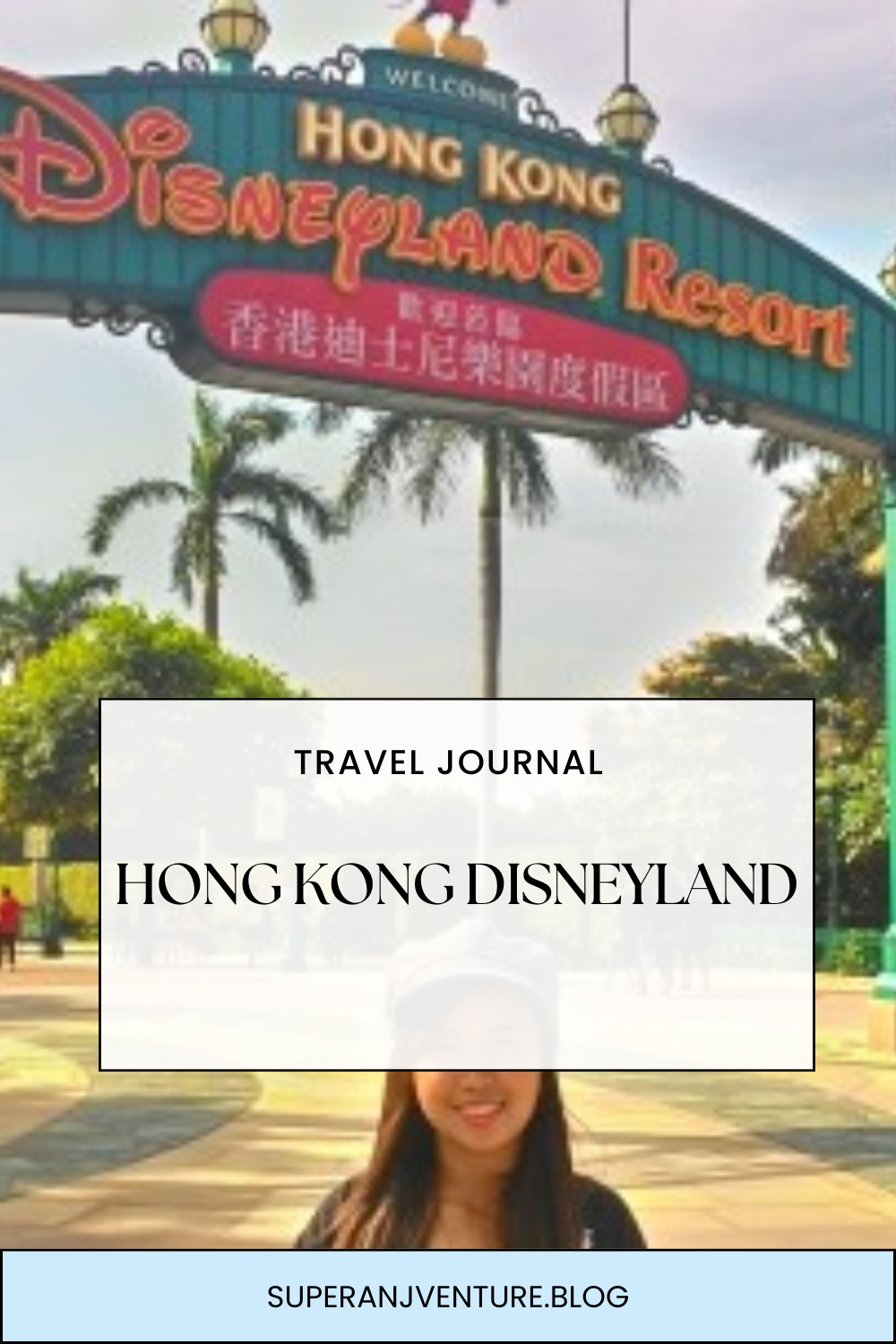
Mandatory shot of the entrance sign!
Naturally, photographs had to happen. The entrance sign required evidence. Mickey made of flowers required evidence. The first proper view inside required evidence. Apparently entering Disneyland without documenting every few metres would have caused administrative problems later. Beneath all that enthusiastic photography, though, there was genuine wonder. Cheerful music followed us through the park, slipping between conversations and footsteps, and there was something wonderfully manipulative about it. Disney knows exactly what it is doing. You walk several kilometres, stand in queues and willingly spend money while orchestral music convinces you the whole thing is an enchanted adventure.

We arrived early, which I had assumed would give us a strategic advantage. Disneyland had other ideas. There was already a crowd waiting at the gates, proving that hundreds of people had experienced the same revolutionary thought of arriving early. We joined them, surrounded by families, children, tourists and adults who were supposedly there for the children but looked suspiciously more excited than the children themselves. Once the gates opened, the music seemed to reach us before anything else, followed by that huge Mickey Mouse floral display near the entrance, perfectly arranged as though even the flowers had signed a Disney employment contract and understood performance expectations.

Then I saw the castle. There are certain buildings you recognise before you have ever stood in front of them, and a Disney castle belongs to that peculiar category. I had seen one appear at the beginning of films for years, usually for only a few seconds before another story began. Suddenly there was one in front of me. I was old enough to understand architecture, branding, engineering and the extraordinary machinery of entertainment behind it, yet somewhere inside I was also young enough to think, very simply, There’s the castle. Both reactions could exist at the same time, and perhaps that was already part of the magic.
The Magic Begins
Hong Kong Disneyland is divided into seven areas: Fantasyland, Adventureland, Main Street U.S.A., Mystic Point, Grizzly Gulch, Tomorrowland, and Toy Story Land.

1. Fantasyland: Where Dreams Begin
Fantasyland was where childhood began reclaiming larger portions of the day. We boarded It’s a Small World and drifted through that cheerful population of singing dolls representing countries from around the world, all united by one impressive achievement: making sure the song would remain inside my head long after the ride ended.

1.1 It’s a Small World: Casted off on a whimsical boat ride past a joyful congregation of singing children from around the globe.
When we passed the Philippines section, seeing something familiar tucked inside that colourful miniature world made me smile. “Kay liit ng mundo,” indeed. The world felt charmingly small inside the ride, although the crowds outside had suggested otherwise.

( From Philippines): “Kay liit ng mundo”
As an adult, I could clearly see the machinery, repeated movements and carefully constructed scenes. I understood how the illusion worked, yet I still allowed it. Perhaps growing up does not destroy imagination as completely as we think. Maybe adulthood simply teaches us where the wires are, and sometimes we deliberately decide not to stare at them.

1.2 The Many Adventures of Winnie the Pooh. Then came Winnie the Pooh. We climbed into an oversized Hunny Pot and wandered through the Hundred Acre Wood, which reminded me that Pooh may possess one of the greatest adult philosophies ever disguised as children’s literature: eat something nice, love your friends and try not to become unnecessarily distressed by complicated situations. Pooh had apparently been practising this successfully for decades while the rest of us invented planners, productivity systems and anxiety.

1.3 Philhar Magic. PhilharMagic continued the slow dismantling of my adult composure. Sitting inside that 3D concert surrounded by Disney characters I had loved since childhood, I found myself grinning at effects primarily designed for children and feeling absolutely no embarrassment about it. By then, Disneyland had established one important rule for the day: adulthood had entered the park, but it was not automatically receiving executive authority.
Flights of Fantasy Parade:
Load video

(video credits to David L youtube)
The Flights of Fantasy Parade made that even clearer. Floats arrived carrying characters from completely different corners of my childhood—Belle, Ariel, Woody, Mickey, Minnie, Donald, Daisy, Goofy, Pluto, Chip and Dale, along with characters from Alice in Wonderland, Toy Story, The Little Mermaid, The Lion King, Aladdin, Mulan and more. Music filled the street while dancers, acrobats and performers passed in front of us, and suddenly adults of every age were enthusiastically waving at fictional characters as though Mickey had personally recognised them in the crowd. I waved too, because there are moments in adult life when maintaining sophistication serves absolutely no useful purpose, and a Disney parade is one of them.


Toy Story

Gorgeous floats depicting magical moments carried Disney Characters accompanied by acrobats and aerialists. Mickey Mouse and his pals were all decked out for the festivities.


“Disney Paint the Night” Nighttime Spectacular
(video credits David L youtube)
Brightened up our night by watching this parade of pixie-dust infused light and color!

Using the entire park as his canvas, Mickey transformed just about everything in Hong Kong Disneyland Park into a gleaming vision.
Ive seen my favorite Disney Characters like never before. They were dancing, singing, and aglow with enchantment! Tinker Bell, Ariel, Belle, Lightning McQueen, Buzz Lightyear, Sheriff Woody and Mike and Sulley all joined in the fun.

2. Adventureland: Into the Jungle
Adventureland moved us into another story. We crossed the Rivers of Adventure by raft towards Tarzan’s Treehouse, which stood on its island surrounded by water and greenery. Walking through the enormous treehouse felt like entering one of those childhood places that had never needed logical explanation. Of course Tarzan lived inside a colossal tree. Of course there were ropes, platforms and jungle details. Nobody needed to discuss building regulations.
2.1 Tarzan’s Treehouse:

Tarzan’s Treehouse built on Tarzan’s Island. Rafts near Festival of the Lion King were used to ferry passengers to and from the island, which was encircled by the Rivers of Adventure

Crossed the Rivers of Adventure aboard a log raft for a walking tour of Tarzan’s Treehouse, where the story of Disney’s Tarzan was brought to life inside a colossal tree.

-during a walk-through tour of Tarzan’s jungle home.

Festival of The Lion King

What stayed with me most from Adventureland, though, was the Festival of the Lion King. We waited for around an hour because missing the show was apparently unacceptable, and theme parks quickly teach you how to convert waiting into anticipation. Then the performance started, the round stage filled with colour and movement, and the waiting almost vanished from memory.
When Hakuna Matata began, something inside me recognised it immediately. That song had belonged to childhood long before I understood how useful its philosophy might become later. As a child, “no worries” sounded like a funny lyric sung by a meerkat and a warthog. As an adult, after jobs, bills, responsibilities and alarm clocks entered the story, it sounded suspiciously like a wellness programme. Timon and Pumbaa may have been ahead of us all.
3. Grizzly Gulch: A Wild West Escape
Grizzly Gulch changed the scenery again, transporting us into an exaggerated version of the American Wild West complete with wanted posters, an old jail, geysers and the general suggestion that law enforcement had taken the afternoon off. Naturally, I posed with the wanted posters because no respectable traveller should ignore an opportunity to acquire photographic proof of a fictional criminal history..
3.1 Wild West Photo Fun


Picture myself in one of 3 “wanted” posters and in an empty cell at the old jail
3.2 Big Grizzly Mountain Runaway Mine Cars

Then came the Big Grizzly Mountain Runaway Mine Cars. After Ocean Park had already introduced me to the complicated relationship between fear and amusement-park machinery, I apparently remained willing to continue the research. The train raced through twisting caverns and tracks fast enough to produce screaming without pushing me into a full existential crisis. It occupied that useful category of rides that are frightening enough to feel exciting but not so terrifying that you begin making promises to God you cannot reasonably maintain.
3.3 Geyser Gulch

Mistakenly built on geysers, the old town of Grizzly Gulch—dubbed Geyser Gulch—is home to all sorts of water-logged fun!
4. Toy Story Land: Oversized Fun
Toy Story Land was one of my favourite parts visually. Everything seemed oversized, brightly coloured and deliberately playful, as though someone had shrunk us and dropped us inside a giant toy box. Huge characters and enormous stationery surrounded the area, and there was something delightfully ridiculous about seeing familiar childhood toys rendered large enough to become architecture.

The Toy Story area was one of my favorites in the Disneyland Hong Kong, it had this interesting pop of colors, oversized characters & stationeries

Honestly, most of the playgrounds here in Disneyland belongs to kids, and those adrenaline boosters are not much here, so RC Racer is basically it’s like a giant motor swing, a high speed U shape coaster.

Then I saw the RC Racer. The ride involved travelling rapidly backwards and forwards along a giant U-shaped track, a description that sounds perfectly reasonable until you stand underneath it and watch people being launched towards the upper edges. I rode it anyway because theme-park admission appears to reduce my ability to assess risk sensibly.

The Toy Soldier Parachute Drop looked much calmer by comparison, although by this point I had learned not to trust the word “calm” inside an amusement park. It lifted us up and lowered us again in a way that allowed my stomach to arrive at certain parts of the ride a fraction later than the rest of my body. After the RC Racer, however, it almost felt civilised.

5. Tomorrowland: Into the Future
Then Tomorrowland introduced me to betrayal. The culprit was Space Mountain, and the accomplice was my workmate, who had assured me it was a perfectly fine ride. The information was delivered with enough confidence that I believed it. I joined the queue genuinely excited because I thought we were going to experience something like a tour through outer space. Perhaps planets, stars and pleasant futuristic scenery. I was prepared for astronomy with seatbelts.
That was not what happened.

5.1 SPACE MOUNTAIN

The moment the ride disappeared into darkness and accelerated, I realised my workmate and I had profoundly different definitions of “fine.” Space Mountain was fast, dark and completely uninterested in giving me enough visual information to prepare for the next turn or drop. I could not see where the track was going, which gave my imagination unlimited freedom to assume something catastrophic was waiting three seconds ahead.
At one point, I became convinced my head might hit something above me, despite the perfectly rational knowledge that Disney had probably not designed a major attraction around unexpectedly injuring guests. Logic had already left the vehicle. All I remember was a thought very close to, Jusko Santisima Trinidad, dili na gyud ko muusab, while the ride continued with absolutely no interest in my spiritual negotiations.

I survived, although my dignity suffered minor damage. The strange thing about theme-park fear is how quickly it becomes comedy once your feet return to solid ground. Five minutes earlier I had been questioning every decision that brought me there; five minutes later I was laughing about it. Would I recommend Space Mountain to people who love thrilling rides? Absolutely. Would the version of me inside Space Mountain have agreed? She was unavailable for comment.
5.2 Buzz Lightyear Astro Blasters

Buzz Lightyear Astro Blasters provided a different sort of chaos afterwards. We fired lasers while travelling through the attraction, attempting to defeat Zurg with the unnecessary seriousness adults display whenever somebody introduces a score. The queue had taken time, but once inside we were participating in an intergalactic battle as though defending the universe had always been part of the itinerary.

5.3 AUTOPIA.

Autopia then gave me control of a car, which was generous considering my performance. I could steer along the track, and although the system prevented any genuinely catastrophic navigation, I still managed to demonstrate that following a smooth line was apparently optional. The ride became bumpier than necessary because steering and I had developed creative differences, but that only made it more entertaining. Sometimes competence is overrated.

6. Mystic Point: Artifacts and Adventure
Mystic Point shifted the mood again. Mystic Manor introduced us to Lord Henry Mystic and his curious monkey companion, Albert, inside a museum filled with objects collected from around the world. We boarded the Mystic Magneto-Electric Carriage and travelled through room after room while Albert’s curiosity opened an enchanted music box, releasing glittering dust that brought the museum’s collection to life.
6.1 Mystic Manor . We also explored a mystifying museum where exotic artifacts from around the globe come to life right before our eyes!
I loved the way the attraction behaved less like a conventional ride and more like a story unfolding around us. Photographs, drawings and artefacts built Lord Henry Mystic’s world before the magical dust began moving through each room. Objects transformed, scenes came alive and suddenly a museum—a place usually governed by signs saying Do Not Touch—had become somewhere everything had decided to move at once.


Albert, naturally, was responsible. This seems to be another dependable Disney principle: whenever there is an adorable animal nearby, there is a reasonable chance it will create major administrative problems.

Suddenly, a haunting melody was heard and a stream of glittering dust drifted throughout the room and museum, miraculously imparting life to whatever it touches.

Some smaller visitors—or those who may be afraid of the dark or sudden surprises—might find the museum more frightful than delightful. (picture above)

We followed the mystical music dust as we embarked on a mesmerizing tour of Mystic Manor, where age-old artifacts from nearly every corner of the world magically come alive.
7. Main Street U.S.A.: A Charming Farewell
By the time we reached Main Street U.S.A., the day had accumulated so many images that losing some of them later felt especially painful. My Main Street photographs disappeared, along with photos from the Animation Academy. I remember being frustrated when I realised they were gone because photographs feel like proof while travel is still fresh. We worry that if the image disappears, part of the day will go with it.
7.1 Animation Academy . Years later, I know that is only partly true. The photographs vanished, but I still remember sitting in the Animation Academy while a Disney artist taught us how to draw a character. The presentation was in Cantonese, yet drawing created its own language when someone demonstrated which line came next. My artistic abilities did not suddenly reach Disney standards, but there was something satisfying about following along and producing a character recognisable enough to claim as mine.
7.2 Art of Animation. This exhibit helped me discover how animated movies are made that includes a stunning Toy Story Zoetrope and rare artifacts.Load video
(video credits to Singyem87 youtube)
Then there was the Toy Story Zoetrope at the Art of Animation exhibit, which fascinated me far more than I expected. Still figures of Woody, Jessie, Bullseye and the others were arranged in different positions around large rotating discs. Once those discs began spinning beneath flashing strobe lights, the individual figures seemed to leap and move.
I knew exactly what was happening. I understood that separate static figures were being shown rapidly enough to create an illusion of movement. Knowing the explanation did absolutely nothing to make it less mesmerising.
Perhaps that was one of the themes Disneyland kept returning to. Understanding how something works does not automatically remove wonder. Adults sometimes behave as though knowledge and amazement must compete, but the park seemed determined to prove otherwise. You could know the castle was concrete and steel and still feel something when you saw it. You could understand animation and still stare at a zoetrope. You could know Mickey was being portrayed by a performer and still wave when he passed.
The Grand Finale
By evening, the park began changing costume. Daylight softened, lights became brighter and Disney Paint the Night turned the streets into something almost electric. Characters we had already seen during the day returned covered in light and colour. Tinker Bell, Ariel, Belle, Lightning McQueen, Buzz Lightyear, Woody, Mike, Sulley and others moved through the darkness surrounded by music and glowing floats.
The same place we had entered that morning now looked completely different. Perhaps Disney understands theatre better than most places ever need to. Morning gives you colour, afternoon gives you movement and night turns everything into light.
By seven in the evening, we had positioned ourselves in front of Sleeping Beauty Castle because the fireworks were scheduled for eight. Hundreds of other people had apparently reached the same conclusion, so we waited together for an hour. By then, my feet had stopped filing complaints and moved directly into silent industrial action.
Then the lights shifted, the music began and everyone looked upward.
“Disney In The Stars” Fireworks
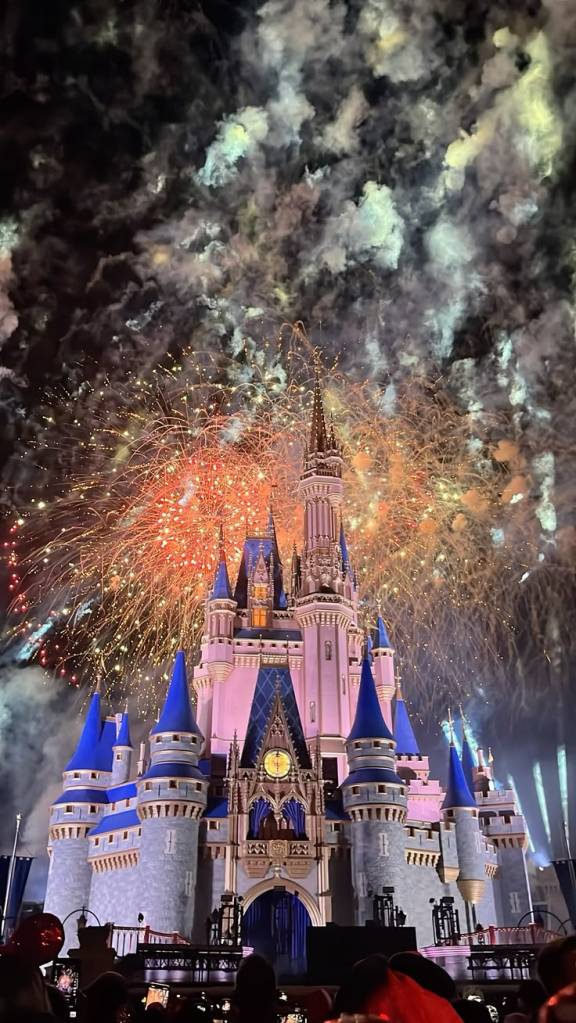
Fireworks rose above the castle in arcs and bursts of colour while familiar Disney music travelled across the park. Every explosion was followed by cheers and those involuntary gasps crowds make when something exceeds expectation. The castle, already magical enough during the day, became almost unreal beneath the lights.
For several minutes, hundreds of strangers shared one direction. Up.
I think that is what I remember most about the fireworks. Everyone had spent the day experiencing a different Disneyland. Some had come with children, some with partners, some with friends. Some had queued for rides I never tried, eaten things I never tasted or met characters I never saw. Yet at the end we were all standing together, looking at the same castle.
Disney stories usually end more neatly than real life. Cinderella finds her prince. Belle and the Beast find love beneath appearances. Ariel reaches the world she wanted. Snow White wakes. Simba returns home. Woody finds his way back. The music rises at precisely the right moment, every emotional loose end is tied beautifully and the credits arrive before anybody has to think about mortgages, laundry or the next work rota.
Real life has never been that disciplined.
There is no guaranteed Prince Charming waiting at the correct chapter. Fairy godmothers have poor response times. Singing household objects remain disappointingly rare. Problems do not reliably resolve themselves before the final song, and nobody hands us a script explaining which difficult chapter will eventually make sense.
Life is not a fairy tale, and I knew that even while standing beneath Disney fireworks. Yet perhaps I had misunderstood what I wanted from fairy tales in the first place. I did not need Cinderella’s romance to become mine, nor did I need a magical castle as a permanent residence or a prince to arrive before sunset. The magic had never really depended on those things becoming literal.
It was the reminder that wonder was still available.
That was what Disneyland returned to me for one day. A train window shaped like Mickey Mouse could make me smile. A Pooh ride could make me feel eight years old. A Lion King song could bring back an entire childhood feeling in three notes. A terrifying ride in complete darkness could make me scream in Cebuano and then laugh about it immediately afterwards. Still Toy Story figures could spring into motion beneath flashing lights and keep me staring even after I understood the illusion. A castle could remain concrete and steel while still becoming something more when the fireworks began.
Maybe growing up does not require us to stop believing in magic. Perhaps it simply changes what magic means.
When the fireworks ended, the park did not freeze in a perfect final frame. People gathered bags. Children became tired. Adults checked phones. Crowds moved towards exits. The castle remained where it was while everyone returned to hotels, transport, sore feet and whatever ordinary life waited outside the gates.
That part never appears in fairy tales either, but I think I like it more now.
The beauty of that day was never that Disneyland made real life disappear. Real life remained exactly where we had left it. Work would continue. Responsibilities would return. Problems would still exist the following morning. Nothing had been permanently repaired because I had survived Space Mountain and waved at Mickey.
For one day, though, ordinary life made room for something else: play, nostalgia, ridiculous photographs, fear followed immediately by laughter, and the uncomplicated happiness of recognising characters you loved before adulthood taught you to be embarrassed by uncomplicated happiness.
By the time we left Hong Kong Disneyland, I was exhausted, carrying too many photographs and several memories that I did not yet know would outlive some of those photographs. I remember thinking how much I wanted to return one day with my family. Happiness often does that to me. When something feels good enough, I immediately begin imagining the people I love inside it. I could picture Mama beneath the castle, someone arguing about which ride to try next, someone becoming hungry at the least convenient moment, somebody refusing a ride while everybody else tried to persuade them, and at least one person demanding another group photograph because someone blinked.
Years later, I understand the Mickey-themed train at Sunny Bay differently. At the time, I thought the mouse-shaped windows were simply a charming preview of Disneyland. Looking back, they were almost little frames around the day that followed. Through them, the ordinary city outside briefly became part of a story I was travelling towards.
That morning, I had boarded the train as an adult going to a theme park. That night, I left knowing that the child I had once been had apparently travelled with me. She was there inside It’s a Small World, inside the Hundred Acre Wood, singing along mentally to Hakuna Matata, recognising Ariel and Belle in the parade, staring at the castle and believing for several hours that another photograph was always justified. She had also screamed on Space Mountain, but some chapters benefit from selective editing.
Perhaps that is why I still believe some of the most beautiful chapters in life do not receive their titles until much later. While we are living them, we are too busy checking maps, finding rides, waiting in queues, complaining about our feet and making sure the photograph is not blurry. Only afterwards do we understand what the day was really carrying.
In 2015, I simply called it Hong Kong Disneyland. Years later, I think I would give the chapter another name. It was the day adulthood stepped onto a train with Mickey-shaped windows, willingly travelled towards a castle and discovered that growing up had never required leaving wonder behind.
Life was never going to be a fairy tale. It was simply life, with work, worries, unfinished plans, ordinary mornings and the occasional ride that makes you question the reliability of your colleagues. Yet somehow that very ordinary life had carried me all the way to a place I had once known only through animated stories.
When the final fireworks disappeared above the castle, nothing turned into a pumpkin. My shoes remained painfully real, the crowds still had to find their way home and tomorrow would arrive with another itinerary. Yet as we walked away, I finally understood why places like Disneyland are called happy places. Not because sadness cannot enter, not because real life stops existing at the gate, and certainly not because everyone inside is smiling every second.
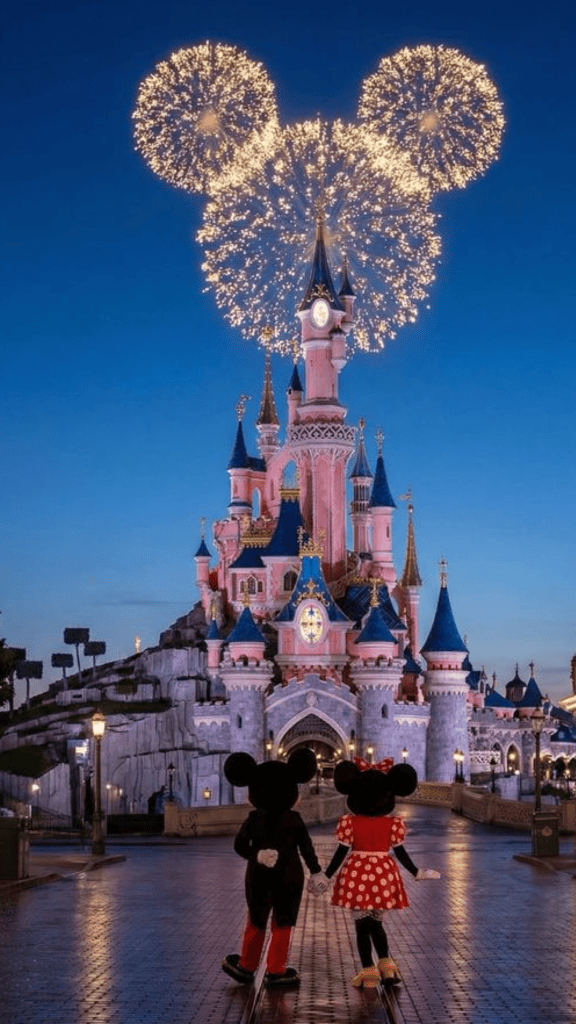
Perhaps a happy place is simply somewhere that reminds you happiness still has many forms. It can be loud music and fireworks, or a Winnie the Pooh ride, or the ridiculous terror of Space Mountain. It can be waving at a fictional mouse, drawing badly in an animation class, recognising a childhood song, or standing beneath a castle and allowing yourself to be impressed even though you know perfectly well how castles like that are built.
The phrase “happiest place” had sounded like advertising when the day began. By the time we left, I understood it differently. A happy place does not have to protect you from reality forever. It only has to remind you that reality still contains things worth looking up for.
Some chapters find their title only after they are over. I think this one finally found mine. It was not the day I escaped real life for a fairy tale; it was the day real life reminded me that wonder had never completely left.
Until then, keep dreaming.
Love,
Anj ❤
Up next: HK Adventure Day 3: A Symphony of Lights








Leave a Reply