
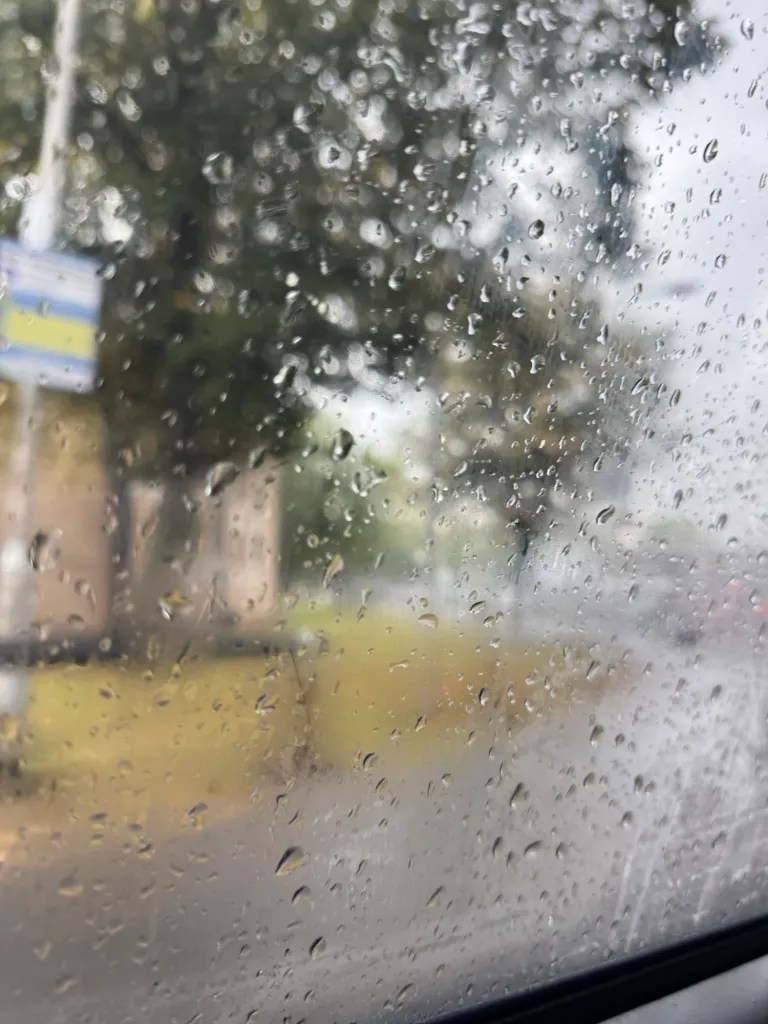
The road to Dumaguete seemed determined to test how badly we wanted to get there. We left central Cebu City while it was still busy being itself—traffic squeezing through streets, buildings standing shoulder to shoulder, horns joining conversations nobody had invited them into—and began the long journey south. The bus groaned into motion as though it already knew it had hours of work ahead, while the highway unrolled itself in front of us like a ribbon with no immediate intention of showing us where it ended. At first, I watched everything outside with the enthusiasm of someone beginning an adventure. Towns appeared one after another, roadside shops waved their colourful signs at us, mountains shifted in the distance, and patches of sea occasionally flashed between houses as though Cebu were giving us little previews to keep us interested. Several hours later, my excitement was still present, but it had become less physically expressive. My neck had opinions, my knees had submitted formal complaints, and my backside had become the loudest critic of provincial travel.
Still, the long ride had its own kind of storytelling. Cebu City slowly loosened its grip on the window. Concrete became less possessive of the landscape, traffic stopped arguing with everyone, and the farther south we travelled, the more space seemed to appear between things. The road passed through towns that carried on with their ordinary afternoons while we moved through them as temporary observers. Laundry fluttered outside houses, sari-sari stores sat patiently by the roadside, motorcycles slipped past us with alarming confidence, and trees leaned towards the highway as though trying to see who was passing. Every few kilometres, the scenery seemed to change the subject.
There is something strangely intimate about travelling long distances by bus. You do not simply arrive at a destination; you watch one place gradually become another. There is no sudden cut between scenes. The landscape has to explain itself kilometre by kilometre. You see the city thin out, the countryside stretch its legs, the coastline appear and disappear, and little communities introduce themselves for a few minutes before the bus carries you onwards. Somewhere along the way, even impatience begins to tire of itself.
By the time Dumaguete finally came into view, the road had already slowed something inside me. Perhaps that was why the city made such an immediate impression. After hours of travelling, Dumaguete did not seem interested in making a grand entrance. It simply opened the door. The city felt as though it had been sitting by the sea waiting for us, entirely confident that we would eventually find our way there. No trumpet fanfare, no dramatic skyline demanding attention—just streets, students, tricycles, old buildings, trees and that familiar coastal air moving through everything like a host quietly saying, You made it. Sit down for a while.
Perhaps that was why the nickname City of Gentle People made sense to me. Dumaguete was active, certainly. It had universities, traffic, shops and people going about their day, but there was room between things. Nobody seemed to have told the city that every spare minute needed filling. Coming from Cebu, where the day can sometimes feel as if it has already started running before you have properly tied your shoes, Dumaguete seemed more willing to walk.
Sights to See:
🌊 Rizal Boulevard: Dumaguete’s Beating Heart
Rizal Boulevard was where I understood this best. The seafront stretched beside the city with palm trees, benches, old lamp posts and the steady company of the water. Ferries moved across the distance while the breeze wandered along the promenade, lifting hair, cooling faces and behaving as though it had nowhere else booked for the afternoon. People walked, talked, sat on benches or simply watched the sea, and for once I did not feel that sitting still was stealing time from the trip.
That is quite an achievement because I am usually the sort of traveller who sees an empty hour on an itinerary and immediately tries to give it employment. There must be another attraction somewhere. Another street. Another café. Another photograph. Rizal Boulevard seemed unimpressed by this attitude. It offered a bench, the sea and a breeze and left me to discover that these were already enough.

Pro tip: Grab a bench, watch the ferries glide by, and don’t rush. Dumaguete invites you to slow down.
The afternoon light made everything look even better. The water caught the sun, the lamp posts lined the promenade like patient old gentlemen, and the palm trees moved whenever the breeze remembered them. Ferries crossed the horizon with none of the urgency I had brought from Cebu, and I began to understand why people could spend so much time there doing what appeared to be very little.
Sometimes very little is exactly enough.
Then Dumaguete introduced us to another reason not to hurry: dessert.

🍰 Sweet Indulgence at Sans Rival Cakes & Pastries
A short walk from Rizal Boulevard brought us to Sans Rival Cakes & Pastries, which had the cosy, nostalgic feeling of an old house that had discovered buttercream and decided there was no reason to return to its previous life. It was warm, inviting and exactly the sort of place where sitting down “for something small” becomes a deeply unreliable plan.
The sans rival itself was non-negotiable. Visiting a place called Sans Rival and refusing the sans rival would have felt unnecessarily contrary. Its layers of meringue, buttercream and nuts made restraint seem like an idea best discussed after the plate was empty. Then came the silvanas—cold, crisp and creamy little things that looked harmless because of their size and therefore presented an even greater danger.

Must-tries:
- The original Sans Rival (because how can you not?)
- Silvanas – crisp, creamy, cold, and divine.
- Cheesecake, chocolate mousse, and chocolate cake – because life is short.
Silvanas interfere with arithmetic. One is a taste. Two are still reasonable. Three can probably be defended as cultural research. By the time cheesecake, chocolate mousse or chocolate cake begins appearing in the conversation, the sensible part of the brain has already left the café and told you to enjoy yourself.
I considered the entire experience an important contribution to local tourism. Calories could file their complaint later.


What I enjoyed about Dumaguete was how easily the day moved between things without feeling crammed. We could walk along the boulevard, sit beside the water, wander through the city and then spend time over cake without feeling that we were failing to maximise the trip. There was no pressure to collect attraction after attraction simply so I could say I had seen them. Dumaguete seemed better suited to noticing than conquering.
Perhaps that is why the smaller details stayed with me. The sea beside the boulevard. The palms moving overhead. Ferries cutting across the water. The old lamps. The feeling of sitting somewhere without immediately checking what came next. The first bite of a silvana. The small satisfaction of discovering that a place can become memorable without requiring a complicated itinerary.
When it was finally time to leave, the road was waiting for us again. It had not shortened out of sympathy. The same kilometres still had to be travelled back towards Cebu, and the bus seat had made no promise to become more comfortable simply because I now had pleasant memories.
Yet the return journey felt different.
On the way to Dumaguete, I had measured the road by how much farther there was to go. On the way back, I found myself measuring it through the things we had just left behind. Rizal Boulevard returned in pieces—the sunlight on the water, the ferries in the distance, the benches and palms. Sans Rival returned more enthusiastically, particularly the silvanas, which is perhaps unsurprising because some memories contain substantially more butter than others.

Outside the window, the same towns began appearing in reverse. Shops passed. Houses gathered beside the road. Motorcycles continued displaying their impressive belief in available space. Trees leaned towards the highway, and occasionally the sea showed itself again as though checking whether we were really leaving.
I realised then that a long road behaves differently once you know what is waiting at the other end. On the way there, every extra kilometre had felt like a delay. On the way home, those same kilometres gave me time to replay the day.
Dumaguete had not tried to impress me by filling every moment. It had done almost the opposite. It had given the afternoon more room. The city had reminded me that travelling did not always need to mean rushing from one landmark to another until your camera was full and your feet had declared independence. Sometimes the memory worth keeping is simply an hour beside the sea followed by cake.

As Cebu slowly gathered around us again, the road returned us to the pace we knew. Traffic thickened. Buildings drew closer together. The open stretches became fewer, and somewhere along the journey the city began reclaiming the window. Yet I did not resent the long ride as much as I had expected.
The road had spent hours taking us south and, without meaning to, had prepared us for Dumaguete. It had gradually removed the rush of Cebu before handing us over to a place where sitting on a boulevard could count as a plan. On the return journey, it did the reverse, giving us enough distance for the day to settle before ordinary life caught up again.
At the beginning of the trip, the highway had kept stretching ahead as if it were teasing us with one more town, one more bend and one more hour inside that bus. By the end, I understood that perhaps Dumaguete was never only waiting at the finish line. Part of the pleasure was watching the road slowly change its mind about where we were.
And somewhere behind us, I could almost imagine the sea breeze continuing its rounds along Rizal Boulevard, bothering somebody else’s hair and persuading another impatient traveller to sit down for a while.
This time, I understood the suggestion.
Until next time,
Anj ❤



















Leave a Reply