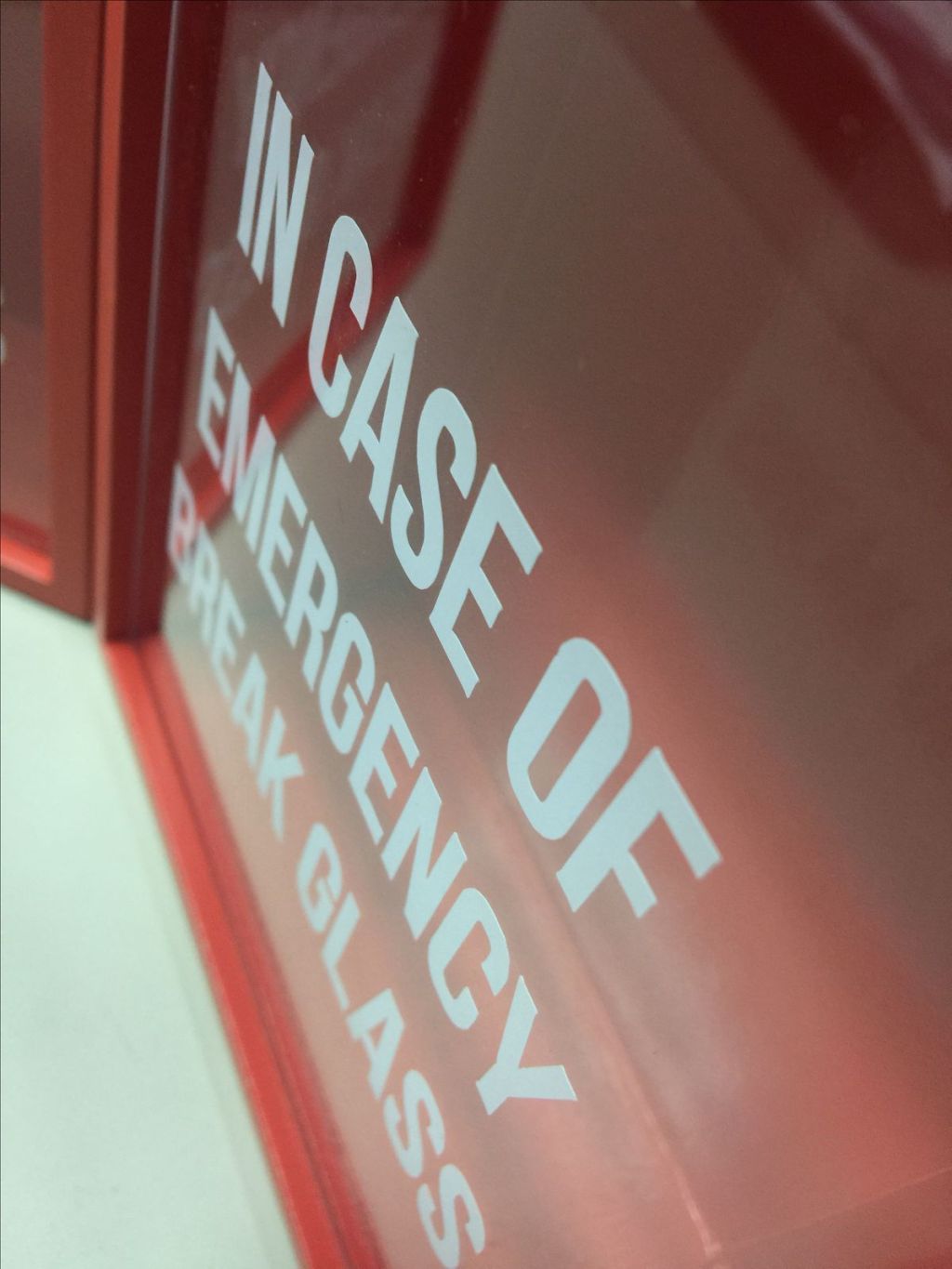
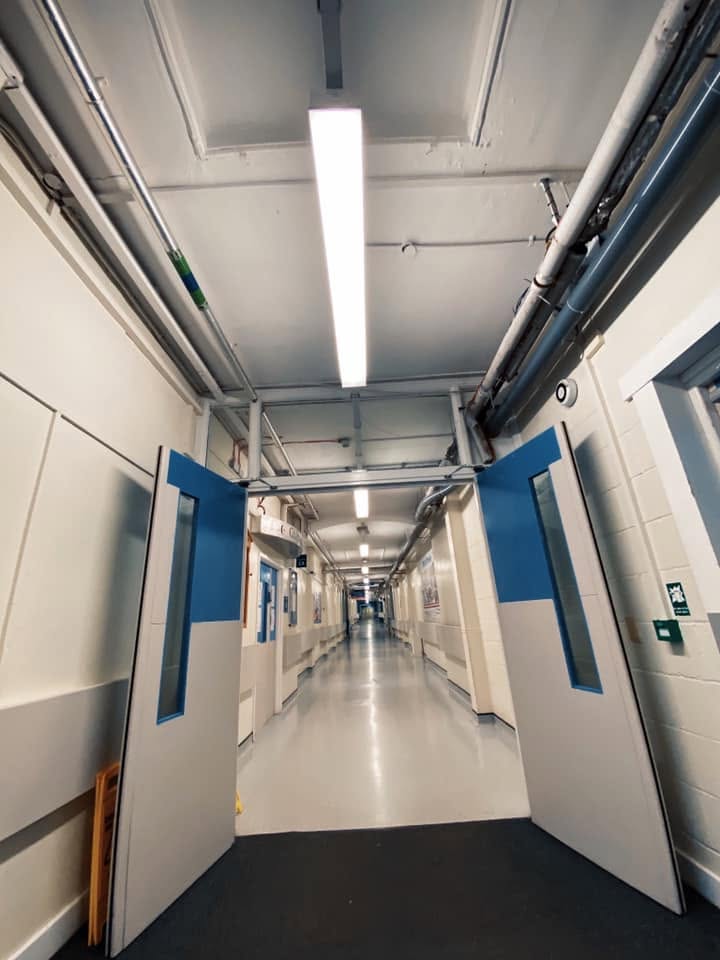
The fire alarm went off before anything was actually on fire. That, I realised afterwards, was rather the point. Nobody stood in the corridor debating whether the smoke had become severe enough to qualify. Nobody suggested waiting another six months to see whether the flames developed further. Doors opened, people moved, procedures existed, and an entire system had been designed around the remarkably sensible principle that emergencies are easier to manage before the building is fully burning.
I remember standing there thinking how ordinary that logic felt. We check exits before we need them. We test alarms while everything is fine. We teach people what to do before panic has a chance to make everybody forget. Hospitals are full of systems built around early recognition: observations, escalation pathways, screening tools and protocols designed to notice deterioration before the situation becomes considerably harder to manage. We do not generally look at a concerning set of observations and say, “Let’s wait until this becomes properly catastrophic before anybody gets involved.” At least, that is not supposed to be the plan.
And then I thought about mental health.
For some reason, when the danger cannot be measured neatly on a monitor, we can become far more comfortable with waiting. Someone may already be struggling to sleep, function, concentrate or cope. They may be carrying anxiety, grief, trauma, depression or exhaustion through ordinary days while still turning up for work, replying to messages and remembering to buy milk. From the outside, they may look completely capable. Human beings can perform normality with astonishing professionalism.
Not every emergency arrives dramatically. Some arrive slowly. Some whisper for months before anybody hears them. Some wear clean clothes, answer emails, smile at colleagues and say “I’m fine” with enough confidence that everyone politely accepts the diagnosis. Some people are holding together work, family and daily responsibilities while privately using almost all of their energy simply to remain upright inside their own lives.
That is partly why the question, “If you could change one law, what would it be?” stayed with me longer than I expected. At first, it sounded like the sort of hypothetical question designed to produce an interesting answer over coffee. Change taxes. Improve education. Protect the environment. Make people who stop abruptly in supermarket aisles legally required to indicate first. There are many worthy candidates.
But my answer came surprisingly quickly.
If I could change one law, I would make mental health care genuinely accessible, properly resourced and treated with the same seriousness we instinctively give physical health. I would want support to be something people can reach before they are falling apart, not something that becomes easier to access only after life has become almost impossible to manage. I would want the principle to be simple: your mind should not have to become an emergency before it deserves care.
Too often, access can feel conditional. Where do you live? What can you afford? How long can you wait? How severe are your symptoms? Are you struggling enough? Can you still work? Can you still function? Are you safe today? These questions have clinical reasons behind them, of course, especially when services are trying to prioritise people at greatest immediate risk. But there is still something deeply uncomfortable about a system in which deterioration can become the unofficial ticket to receiving more urgent attention.
Imagine applying the same logic everywhere else. Your brakes are beginning to fail, but please return when they stop working completely. There is smoke somewhere in the building, but we would prefer to wait until flames become visible. Your wound looks concerning, although perhaps we should see whether infection develops before doing anything troublesome like prevention. We understand instinctively how absurd that sounds because physical safety has taught us the value of intervention before disaster.
Mental health deserves the same imagination.
I would want preventive care to feel ordinary. Therapy should not be treated as something reserved only for people who have reached their absolute limit. Asking for help early should be considered sensible, not evidence that someone is exaggerating. People should not have to become experts in navigating complicated systems at exactly the moment when their concentration, motivation or confidence may already be struggling.
I would want shorter waits supported by enough trained professionals to make shorter waits possible. There is little value in telling people to seek help while simultaneously creating services too stretched to receive them properly. Professionals cannot endlessly compensate for structural shortages by becoming more exhausted themselves. You cannot build sustainable care by repeatedly asking the people providing it to stretch a little further. Elastic has limits too.
I would also want mental health education to begin much earlier. Not simply posters telling children to “be kind,” although kindness is hardly a bad start. I mean real emotional literacy: how to recognise distress, how to describe feelings without embarrassment, how to ask for help, how to cope with disappointment, how to understand anxiety, how to recognise when a friend may need support, and how to know that struggling does not automatically make someone weak or difficult.
We teach children how to cross roads safely because we know roads can be dangerous. We teach fire drills because emergencies can happen. We teach basic physical health because bodies require looking after. It seems strange that people can spend years in education learning equations they may never use again while receiving remarkably little instruction about what to do when their own mind becomes somewhere difficult to live.
Workplaces would need to change too. I have always found it slightly ironic that wellbeing can sometimes be treated as an annual themed week wedged between emails, staffing problems and impossible workloads. There may be posters, fruit, motivational messages and perhaps a seminar reminding everyone to practise self-care, followed immediately by conditions that make self-care approximately as practical as taking a spa break during a cardiac arrest.
Psychological safety cannot exist only in PowerPoint slides.
If mental wellbeing genuinely matters at work, it has to appear in how people are managed, spoken to and supported. Burnout should not be worn as evidence of commitment. Exhaustion should not become a competition. Compassionate leadership should not depend entirely on whether you happen to have a naturally compassionate manager. People should be able to raise concerns without fearing humiliation, ask for support before reaching crisis and take mental health seriously without feeling they have somehow failed professionally.
Healthcare workers are not exempt from this simply because we spend our working lives caring for other people. If anything, sometimes we become particularly good at recognising distress everywhere except in ourselves. We can assess risk, identify deterioration, comfort families and encourage someone else to seek support, then look at our own exhaustion and decide it probably just needs another coffee and an early night.
The human brain is wonderfully creative when negotiating with itself.
Untreated mental health difficulties do not remain politely contained inside one person’s head. They ripple outward. They affect relationships, physical health, work, parenting, decision-making, confidence and the ability to participate fully in ordinary life. By the time someone reaches crisis, the consequences may already have spread through several parts of their world.
Prevention is less dramatic, which may be why it receives less attention. Nobody photographs the crisis that never happened. There is no breaking-news banner for the person who received therapy early enough to remain in work, the teenager who learned how to ask for help before self-hatred became unbearable, or the exhausted parent who found support before everything collapsed. Successful prevention often leaves behind very little spectacle.
That is precisely its success.
We tend to notice ambulances more than conversations, emergency departments more than early interventions, and breaking points more than all the small moments that might have prevented them. Crisis is visible. Prevention often looks like nothing happened.
But “nothing happened” can be an extraordinary outcome.
Someone did not lose their job. Someone remained connected to their family. Someone slept. Someone asked for help. Someone understood what was happening to them before they decided there was something fundamentally wrong with who they were. Someone learned that panic could be managed, grief could be supported or trauma could be treated. Someone received care while they still had enough energy to engage with it.
That matters.
I do not think mental health care should be framed as a luxury available only to people who can afford private support or a rescue service reserved for those who have already become severely unwell. There has to be room in between. There has to be a place for the person who knows something is wrong but has not yet reached the edge. The point should not be to determine how close somebody can safely get to falling before we extend a hand.
And I know none of this is simple. Laws do not magically create therapists, psychiatrists, nurses, counsellors, beds, community services or unlimited funding. No piece of legislation can erase every waiting list overnight. Mental health care is complex because people are complex, and resources are finite. There would still be difficult decisions, clinical thresholds and moments when urgent cases quite rightly need to come first.
But laws also reveal priorities.
They decide what society considers important enough to protect, fund, regulate and expect. A legal commitment to accessible mental health care would not instantly solve every problem, but it would make one principle much harder to ignore: psychological health is health. Not an optional extra. Not something to discuss only when a person reaches crisis. Not the slightly awkward cousin of physical medicine that everybody agrees matters while quietly giving it fewer chairs at the table.
I think about that fire alarm again. The building was not burning. Nobody needed rescuing. There were no flames climbing the walls. The alarm was tested because waiting for catastrophe before checking whether the system worked would have been ridiculous.
That is what I would want mental health care to understand at its deepest level.
We still need emergency services. We still need crisis teams, urgent assessments and places where people can go when everything has become unbearable. There will always be moments when somebody genuinely needs to break the glass.
But the glass should not be the beginning of the system.
Before that point, there should have been conversations, access, education, properly staffed services, early intervention, supportive workplaces and people who knew where to turn without first having to prove how badly they were suffering. We should notice the smoke. We should check the wiring. We should maintain the alarms. We should help long before somebody is standing in front of a red box wondering whether things have finally become bad enough to break it.
Because the message I would want that law to send is actually very simple: your mind matters as much as your body, asking for help should not require an apology, and you should not have to collapse before care decides you are worth catching.
Emergency glass exists for a reason.
But people deserve something before it shatters.
Hoping we learn to notice the smoke,
Anj 🖤

























Leave a Reply